
BestCarShipping Inc. offers reliable, professional auto transport across the United States. Visitors receive clear expectations from quote to delivery, with licensed crews and insured moves. The team treats each vehicle like family, focused on protection and straightforward communication.
Request a quote online or contact the team at (307) 288-5972 or info@bestcarshippinginc.com to begin. Options include open or enclosed carriers, standard or expedited timelines, and door-to-door transport. Rates depend on route and vehicle type; comparing quotes confirms the best price quickly.
Who we serve: individuals relocating, online buyers and sellers, dealerships, and logistics coordinators. Customers receive documented inspections at pickup and delivery, proof of licensing, and full insurance details for peace mind.
Key Takeaways
- Professional auto transport with licensed, insured crews.
- Transparent pricing based on route and vehicle.
- Options: open vs enclosed, standard vs expedited, door-to-door.
- Easy next step: get an online quote or call (307) 288-5972.
- Documented inspections and clear communication for peace of mind.
Trusted Car Shipping Services for Door-to-Door Auto Transport in the United States
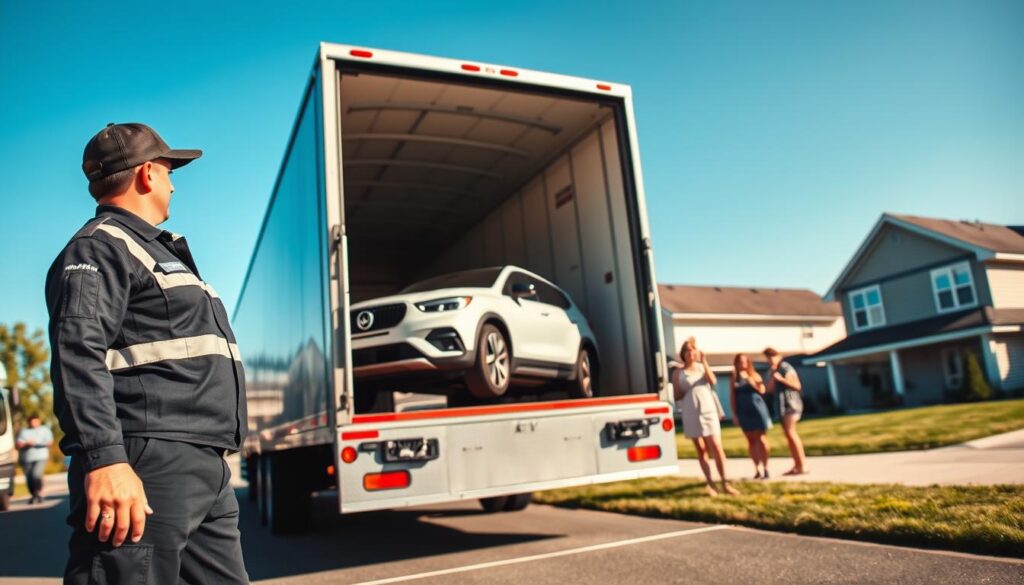
Choosing door-to-door delivery keeps your vehicle moving with fewer handoffs and clearer timelines. This option is the most common because it lowers effort for customers compared with terminal-to-terminal pickup and delivery.
Who car transport is ideal for
Door-to-door transport suits relocations, online purchases or sales, sending vehicles to family, seasonal moves, and fleet repositioning. It helps anyone who lacks a spare vehicle to reach a terminal.
What “door-to-door” pickup and delivery really means
Pickup and delivery occur at the customer’s address or as close as safely and legally possible. Large carriers may request a nearby meeting point when streets are narrow or have low wires and branches.
- Convenience: Fewer handoffs reduce delays.
- Coordination: The team schedules pickup, confirms windows, and communicates updates.
- Expectations: Drivers will note access requirements and follow local requirements for safe delivery.
| Option | Typical Benefit | When it’s best |
|---|---|---|
| Door-to-door | Lower customer effort, direct delivery | Home moves, online purchases, lack of alternate transport |
| Terminal-to-terminal | Lower cost, fixed locations | When customer can travel to pickup/drop-off point |
| Guaranteed pickup | Assured window for tight timelines | Move-in deadlines or timed logistics |
For reliable options and vetted carriers, customers compare rates and providers like the best car shippers to confirm service and requirements.
How Our Auto Transport Process Works From Quote to Delivery
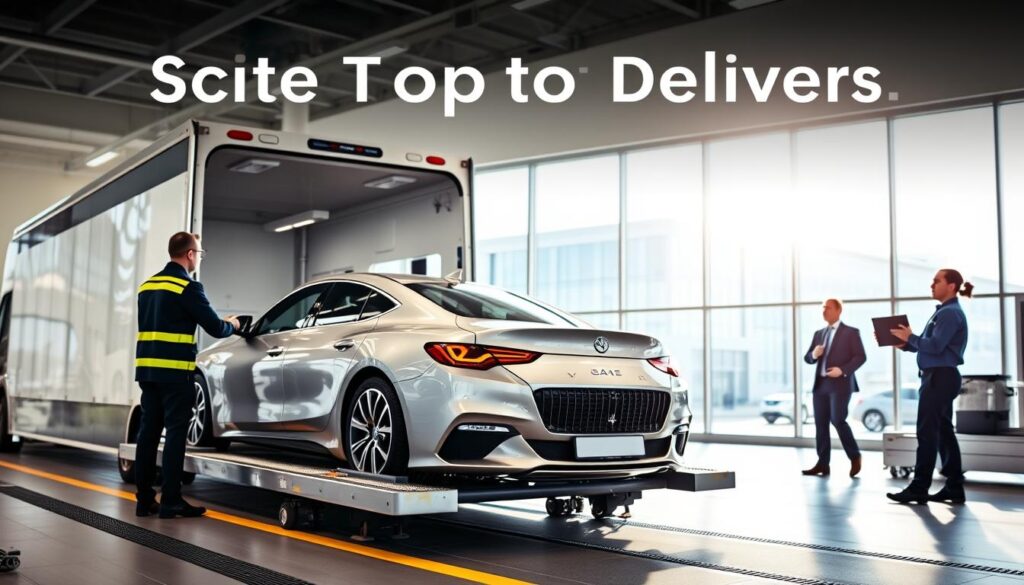
Understanding every phase from estimate to handoff helps customers plan with confidence.
Get started: Provide origin and destination, year/make/model, operable vs inoperable status, desired service level, and timing flexibility. These details produce an accurate quote and expected time windows.
Carrier assignment and scheduling
Once booked, the team assigns a carrier based on route and equipment. Expect a primary point of contact and regular dispatch updates. Drivers confirm pickup windows before arrival.
Pickup inspection and paperwork
Drivers document condition with photos and note existing marks on the Bill of Lading. The shipment loads only after both parties confirm details.
Transit, updates, and delivery
During transit, customers receive ETA updates and coordination calls before drop-off. On delivery the driver repeats the inspection and completes final sign-off.
“Consistent communication is part of the service, not an add-on.”
For local booking details, request an estimate for auto transport in Upton.
a car shipping Options Built for Your Vehicle, Timeline, and Budget
Select from tiered service levels designed to match timelines, budgets, and vehicle needs.
Standard auto shipping for flexible schedules
Standard service fits flexible moves and budget-focused plans. Pickup windows are broader, which lowers cost and increases carrier options.
Best when: customers can accept multi-day pickup windows and want lower price risk.
Expedited car shipping when time matters
Expedited service prioritizes dispatch to shorten wait time. This reduces days-to-pickup and helps meet tighter deadlines.
Trade-off: faster pickup usually increases the price and slightly limits carrier choice.
Guaranteed pickup windows for tight move-in dates
Guaranteed pickup provides a fixed window for pickup at origin. Use this for move-in deadlines, auctions, or timed handoffs.
Impact: guaranteed windows carry the highest cost but offer the most predictable coordination.
How to choose: share deadlines and site access details when requesting a quote. Early constraints let dispatch select the right type and avoid rework or delay.
| Service Level | Primary Benefit | When to Use |
|---|---|---|
| Standard | Lower price, broad carrier pool | Flexible dates, budget planning |
| Expedited | Faster pickup, prioritized dispatch | Short timelines, changing plans |
| Guaranteed Pickup | Fixed window, reliable timing | Move-ins, auctions, coordinated handoffs |
Open Carrier Car Shipping for Affordable, Widely Available Transport
Open trailer moves are the industry default because carriers run this equipment on most major routes. This makes service widely available and keeps price lower for customers.
Why open transport is most common
Carriers stack multiple vehicles on open rigs to maximize efficiency. That routing lowers cost and increases pickup options. Most owners select this for everyday moves.
What exposure to weather and debris means
Vehicles are secured with standard straps and wheel chocks. Open trailers leave surfaces exposed to rain, dust, and road debris during transit.
If cosmetic protection matters, choose enclosed service for high-value paintwork or classic models. Open transport is generally safe, but not risk-free.
“Condition is documented before and after pickup to protect both parties.”
| Feature | Benefit | When to Choose |
|---|---|---|
| Open carrier | Lowest price, wide availability | Everyday vehicles, budget moves |
| Enclosed option | Extra protection from elements | Luxury, classic, or show vehicles |
| Inspection | Photos and BOL record condition | All transports to document damage claims |
For details on open carrier options, request a quote for open carrier transport.
Enclosed Auto Transport for Luxury, Classic, and High-Value Vehicles
For owners of high-value or vintage vehicles, enclosed transport delivers controlled protection and fewer transit risks.
What enclosed auto transport means: the vehicle travels inside a covered trailer for full shelter from weather and road debris. This option uses enclosed trailers that limit exposure and provide secure tie-down points.
When the higher cost is justified
Choose enclosed for luxury models, classic restorations, low-clearance sports vehicles, or inventory with high resale value. Premium finishes and rare parts justify added cost when condition preservation is priority.
Protection benefits during long-distance transit
Over multi-day routes, covered trailers reduce exposure to rain, dust, and stones. Fewer environmental risks mean lower damage probability and smoother final condition on delivery.
- Scheduling: enclosed options have limited capacity; book earlier to secure dates.
- Insurance & documentation: confirm carrier insurance limits and keep pre-shipment photos for condition records.
- Business benefit: risk reduction and true peace mind for valuable assets.
“Enclosed transport protects value and minimizes surprise repairs.”
Specialized Vehicle Transportation for Motorcycles, RVs, and Oversized Equipment
Nonstandard vehicles and heavy equipment require tailored transport solutions and trained crews.
What counts as specialized transport
Specialized moves include motorcycles, RVs, boats/campers, and oversized or heavy equipment. These items need unique loading profiles and securement methods.
Essential equipment and operational requirements
- Special trailers, ramps, and lift gates sized for the unit type.
- Winches and skids for inoperable vehicles or unstable loads.
- Custom tie-downs and blocking to protect finishes and structure.
Expertise, quoting, and scheduling expectations
Experienced crews reduce damage risk and avoid delays from mismatched equipment. When requesting a quote, provide accurate dimensions, weight, modifications, and operability status.
Note: specialized transport often affects scheduling and cost because fewer carriers carry the required equipment and route limits may apply.
BestCarShipping Inc. coordinates the right carrier, confirms requirements, and keeps communication clear so customers receive reliable transportation for unusual or oversized units.
Door-to-Door vs Terminal-to-Terminal Car Transport Services
Pickup and delivery logistics shape the real-world experience more than the headline price on a quote.
Door-to-door service reduces customer effort by handling pickup and delivery at the address or nearest safe point. This saves time but can raise the base cost compared with terminal-to-terminal choices.
Terminal-to-terminal is often cheaper. Customers drop off and collect at designated facilities. That reduces driver detours and helps lower price for longer distance routes.
When trucks cannot reach your street
- Accessibility factors: narrow lanes, low bridges, dense trees, HOA limits, or cul-de-sacs may block large rigs.
- Common meeting points: wide parking lots, shopping centers, or nearby major roads that allow safe loading and unloading.
- Coordination: dispatch provides clear pickup/delivery plans and advance notice to avoid surprises.
Be transparent about access constraints early. That prevents delays and unexpected fees and helps crews plan the safest route and meeting point.
For details on terminal options, review terminal-to-terminal service.
Car Shipping Cost Factors and Transparent Pricing
Clear pricing starts with mapping distance, vehicle specs, and desired service level. BestCarShipping Inc. breaks down what affects price so customers can compare quotes with confidence.
Distance economics and per-mile examples
Longer routes often lower per-mile rates because carriers run optimized lanes. For context, market averages show about $2.92/mile under 200 miles, roughly $0.93/mile for 200–500 miles, and near $0.78/mile for 1,000+ miles.
Vehicle size, weight, and operability
Size and weight affect space and fuel. Inoperable units need winching and extra labor, which raises price and may require specialized equipment.
Transport type and service upgrades
Open trailers reduce base cost. Enclosed transport, expedited pickup, or guaranteed windows add price but increase protection and certainty.
Market factors: seasonality, fuel, and carrier supply
Demand spikes and fuel swings raise carrier rates. Lane capacity affects quotes—busy seasons mean higher prices and limited options.
“Transparent pricing explains what you pay for and why quotes differ.”
| Factor | Impact | Typical price effect | Example lanes |
|---|---|---|---|
| Distance | Per-mile drops on long hauls | Lower $/mile, higher total | Kenosha→LA (~2000 mi) ~$1,099 |
| Vehicle condition | Operable vs inoperable | Inoperable adds labor fee | Kenosha→Dallas (~1050 mi) ~$849 |
| Transport type | Open vs enclosed | Enclosed adds premium | Atlanta→Los Angeles (~2200 mi) $1,000–$2,500 |
| Season & fuel | Carrier supply and costs | Wide quote ranges | Atlanta→Miami (~650 mi) $500–$1,100 |
Bottom line: distance, vehicle size and condition, transport option, service level, and market forces drive final price. Request specific quotes for exact numbers and window availability.
Estimated Car Shipping Rates and What to Expect Per Mile
Per-mile benchmarks give quick context for planning transport budgets. Use these averages as planning reference, not final bids.
Typical US averages by mileage bands
Under 200 miles: roughly $2.92 per mile on average.
200–500 miles: about $0.93 per mile.
1,000+ miles: near $0.78 per mile.
Why comparing quotes confirms your price
Estimates vary because lane demand, carrier availability, vehicle type, and timing shift rates. Seasonal spikes and fuel changes also affect final price.
- Use averages for budgeting and approvals.
- Request multiple quotes to see real-time market price and available windows.
- Compare beyond price: inspect service level, pickup windows, insurance limits, and communication practices.
| Item | What to check | Why it matters |
|---|---|---|
| Included services | Pickup, delivery, inspections | Prevents surprise fees |
| Payment & cancellation | Terms and refunds | Protects budget |
| Updates | How ETAs are shared | Keeps timelines clear |
“Published averages are planning tools. Confirm final price with written quotes.”
Request a quote from BestCarShipping Inc. to confirm exact rates and secure pickup windows. Call (307) 288-5972 or email info@bestcarshippinginc.com for firm pricing and scheduling details.
How Long Does It Take to Ship a Car?
Expectations depend on distance, service level, and route specifics. Typical transit for short runs under 500 miles is often 1–3 days. Nearby metro lanes, such as Atlanta-area moves, commonly fall in the 3–5 day range.
Cross-country transport for 1,500+ miles typically requires 7–10 days in transit. These ranges assume normal traffic, clear weather, and standard carrier availability.
What can delay pickup or delivery dates
Delays come from weather, road closures, heavy demand, and limited carrier capacity. Access issues at pickup or delivery points and inoperable vehicles needing special equipment also add time.
Pickup window vs transit time
The pickup window is the scheduled range when the carrier will collect the vehicle. The transit time is the actual days spent moving between origin and destination. Customers should plan for both.
How Hours of Service rules affect long hauls
Drivers must follow federal limits on daily driving and required rest periods. These safety rules can extend long-haul timelines and add planned stops on routes.
- Plan with buffers: add extra days for weather and peak season.
- Expect updates: proactive carrier communication reduces missed handoffs.
- Inoperable units: allow extra time for special equipment and fewer available carriers.
“Clear timelines and steady communication prevent surprises during transit.”
For route-specific timing and examples, request detailed Florida-to-North Dakota timing information from the team.
Insurance Coverage, Licensing, and Compliance for Peace of Mind
Verify insurance and licensing before booking to protect your vehicle and reduce surprises.
Reputable providers maintain active FMCSA registration with valid USDOT and MC numbers. Ask the company for those numbers and confirm active status on the FMCSA site before payment.
What “fully insured” should include
Confirm in writing: carrier liability limits, cargo coverage specifics, and how deductibles apply. Get details on who handles claims and the expected timeline.
Carrier versus additional coverage
Carrier insurance covers loss or damage during transit per the Bill of Lading. Customers may choose supplemental policies for higher limits or replacement value. Document conditions with photos at pickup and delivery to support any claim.
- Document: keep quote, order confirmation, BOL, and inspection photos together.
- Verify: request USDOT and MC numbers and check FMCSA registration.
- Escalation: confirm an internal contact and next steps if issues arise.
“Verified authority, clear documentation, and known claims paths turn paperwork into real peace of mind.”
For practical tips before transport, review these stress-free vehicle transport tips: stress-free vehicle transport tips. For questions call (307) 288-5972 or email info@bestcarshippinginc.com.
How to Choose a Reliable Auto Transport Company
Choose a transport partner with verified credentials and steady communication to avoid surprises and delays.
Reading customer reviews for pricing accuracy and communication
Scan reviews for repeated notes on on-time pickup and honest quotes. Look for patterns, not single anecdotes.
Consistent praise for updates and clear pricing signals trustworthy service. Warnings about low prices and last-minute fees mean more vetting is needed.
Questions to ask about equipment, experience, and dispatch
- Who dispatches and who will be the day-of contact?
- What equipment fits the vehicle type and access limits?
- What insurance covers loss or damage, and can you get written details?
- How are updates and ETAs delivered?
Red flags that can lead to surprise fees or poor service
Watch for vague pricing, refusal to provide USDOT/MC numbers, and pressure to accept payment without paperwork.
| Check | Why it matters | Red flag |
|---|---|---|
| Reviews | Shows real customer experience | Only five-star posts, no specifics |
| Credentials | Regulatory proof and experience | Refusal to share USDOT/MC |
| Quotes | Scope and service level clarity | Lowest price with no written scope |
Compare quotes on scope, not just price. BestCarShipping Inc. emphasizes transparent communication and protection of customer assets. Call (307) 288-5972 or email info@bestcarshippinginc.com for verified details and written quotes.
Preparing Your Car for Shipping Services
Simple pre-shipment steps reduce delays and make inspections clear at pickup.
Clean and document condition with photos
Wash the vehicle so scratches and dents show plainly. Take clear photos of all sides, roof, bumpers, wheels, and any marks.
Capture close-ups of existing damage. These images speed inspections and support claims if needed.
Fuel, tire pressure, and basic checks
Keep fuel near one-quarter tank to lower weight while allowing loading. Confirm tire pressure and battery charge so the vehicle can be moved safely.
Perform simple maintenance: top fluids and secure loose parts to prevent issues during transport.
Paperwork ready at pickup
Have title or registration available if required. The driver will verify identity, pickup address, and condition details for the Bill of Lading.
| Item | Why it matters | Quick tip |
|---|---|---|
| Photos | Proof of pre-shipment condition | Six angles plus close-ups |
| Fuel level | Safety and weight control | ~25% tank recommended |
| Documents | Speeds pickup and reduces disputes | Title/registration on hand |
“Preparation reduces surprises, shortens inspections, and cleans up final delivery sign-off.”
Tip: For full prep guidance, see the step-by-step guide to prepare a car for transport or call (307) 288-5972 for specific requirements.
Personal Items in Your Vehicle During Transport
To avoid claims complications, most carriers do not allow personal possessions inside a vehicle during transit.
Why limits exist: liability rules and insurance exclusions often bar personal items. Weight and DOT requirements also affect load plans. Carriers set these limits to keep claims and compliance simple.
What to remove before pickup
- Electronics and accessories (phones, laptops, navigation units)
- Important documents and titles
- Jewelry, cash, and other valuables
- Fragile goods, loose tools, and unsecured boxes
- Any objects that can shift, stain, or break during transport
Exceptions and expectations: some carriers permit limited items if confirmed in writing. If allowed, keep belongings below window level and firmly secured.
“Fewer personal items reduce theft risk, damage exposure, and claims complexity.”
Practical step: ask about personal item rules before pickup day. Clear communication prevents last-minute rework and protects the vehicle, the customer, and the carrier.
Receiving Your Vehicle After Auto Delivery
On arrival, a methodical walk-around confirms condition and closes the delivery smoothly.
Inspect for new damage and compare photos
Begin with a full exterior walk-around. Compare each panel to pre-shipment photos and note any new marks.
Check glass, paint, and undercarriage areas that might show transit wear. If anything differs, record it on the Bill of Lading before signing.
Check accessories and finalize delivery paperwork
Verify mirrors, spoilers, racks, specialty wheels, and other add-ons. Confirm that keys, manuals, and any agreed items are present.
Document new damage immediately with time-stamped photos. The driver will complete a final inspection; ensure the Bill of Lading reflects all notes.
- Walk-around and compare photos.
- Note differences on delivery paperwork.
- Photograph new damage and loose accessories.
- Sign only after paperwork matches observed condition.
- Keep copies for warranty or claims.
“Clear documentation at delivery protects the customer and closes the order cleanly.”
BestCarShipping Inc. coordinates delivery windows and supports follow-up if questions arise. Keep contacts and copies on hand for any next steps.
Conclusion
This final note ties the page promise to clear next steps and reliable outcomes.
BestCarShipping Inc. delivers dependable car shipping with documented inspections, steady updates, and choices for each timeline and budget. Decide between door-to-door or terminal pickup, open versus enclosed trailers, and standard, expedited, or guaranteed pickup windows to match your needs.
Major cost and time drivers are distance, vehicle condition, and service level. Plan the journey with those factors in mind and expect transparent pricing so there are no surprises.
Request a written quote to confirm the best option. Contact the team at info@bestcarshippinginc.com or call (307) 288-5972 for fast quotes and next steps. The company protects your vehicles and guides the journey with care.