
BestCarShipping Inc. offers nationwide, door-to-door transport for individuals and businesses. With 30+ years of experience and access to a network of 25,000+ transporters, the company focuses on reliable, on-time delivery and careful handling.
This professional service reduces risk and simplifies planning. Customers get a clear path: request a quote, book pickup, track transit, and confirm delivery. There is no up-front deposit until the pickup is scheduled, which keeps pricing transparent.
Options include door-to-door convenience and open or enclosed carriers. Insurance, timelines, and cost drivers are explained up front to help decision makers and logistics coordinators choose the right option.
For a fast quote or to discuss business needs, contact info@bestcarshippinginc.com or call (307) 288-5972. The team keeps communication direct and focused on protecting your vehicle throughout transit.
Key Takeaways
- Nationwide door-to-door transport with a large carrier network.
- 30+ years of proven experience and transparent policies.
- Simple process: get a quote, schedule pickup, track, and confirm delivery.
- No up-front deposit until pickup is set, for clear pricing.
- Options and insurance details available for both individuals and businesses.
Reliable Nationwide Car Shipping You Can Count On

Reliable nationwide service means your vehicle moves on a clear schedule from pickup to final delivery. BestCarShipping Inc. pairs a 25,000+ transporter network with defined procedures to keep shipments predictable.
Safe vehicle transport with trained transport professionals
Customers receive experienced drivers, standardized pickup and delivery inspections, and documented handoffs. These safeguards reduce damage risk and create visible accountability at each step.
Service to all 50 states with residential and business pickup
Coast-to-coast coverage supports everyday moves and commercial transfers. Direct residential or business pickup options minimize downtime for fleets and simplify logistics for individual owners.
- Consistent carrier access: capacity even in high-demand weeks.
- Clear scheduling: status updates and predictable timelines.
- Commercial-ready: paperwork, tracking, and reduced operational strain versus self-driving.
- Peace of mind: trained teams, defined procedures, and real-time communication.
Auto Car Shipping Services Built for Door-to-Door Convenience
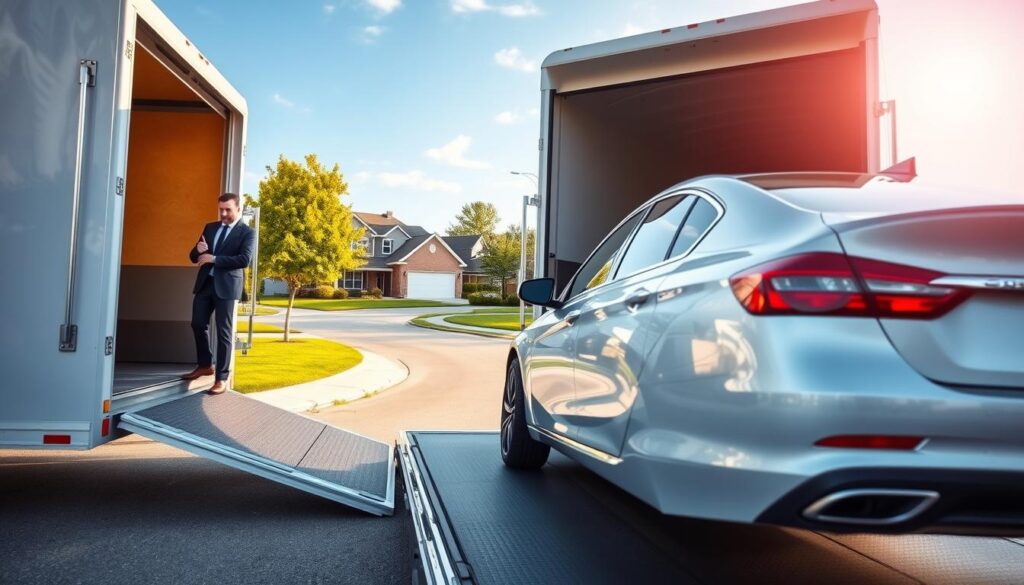
Door-to-door service brings the carrier directly to the addresses you provide whenever safe and legal access allows. This option is standard for most shipments and reduces extra logistics for the customer.
Door-to-door vs. terminal-to-terminal
Door-to-door means the carrier attempts pickup and delivery at your specified locations. Drivers perform inspections and document the condition at both ends.
Terminal-to-terminal is a budget-friendly type that requires customers to drop off and collect a vehicle at carrier locations. It can save money but adds time and coordination.
What direct pickup and delivery means
“Direct pickup and delivery” is a convenience standard. It depends on truck access, local rules, and safety. If access is limited, the carrier will suggest alternatives.
When trucks can’t reach your address
Large trucks may be blocked by narrow streets, low branches, tight turns, or municipal restrictions. Drivers assess each location before loading.
Meetup spots—like a grocery lot or gas station near your location—keep a shipment on schedule. The carrier selects a highway-accessible spot with room to load and unload safely.
Expect a direct call from the driver to confirm the meetup location and a pickup window. Clear communication reduces surprises and helps deliveries stay on time.
| Option | Who handles | Cost | Best for |
|---|---|---|---|
| Door-to-door | Carrier to address | Standard | Convenience and time savings |
| Terminal-to-terminal | Customer drop/collect | Often lower | Flexible budget |
| Meetup (limited access) | Carrier & customer coordinate | Standard | Tight streets or restricted locations |
| Direct pickup & delivery | Carrier schedules | Standard | Predictable timelines |
How the Auto Transport Process Works From Quote to Delivery
A straightforward flow guides each shipment from initial quote through final inspection. The company uses clear steps so customers see milestones and timelines.
Getting a fast, accurate quote
Provide origin, destination, vehicle details, and your first available pickup date. These details let the team price reliably and return a prompt quote.
Pickup, loading, and documentation
On pickup day the driver calls with an arrival window. A walkaround records the vehicle’s condition and the bill of lading documents existing notes.
In-transit visibility and delivery
Customers receive 24/7 online tracking tied to a booking reference number. Updates show status while the shipment moves in business days.
- Operational flow: quote → booking → dispatch → pickup → transport → delivery.
- Loading standards: trained teams secure vehicles to minimize movement without technical jargon.
- Final check: offload, compare condition to the bill of lading, and confirm acceptance.
Clear communication and documented checks keep risk low and schedules predictable from start to finish.
Open vs. Enclosed Auto Transport: Choosing the Right Trailer Type
Choosing the right trailer type affects protection, timing, and final cost for a vehicle move.
Open car shipping for cost-effective everyday vehicle transport
Open car shipping is the standard solution for most cars. It offers reliable, professional handling at lower prices.
Open carriers carry many vehicles at once. That makes them the most economical choice for everyday vehicles and routine relocations.
Enclosed auto transport for luxury, classic, and high-value vehicles
Enclosed auto transport provides premium protection. Enclosed trailers shield vehicles from weather, dust, and road debris.
This option is best for luxury, classic, or specialty vehicles where extra care is justified.
Price differences and how to choose
Enclosed service commonly costs significantly more than open. Typical ranges are 40–60% higher, with recent Charleston data averaging about +$636 (+66%) over open.
Choose based on risk tolerance, vehicle value, paint condition, and route length—not price alone.
| Feature | Open | Enclosed |
|---|---|---|
| Exposure level | Exterior elements visible | Protected from weather and debris |
| Typical cost change | Base price | +40–60% (Charleston avg +66% / +$636) |
| Best for | Everyday vehicles and budget moves | Luxury, classic, and high-value vehicles |
| Availability | Widely available nationwide | Limited capacity; book earlier |
Both options are professional carrier services. The primary difference is trailer type and the level of exposure during transit.
Car Shipping Costs and What Impacts Your Quote
Understanding what drives the final price helps customers make smarter booking choices. Quotes reflect measurable inputs. They also list assumptions so buyers know what may change.
Distance and route accessibility
Distance is the dominant factor. Longer routes raise base rates and add driver time.
Route accessibility matters when carriers must detour or serve low-density areas. Tight turns, narrow streets, or required permits increase labor and miles.
Vehicle size and type
Larger vehicles cost more. SUVs and pickup trucks take more trailer space and add weight versus sedans.
That difference shows up as higher line items on a quote for larger vehicle types.
Seasonality, demand, and fuel
Peak moving seasons push prices higher. Market demand and current fuel costs are external drivers customers cannot control.
Booking off-peak often secures better prices and faster scheduling.
Pickup/delivery location complexity
Urban restrictions and rural access both affect effort and fees. Dense city rules or remote driveways can require alternative meetups.
Expedited delivery fees
Faster delivery is a premium. Expedited options compress scheduling and add fees that make sense for tight deadlines.
What customers can control:
- Flexible dates and pickup windows
- Trailer choice (open vs. enclosed)
- Selecting accessible meetup points
Transparency matters: the best quotes itemize distance, vehicle type, access fees, and any expedited charges so the final invoice matches expectations.
| Cost Driver | How it affects quote | Control |
|---|---|---|
| Distance / route | Higher miles = higher base price | Low (route fixed) |
| Vehicle size/type | Larger vehicles increase space and weight charges | Low (vehicle fixed) |
| Access complexity | Urban/rural constraints add fees or require meetups | Medium (choose meetup) |
| Seasonality & fuel | Market demand and fuel surcharges change prices | Low (timing flexible) |
| Expedited service | Adds premium for faster scheduling | High (optional) |
For a precise estimate, use the cost calculator to generate a detailed quote based on distance, vehicle type, and desired delivery window.
Estimated Transit Times and Delivery Windows Across the US
Plan transit expectations early so move-in dates and fleet needs stay on track. This simple step helps set realistic timelines and reduces stress for both individuals and logistics teams.
Baseline planning rule
A practical rule of thumb is about one day per 500 miles. Use this as a baseline when estimating days for long-distance moves.
Transit vs. total time
Transit time is the time the vehicle spends on the road. Total time includes dispatch, the pickup window, transit, and the scheduled delivery appointment.
What commonly extends timelines
- Severe weather: storms and winter systems slow progress and add extra days.
- Traffic congestion: urban bottlenecks increase stops and delays.
- Seasonal surges: peak holiday weeks and busy moving months push capacity limits.
Customers should plan a reasonable delivery window rather than a single guaranteed day. Expect updates as the carrier progresses along the route. Clear communication from dispatch keeps timelines visible and helps adjust work schedules or move-in plans as needed.
“Plan with a window, not a single date, especially for long distance moves.”
Charleston Car Shipping and South Carolina Auto Transport Coverage
Charleston’s mix of maritime terminals and interstate access positions it as an efficient origin or destination for nationwide moves. The city’s port activity supports frequent vehicle movement and steady carrier availability.
Regional hub advantages
The port and established transport networks make this market high coverage for charleston car shipping. That infrastructure supports reliable transit and competitive rates.
Highway access that helps scheduling
Direct routing via I-26 and nearby I-95 keeps lanes open for long-distance runs. Those corridors reduce detours and help hold delivery windows steady.
Neighborhoods, suburbs, and meeting options
Service reaches downtown Charleston and surrounding suburbs. If a street restricts large carriers, drivers arrange highway-accessible meetup points to keep the pickup on schedule without risking safety.
- Coverage note: south carolina service extends statewide for in-state or cross-country routes.
- Local reach: common zip codes served include 29401, 29403, 29407, 29412, 29414, 29423, 29445, 29449, 29455, 29466, 29470, 29482, 29485, 29492 and many others across the region.
- How it helps you: clear logistics, predictable routing, and flexible pickup and delivery options across many locations.
Typical Charleston, SC Pricing and Timeframes Based on Recent Market Data
Updated 2026 figures give a practical view of what to budget and expect when moving a vehicle from Charleston, SC.
Typical Charleston, SC ranges: about $750–$1,900 with common transit timing of 3–7 days. These figures reflect market averages and current demand.
Common ranges for Charleston vehicle shipments: cost and delivery timelines
Use the range as a planning benchmark. Final cost and prices depend on exact pickup/delivery addresses, seasonality, and trailer choice.
Example long-distance routes from Charleston and what they can cost
| Route (mi) | Estimated prices | Typical days |
|---|---|---|
| Charleston → Los Angeles (2,480) | $1,150–$1,525 | 3–7 days |
| Charleston → New York City (757) | $750–$1,000 | 0–3 days |
| Charleston → Seattle (2,938) | $1,450–$1,900 | 4–10 days |
Treat these numbers as planning guides for shipments from south carolina. Compare routes and request a formal quote to get a precise price. Dispatch timing, driver schedules, and weather can shift the delivery window.
Pickup Scheduling and Carrier Availability in Charleston
Charleston’s carrier network moves quickly when demand is steady, letting most bookings convert to pickup windows in a short time.
What carrier availability means: a “Very Good” rating indicates drivers can be assigned quickly. The operational benchmark is an average booking-to-pickup time of 1–3 days, depending on route demand and capacity.
How booking ahead helps: reserving service one to two weeks before a move lets the company bundle loads and secure lower prices. Early booking reduces last-minute volatility and improves carrier matches.
- Flexible pickup windows let dispatch optimize the route and often save money.
- Meeting at highway-accessible locations (for example, Mount Pleasant or Summerville) lowers cost versus tight downtown access.
- Downtown Charleston may require special coordination; narrow streets can affect scheduling and cost.
Customers who share date flexibility early give dispatch the best chance to match reliable carriers and protect against unexpected price swings. For questions, contact info@bestcarshippinginc.com or call (307) 288-5972.
Insurance Coverage and Peace of Mind During Vehicle Transport
Knowing the coverage limits before pickup keeps expectations aligned and reduces surprises. Basic liability protection usually applies during transit and covers third‑party damage and carrier liability for loss or damage under the carrier’s policy.
What baseline coverage means
Basic liability coverage typically protects the vehicle during the haul for visible damage and incidents listed on the bill of lading. It is a core risk-management layer and matters when comparing quotes and carriers.
Optional enhanced protection
Optional comprehensive coverage is available for higher-value vehicles or added peace mind. This upgrade increases cargo limits and reduces out‑of‑pocket exposure for owners who want extra protection.
Simple verification checklist
| Step | What to check | Why it matters |
|---|---|---|
| Request certificate | Carrier insurance certificate on file | Confirms carrier is insured |
| Confirm dates | Policy effective dates cover pickup to delivery | Prevents coverage gaps |
| Verify limits | Liability (example: $1,000,000) and cargo ($100,000) | Ensures adequate protection |
Customers should note personal items are typically not covered and coverage applies to the vehicle per the carrier’s policy. The bill of lading condition notes at pickup and final inspection at delivery tie documentation to coverage and provide clear proof if a claim is needed.
Ask the company for policy documents before booking and review the insurance and service details at insurance and service details. Clear verification gives real peace mind and reduces surprises on delivery.
Prepare Your Car for Shipping the Right Way
Preparing the vehicle before pickup prevents delays and speeds the inspection process. A short checklist reduces disputes and keeps pickup day professional.
Clean and document the condition
Wash the vehicle and take date-stamped photos from all angles. Include close-ups of any scratches, dents, or prior damage.
These images support the bill of lading and simplify claims if needed.
Remove personal items and follow weight rules
Remove loose belongings. Carriers may permit limited weight (often up to 100 lbs) stored below the window line; policies vary.
Personal items are typically not covered by carrier insurance, so avoid packing valuables inside.
Mechanical checks and fuel
Confirm there are no fluid leaks, the battery is charged, and tires are properly inflated.
Keep fuel at about a quarter tank—enough for loading but light for safety.
Keys, alarms, and accessories
Provide a working key and disable alarms to prevent delays. Remove toll tags, garage passes, and loose aftermarket parts or secure them firmly.
- Quick checklist: clean, photograph, remove items, check fluids/battery/tires, ~1/4 tank fuel, keys & alarms off, secure accessories.
Proper prep protects the vehicle and speeds the bill of lading inspection. For full preparation guidance, see how to prepare a car for or contact info@bestcarshippinginc.com.
Tracking, Communication, and Customer Support Throughout the Shipment
Clear communication reduces stress and keeps delivery timelines predictable. The company provides tools and staff to keep customers informed from booking to delivery.
24/7 online shipment tracking with real-time status updates
24/7 online tracking offers live or frequent status updates so customers can see progress and key locations. This visibility reduces uncertainty during long moves and helps plan for arrival.
What you’ll receive after booking: reference numbers and shipment details
After a quote converts to a booking, customers receive a confirmation email with a unique booking reference and shipment details. The message lists pickup windows, carrier contact info, and next steps.
Keep the reference number handy. It speeds support requests and links directly to the shipment record when calling or emailing the company.
Extended office hours and how to get help across US time zones
Support teams maintain extended hours to serve multiple time zones. Customers can reach dispatch during early mornings and evenings to match driver schedules nationwide.
- Who contacts you: dispatch confirms pickup; the driver calls on the day of loading.
- When updates occur: at booking, on pickup, during transit milestones, and before delivery.
- What triggers outreach: route changes, weather delays, or access issues that affect delivery windows.
Business-friendly support is part of the service value. Proactive communication helps coordinate changes and gives customers peace of mind about their transport and delivery.
For immediate help or questions about a quote or an active shipment, contact info@bestcarshippinginc.com or call (307) 288-5972.
Payment Options, Deposits, and What to Expect on Pickup Day
Understanding when and how payments are collected reduces confusion on pickup day.
No up-front deposit: Some providers require no up-front deposit until a pickup is scheduled. In practice, that means the company bills or requests payment once a carrier is assigned or when the pickup window is confirmed.
How payments are structured: Customers often pay a portion at booking or when a carrier is secured. The remaining balance may be due before or at delivery. Clear timing helps plan money flow and avoids surprises.
Accepted payment methods
Common options include major credit cards and electronic bank transfer. If a balance is due on delivery, drivers may accept cash or a certified/bank check where allowed by policy.
What to expect on pickup day
- Driver inspection and bill of lading with condition notes.
- Signing documentation that confirms fees and final delivery details.
- Driver contact and a brief walkaround to verify readiness for transit.
Practical tip: Always get the final quote and payment milestones in writing. That keeps transactions clear and professional and protects both parties.
Why Customers Choose Professional Auto Transport Companies
Professional transport firms remove the guesswork from long-distance moves and protect your schedule. They focus on reducing mileage, lowering risk, and keeping timelines visible for every shipment.
Benefits vs. driving yourself: time, wear-and-tear, and risk reduction
Reduced mileage means less wear on the vehicle and no added odometer miles. That preserves resale value and limits maintenance costs.
Lower exposure to roadside risk cuts the chance of accidents, weather damage, or theft during long runs. Time savings are measurable for busy families, dealerships, and relocating professionals.
What to look for in the best car shipping provider: transparency and reliability
Top providers give clear, itemized quotes and defined terms. Look for responsive support, documented inspections, and a written bill of lading.
Evaluate companies by reliability indicators—not just the lowest price. Good vendors offer visible tracking and timely communication for true peace mind.
Network strength and capacity: access to nationwide transporters
Large networks—for example, 25,000+ transport partners—mean better routes and capacity during peak demand. That improves scheduling and lowers delay risk.
| Option | Time | Wear | Risk |
|---|---|---|---|
| Drive yourself | High (days on road) | High (miles added) | Higher exposure |
| Professional transport | Lower (managed schedule) | Minimal (vehicle unloaded) | Reduced; documented protection |
| Best car shipping providers | Predictable windows | Very low | Insurance & tracking |
South Carolina Vehicle Requirements After Delivery
Completing registration and verifying coverage are the practical first steps once a vehicle arrives in south carolina. New residents must plan DMV timing into move schedules. Doing paperwork early prevents fines and delays.
New resident registration timeline
South Carolina requires new residents to register a vehicle within 45 days of establishing residency. Factor those days into your arrival and DMV visit planning.
Minimum insurance and DMV checklist
Carry the following items to the DMV to complete registration and title transfer:
- Proof of ownership (title or out-of-state registration).
- Proof of minimum liability insurance (commonly 25/50/25 limits).
- Completed state forms and valid ID.
- Payment for registration fees and any local taxes.
Note: Most passenger vehicles in south carolina do not require emissions testing, but confirm local rules if you live in an urban area.
Charleston coastal considerations
After delivery to Charleston, protect the vehicle from salt air and humidity. Salt accelerates rust and can affect the undercarriage and wheel wells.
- Schedule regular undercarriage washing, especially after coastal exposure.
- Consider rust-proofing treatments for long-term protection.
- Plan for hurricane season: store the vehicle in a covered location or move inland when storms approach.
| Action | Why | Timing (days) |
|---|---|---|
| Register vehicle | Legal compliance | Within 45 days |
| Confirm insurance limits | Meets state minimum | Before driving |
| Underbody wash & rust check | Protect condition | After coastal exposure |
If customers need help aligning delivery timing with DMV appointments or want clarification on paperwork, contact BestCarShipping Inc. at info@bestcarshippinginc.com or call (307) 288-5972. Clear planning keeps compliance simple and protects the vehicle’s condition after delivery.
Get a Fast Auto Car Shipping Quote for Your Route
Get an accurate quote fast by supplying a few precise route and vehicle details. BestCarShipping Inc. uses origin, destination, and vehicle specifics to produce reliable pricing.
Information needed to calculate cost ship car pricing accurately
Provide clear pickup ZIP/city and delivery ZIP/city. Add the vehicle year, make, and model. Note if the vehicle is running or non-running, and state your earliest pickup date.
| Required detail | Why it matters | Example | Impact on price |
|---|---|---|---|
| Pickup ZIP/City | Defines origin miles and access | 29401 | Distance & access fees |
| Delivery ZIP/City | Defines destination miles and access | 90001 | Distance & urban fees |
| Year/Make/Model | Size and weight estimate | 2018 Toyota Camry | Vehicle size surcharge |
| Running condition & earliest pickup | Handling needs and schedule | Running, start 04/05 | Loading time & availability |
Choosing your pickup date and transport type for the best value
Pickup flexibility is one of the best levers to lower cost. Booking with 1–2 weeks lead time gives dispatch a window to bundle loads and reduce rates.
The trailer type matters. Open trailers are the economical default. Enclosed trailers add protection and cost. Choose based on value and risk tolerance.
What happens after you book: dispatch, pickup confirmation, and delivery coordination
After booking, dispatch assigns a carrier and confirms a pickup window. The driver calls or texts before arrival. The bill of lading records condition at pickup and again at delivery.
Customers receive written shipment details with contact info for dispatch and the assigned carrier. This ensures transparent tracking and clear points of contact.
Next step: Request a quote now to lock in the right plan. Email info@bestcarshippinginc.com or call (307) 288-5972 for immediate service and written confirmation.
Conclusion
Wrap up your move with clear checks and a confirmed schedule. Wrap up means recorded pickup notes, in-transit updates, and a final inspection at delivery. These steps protect the asset and reduce disputes.
For Charleston and south carolina moves expect typical pickup windows of 1–3 days and transit ranges near $750–$1,900 with common delivery times of 3–7 days. Register vehicles within 45 days and carry minimum 25/50/25 insurance.
Choose trailer type by value, pick flexible dates to save money, and confirm access for door delivery. Best practices: documented bill of lading inspections, steady communication, and realistic timelines.
If you are ready to ship car now, request a quote and confirm pickup. For professional auto transport help visit professional auto transport services or contact info@bestcarshippinginc.com / (307) 288-5972.