
Reliable coordination for vehicle pickup, transport, and delivery is essential for dealerships and logistics teams. This company focuses on clear timelines, documented condition reports, and proactive communication to protect inventory and margins.
Nationwide coverage across all 50 states is standard. Carriers and broker networks follow vetted standards, transparent pricing, and steady customer updates. That creates predictable service and fewer surprises.
The page is commercial in intent. It helps teams request a quote, compare open vs. enclosed transport, and book confidently. Expect door-to-door planning, insurance checks, and step-by-step delivery notes.
To get started, Request a quote or contact the team at (307) 288-5972 or info@bestcarshippinginc.com. For location-specific options and the best car shipping routes, the link provides details and booking steps.
Key Takeaways
- Professional coordination covers pickup, transit, and delivery with condition documentation.
- Reliability comes from realistic ETAs, vetted carriers, and clear escalation paths.
- Service supports nationwide vehicle moves with door-to-door planning.
- Customer care includes proactive updates and insurance verification.
- Core decisions: open vs. enclosed transport, transit timing, and cost control.
Who We Help: Dealerships, Vehicle Owners, and Logistics Coordinators

Reliable handling for dealerships, vehicle owners, and logistics coordinators begins with clear steps and consistent documentation. The service supports varied volumes and prioritizes predictable timing for all vehicles.
Dealer-to-dealer transfers and inventory moves
Dealerships move stock between rooftops to balance supply and demand. The service handles aged units and market rebalancing without pulling staff from sales or lot duties.
Retail customers buying or selling far away
Vehicle owners who buy long-distance or relocate get simple instructions and steady updates. Families and individual buyers value easy booking and clear delivery steps.
Auctions, relocations, and multi-vehicle needs
Auction purchases, lease returns, and corporate relocations often require repeatable scheduling. Multi-unit moves use consolidated loads when possible to stabilize timing and pricing for cars.
- Service expectations: dealers focus on pickup windows and load planning; retail customers want communication and straightforward steps.
- Team support: centralized updates, consistent paperwork, and a standardized inspection process reduce follow-up.
- Customer service: a single point of contact handles updates, changes, and delivery coordination to minimize disruption.
Car shipping can be single-unit, expedited, or multi-unit depending on urgency and volume. The team guides each customer through the process to secure reliable car transport and on-time delivery.
Auto Dealer Shipping Built for Nationwide Delivery Across the United States
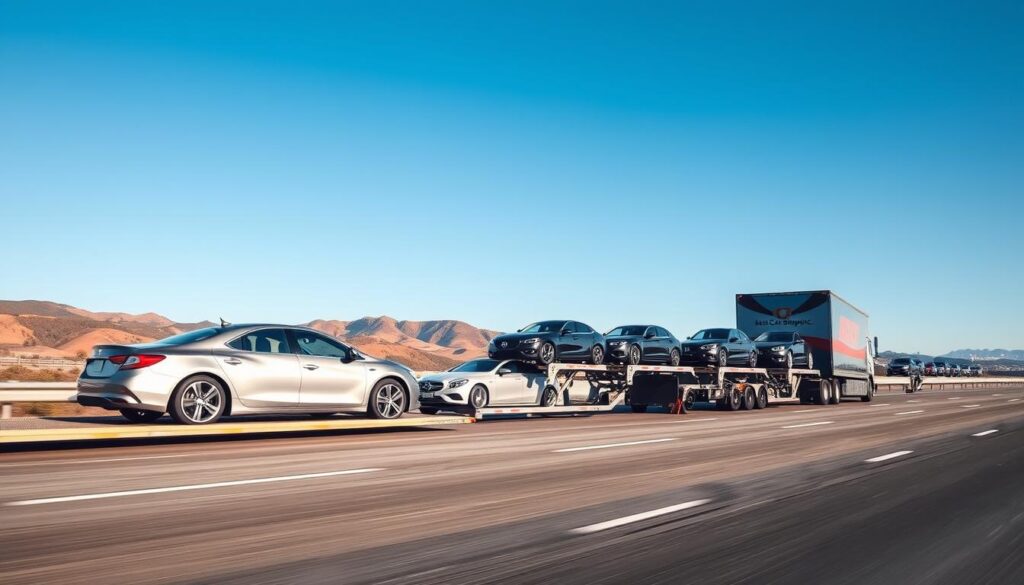
Many carriers offer true coast-to-coast service that combines dispatch coverage, lane density, and flexible pickup windows. This operational model matches carrier routing with dealer and customer schedules to reduce delays.
Door-to-door vehicle transport to all 50 states
Drivers attempt to reach the delivery point as close as legally and safely possible. On narrow streets or restricted zones, carriers will arrange a nearby meeting location and confirm the plan before pickup.
Metro routes vs. rural destinations and accessibility considerations
Dense corridors have more carrier options and shorter lead times. Rural and remote destinations often need extra days and may require staged drop-off points.
- Operational scope: dispatch coverage, lane density, and flexible pickup/delivery windows.
- Access limits: large haulers may not fit tight turns, low bridges, or downtown cores.
- Timing: same distance can vary in delivery time based on lane demand, driver hours, and load sequencing.
Reputable companies plan around safe access, not just convenience, to protect vehicles and reduce claims risk. For comparisons and vetted providers, see best car shippers.
Why Choose a Reliable Auto Transport Company for Dealer Moves
Clear operational communication prevents surprises that can stall retail and recon workflows. Reliability matters because missed pickups disrupt sales cycles and slow inventory turn.
Transparent communication from dispatch to delivery
The company provides pickup confirmation, scheduled driver contact, and regular in-transit updates. Customers receive ETA revisions and delivery scheduling that reduce surprises.
Vetted carrier networks and proven customer experience
Carriers are selected on safety records, claims history, and reviews. This approach lowers risk and creates a consistent experience for lots and buyers.
- Insurance & protection: verify active coverage and document what is covered during transit (example benchmarks: $1,000,000 liability and $100,000 cargo).
- Operational details: payment timing, required paperwork, and a clear contact if plans change mid-route.
- Driver coordination: driver check-ins and pickup confirmations that are operational, not promotional.
Request a quote and compare scope, communication cadence, and documentation—not just price. For assistance call (307) 288-5972 or email info@bestcarshippinginc.com.
How Our Car Shipping Process Works From Quote to Delivery
The booking flow begins with a concise quote form that captures lane, vehicle type, trailer preference, condition (running or inoperable), and desired pickup window. That information shapes dispatch planning and initial pricing.
Request a quote and book your transport window
Customers submit a quote request online or by phone. The team confirms lanes and offers a schedule window so staff can plan lot operations and recon time.
Carrier assignment, scheduling, and pickup confirmation
Once posted, carriers are matched by lane density and trailer availability. Scheduling means a confirmed pickup window and a driver contact for operational coordination.
Vehicle inspection at pickup and the bill of lading
At pickup, the driver completes a condition check and the bill of lading. Staff should photograph key areas and note existing damage. The paperwork protects both parties and supports audits.
In-transit updates and estimated arrival timing
The carrier provides tracking and ETA updates. Weather, traffic, and DOT hours can shift arrival time; expect typical lanes to take 2–6 days on average.
Final inspection at delivery and completion steps
At delivery, complete a final inspection and note exceptions on the bill of lading before signing. Closeout includes proof of delivery, payment confirmation, and archived inspection photos so the move is repeatable and auditable.
- Repeatable process: standardized forms and photos make each shipment auditable.
- Operational clarity: pickup confirmations and driver contact reduce downtime.
- Request a quote to start a documented, reliable car transport workflow.
Auto Transport Options for Dealers: Open vs. Enclosed Shipping
Trailer choice drives pricing and logistics for both routine inventory and high-value cars. Selecting the right option reduces risk and sets customer expectations.
Open trailer transport for everyday inventory
Open trailers are the standard choice for most lot moves. They carry more units per load, which improves availability and lowers prices on common lanes.
Open transport works well for daily-driver car stock and routine relocations.
Enclosed transport for luxury and sensitive vehicles
Enclosed trailers protect cars from weather, road debris, and public exposure. This option suits luxury, classic, or highly modified vehicles where appearance and protection matter.
Cost differences and market benchmark
Sherpa’s 2026 Louisville data shows enclosed trailers averaged +$452 versus open—about +57% higher. Expect enclosed to cost roughly 40–60% more depending on lane and season.
- Why prices rise: smaller capacity, higher handling expectations, and tighter carrier supply.
- How to choose: ship routine units open; choose enclosed for high-value deliveries or sensitive consignments.
- Practical checks: confirm loading clearance, vehicle height, and carrier equipment for modified vehicles before booking.
Typical Auto Transport Transit Times and What Affects Delivery Speed
Typical transit timelines depend on miles, driver rules, and load sequencing. Use these benchmarks to set realistic expectations for delivery windows and lot planning.
Benchmark and mileage rule of thumb
For long-haul routes, a common benchmark is 2–6 days for about 1,445 miles (Louisville example). That range reflects lane density and stop patterns.
As a rule of thumb, estimate roughly 500 miles per day in transit. Adjust for weekends, route timing, and scheduled stops.
Driver limits and real-world delays
Driver hours-of-service limit daily progress. This protects safety but can extend time on longer routes.
Weather, traffic, construction, and detours also cause delays. Multi-car trailers add stops that change the arrival sequence.
How to plan operations
Dealers and logistics teams should book buffer windows, schedule recon after an estimated arrival, and notify customers with a delivery window rather than a fixed date.
- Decision-useful timeline: expect a range, not a single day.
- Operational tip: plan staffing and inspections around the upper end of the estimate.
- Communication: confirm updates as the carrier revises ETA during transit.
Car Shipping Costs and Price Ranges in the Current Market
Market rates for vehicle moves vary widely based on lane demand and available capacity. Use transparent benchmarks to set realistic budgets and timelines.
2026 benchmark ranges
For 2026, Sherpa data shows a Louisville benchmark of about $550–$1,750. That range reflects short regional lanes up to long cross‑country runs.
Route snapshots and what they signal
- Louisville → Chicago: $550–$775 — denser lanes, lower cost.
- Louisville → NYC: $775–$900 — medium distance, steady demand.
- Louisville → Miami: $850–$925 — seasonal tourist lanes can tighten capacity.
- Louisville → Seattle: $1,325–$1,750 — long distance and lower backhaul raise prices.
How vehicle and trailer type affect the quote
Vehicle type matters. Sherpa shows an SUV/crossover adder near +$115 and a pickup adder around +$214 versus a sedan baseline.
Trailer choice also shifts the price. Enclosed transport commonly runs 40–60% higher. In the Louisville example, enclosed averaged about +$452 (+57%).
How quotes are formed
Carriers price by lane supply and demand, not mileage alone. Fuel, capacity, and seasonality change day‑to‑day. Ask for a written quote that lists adders and transit assumptions.
Practical note: use these ranges to budget and request a tailored quote. For help, contact (307) 288-5972 or info@bestcarshippinginc.com.
Key Cost Factors Dealers Should Know Before Booking Vehicle Shipping
Costs for vehicle moves often hinge on more than miles; carrier demand and lane supply drive final quotes. Understanding these drivers helps teams set budgets and avoid last‑minute premiums.
Distance, route demand, and carrier availability
Distance sets a base, but route density and carrier availability usually decide if a quote is competitive or premium. Busy lanes lower rates. Sparse lanes raise them.
Pickup and delivery accessibility
Easy access near highways reduces deadhead and speeds loading. Remote lots or tight lots add handling time and raise the price. Make sites as truck‑friendly as possible.
Timing, vehicle condition, fuel, and expedited transport
Seasonality matters—peak windows can boost prices 20–40% due to capacity limits.
Condition affects options: inoperable cars need winches and more time, which limits carrier choices and increases cost.
Rising fuel or urgent requests force route prioritization and add fees when speed is required.
“Accurate details up front reduce change fees and speed carrier matching.”
- Provide exact addresses and condition notes.
- Offer flexible pickup windows when possible.
- Consider meeting at highway hubs to cut costs.
Practical step: use the cost calculator to model scenarios and plan margins before booking.
Ways to Get Better Rates Without Sacrificing Service
Simple timing and location choices often cut transport prices without reducing service quality.
Book 1–2 weeks in advance. Sherpa recommends this window to increase carrier options and stabilize quotes. Early booking reduces premiums and gives dispatch more routing choices.
Use flexible pickup and delivery windows
Flexible windows let carriers optimize routes and fill unused capacity. That typically lowers the cost and shortens wait time without changing oversight.
Meet at highway-accessible hubs when possible
Choosing a nearby interstate hub cuts loading delays and reduces access fees. Carriers reach hubs faster, which stabilizes prices and improves on‑time performance.
- Dealer playbook: plan shipments 1–2 weeks ahead to widen carrier options.
- Flexibility: offer broad pickup/delivery windows to lower the quote.
- Hub meets: use highway locations to reduce handling time and risk.
- Off-peak planning: avoid peak seasons that can raise prices 20–40%.
- Maintain standards: keep inspections, insurance checks, and update cadence regardless of rate.
Get started with a quote: call (307) 288-5972 or email info@bestcarshippinginc.com.
Pickup and Delivery Details: Door-to-Door, Meeting Points, and Site Access
Clear site access determines whether a driver can complete a pickup or requires a nearby meeting point. Planning these logistics reduces delays and keeps the move predictable.
When door-to-door works best
Door-to-door means the driver will attempt to reach the provided address, but safety and legal access set the final pickup or delivery point.
Door-to-door works best for lots with wide turns, suburban streets, and commercial sites with clear truck access. These locations let the driver load and unload without staging.
When a meeting point is needed
Restricted areas — downtown cores, tight neighborhoods, HOAs, or streets with low trees or weight limits — often require a nearby meeting location.
- Common meeting spots: large grocery parking lots, mall lots, or highway-access rest areas close to the destination.
- These spots provide safe, legal space for loading and reduce risk to the car and public property.
On-site needs and expectations
The driver needs clear access, a responsible adult present, and time to complete inspection paperwork. Confirm any site constraints in advance to avoid last-minute reschedules or access fees.
Practical tip: provide precise directions and photos of the destination when booking so carriers can plan the best pickup and delivery solution.
Tracking, Updates, and Customer Service You Can Count On
A structured update plan ensures every move is visible from pickup to handoff. Clear milestones guide the process and keep ops teams confident about timing.
Proactive status updates throughout the move
Proactive updates include pickup-day coordination, confirmation once a vehicle is loaded, periodic in-transit status, and delivery appointment scheduling.
These notifications arrive at real milestones: dispatch, pickup, major ETA shifts, and final sign-off. That avoids vague check-ins and reduces surprise calls.
Online shipment tracking when available
RoadRunner and similar providers offer online portals that use a booking or dispatch identifier. Customers can check status without waiting for callbacks.
This visibility cuts follow-up time and lets dealer staff and retail buyers plan inspections and payments with confidence.
Operational customer service and accountability
Customer service acts as operational support. The team resolves handoffs, rebooks appointments, and keeps everyone aligned when weather or hours-of-service affect the route.
| Update Type | When It Occurs | Who Receives It |
|---|---|---|
| Dispatch Notice | At carrier assignment | Logistics team, customer |
| Pickup Confirmation | Once loaded | Customer, dispatch |
| In-Transit Status | Periodic; major ETA shifts | Logistics team, customer |
| Delivery Appointment | 1–2 days before delivery | Customer, receiving staff |
Expect updates to align with real events and to include a clear escalation path if days or delivery windows change. For lane-specific tracking and booking support, see our Sanford page at service and tracking options or contact (307) 288-5972.
Insurance, Protection, and Risk Management During Vehicle Transport
Verifying carrier coverage and documenting condition are core steps in risk control.
Carrier insurance verification and coverage expectations
Confirm active policies before a load moves. Carriers should show MC numbers and policy limits. The carrier’s cargo policy applies while the vehicle is in transit. A customer’s personal policy may differ and should be checked separately.
Common coverage benchmarks dealers recognize
Example standard: $1,000,000 liability and $100,000 cargo. This benchmark is widely cited and used as a minimum by major providers. Verify these limits in writing before booking.
How inspections and documentation protect claim rights
Do a clear pickup walkaround and note all exceptions on the bill of lading. Take dated photos of all sides, interior, and known damage.
Documentation discipline: photos, signed BOL notations, and prompt reporting speed resolution and protect rights.
Verification best practices and common questions
- Confirm the policy is active and note coverage limits and insurer name.
- Record carrier/MC and attach a copy of the certificate to the load record.
- Ask upfront: what is covered, what is excluded, and how to report damage at delivery.
| Item | Action | Why it matters |
|---|---|---|
| Policy check | Obtain certificate, verify dates and limits | Ensures coverage applies during transit |
| Pickup inspection | Photos + BOL notations | Creates baseline for claims |
| Delivery review | Final walkaround before signing | Prevents disputed claims and speeds payment |
Questions about coverage or the claims process should be raised before pickup to avoid delays. For direct support, contact (307) 288-5972 or email info@bestcarshippinginc.com.
How to Prepare Cars for Shipping From a Dealership or Residence
Simple steps before a pickup protect condition and speed loading. A clear prep routine reduces delays and helps the carrier and dealer complete a clean handoff.
Photo documentation and exterior cleaning
Wash the exterior so scratches, chips, and wheel marks are visible. Take time-stamped photos from all angles after cleaning.
Why it matters: clean photos create an objective condition record that supports insurance and claim resolution.
Remove personal items and follow cargo limits
Empty the cabin and glovebox. If personal items are allowed, secure them in the trunk below the window line.
Example policy: up to 100 lbs in the trunk when carriers permit. Avoid relying on loose items to prevent damage and disputes.
Fuel, keys, alarms, leaks, and accessories checklist
Keep fuel near a quarter tank to enable safe loading while limiting added weight. Provide a working key and note any mechanical issues.
Disable alarms and remove or secure loose accessories like roof racks, spoilers, and antennas. Inspect for fluid leaks and report them in advance.
- Dealership-ready prep checklist: wash + photos, remove items, note condition, supply key, disable alarm.
- Operational details: confirm the vehicle starts, steers, and has no active leaks before pickup.
- Insurance tip: accurate photos and signed condition notes reduce disputes and speed claims.
Following these steps makes vehicle shipping smoother and protects both the owner and the driver during pickup and transit.
Highway and Hub Advantages That Improve Auto Dealer Shipping Efficiency
Cities on major interstates create reliable, high-capacity lanes. That predictability lowers cost and shortens wait time for vehicle transport.
Why interstate access matters: I-64, I-65, and I-71 connectivity in the Louisville region
Louisville sits at the crossroads of I-64, I-65, and I-71. These corridors give carriers steady throughput and simpler route planning.
Steady lanes reduce deadhead distance and improve schedule reliability. That stability helps keep prices competitive in many markets.
How hub cities can reduce wait time and stabilize pricing
Hub points concentrate carrier options. More carriers passing through means more pickup windows and less chance of reschedules.
Practical tip: when a lot is off-corridor, meeting near an interstate-accessible hub can cut overall time and cost.
“Hub connectivity turns single moves into repeatable lanes with better pricing and fewer surprises.”
| Advantage | Operational Benefit | Dealer Outcome |
|---|---|---|
| Interstate throughput | Lower deadhead, predictable routing | Lower cost, stable delivery windows |
| Carrier density | More booking options | Fewer reschedules, faster pickup |
| Hub meet points | Safer loading, easier access | Reduced handling time, fewer last‑mile issues |
For recurring lanes and large volumes, using hub-based meeting points improves service quality and margin control. Learn more about specialized car resellers shipping services to see how hub planning affects quotes and routing.
Local Compliance Notes When Shipping to Kentucky
Kentucky has specific registration and weather rules that affect vehicle moves and delivery timing. This brief guide gives planning points, not legal advice, to help ops and customers prepare.
Registration timing
New residents generally must register a vehicle within 15 days of establishing residency. Plan delivery dates with that time frame in mind so buyers can complete registration and avoid late fees.
Insurance readiness
Confirm coverage before arrival. Ensure the policy is active in the destination state and that proof of insurance is available at delivery.
Seasonal weather and routing
Kentucky winters can bring snow and ice that delay transportation. Add buffer days to schedules during severe conditions to protect delivery commitments.
- Practical steps: avoid tight promises during storms and confirm accessible drop‑off locations if roads are restricted.
- Pack documents: registration forms and proof of insurance should be on hand at handoff.
Questions to ask at booking: county clerk requirements, what proof of insurance is required, and whether temporary tags or permits apply for the buyer’s situation.
Need help planning a Kentucky delivery? Contact (307) 288-5972 or info@bestcarshippinginc.com for operational guidance.
Conclusion
,Operational discipline—confirmed pickup windows, inspections, and proof of coverage—drives reliable results.
Professional car shipping protects inventory, schedules, and the buyer experience through consistent communication and documented handling. The three buying criteria that matter most are a reliable process, realistic transit expectations, and transparent pricing tied to lane and vehicle specifics.
Use 2026 benchmarks for comparison: typical Louisville ranges run about $550–$1,750, common long‑haul timelines are 2–6 days, and enclosed trailers averaged roughly +57% vs. open. Next steps: request a quote, confirm pickup/delivery access, choose open or enclosed, and book a window that balances speed and cost. Verify insurance and complete the bill‑of‑lading at pickup. Call (307) 288-5972 or email info@bestcarshippinginc.com to schedule service focused on protection, communication, and on-time delivery.
FAQ
What services does Best Car Shipping Inc. provide for dealerships and vehicle owners?
Who typically uses these transport services?
How does the booking and pickup process work?
What are the differences between open and enclosed transport?
How long does transport usually take?
What drives the price of vehicle transport?
Can dealers reduce shipping costs without sacrificing service?
How is vehicle condition documented and protected during transport?
What insurance coverage should customers expect?
Are inoperable vehicles transportable?
What prep is required before pickup?
How are pickup and delivery locations determined?
How can customers track their shipment?
What local compliance should dealers know when shipping into Kentucky?
How do market conditions affect transit pricing examples for 2026?
FAQ
What services does Best Car Shipping Inc. provide for dealerships and vehicle owners?
Best Car Shipping Inc. offers door-to-door vehicle transport, dealer-to-dealer transfers, auction and fleet moves, and retail customer deliveries across all 50 states. Services include open and enclosed trailer options, carrier assignment, condition inspections, insurance verification, tracking, and dedicated customer support. Contact info@bestcarshippinginc.com or (307) 288-5972 to get started.
Who typically uses these transport services?
Dealerships moving inventory, retail buyers and sellers handling long-distance transactions, auction houses, relocation coordinators, and fleet managers all rely on these services. Logistics coordinators and businesses with multi-vehicle needs also use scheduled or expedited delivery options.
How does the booking and pickup process work?
After requesting a quote, customers select a pickup window and confirm the booking. The carrier is assigned, and truck scheduling and pickup confirmation follow. Drivers perform a vehicle inspection and prepare the bill of lading at pickup. Customers receive in-transit updates and an estimated arrival before final inspection at delivery.
What are the differences between open and enclosed transport?
Open trailer transport is the most economical choice for everyday cars and standard dealer inventory. Enclosed transport protects luxury, classic, and high-value vehicles from road exposure and weather. Enclosed options typically cost more—often substantially higher—due to added protection and lower carrier availability.
How long does transport usually take?
Typical transit depends on distance and route conditions. A common benchmark is 2–6 days for routes near 1,445 miles; a rule of thumb is roughly 500 miles per day. Driver hours, traffic, construction, weather, and detours can lengthen transit time.
What drives the price of vehicle transport?
Major factors include distance, route demand, carrier availability, vehicle type and condition, trailer type, pickup and delivery accessibility, fuel costs, and timing or seasonality. Remote locations and expedited requests raise prices. Transparent quotes explain each factor affecting cost.
Can dealers reduce shipping costs without sacrificing service?
Yes. Book 1–2 weeks in advance, offer flexible pickup and delivery windows, and use highway-accessible meeting points. Consolidating multiple vehicles or scheduling during off-peak times also improves pricing and carrier options.
How is vehicle condition documented and protected during transport?
Drivers complete a detailed pickup inspection and bill of lading with photos and notes. Final inspection at delivery verifies condition. Carrier insurance is confirmed before loading. Customers are advised to document pre-shipment condition with photos.
What insurance coverage should customers expect?
Standard carrier liability and cargo coverage vary. Best Car Shipping Inc. verifies carrier insurance and provides coverage benchmarks during quoting. Customers should confirm liability and cargo limits and understand claim procedures before shipping.
Are inoperable vehicles transportable?
Yes, but inoperable units require special handling and equipment. They typically cost more and need accurate condition disclosure during booking. Availability varies by carrier, so plan earlier and discuss ramp or winch requirements.
What prep is required before pickup?
Clean the vehicle for clear condition photos, remove personal items and loose accessories, leave minimal fuel (usually under a quarter tank), disable alarms, secure or remove external antennas, and provide keys and any necessary paperwork to the driver. Note cargo limits for trunks and compartments.
How are pickup and delivery locations determined?
Door-to-door works when site access and parking allow large trucks. If tight access exists, carriers arrange nearby meeting points with easy highway access. Dealers often use lot-side pickups at hubs to speed loading and reduce wait times.
How can customers track their shipment?
Customers receive proactive status updates via phone or email and can access online tracking when available. Dedicated dispatch coordinates estimated arrival times and answers status questions throughout transit.
What local compliance should dealers know when shipping into Kentucky?
New residents generally must register vehicles within 15 days of establishing residency. Confirm insurance minimums before arrival. Seasonal weather planning is important—winter conditions may require additional time or equipment for safe delivery.
How do market conditions affect transit pricing examples for 2026?
Current market snapshots show wide ranges—shorter routes can be economical, while longer or specialized moves may cost more. For example ranges commonly seen in 2026, a mid-distance move might fall between roughly 0 and
FAQ
What services does Best Car Shipping Inc. provide for dealerships and vehicle owners?
Best Car Shipping Inc. offers door-to-door vehicle transport, dealer-to-dealer transfers, auction and fleet moves, and retail customer deliveries across all 50 states. Services include open and enclosed trailer options, carrier assignment, condition inspections, insurance verification, tracking, and dedicated customer support. Contact info@bestcarshippinginc.com or (307) 288-5972 to get started.
Who typically uses these transport services?
Dealerships moving inventory, retail buyers and sellers handling long-distance transactions, auction houses, relocation coordinators, and fleet managers all rely on these services. Logistics coordinators and businesses with multi-vehicle needs also use scheduled or expedited delivery options.
How does the booking and pickup process work?
After requesting a quote, customers select a pickup window and confirm the booking. The carrier is assigned, and truck scheduling and pickup confirmation follow. Drivers perform a vehicle inspection and prepare the bill of lading at pickup. Customers receive in-transit updates and an estimated arrival before final inspection at delivery.
What are the differences between open and enclosed transport?
Open trailer transport is the most economical choice for everyday cars and standard dealer inventory. Enclosed transport protects luxury, classic, and high-value vehicles from road exposure and weather. Enclosed options typically cost more—often substantially higher—due to added protection and lower carrier availability.
How long does transport usually take?
Typical transit depends on distance and route conditions. A common benchmark is 2–6 days for routes near 1,445 miles; a rule of thumb is roughly 500 miles per day. Driver hours, traffic, construction, weather, and detours can lengthen transit time.
What drives the price of vehicle transport?
Major factors include distance, route demand, carrier availability, vehicle type and condition, trailer type, pickup and delivery accessibility, fuel costs, and timing or seasonality. Remote locations and expedited requests raise prices. Transparent quotes explain each factor affecting cost.
Can dealers reduce shipping costs without sacrificing service?
Yes. Book 1–2 weeks in advance, offer flexible pickup and delivery windows, and use highway-accessible meeting points. Consolidating multiple vehicles or scheduling during off-peak times also improves pricing and carrier options.
How is vehicle condition documented and protected during transport?
Drivers complete a detailed pickup inspection and bill of lading with photos and notes. Final inspection at delivery verifies condition. Carrier insurance is confirmed before loading. Customers are advised to document pre-shipment condition with photos.
What insurance coverage should customers expect?
Standard carrier liability and cargo coverage vary. Best Car Shipping Inc. verifies carrier insurance and provides coverage benchmarks during quoting. Customers should confirm liability and cargo limits and understand claim procedures before shipping.
Are inoperable vehicles transportable?
Yes, but inoperable units require special handling and equipment. They typically cost more and need accurate condition disclosure during booking. Availability varies by carrier, so plan earlier and discuss ramp or winch requirements.
What prep is required before pickup?
Clean the vehicle for clear condition photos, remove personal items and loose accessories, leave minimal fuel (usually under a quarter tank), disable alarms, secure or remove external antennas, and provide keys and any necessary paperwork to the driver. Note cargo limits for trunks and compartments.
How are pickup and delivery locations determined?
Door-to-door works when site access and parking allow large trucks. If tight access exists, carriers arrange nearby meeting points with easy highway access. Dealers often use lot-side pickups at hubs to speed loading and reduce wait times.
How can customers track their shipment?
Customers receive proactive status updates via phone or email and can access online tracking when available. Dedicated dispatch coordinates estimated arrival times and answers status questions throughout transit.
What local compliance should dealers know when shipping into Kentucky?
New residents generally must register vehicles within 15 days of establishing residency. Confirm insurance minimums before arrival. Seasonal weather planning is important—winter conditions may require additional time or equipment for safe delivery.
How do market conditions affect transit pricing examples for 2026?
Current market snapshots show wide ranges—shorter routes can be economical, while longer or specialized moves may cost more. For example ranges commonly seen in 2026, a mid-distance move might fall between roughly $550 and $1,750 depending on distance, vehicle type, and trailer choice.
Who should be contacted with questions or to get a quote?
Contact Best Car Shipping Inc. at info@bestcarshippinginc.com or (307) 288-5972 for quotes, scheduling, and detailed service questions. The team provides transparent pricing, insurance verification, and customer service throughout the transport process.
,750 depending on distance, vehicle type, and trailer choice.
Who should be contacted with questions or to get a quote?
Contact Best Car Shipping Inc. at info@bestcarshippinginc.com or (307) 288-5972 for quotes, scheduling, and detailed service questions. The team provides transparent pricing, insurance verification, and customer service throughout the transport process.