
Comparing offers helps vehicle owners choose reliable care and predictable delivery. This guide shows how to evaluate each quote so the car arrives without damage and on time.
The right quote is not always the lowest price. Look for clear timelines, carrier type, insurance details, and any added services like expedited transport. That balance matters whether the car is a daily driver or a high-value vehicle.
Reputable companies put pricing and service terms in writing. This transparency lets customers budget confidently and avoid surprises during pickup and delivery.
Use this article to compare carrier types, pickup and delivery methods, insurance options, seasonal timing, and extra services. When ready, request multiple offers and verify details before booking to lock in a dependable transport plan.
If questions come up, our team can help interpret the quote and next steps—contact info@bestcarshippinginc.com or call (307) 288-5972. For a guided start, request a comparative review via car shipping services.
Key Takeaways
- Prioritize documented coverage, timelines, and handling over the lowest price.
- Compare carrier type and pickup/delivery methods for safe vehicle handling.
- Watch seasonal timing and add-ons like expedited transport for tight schedules.
- Get multiple offers and verify written terms before booking.
- Contact the support team for help reading a quote or planning next steps.
What Auto Shipping Quotes Include and How to Compare Them

A professional quote lays out route, timing, and handling so customers know exactly what to expect.
Quote basics cover the route, pickup and delivery locations, an estimated timing window, carrier availability, and declared vehicle details. These items drive the final price and the handling plan.
Timing flexibility matters. A wider pickup window lets carriers optimize routes and often reduces cost without lowering service standards.
| Quote Element | What It Includes | Why It Matters | Red Flag |
|---|---|---|---|
| Route & Distance | Road path, terminals, total miles | Determines base transport and ETA | No clear route or vague timing |
| Pickup/Delivery | Exact addresses, door vs. terminal | Affects convenience and cost | Unwilling to put terms in writing |
| Vehicle Details | Make, model, operability, size | Impacts carrier type and space | Changing specs after booking |
| Insurance & Fees | Standard cargo coverage; surcharges listed | Protects vehicle; shows transparency | Missing insurance info or hidden fees |
When comparing like-for-like, match carrier type (open vs. enclosed), service level, vehicle condition, and timing windows. Confirm standard insurance in writing and consider higher-value protection for classic or exotic cars.
Verify with companies: ask who handles claims, how inspections are documented, and how disputes are resolved to protect the vehicle during transport.
Car Shipping Cost in Canada: Real-World Price Drivers
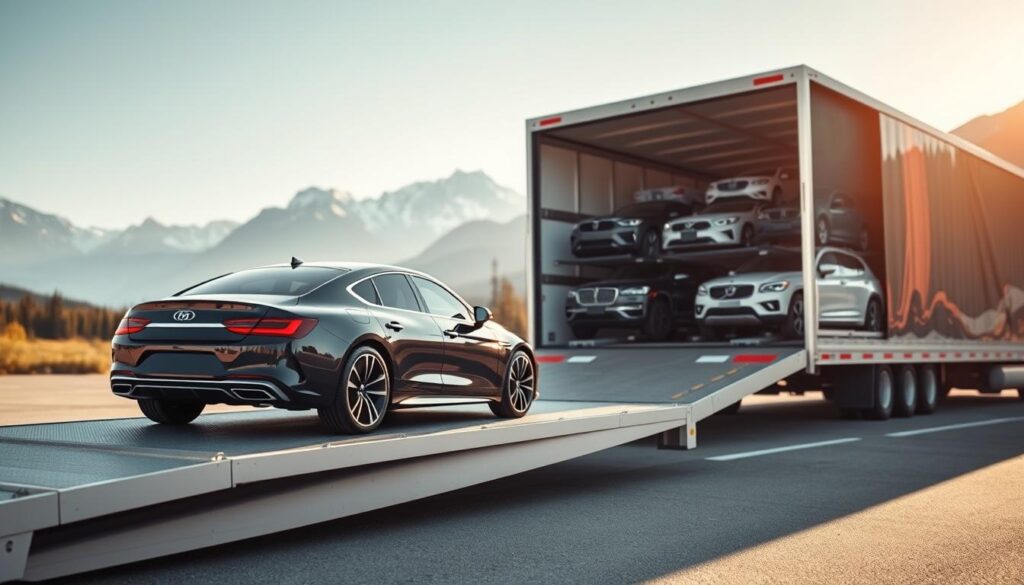
How far a vehicle travels and where it starts or ends largely drives the final price. This section explains the main factors that change car shipping cost and expected timelines across the country.
Distance vs. total price
Longer routes usually lower the per-mile rate but raise the overall cost. Carriers optimize long lanes, so the shipping cost per mile falls on cross-country moves.
Pickup and delivery geography
Major metro pickup and delivery points often cost less. Cities see more runs and driver availability, while rural towns add routing time and higher charges.
Vehicle type and condition
Sedans usually cost less than larger SUVs or pickup trucks because bigger vehicles displace space. Inoperable vehicles add labor for winching or special loading and increase the final cost.
Carrier choice, speed, and season
Open carriers provide the best value for routine transport. Enclosed options raise the price for extra protection. Paying for exact-day pickup or expedited delivery also increases cost because dispatch flexibility is limited.
Expect short-haul moves to clear in about three days, while longer lanes like Toronto to Vancouver may take up to ten days. For specific planning and a tailored review, see car shipping services.
Choose the Right Car Shipping Services for Your Needs
Select a service by matching vehicle value, timeline, and delivery convenience. This method keeps costs aligned with protection needs and reduces risk.
Open carrier
Best value for routine moves. Open carriers haul multiple cars per trailer, often 4–12 vehicles. They give the lowest cost for standard car transport across Canada. The tradeoff is exposure to weather, road grit, and salt.
Enclosed transport
Protection-first option. Enclosed trailers shelter classic, vintage, and high-end cars. The added shielding raises costs but reduces exposure and handling risk. Choose this when the vehicle’s value justifies extra care.
Flatbed and specialty moves
Flatbeds usually carry a single vehicle. They work well for short runs, tight access, or non-standard cars. Expect higher costs for the tailored handling and one-car capacity.
Rail vehicle transport
Rail moves can carry many vehicles and often offer the lowest cost. Delivery is terminal-to-terminal and timelines run longer. Use rail for budget-driven plans with flexible schedules.
- Decision rule: Base the service choice on vehicle value, risk tolerance, required timeline, and delivery convenience.
- Professional companies list what each service includes and provide realistic delivery windows.
Pickup Delivery Options That Change Price, Convenience, and Risk
Pickup and delivery choices shape price, convenience, and the risk to your vehicle. Selecting door service or using a terminal affects the overall cost and how easy the process will be for the customer.
Door-to-door vs. terminal-to-terminal
Door-to-door maximizes convenience. A carrier collects at the customer’s address and drops the vehicle at the final door. This option reduces handling but can raise cost when access is tight.
Terminal-to-terminal lowers cost. Customers drop off and pick up at secure yards. It works well for those who can travel to a major city terminal and want lower charges.
Major city pickup and delivery advantages
Choosing a metro pickup or drop-off often cuts the cost. Companies run frequent routes between large hubs. That improves availability and lowers per-mile rates.
Delivery time and condition checks
Short-haul moves typically take about three days. Cross-country lanes can run up to ten days, depending on route and weather.
Inspections matter. Document the vehicle before loading and again at delivery with photos and notes. The Bill of Lading and inspection report are the core records for claims and proof of condition.
Practical risk and communication tips
- Access limits: Tight streets or seasonal bans can force terminal service or extra handling.
- Damage prevention: Use pre- and post-transport photos and written notes to prevent disputes.
- Expectations: A reliable company confirms pickup windows, contact procedures, and delivery handoff steps.
These pickup delivery options let vehicle owners trade between cost, convenience, and risk. Choose the path that matches the vehicle’s value and the customer’s schedule.
How to Get the Best Auto Shipping Quote Using a Calculator and Smart Inputs
Use a cost calculator to turn vague estimates into a reliable budget for vehicle transport. A tool standardizes entries and removes manual guesswork.
Why a calculator beats manual estimating for budgeting
Calculators produce a defensible shipping cost range. They factor distance, route, and seasonality fast. This reduces surprises and helps planners set realistic expectations.
Inputs that improve accuracy
Enter precise pickup and delivery city or postal codes. Add year, make, model, size class, and whether the vehicle is operable.
Specify open or enclosed carrier and note accessories that change dimensions. These inputs tighten the final cost and lower adjustment risk.
Comparing service tiers
| Tier | Availability | Typical cost | Best for |
|---|---|---|---|
| Standard | High | Lowest | Routine car moves |
| Accelerated | Moderate | Higher | Faster pickup and delivery |
| Premium Enclosed | Limited | Highest | High-value vehicle protection |
To get best results, confirm taxes, fuel factors, and insurance are included. Decide whether need for added coverage applies to collector cars.
Before booking, verify carrier type, pickup window, inspection steps, cancellation terms, and customer support contacts at the company. For a cost comparison and low-rate options, see cheap car shipping.
Conclusion
A simple, methodical review of offers leads to better decisions for transporting vehicles across Canada.
Compare like-for-like, confirm carrier type, and align transport speed with realistic timelines and budget. This decision framework helps customers choose a reliable shipping company and lower risk.
Safety matters: pick open carrier or enclosed options based on value, do disciplined inspections, and keep clear documentation from pickup to delivery.
Control cost by using metro pickup/delivery, offering flexible windows, and providing accurate vehicle details to avoid rework. For open transport specifics see open carrier.
Collect multiple quotes, verify insurance and service terms, and choose a provider with strong communication. For help comparing offers or booking services contact info@bestcarshippinginc.com or call (307) 288-5972. For cross-border lanes, confirm US paperwork and lead times early so transport car planning stays on schedule.