
Best Car Shipping Inc. arranges prompt, reliable moves for buyers who win a car at auction and need shipping to a commercial lot. This service page explains how to request a quote, schedule pickup at the sale facility, and track delivery to your destination.
Los Angeles is a high‑volume market with constant inflow and outflow of vehicles. Many buyers ship immediately after release to keep inventory moving. For active lanes, route-specific quotes beat static rates.
Affordability comes from lane alignment, carrier availability, and smart consolidation — not from reduced insurance, compliance, or communication. The company supports single-unit and multi-vehicle moves and often begins timing at auction release.
Expect transparent status updates, professional handling, and clear pickup requirements. For U.S. operations and recurring purchases, this page is built to support daily inventory flow. Call (307) 288-5972 or email info@bestcarshippinginc.com to plan pickup and confirm release details.
Key Takeaways
- Service covers arranging pickup at sale facilities and delivery to commercial locations.
- Route-specific quotes work better for busy lanes than flat rates.
- Affordable pricing relies on planning and carrier alignment, not lower standards.
- Supports both single and multi-vehicle shipments, often starting at release.
- Clear communication and tracking build trust for owners and buyers.
- U.S. focused, ideal for high-volume and recurring inventory needs.
- Contact Best Car Shipping Inc. at (307) 288-5972 or info@bestcarshippinginc.com.
Auto transport auction shipping for buyers, dealers, and logistics teams

When lots fill and sales close fast, reliable logistics become an operational necessity. Dealer groups and wholesale buyers do not treat pickups as one-off tasks. They run daily cycles that depend on steady carrier capacity and timely release compliance.
How the workflow adapts
The same dispatch process covers physical on-site pickup, virtual purchases that need immediate collection, and hybrid sales with mixed release steps. Centralized systems give teams a single dashboard for jobs and listed vehicles.
Common use cases and clear roles
Individual owners hire a service to move a purchased car home. Dealers reposition inventory to lots. Fleet managers move returns to hubs.
Roles are simple: buyers handle purchase and release. The provider manages scheduling, carrier coordination, and updates. Customers get centralized access to status so follow-ups drop sharply.
“Fewer handoffs and predictable pickups cut storage fees and speed time to market.”
- Plan around release windows and facility rules.
- Maintain consistent access to capacity to reduce dwell time.
- Result: fewer missed pickups and more reliable shipments for business operations.
For open carrier options and lane-specific quotes, see open carrier service.
Why Los Angeles is a major hub for auction vehicle transport in the United States
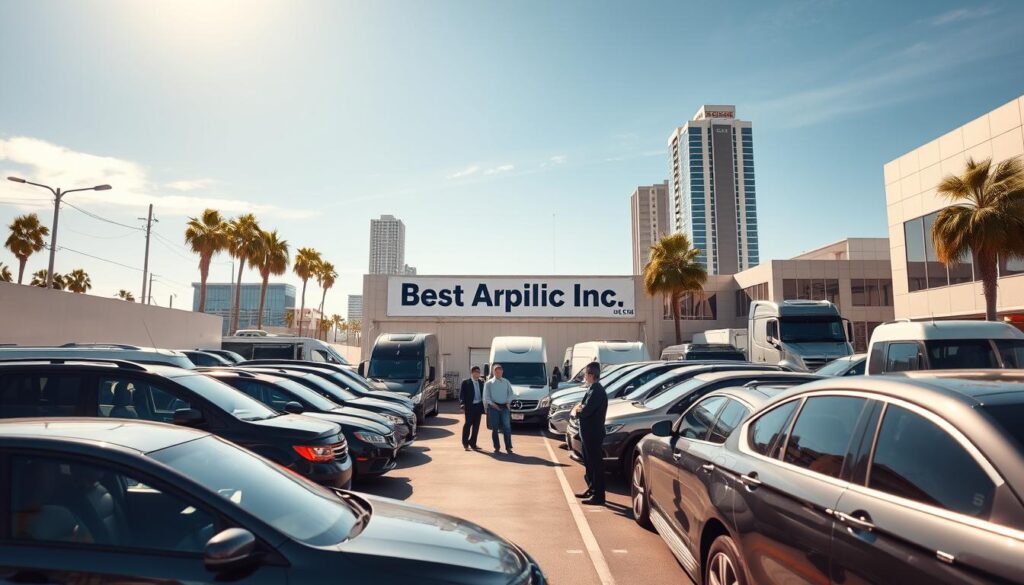
The Los Angeles market funnels large pools of inventory into predictable outbound corridors daily. This density creates repeated chances to move a car quickly when carriers and schedules line up.
High-density wholesale inventory and constant inbound/outbound movement
Buyers see dealer consignments, fleet returns, and commercial units stacked across lanes. That mix changes handling needs and pickup timing.
Where Los Angeles purchases are commonly redistributed
Common redistribution runs within California, outward to Arizona, Nevada, and Utah, then onward to Texas and Midwest hubs, and across to Eastern markets.
Typical scenarios after sale days
After sale days, release windows and staging cause bottlenecks. Planning pickup time around facility rules limits dwell time and storage fees.
Popular routes and why route-specific quotes matter
- I-5, I-10, and I-15 support fast lane alignment for outbound loads.
- Route-specific quote practices match active lanes and lower delays.
- Professional buyers reduce turnaround time with a clear carrier plan.
For tailored service in this market, see car shipping in Los Angeles.
Transport options for auction vehicles: open carrier, enclosed, and door-to-door delivery
Choosing the right shipping option reduces delays and protects inventory from handling risk.
Open carrier as the standard for wholesale moves
Open carrier is the default for high-volume, mixed-condition lots. It moves many vehicles per run and keeps costs predictable.
Carriers can fold auction pickups into scheduled lanes. That lowers per-unit rates and speeds turnover.
How LA corridors improve load optimization
I-5, I-10, and I-15 let carriers combine pickups with mainline runs. This alignment reduces empty miles and stabilizes ETAs.
When enclosed shipping is appropriate
Enclosed service fits classic, exotic, or otherwise high-value car types. Choose it when condition sensitivity outweighs the extra cost.
Door-to-door pickup and multi-vehicle consolidation
Door-to-door means direct pickup from the sale facility and delivery to a dealership lot, fleet yard, or logistics hub. Fewer handoffs cut risk.
Grouping multiple units into a single load simplifies scheduling and lowers administrative work for recurring buyers.
- Practical note: Confirm receiving hours, staging space, and access rules before scheduling.
- Professional inspections, careful loading, and clear status updates protect customers across shipments.
For additional regional service options, see reliable vehicle transport in Houston.
What affects pricing and time for auction car shipping
Costs and transit windows shift quickly when lanes are busy and carriers reroute capacity.
Cost drivers buyers can influence and those set by the market
Buyer-controlled: pickup timing, consolidated loads, and clear delivery instructions. These reduce handling and storage fees.
Market-driven: distance, lane congestion, and current carrier demand. Seasonal peaks in Southern California can push rates up and extend time.
How release schedules and delivery access change turnaround
Vehicles often remain at the sale facility until release paperwork and inspections are complete. That delay affects total turnaround.
Receiving hours, lot access, and required appointments also shape final-mile scheduling. Plan around these windows to avoid added dwell time.
Why route-specific quotes are more accurate
Route-specific quotes reflect capacity, seasonality, and real outbound flow. For active Los Angeles-origin lanes, a tailored quote beats a flat rate.
- Single-unit moves cost more per vehicle than consolidated shipments.
- Volume improves efficiency and lowers per-unit price when lanes align.
- Proactive logistics planning reduces storage risk and missed pickups.
For a fast cost estimate, use the cost calculator to request a route-specific quote and set realistic time expectations.
Choosing the right carriers and logistics partner for your shipments
Successful shipment programs start with a clear model: either a self-managed marketplace for control or a managed 3PL that scales on demand.
Self-managed marketplaces let teams compare carriers, select the best fit for each route and car, and keep full oversight of dispatch decisions.
Digital dispatches and single-dashboard control
Marketplaces such as Central Dispatch provide digital dispatches and a single dashboard for vehicles, current jobs, and updated records.
The result: fewer manual steps, clearer internal access, and faster issue resolution.
Verified transactions and rating systems
Ratings and verified transactions build confidence. Teams choose partners based on real performance feedback, not just price.
Managed 3PLs for scale and integrations
3PL providers like ACERTUS offer on-demand capacity, API integrations for instant quotes, and white-label options for branded service.
This model absorbs post-sale surges and seasonal peaks while keeping real-time status updates flowing to stakeholders.
Practical coordination with auction operators
Coordinate pickups with major operators such as Manheim, ADESA, and America’s Auto Auction to avoid missed windows and extra fees.
Tip: For a fast estimate and to request a vehicle quote, use the request a vehicle quote page.
Conclusion
Treat pickup and delivery as part of the purchase. When buyers plan release timing and route alignment, a single vehicle moves predictably from lot to lot.
Los Angeles acts as a high-velocity sourcing hub. Efficient scheduling cuts dwell time and speeds redistribution of vehicles to regional and national destinations.
Choose wisely: open vs enclosed options, door-to-door pickup to commercial lots, and consolidated loads for multi-unit buys. These practical choices reduce handling and fees.
Pricing and timelines respond best to route-specific planning that reflects lane conditions and release rules. For reliable assistance and tailored shipping plans, contact Best Car Shipping Inc. or use our shipping broker services. Call (307) 288-5972 or email info@bestcarshippinginc.com.