
Answer: Door-to-door vehicle transport is a standard, widely available service across the United States. Many vetted auto transport companies deliver vehicles straight to a buyer’s address. This option often reduces time on the road, limits added mileage, and lowers risk compared with driving the vehicle long distances.
How it works: Customers select a transport company and choose open or enclosed transport. They schedule pickup and delivery windows and confirm vehicle condition at handoff. Professional shipping processes include clear paperwork, tracking, and insurance options.
This guide is an end-to-end resource for buyers, relocations, and logistics coordinators who need reliable execution. It highlights key decision points: transport method, pricing drivers, pickup limits, and scam prevention steps. The tone is protective and practical, focused on preserving vehicle value, schedule, and budget.
Need a quote or help choosing a shipping option? Contact Best Car Shipping Inc at info@bestcarshippinginc.com or call (307) 288-5972 for professional support and transparent service.
Key Takeaways
- Door-to-door transport is widely available and often safer than long drives.
- Select open or enclosed transport based on protection needs and cost.
- Schedule windows, verify condition, and retain clear paperwork at delivery.
- Price depends on distance, vehicle size, and pickup/delivery constraints.
- Use vetted companies, track shipments, and confirm insurance coverage.
Can you get a car shipped to you? What “door-to-door” vehicle shipping means in the United States

Door-to-door vehicle transport means a carrier picks up and drops off as close as legally and safely possible to both addresses. Drivers aim for nearby safe access points rather than forcing entry into tight residential lanes.
Common situations include buying a car out of state, job relocation, college moves, military PCS moves, and seasonal travel when driving is inefficient. Metro moves usually lower cost because transport companies have more routing options and backhauls.
Door-to-door differs from terminal pickup. Terminals can simplify scheduling on busy lanes but may add storage fees and extra coordination. Reputable shipping companies will explain access limits and confirm the plan in writing before dispatch.
- Prioritize convenience for direct delivery.
- Choose terminal pickup to control price when flexible.
- Coordinate with the seller and use a bill of lading to document condition.
| Service | Convenience | Cost Impact | Access Limits |
|---|---|---|---|
| Door-to-door | High — near origin/destination | Higher in rural/state areas | May require nearby lot for large carriers |
| Terminal pickup | Lower — must travel to terminal | Often lower on dense routes | Terminals accept most vehicles |
| Hybrid (meeting point) | Moderate — flexible meeting spot | Balanced cost and convenience | Best for tight neighborhoods |
For more details on selecting the right option and workflow, see the complete automobile shipping guide. Choose plans that match timeline, access, and budget before booking with any transport company.
How car shipping works in 2026: the end-to-end process from quote to delivery
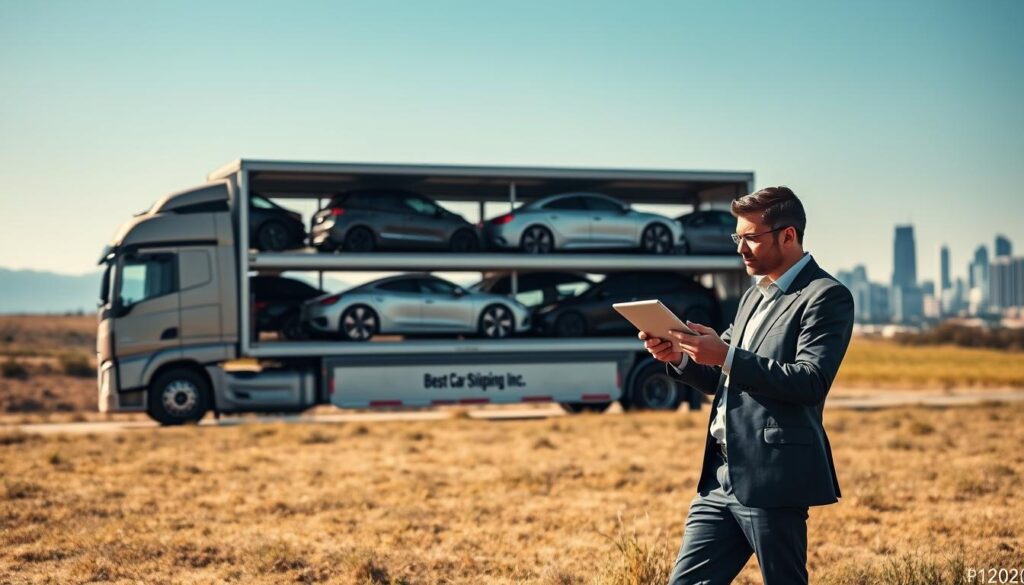
The end-to-end timeline for modern auto transport outlines every step from initial inquiry through final handoff. This summary gives a clear process so owners know what to expect and when to act.
Requesting a quote
Essential inputs: origin and destination ZIPs, vehicle year/make/model, operable status, pickup window, and open vs. enclosed selection. Accurate details yield better prices and fewer surprises.
Booking and pickup expectations
Book early to improve pricing and scheduling flexibility. Move.org notes rates often fall the farther ahead a booking is placed.
Transit, tracking, and delivery timing
Pickup windows are estimates. Routing, weather, traffic, DOT hours, and added stops shift schedules. Transit across many states may take weeks.
“Confirm what the quote includes: carrier pay, insurance, fuel surcharges, and any broker fees.”
- Step-by-step: quote → booking → dispatch → pickup inspection → transit updates → delivery inspection → paperwork closeout.
- Modern norms: status texts, dispatch confirmation, and driver check-ins during transit.
- Make sure contact numbers, backup contact, and access notes are confirmed before loading.
For local options and a reliable car shipping service, review this car shipping service in Newnan, GA.
Choosing the right car transport company without getting scammed
Selecting an honest auto transport provider starts with careful verification and clear paperwork.
Begin with reputation signals. Look for consistent reviews across platforms. Focus on on‑time performance, damage handling, and billing patterns rather than a single high score.
Use BBB-style vetting as one input. Cross-check business name, address, phone, and operating authority on federal registries. Patterns matter more than one review.
Licensing and insurance checklist
Before payment, confirm USDOT/MC authority and request proof of cargo insurance. Make sure coverage limits match vehicle value. If the driver avoids a bill of lading, treat that as a red flag.
Comparing quotes and spotting hidden fees
Compare like-for-like: open vs. enclosed, door-to-door vs. terminal, operable vs. inoperable. Ask whether taxes, fuel surcharges, or remote pickup fees apply.
| Issue | What to verify | Red flag | Typical remedy |
|---|---|---|---|
| Licensing | USDOT/MC number on record | No authority listed | Decline or require verified carrier |
| Insurance | Proof of cargo insurance and limits | No documentation provided | Insist on policy copy before pay |
| Quotes | Like-for-like service terms | Vague inclusions or extremely low price | Request itemized written quote |
| Broker vs Carrier | Who signs contract and who moves vehicle | Unclear roles or no carrier ID | Clarify contract party and insurer |
Broker vs. carrier: know who holds responsibility
Brokers arrange capacity and handle dispatch. Carriers perform the physical transport and hold insurance on the truck. The contract should name the responsible party.
Final guidance: Insist on documented pickup and delivery windows, require a bill of lading at handoff, and compare multiple quotes before committing. For local assistance, consider this trusted option: car shipping and auto transport in.
Open vs. enclosed car transport: picking the best shipping method for your vehicle
Selecting between open and enclosed transport is a top decision for any vehicle move. The right choice depends on risk tolerance, budget, and vehicle value.
Open transport — common, economical choice
Open carriers handle most moves. They offer the lowest price and wide availability. This type suits daily drivers and standard collector cars without delicate finishes.
Exposure is the trade-off. Vehicles face weather, dust, and road debris. Expect cleaning at delivery and routine cosmetic wear in rare cases.
Enclosed transport — added protection for high-value vehicles
Enclosed trailers protect against weather and road hazards. This service is standard for luxury, exotic, and classic cars. Loads are smaller and handling is more controlled.
“Choose the method that matches vehicle value and mission, not the highest sticker price.”
| Feature | Open transport | Enclosed transport |
|---|---|---|
| Cost | Lower | Higher |
| Protection | Moderate — exposed | High — covered |
| Availability | Wider | Limited on some routes |
| Best for | Daily drivers, standard cars | Luxury, exotic, classic cars |
Decision triggers: choose enclosed when paint, custom work, or rarity matters. For balanced value, open transport often meets needs at lower cost.
Learn more about secure enclosed options at enclosed car shipping.
Car shipping costs: what you’ll pay and what drives pricing
Estimating true transport expense requires more than per-mile math; fixed costs and lane dynamics matter. Total cost rises with distance, but per-mile rates usually fall on long hauls because fixed expenses spread out.
Per-mile benchmarks: use market references to sanity-check quotes. uShip lists about $2.92 per mile for trips under 200 miles and about $0.78 per mile for routes over 1,000 miles (July 2022).
Real examples show variability. Move.org reported these sample prices: Los Angeles → Boston $1,420; Cheyenne → Little Rock $1,125; Buffalo → Detroit $451. These illustrate how distance, lane demand, and backhaul options affect totals.
Primary cost drivers
- Miles and route: longer trips lower per-mile but raise total price.
- Vehicle size and weight: larger units occupy more space and can increase pricing.
- Pickup/drop access: metro delivery lowers costs; remote locations add time and fees.
- Operable vs. inoperable: non-running vehicles need special gear and higher charges.
- Gas and demand: rising fuel prices and peak season push prices higher.
For best results, request multiple quotes, confirm inclusions, and prefer transparent pricing over the lowest headline number. Contact Best Car Shipping Inc at info@bestcarshippinginc.com or call (307) 288-5972 for a professional quote and clear terms.
Getting your car ready for shipping day
Preparing the vehicle ahead of pickup reduces disputes and keeps schedules on track.
Remove personal belongings. Most transport companies will not accept vehicles loaded with household items. Remove loose goods, remove child seats, and confirm any limited items in writing with the company.
Clean the vehicle. A clear exterior makes condition checks accurate. Scratches, chips, and trim issues show plainly on a washed surface.
Document existing damage. Take time-stamped photos from all angles. Capture close-ups of dents and paint flaws and keep short notes that match the inspection report.
Set fuel and secure the vehicle. Leave about one quarter tank of gas so the driver can move the vehicle if needed. Secure loose parts, fold mirrors, disable alarms, and confirm the vehicle can shift into neutral.
Keys and pre-pickup check. Make sure keys are available and keep a spare separately. Verify pickup contact info, access notes, and special handling requests before the carrier arrives.
“Simple readiness steps protect value and reduce claim disputes.”
Pickup day: coordinating with the seller or dealership when you’re not there
Remote pickup requires tight communication so paperwork and inspection proceed without delays.
Remote pickup: step-by-step
Step 1: Authorize the seller or dealer as the on-site representative for inspection.
Step 2: Share dispatcher and driver contact details with that representative.
Step 3: The driver performs the pickup inspection and signs the bill of lading with the seller.
Paperwork and items the driver may require
- Keys and clear access to the vehicle.
- Copy of the seller’s photo ID and registration or title (temporary if processing).
- Proof of insurance and any transport paperwork the company provided.
- Confirm payment terms—broker vs. carrier splits may affect timing.
Make sure the transport company list of requirements is confirmed before pickup.
Day-before checklist and insurance notes
| Responsibility | What to confirm | Why it matters |
|---|---|---|
| Buyer | Confirm pickup window and point of contact | Avoids missed pickups and storage fees |
| Seller/Dealer | Have ID, keys, and title/temporary registration ready | Speeds inspection and transfer of possession |
| Transport company | Verify cargo insurance limits and driver contact | Clarifies liability during transit |
“Share direct contact lines and confirm the meeting spot for large-truck access before the carrier arrives.”
Final note: Confirm the vehicle’s operable status, key location, and the exact seller contact the day before pickup. For assistance or a quote, contact Best Car Shipping Inc at info@bestcarshippinginc.com or call (307) 288-5972.
Delivery day: inspect, sign bill lading, and handle damage claims correctly
The final handoff requires focused inspection, precise documentation, and immediate action if any damage appears. Follow set steps so the transport service and owner agree on condition before closing delivery.
Pre-delivery inspection vs. post-delivery inspection
At pickup the carrier records the vehicle condition. That initial record documents dings, scratches, and fluid leaks. Those notes form the baseline for claims.
At delivery the receiver must compare the vehicle against that baseline. Inspect common impact points: bumpers, mirrors, rocker panels, roof, and wheels. Bright daylight helps reveal subtle issues.
How the bill lading protects the owner
The bill lading is the shipment receipt and condition report. It is legal proof of what the carrier accepted and what the receiver accepted at delivery.
Before signing, confirm VIN, mileage, delivery address, and every condition mark matches photos and the pickup report. If all is correct, sign bill lading to complete receipt. If anything differs, note it clearly.
If there’s damage: document, notify, and start the claim
Do not sign acceptance without documenting new damage. Take timestamped photos from multiple angles. Write clear notes on the bill lading describing each issue.
Then contact the transport company immediately and request claim forms and insurance instructions. Reputable companies will explain the insurance process and assist with escalation.
“If a driver discourages inspection or fails to present the bill lading, pause and call company dispatch before signing.”
Final tip: Keep copies of all photos, the signed bill lading, and emails. For help with delivery-day questions or to report damage, contact Best Car Shipping Inc at info@bestcarshippinginc.com or call (307) 288-5972.
Conclusion
Structured preparation and vetted partners make long-haul vehicle transport routine and low‑risk.
Follow a simple sequence: request a detailed quote, select a reputable auto transport company, choose open or enclosed protection, ready the vehicle, coordinate pickup, and inspect paperwork at delivery. This process reduces surprises and protects value.
Verify licensing and insurance, confirm price inclusions, keep written communications, and never sign delivery documents without reviewing the bill of lading. Use per‑mile benchmarks and lane examples to judge cost and timing.
Early booking improves schedule reliability and often lowers prices. For regional support and transparent service, consider the top-rated Irvine car shipping experts. Contact info@bestcarshippinginc.com or (307) 288-5972 for a quote and assistance.