
When a vehicle makes a single clicking sound and the engine won’t turn over, owners need clear guidance. Every vehicle, including EVs, uses a 12-volt battery that completes the circuit to the starter solenoid. A quick, sharp clicking often signals a focused electrical fault.
If you are trying to start and hear a single click, check the battery condition and the starter. A dead battery is common, yet a failing ignition switch or worn solenoid can cause the same noise.
Best Car Shipping Inc. recommends turning off headlights and accessories to conserve power while diagnosing the issue. Prompt attention matters: a lone click usually points to the starter or ignition components, while rapid clicking often means a weak battery or charging fault.
Key Takeaways
- One click often indicates a starter or ignition fault rather than a general failure.
- Check the 12-volt battery and reduce accessory load before testing again.
- A dead battery and rapid clicking are different symptoms with different fixes.
- Inspect the solenoid and ignition switch if the battery shows adequate voltage.
- Contact a professional for diagnosis and safe, reliable service.
Understanding the Car Clicks But Won’t Start Single Click Meaning
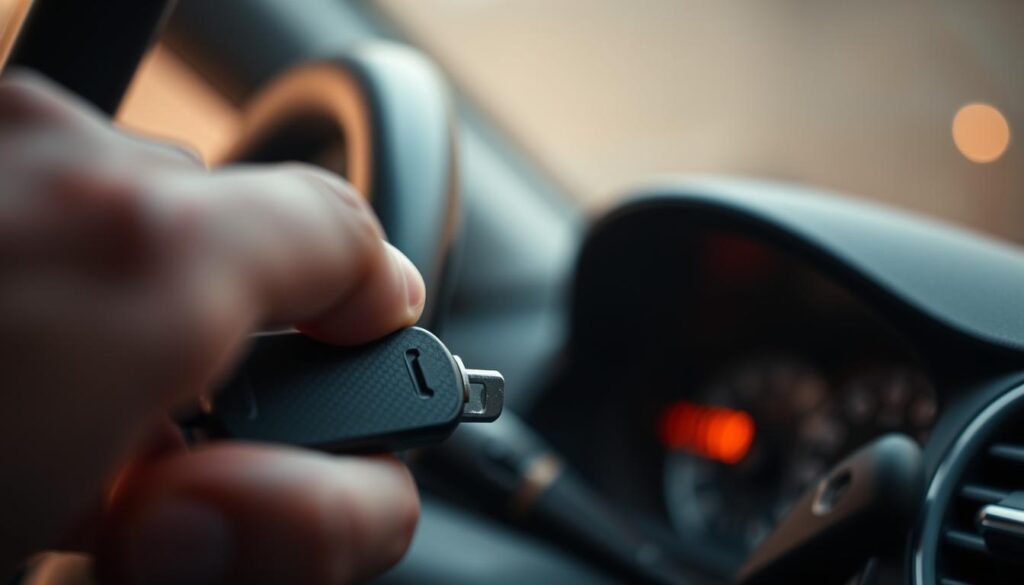
A single, distinct tap when turning the key usually shows the starter receives voltage yet cannot turn the engine over. This sound often means the drive gear failed to engage the flywheel properly.
Technicians at Best Car Shipping Inc. use the exact audible cue to narrow down faults. Identifying the tone and timing helps decide whether the issue is the battery, the starter mechanism, or wiring.
If the battery tests healthy but the engine still gives a lone tap, the starter motor may be stuck or internally damaged. Professional diagnostic tools are usually required to confirm which component is primary.
“Observe the vehicle’s exact behavior; calm, clear notes speed accurate diagnosis and reduce repair time.”
| Symptom | Likely Cause | Action |
|---|---|---|
| Single tapping sound | Starter gear failed to engage | Inspect starter and flywheel teeth |
| Battery reads full but no crank | Starter internal fault | Run starter bench test |
| Accessory power ok | Local starter or solenoid issue | Use professional diagnostics |
Remain calm and note the exact timing of the clicking. Then contact Best Car Shipping Inc. at (307) 288-5972 or info@bestcarshippinginc.com for reliable diagnostic support.
Distinguishing Between Single and Rapid Clicking Sounds
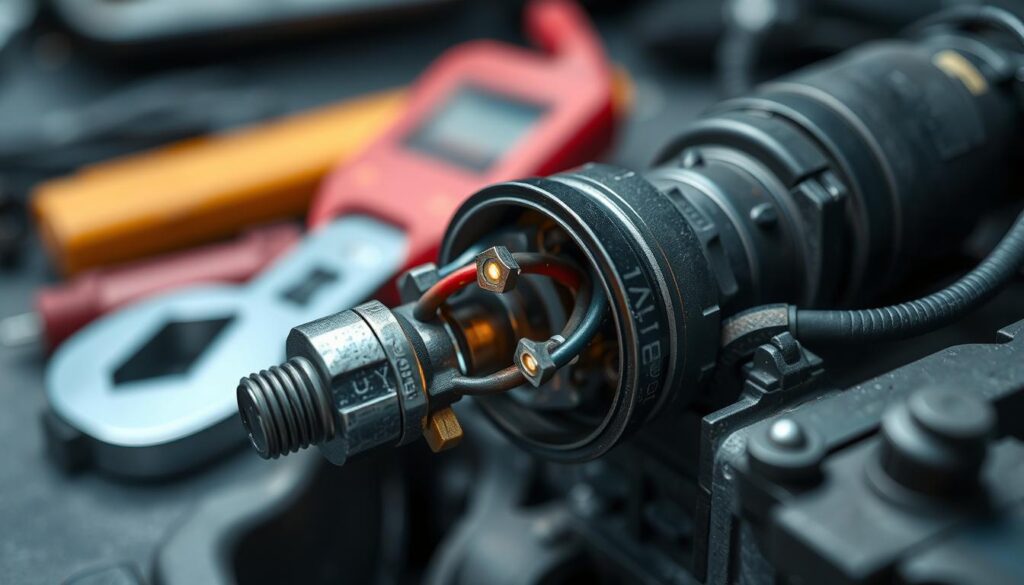
Not all starter noises signal the same problem; careful listening narrows the diagnosis. The two patterns most owners hear are an isolated loud tap and a fast, repeated tapping noise. Each pattern points to different components and remedies.
Single Click Indicators
Single, loud tap: Often the starter motor or solenoid fails to engage the flywheel. When trying start the engine, this sound can mean internal starter wear or a faulty ignition switch.
Check for firm battery connections and intact cables before assuming the motor needs replacement.
Rapid Clicking Patterns
Rapid clicking usually signals a weak or dead battery that lacks cold-cranking amps. Poor connections, loose cables, or visible corrosion on the terminals can cause this repetitive clicking noise.
- Inspect terminals for white or blue corrosion that limits current flow.
- Ensure battery cables are tight; vibrations can loosen connections over time.
- If connections are clean and tight but the issue persists, the battery may be dead or failing.
| Sound | Likely Cause | Immediate Action |
|---|---|---|
| Isolated loud tap | Faulty starter motor or solenoid | Test starter and ignition switch; consider bench test |
| Rapid tapping | Dead battery or poor connections | Check terminals and cables; attempt a jump or charge |
| Intermittent tapping | Loose cables or corroded terminals | Tighten clamps and clean terminals; retest current flow |
Common Electrical Culprits Behind Starting Issues
A brief, sharp tapping at ignition often points to power delivery or relay problems in the electrical system.
Battery age is a frequent reason for failures. According to AAA, the average battery lasts about three years. Batteries older than three years lose capacity and may fail under load.
The alternator keeps the battery charged while the vehicle runs. A failing alternator often leads to a dead battery over time. Have the alternator tested periodically to confirm proper power output.
A faulty starter relay or a blown relay can stop the ignition signal from reaching the starter solenoid. That fault may produce an isolated tapping or a silent response.
- A low-voltage battery causes rapid clicking and prevents the starter motor from engaging the flywheel.
- A bad relay or ignition switch can interrupt the starter circuit even when accessory power looks normal.
- Corroded connections reduce current flow and mimic more serious faults in the system.
| Issue | Likely Cause | Suggested Action |
|---|---|---|
| Rapid clicking noise | Weak or discharged battery | Charge battery or attempt a jump; test capacity |
| Isolated tapping | Faulty starter relay or solenoid | Inspect relay and solenoid; bench test starter |
| Battery drains over time | Alternator failure or parasitic draw | Test alternator output; check for electrical draw |
“Address electrical faults early to avoid being stranded and to limit repair time.”
For professional diagnosis and transport planning, contact Best Car Shipping Inc. at (307) 288-5972 or info@bestcarshippinginc.com.
Inspecting Battery Terminals and Cable Connections
Begin with a visual check of the battery posts and cable clamps. A quick inspection can reveal loose clamps, white powder, or frayed wiring that reduces power delivery to the starter.
Regular maintenance of these parts prevents preventable failures. Tight, clean connections let the car battery deliver full current when the ignition is engaged.
Cleaning Corroded Terminals
To remove corrosion, mix one part baking soda with three parts water. Use a stiff-bristle brush to scrub the terminal and clamp until the white residue is gone.
After cleaning, rinse briefly with water and dry the area before reconnecting the battery cables. Re-tighten clamps to the manufacturer’s torque recommendation.
- Inspect connections at least twice a year to prevent buildup and high resistance.
- Loose battery cables often produce a clicking sound by limiting current flow to the starter.
- Check both positive and negative cables for fraying or damaged clamps and replace if needed.
“A clean terminal transfers the maximum power from the battery to the starter; routine checks save time and towing fees.”
Pro tip: If the vehicle still struggles after cleaning and tightening, have the battery tested for capacity and the connections checked by a technician.
Evaluating the Starter Motor and Solenoid
A distinct tapping during ignition often signals the starter circuit is receiving power but failing to engage the engine.
Signs of a Failing Starter
Visible cues: A loud tap at the key position suggests the starter motor or solenoid is struggling.
If you hear a grinding noise, the starter gear may not mesh with the flywheel. That often means internal wear or alignment trouble.
Most starter motors last beyond 100,000 miles, though environment and use reduce that span.
Testing the Solenoid
Basic checks: Confirm the battery provides at least 12 volts to the starter circuit before testing the solenoid.
Measure current and observe whether the solenoid actuates consistently. Intermittent power often causes repeated failures.
- Attempt to try start the vehicle several times; intermittent engagement can reveal a failing solenoid.
- Remember a bad alternator can mimic a faulty starter by draining battery power over time.
| Symptom | Likely Cause | Next Step |
|---|---|---|
| Loud tap at key | Faulty starter motor or solenoid | Test starter bench; inspect flywheel teeth |
| Grinding noise | Gear not engaging flywheel | Inspect starter drive and replace if worn |
| Intermittent engagement | Inconsistent current or solenoid failure | Check battery voltage and wiring; test solenoid |
“Confirm power and current at the starter before replacing components to avoid unnecessary repairs.”
Need help? Contact Best Car Shipping Inc. at (307) 288-5972 or info@bestcarshippinginc.com for professional testing and transport support.
Troubleshooting Steps for When Your Vehicle Fails to Start
Confirm the vehicle is in Park or Neutral and that the transmission interlock allows the starter to engage. This simple check prevents wasted diagnostics.
Observe the headlights when trying start the engine. If they dim sharply, the 12-volt battery or poor connections are likely at fault.
If you hear a rapid clicking sound, suspect a discharged battery. A lone tap more often points to the starter solenoid or starter relay rather than the battery.
Keep jumper cables on hand to attempt a safe jump. Do not repeatedly press the start button or key when a lone tap occurs; this can overheat the relay and worsen the problem.
When basic checks fail, a trained mechanic should test voltage drop across the battery and starter motor with a multimeter. That diagnosis isolates a faulty starter, ignition switch, or alternator issue quickly.
Pro tip: If unsure, call Best Car Shipping Inc. at (307) 288-5972 or email info@bestcarshippinginc.com for fast guidance and transport support.
Preventive Maintenance to Avoid Future Starting Problems
Simple, scheduled upkeep extends battery life and reduces roadside failures.
Best Practices for Battery Longevity
Replace the battery every three to five years based on climate and driving patterns. This timeframe limits unexpected failures and preserves warranty coverage.
Inspect battery cables and terminals regularly. Clean terminals to remove corrosion and ensure full power reaches the starter motor.
Keep the alternator in good condition. A healthy alternator maintains charge during daily drives and long trips, protecting the car battery from deep discharge.
- If the engine cranks slowly, have the starter motor and battery checked by a technician.
- Turn off interior lights and accessories when the vehicle is parked to avoid unnecessary drain.
- Ensure tight, clean terminal connections so the starter receives full current without resistance.
“Consistent electrical maintenance is the best defense against unexpected failures.”
Need transport or diagnostic help? For reliable logistics and support, see our Texas car shipping options or contact Best Car Shipping Inc. at (307) 288-5972 or info@bestcarshippinginc.com.
Conclusion
Call a qualified mechanic, and note the exact pattern of the clicking sound during ignition. Identifying whether the noise is isolated or a rapid clicking guides the next steps.
A failing starter motor, a weak battery, a stuck solenoid, or a faulty relay are common causes. Regular inspection and basic maintenance reduce the risk of recurring problems.
For drivers in Miami, Green’s Garage offers expert electrical diagnosis and repair. Best Car Shipping Inc. can also assist with transport and logistics for vehicles that need shop service.
Listen closely, document the noise, and arrange professional maintenance to protect your engine and electrical system.