
Reliable service means credentialed operations, clear timelines, and documented inspections from pickup to delivery. This guide sets practical expectations for modern auto transport in the United States, including door-to-door service, open versus enclosed options, and typical delivery windows.
Typical moves from Detroit often range from $950 to $1,500 with transit times of two to six days, depending on distance, vehicle size, and trailer type. Detroit’s links to I-75, I-94, and I-96 keep routes competitive and predictable.
This short guide acts as a buyer’s checklist to compare shipping companies without falling for hidden fees or vague timelines. It highlights safety priorities like pre-transport photos, a Bill of Lading, and the difference between cargo insurance and personal auto coverage.
Next steps: weigh open versus enclosed transport, consider guaranteed pickup for tight schedules, and decide when expedited service merits the premium. For personalized help selecting an auto transport provider, call (307) 288-5972 or email info@bestcarshippinginc.com.
Key Takeaways
- Reliable service combines credentials, clear communication, and inspection records.
- Detroit benchmarks: $950–$1,500 and 2–6 day transit windows are common.
- Understand open vs. enclosed options and insurance coverage differences.
- Use a buyer’s checklist to avoid hidden fees and vague timelines.
- Contact (307) 288-5972 or info@bestcarshippinginc.com for quote help.
What a Car Freight Company Does and When You Should Use One
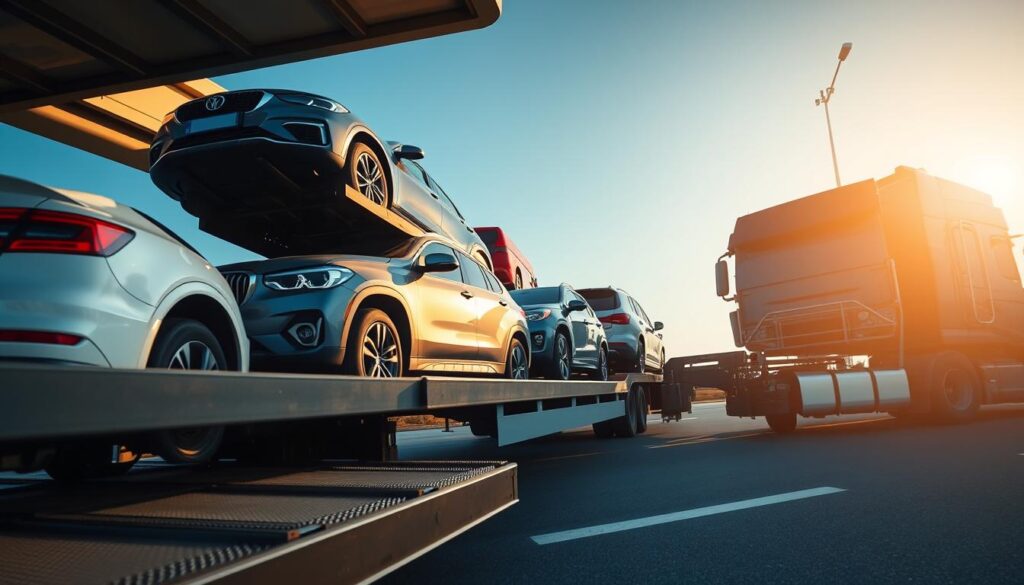
Professional vehicle movers handle scheduling, inspections, and the physical transfer of vehicles across state lines. They make long-distance moves practical and often less risky than driving yourself.
The roles break down into distinct functions:
- Carriers perform the actual loading and transport.
- Brokers arrange capacity and match loads to available drivers.
- Hybrid networks combine both to improve availability and pricing.
Buyers usually interact with a broker-style shipping company that handles quotes and customer service, while a carrier does the driving. That model improves scale but makes clear communication and documented inspections essential.
| Role | Primary task | Best use |
|---|---|---|
| Carrier | Move vehicles | Scheduled pickup to delivery |
| Broker | Coordinate logistics | Flexible timing, better rates |
| Hybrid | Combine service + network | High-demand routes |
When to choose professional help:
- Cross-country moves and dealership-to-home delivery.
- Online purchases or auction wins where you must ship car to your location.
- Seasonal snowbird moves and college drop-offs.
- Military PCS and remote job relocations.
Key advantage: professional auto transport cuts mileage, wear, and weather exposure. This matters most for leased or high-value vehicles.
For vetted options, see our guide to the best car shippers.
Car Freight Companies: How to Choose the Right Provider

Trust begins with verified credentials, straightforward quotes, and visible shipment updates. Reliability means on-time pickup windows, accurate written estimates, active liability insurance, and documented inspections at pickup and delivery.
How to vet credentials and compliance
Confirm USDOT/MC status and view safety records on FMCSA. Check complaint history and recent inspections before booking.
| Step | What to check | Why it matters |
|---|---|---|
| Registration | USDOT / MC number | Legal authority to operate |
| Safety | Crash & inspection records | Risk and reliability signals |
| Insurance | Active cargo and liability | Protects against loss or damage |
Spotting bait-and-switch and hidden fees
Watch for non-binding estimates, vague surcharge language, and unusually low promos. Common add-ons include inaccessible addresses, oversized or inoperable units, seasonal demand, and expedited requests. Ask how these affect final shipping costs.
Communication and tracking expectations
Strong 24/7 customer support and regular updates reduce risk. Some providers offer live tracking; others provide dispatcher check-ins. Ask upfront which method applies so timelines stay clear.
For help selecting a vetted provider, call (307) 288-5972 or email info@bestcarshippinginc.com.
How Car Shipping Works From Quote to Delivery
Start-to-finish vehicle moves follow a simple, predictable flow: quote, book, pickup, track, and inspect at delivery. This section lays out each step so customers understand expectations and required actions.
Quote and booking
Quote inputs that change price: exact ZIPs or metro, operable vs. inoperable status, vehicle size, trailer type, and readiness date. Accurate details produce better estimates and fewer surprises.
Pickup day
When a carrier is secured, dispatch confirms pickup window and route. Buyers should get written pickup details and contact numbers before the driver arrives.
On arrival: the driver performs a walkaround inspection and records pre-existing damage on the Bill of Lading. Hand over a working key only if required.
In-transit updates and delivery
Some providers offer real-time tracking; others provide manual check-ins. For long-haul moves, a daily status or milestone update is reasonable.
“Pre- and post-inspections protect both parties; sign only after you verify condition.”
At delivery, perform a final inspection, photograph any damage, and note issues on the paperwork before signing. If damage appears, follow the shipping company’s claims steps promptly.
| Stage | Buyer action | Why it matters |
|---|---|---|
| Quote | Provide ZIPs, dates, vehicle details | Accurate pricing |
| Pickup | Confirm keys, inspect, Bill of Lading | Document condition |
| Delivery | Final inspection, photos | Start claims process if needed |
Questions about shipping services or to get a quote? Call (307) 288-5972 or email info@bestcarshippinginc.com.
Open Enclosed Transport Explained for Everyday Cars and High-Value Vehicles
Transport choices balance protection and price. The decision comes down to vehicle value, exposure to road debris, and weather on the route.
Open transport: the common, cost-effective default
Open transport moves multiple units on exposed racks. It offers broad availability and lower rates because carriers can stack several pickups on one run.
This option suits daily drivers and non-collector vehicles where price and timing matter most.
Enclosed transport: when extra protection pays
Enclosed transport shelters vehicles inside a covered trailer. It reduces road-debris, salt, and weather risk.
Use this for luxury, classic, or show vehicles. Sherpa data shows enclosed trailers average about +$581 (+68%) over open baselines. That added cost is often justified by reduced risk for high-value assets.
Open enclosed carriers and top-loaded options: what to ask for
Online listings use the phrase open enclosed to describe both choices; clarify your booking to avoid confusion.
- Ask specifically for open or enclosed equipment when you book.
- Request top-loaded placement on an open trailer to reduce debris exposure; expect an upgrade fee when carriers must guarantee position.
- Confirm insurance and handling terms for enclosed carriers before accepting a quote.
“Choose enclosed shipping when replacement cost exceeds the premium and seasonality increases exposure.”
For more on choosing open vs. enclosed options, review our guide to open transport services or contact (307) 288-5972 for personalized advice.
How Much Does It Cost to Ship a Car in the United States Today
Budgeting for vehicle transport starts with realistic regional benchmarks tied to carrier density and route demand. Use Detroit figures as a practical guide because its interstate links create more backhaul options and often more competitive pricing.
Detroit benchmark pricing and why hubs matter
Typical Detroit-to-market ranges run about $950–$1,500 with common transit windows of 2–6 days. Major metros lower prices through denser routes, more drivers, and flexible scheduling.
Sample route ranges and drivers of spread
| Route | Price range | Transit (days) | What drives spread |
|---|---|---|---|
| Detroit → Los Angeles | $1,150–$1,400 | 3–7 | Distance, trailer type, seasonal demand |
| Detroit → Phoenix | $1,125–$1,325 | 2–6 | Backhaul availability, pickup ZIPs |
| Detroit → Miami | $950–$1,175 | 1–5 | High volume, salt-season risk |
| Detroit → Atlanta | $800–$925 | 0–3 | Close hub, frequent runs |
What a 2–6 day window means operationally
Dispatch time covers carrier assignment and routing. Pickup windows follow; drivers confirm a 24–48 hour arrival slot. Transit is in-transit miles; final-mile may add scheduling for curbside delivery.
Buyer tip: get written, itemized quotes from top car shipping companies, compare identical dates and trailer types, and ask about surcharges before you book.
What Impacts Vehicle Shipping Prices the Most
Pricing for vehicle moves hinges on a few predictable market forces and practical constraints. Understanding these helps buyers compare quotes and avoid surprises.
Route density and distance
Major interstates and dense corridors lower per-mile rates. Routes from hubs like Detroit are often cheaper and faster to schedule than remote runs.
Vehicle size and type
Smaller sedans take more space on a trailer than large pickups. Vehicles like sedans, SUVs, and pickup trucks change capacity and price.
Trailer type and seasonality
Enclosed shipping commands a premium. Sherpa data shows an enclosed trailer averages +$581 (+68%) over open baselines. SUVs average +$94 and pickups +$263 versus a sedan.
Access and timing
Downtown pickup or tight windows raise fees. Seasonal peaks, winter delays, and fuel swings also move quotes.
| Driver | Typical effect | Mitigation |
|---|---|---|
| Route density | Lower price on interstates | Use hub-to-hub routes |
| Vehicle type | SUVs +$94, pickups +$263 | Choose flexible pickup spots |
| Trailer choice | Enclosed +$581 (68%) | Book early; consider open enclosed options |
Practical tip: allow flexible windows and choose suburban meet points to trim shipping costs. For tailored advice on auto transport and car shipping, call (307) 288-5972 or email info@bestcarshippinginc.com.
Guaranteed Pickup, Expedited Delivery, and Time-Critical Shipping Options
Priority pickups and same-week delivery offer certainty, but they cost more and are not always available in every market. Buyers must weigh certainty against added fees and limited carrier slots.
Guaranteed pickup vs. flexible pickup windows
Guaranteed pickup commits a carrier to a specific date and often a narrow time window. Flexible pickup lets dispatch place the vehicle on existing runs to lower cost.
When expedited delivery makes sense
Use expedited service for firm job start dates, closings, military reporting, or auction deadlines. Expect a premium for priority dispatch and fewer routing options.
Booking lead times and market reality
Recommended planning: 1–2 weeks for typical moves, 2–3 weeks for best value, and 3–4 weeks during peak season. Some markets permit 1–3 day booking-to-pickup, but guaranteed pickup is uncommon in many metros. Always confirm terms and proof of the guarantee.
Communication standard: insist on 24/7 customer access and a clear escalation path for time-critical loads. Written confirmation reduces disputes.
| Option | When to use | Typical effect on price |
|---|---|---|
| Guaranteed pickup | Firm deadlines, legal or job constraints | Higher; priority dispatch fee |
| Expedited delivery | Short windows, auctions, military orders | Moderate to high |
| Flexible window | Cost-sensitive moves without hard deadlines | Lower; uses existing routes |
For vetted options and help booking time-critical auto shipping or auto transport, see our recommended provider at best car shipping company or call (307) 288-5972.
Cargo Insurance, Liability Coverage, and Damage-Free Guarantees
Insurance rules for vehicle shipping can be confusing; start by separating contractual liability from optional policies.
Coverage basics and common limits
Carrier liability is the operator’s legal responsibility. Regulators require carriers to carry at least $1,000,000 liability and a typical minimum of $100,000 in cargo insurance.
Cargo insurance covers transport-related damage from loading, transit, or unloading. It does not cover personal items, pre-existing damage, or mechanical failures.
Marketing promises vs. contract terms
Some providers advertise a “damage-free guarantee” or small complimentary payouts (for example, $500). These are promotional and not a substitute for formal insurance.
Claim-protection checklist
- Take pre-pickup photos with clear lighting and angles.
- Wash the vehicle so scratches are visible.
- Note every mark on the Bill of Lading at pickup and repeat at delivery.
- Refuse to sign until inspection is complete; document discrepancies immediately.
Risk management: request proof of active insurance before dispatch and confirm the provider’s claims process. A reputable shipping company offers clear timelines, written steps, and 24/7 customer support during claims.
Door-to-Door vs. Terminal-to-Terminal Auto Transport Services
Door-to-door pickup gets the carrier as close to the delivery address as safety and local rules allow. This is the default option for most buyers because it reduces coordination and handoffs.
Why door-to-door is the most popular shipping service
Door-to-door minimizes customer effort. The driver handles pickup and delivery logistics and the buyer avoids extra trips to a terminal.
When terminals make sense for price or access
Terminal-to-terminal can be cheaper. Use it for dense urban cores, gated communities, or when the pickup spot blocks large trucks.
Large truck restrictions and how to plan a safe meetup location
- Choose well-lit, large parking lots with wide turning radii and clear addresses.
- Confirm truck length, timing windows, and if a smaller shuttle is available and its cost.
- At the meetup, perform the inspection, record damage, and handle key handoff with the same rigor as curbside pickup.
Ask the auto transport company about access limits and alternate pickup plans before you book. Clear expectations cut delays and protect the vehicle when you ship car or arrange car shipping.
Company Comparison Criteria That Actually Matter
Compare providers by what they actually deliver, not by glossy ads or low initial quotes. Focus on measurable service elements. These reveal reliability faster than marketing language.
Service diversity and reliability signals
Services offered should include open and enclosed options, inoperable-vehicle handling, multi-vehicle moves, and specialty shipping. Providers that list these routinely show stronger operational processes.
High-value add-ons buyers use
Look for real-time tracking, expedited delivery, a clean-vehicle guarantee or free wash, rental reimbursement, and white-glove coordination. Sherpa’s price-lock model and free car wash are practical perks. Ship A Car Direct advertises rental assistance for delays over 14 days.
Scheduling, payment, and geographic reach
Prefer refundable deposits and clear cancellation rules. Nexus offers a refundable $25 deposit and serves all 50 states, including alaska hawaii. Ask what the company offers in writing before you book.
| Comparison Factor | What to check | Why it matters |
|---|---|---|
| Credentials | USDOT/MC, insurance proof | Legal and financial protection |
| Service breadth | Open/enclosed, inoperable, specialty | Shows operational capacity |
| Add-ons | Tracking, wash, rental aid | Reduces disruption and risk |
| Payment policy | Refunds, deposit terms | Limits financial exposure |
Practical step: request a written service matrix that lists what is included, extra fees, and exclusions. For a local option, see car shipping and auto transport Upton or contact (307) 288-5972 for help.
Top-Rated Car Shipping Companies and What They’re Known For
Choosing among top providers comes down to four things: price clarity, tracking, service breadth, and specialty handling. This section summarizes key strengths so buyers can match needs to features.
Sherpa Auto Transport
sherpa auto transport markets the Price Lock Promise. That gives fixed pricing after booking. Sherpa also offers a free wash and clear communication. Buyers get price certainty and proactive updates.
SGT Auto Transport
sgt auto transport suits budget-focused shippers and motorcycle owners. It lists discounts and price-match options. Note: buyers should confirm digital tracking; some lanes lack live feeds.
Nexus Auto Transport
nexus auto transport leverages a 30,000+ carrier network and live shipment tracking. It serves all 50 states, including Alaska and Hawaii, and uses a refundable $25 deposit for bookings.
Ship A Car Direct
Ship A Car Direct highlights damage perks and last-minute help. Their marketing includes a Damage Free Guarantee and $500 gap coverage. Confirm written terms before dispatch.
| Provider | Standout feature | What to verify |
|---|---|---|
| Sherpa Auto Transport | Price Lock Promise, free wash | Binding price window |
| SGT Auto Transport | Discounts, motorcycle shipping | Tracking availability |
| Nexus Auto Transport | Large network, live tracking | Deposit & coverage limits |
| Ship A Car Direct | Damage coverage perks, rush service | Written guarantees |
Quick evaluation checklist: confirm price guarantees, ask about live tracking, verify specialty handling (motorcycle shipping), and get any damage promises in writing. For help, call (307) 288-5972 or email info@bestcarshippinginc.com.
Service Availability Snapshot Based on Real Company Data
A quick look at real provider data makes it clear which add-ons are routine and which are exceptional. Use this snapshot to set realistic expectations before you request quotes.
How common key services are
In Detroit-area listings, about 56.52% of providers include real-time tracking as one of the services offered. The same share offers expedited delivery lanes.
Damage-free guarantees appear less often — roughly 26.09%. True guaranteed delivery is rare, near 8.7% locally.
What guaranteed delivery availability looks like
Guaranteed pickup commitments (a scheduling promise) are more common than marketing claims of guaranteed delivery. Buyers should treat delivery guarantees as special requests and confirm them in writing.
Discount patterns: military and student savings
Military discounts show up in about 21.74% of Detroit profiles. Student discounts are uncommon — around 4.35%. Always verify eligibility rules and get the discount noted on the quote.
- Ask early about the tracking method and escalation path for delays.
- Request written confirmation for any damage guarantees or scheduling promises.
- Compare the services offered line-by-line across at least three providers to avoid assumptions.
For a local option and to compare detailed service menus, see auto transport and car shipping in or contact (307) 288-5972 or info@bestcarshippinginc.com.
Specialty Vehicle Transport Services Buyers Ask For
Not all transports are routine; classic, motorcycle, EV, and oversized loads need tailored handling and clear documentation.
Classic car and enclosed shipping considerations
Classic car owners usually choose enclosed transport for paint protection and reduced road debris. Handlers use soft straps, extra padding, and tighter placement rules.
Book early and get written handling procedures. Confirm insurance limits and ask for a placement guarantee if the vehicle is irreplaceable.
Motorcycle shipping requirements
Motorcycle shipping relies on secure tie-downs, wheel chocks, and experienced handlers. Crating is rare; most shippers use open trailers with motorcycle-rated fixtures.
Verify the shipper’s motorcycle experience and request photos of tie-down methods before pickup.
Inoperable vehicle rules
Many carriers accept inoperable units only if they can brake, roll, and steer. If not, expect specialized equipment and higher pricing.
Disclose operable status at booking to avoid delays and added fees on pickup day.
EV handling expectations
For electric vehicles, follow battery state-of-charge guidance and keyless entry procedures. Low battery charge can complicate loading and unloading.
Confirm staff training for EVs and any battery-related restrictions with the provider in writing.
RV, boat, trailer, and heavy equipment realities
Oversized moves need permits, escorts, and heavy lift gear. Availability is limited and rates are higher due to special routing and equipment.
Early coordination on dimensions, pickup access, and insurance prevents rescheduling and unexpected charges.
Buyer tip: always confirm specialty documentation, insurance limits, and pickup access when you book. For help arranging specialty vehicle transport or to verify handling terms, call (307) 288-5972 or email info@bestcarshippinginc.com.
Alaska, Hawaii, and International Shipping Considerations
Shipping to alaska hawaii adds ocean legs, port rules, and extra paperwork that change timelines and costs. These moves need coordinated inland pickups, a booked sailing, and port handling that differs from land-only runs.
What changes when your route includes ocean transit
Ocean transit ties delivery to sailing schedules. Transit time depends on vessel departures as much as miles. Fewer providers offer international shipping, so expect longer lead times and stricter documentation.
Personal items rules and why ports often require empty vehicles
Ports commonly require vehicles to be emptied. Personal items are usually excluded from coverage and may be prohibited for port moves. Leaving belongings inside can create delays or denied claims.
- Clean the vehicle for inspection.
- Remove accessories and personal items.
- Confirm title, registration, and customs paperwork.
- Ask for documented handoffs between inland carrier and ocean leg provider.
Buyer tip: choose shipping companies that provide milestone updates and written instructions for port drop-off. For Hawaii-specific guidance, see Hawaii vehicle transport or contact (307) 288-5972 for help.
How to Get Accurate Quotes and Avoid Surprise Added Costs
Get a reliable estimate by giving exact pickup and drop-off points, vehicle condition, and a clear timing window. Precise inputs make quotes meaningful and reduce late surprises.
What to provide for a precise estimate
Accurate quote inputs: exact addresses or nearest intersections, operable status, any modifications, curb weight class, and preferred pickup window. Photographs and clear notes on nonstandard gear speed up vetting.
Quote types and price protections
Binding quotes lock a rate for the specified scope. Price match offers attempt to match competitors but may exclude surcharges. Price lock programs, like Sherpa’s model, guarantee price stability after booking. Each approach has limits—get exclusions in writing.
Payment flow and common added cost triggers
Expect a deposit for some bookings and a balance due at pickup or delivery. Cards are common; some carriers request cash or certified check for on-site balances.
- Common surprise added cost: downtown access, narrow streets, rural pickup, oversized loads, inoperable vehicles, and peak-season surcharges.
- Timing matters: flexible windows lower price; firm dates raise rates.
Demand written confirmation of inclusions and exclusions before you book. For a formal estimate, request a vehicle transport quote and confirm payment terms beforehand.
Vehicle Prep Checklist for Safe Pickup and Smooth Delivery
A clear, consistent prep routine protects the vehicle and keeps schedules reliable. Being ready reduces loading delays, claim disputes, and rescheduling fees tied to guaranteed pickup windows.
Clean, photograph, and document condition
Wash the vehicle so scratches and dings are visible. Take time-stamped photos from all sides and the interior.
Match those notes to the Bill of Lading at pickup to reduce claims friction and speed any cargo insurance review.
Remove personal items, toll tags, and loose accessories
Remove luggage, electronics, and portable toll devices. Personal property is typically not covered and some ports require empty vehicles.
Fuel level, battery, leaks, and alarm settings
Keep fuel at about a quarter tank. Ensure the battery holds a charge, fix active leaks, and disable alarms unless instructed otherwise.
Provide keys and confirm access instructions with the dispatcher.
Winter prep for northern routes
Check antifreeze, battery cold-start readiness, and tire condition. Consider winter tires if the vehicle may be driven after delivery.
“Being ready on the agreed window supports guaranteed pickup and avoids rescheduling fees.”
Conclusion
A confident final choice depends on clear credentials, transparent pricing, and written terms that match your timeline.
Buyers should verify USDOT/MC status, compare itemized quotes, confirm active insurance, and pick the trailer type that fits the vehicle’s value.
Document condition with photos, follow the prep checklist, and insist on written pickup and delivery terms. These steps prevent most disputes and speed claims if needed.
Focus on service fit, not only price: communication, tracking, and claims handling matter most when evaluating car shipping companies.
Shortlist mindset: consider sherpa auto transport for price certainty and Sherpa’s Price Lock promise; choose SGT for discount-focused lanes and motorcycle moves; pick other providers by route and service needs.
For help selecting the best option for your route and timeline, call (307) 288-5972 or email info@bestcarshippinginc.com for a quote review and scheduling guidance.