
Every vehicle owner should recognize rising gauge readings as a clear warning. Feldman CDJR of Woodhaven noted on May 9, 2022 that such symptoms often point to a cooling system failure. This guide offers practical steps to assess risk and decide on next moves.
Take the time to check basic indicators before the problem grows. Inspect coolant level and fan operation if it is safe to do so. Contacting a professional diagnostic service quickly can prevent major engine damage.
Our team stresses timely, reliable support and clear guidance. For related transport and care options, see our auto transport services.
Key Takeaways
- Rising temperature often signals a cooling system failure and needs prompt attention.
- Basic checks can buy critical time, but professional diagnostics are recommended.
- Ignoring warning signs risks costly engine repairs later.
- Feldman CDJR of Woodhaven advises quick assessment and qualified service.
- Owners should rely on trusted support and clear, timely communication.
Understanding Why Your Car Overheating in Traffic
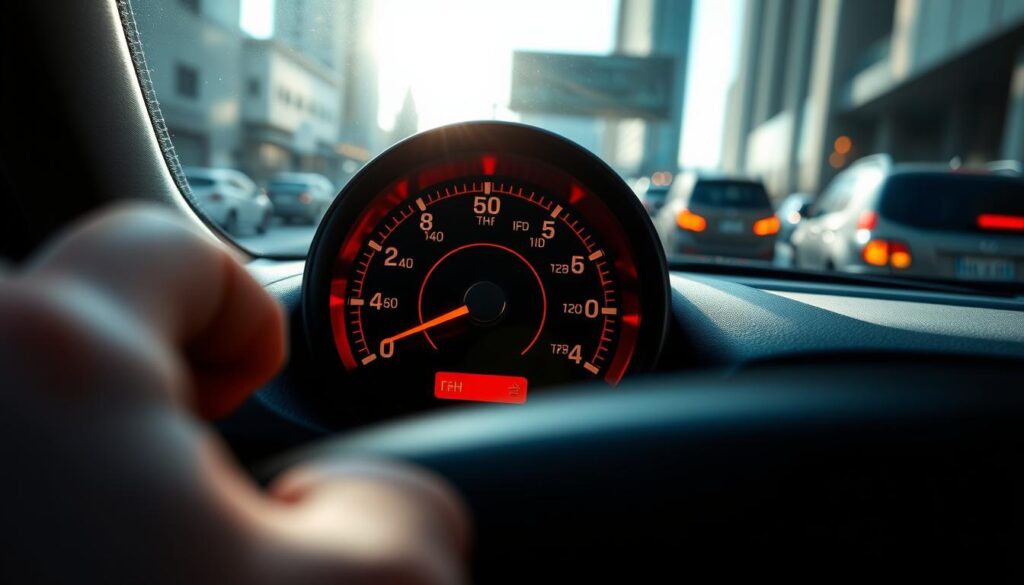
Prolonged idle time reduces airflow and can quickly push engine temperature higher. This is a common reason owners notice a rising gauge after 10–15 minutes of waiting.
Air conditioning adds load too. Running the AC while the vehicle sits forces the engine to work harder to keep a cool ride. That extra demand can turn a minor issue into a serious problem fast.
Another core reason is lack of moving air. At low speed the radiator and fan must do all heat removal. If either fails, temperature climbs and a dashboard light may appear.
- Long idling stresses the cooling system and shortens safe times to wait.
- Using AC increases engine load and heat output.
- Poor airflow means heat cannot dissipate even after a few minutes.
Monitor gauge readings closely and contact a trusted service technician at the first sign of trouble. Prompt attention prevents costly repairs and keeps the ride reliable.
Common Cooling System Failures
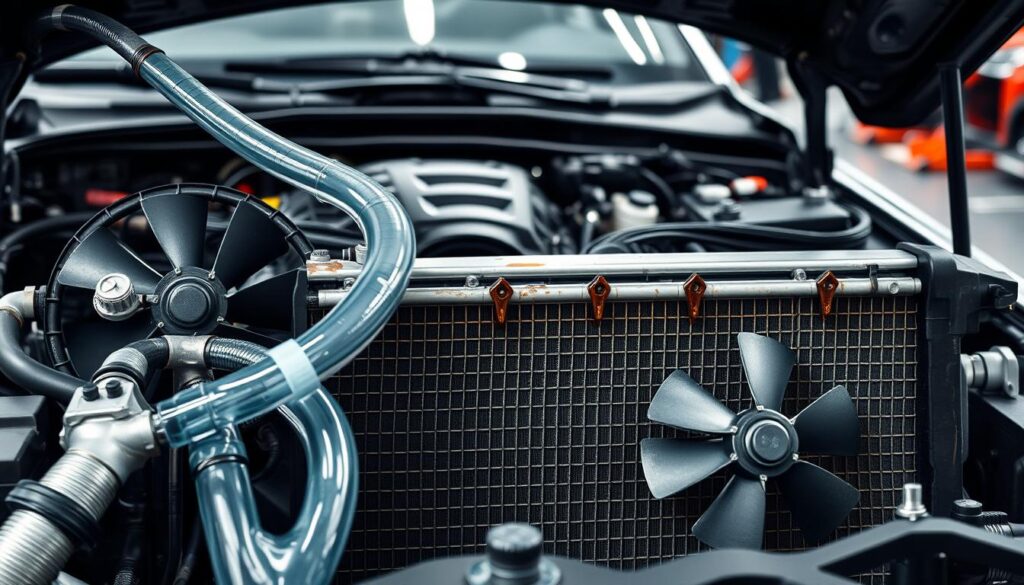
Common failures often begin with basic, serviceable parts. Quick diagnosis saves time and reduces potential damage to the engine.
Thermostat Malfunctions
The thermostat controls coolant flow to the engine. A stuck thermostat prevents circulation.
When that happens, the cooling circuit cannot remove heat and the gauge may rise rapidly. A failed thermostat is a frequent reason for system failure and severe engine damage if ignored.
Water Pump Issues
The water pump moves coolant through the radiator and engine. Worn seals, bearing failure, or a broken impeller will cut flow.
Service departments replace pumps and thermostats regularly. Replacing these parts keeps the vehicle reliable during long idle times and reduces repeat problems.
| Component | Primary Function | Common Faults | Typical Service |
|---|---|---|---|
| Thermostat | Regulates coolant flow | Stuck closed, fails open | Replace thermostat |
| Water Pump | Circulates coolant | Leaks, bearing wear | Replace pump and gasket |
| Radiator | Dissipates engine heat | Clogs, leaks | Flush or replace |
The Role of the Radiator Fan
The radiator fan plays a direct role in moving cool air through the radiator core. It helps the cooling system lower engine temperature when forward motion is absent.
If the fan fails to engage, the engine will accumulate heat rapidly. This risk rises during hot summer days and extended idle periods.
Service teams check fan operation as a routine diagnostic. A faulty fan is a frequent cause of rising temperature and reduced airflow. Technicians test electrical connections, motor function, and relay operation to restore proper cooling.
Quick checks can reveal obvious fan problems, but professional inspection prevents repeat failures and protects the vehicle.
| Symptom | Likely Cause | Service Action |
|---|---|---|
| Rapid gauge rise at idle | Fan motor or relay failure | Test electrical circuit; replace motor or relay |
| Fan runs intermittently | Wiring or temperature sensor fault | Inspect wiring; replace sensor if needed |
| No airflow through radiator | Physical obstruction or fan damage | Clear debris; repair or replace fan assembly |
Checking Fluid Levels and Potential Leaks
A quick fluid check can reveal a coolant loss before it becomes a breakdown. Maintaining proper levels keeps the cooling system working and helps the engine cool during long rides.
Identifying Coolant Loss
Puddles under the vehicle are the most visible sign of a leak. A bright-colored fluid or a sweet smell often points to coolant and should prompt immediate checks.
Inspect the reservoir, hoses, and visible parts for drips or crusted residue. Low fluid can let the engine heat rapidly and trigger a dashboard light.
If a puddle appears, stop using the vehicle for long trips. Contact a qualified service team to locate faulty parts and repair the leak. Early detection prevents major damage and reduces the chance of being stranded.
| Symptom | Likely Cause | Quick Check | Recommended Action |
|---|---|---|---|
| Puddle under vehicle | Hose or radiator leak | Inspect hoses, clamp points | Repair or replace leaking part; top off coolant |
| Low reservoir level | Slow leak or evaporation | Check cap and overflow line | Pressure test; replace cap or fix leak |
| Sweet smell in cabin | Cooling fluid vapor | Look for residue near engine | Service system; avoid long drives |
Preventive service includes fluid top-offs and scheduled inspections. For transport or maintenance coordination, see Wisconsin car shipping for related vehicle handling options.
Diagnostic Steps for Vehicle Owners
A quick walk-around inspection can reveal obvious faults before tools are needed. Start with a calm, systematic check and avoid running the engine if you smell burning or see smoke.
Visual Inspection of Components
Look for puddles, crusted residue, or loose clamps around hoses and the radiator. Check belts and visible parts for damage or rubbing.
If you see a leak or damaged part, stop driving and seek service. Small faults often explain a sudden rise in engine temperature.
Monitoring the Temperature Gauge
Watch the temperature gauge closely while the vehicle is idling. Note how fast the needle moves and if any warning light appears.
Record times and readings. This information helps technicians isolate the problem and decide whether a thermostat or coolant loss is likely.
Testing Fan Operation
With the engine at operating temperature, verify the fan runs or cycles. A nonworking fan or relay often causes high heat at idle.
- Turn on the AC briefly; the fan should engage.
- Listen for unusual noise or erratic operation.
- When unsure, have a service team test the radiator fan and relay with diagnostic tools.
“Prompt, simple checks can prevent major repairs and keep vehicles safe on the road.”
When to Seek Professional Mechanical Assistance
Persistent temperature rises signal it’s time for professional diagnostics and repair.
Knibbe Automotive Repair offers focused diagnostic work for owners who notice repeat thermal spikes. Their technicians identify root causes and recommend repairs that protect the engine and overall vehicle reliability.
A prompt visit helps avoid larger problems. Technicians test the cooling circuit, inspect the radiator fan and related parts, and verify coolant flow under load.
- If your car keeps heating despite simple checks, book service at Knibbe Automotive Repair.
- The shop explains which parts need replacement and why, so owners understand the work.
- If the issue shows up at different times, technicians perform a full inspection to find hidden faults.
- Professional repairs save time and reduce the chance of repeated problems during daily use.
“Trusting a qualified service shop ensures the vehicle is repaired correctly and returns to safe operation.”
For scheduling and questions, contact the team directly by phone or email to arrange a diagnostic time. Prompt service prevents larger expenses and keeps commutes reliable.
Conclusion
,Consistent service and quick attention to faults protect core components and save time. Monitor the temperature gauge and the gauge needle during idle. A single quick check can alert an owner to a developing issue and keep the vehicle reliable.
Maintain coolant levels and inspect the radiator and fan regularly. Proper care helps the engine run at the correct temperature and reduces the chance of sudden failure.
If a fault persists, arrange professional service to replace worn parts such as the thermostat. Timely service preserves the vehicle, extends part life, and restores confidence on every trip.
Need help? Contact info@bestcarshippinginc.com or call (307) 288-5972 to schedule service and diagnostic time.