
Professional vehicle moves for residents and businesses who need reliable pickup, careful handling, and accountable delivery timelines.
This service sets expectations up front: prices commonly range from $500 to $1,500 depending on distance, vehicle type, and season. Typical delivery windows run from 1–7 days for many routes, with some extending to 10 days based on route and conditions.
Customers can expect clear quotes, insured carriers, and documented inspections. Real people handle dispatch and confirmations so milestones are tracked at each handoff.
If you are an owner, a family relocating, a dealer, or a logistics coordinator, this page explains how the company protects your vehicle as a valuable asset. Get a fast quote or call (307) 288-5972. Email info@bestcarshippinginc.com or visit Louisiana car shipping for details.
Key Takeaways
- Transparent pricing and timelines with clear, written quotes.
- Insured carriers and documented inspections for protection.
- Typical delivery ranges: 1–7 days; up to 10 days on some routes.
- Support from dispatch to delivery with real human contact.
- Fast online quotes and direct phone/email support available.
Car Shipping & Auto Transport in Church Point, Louisiana
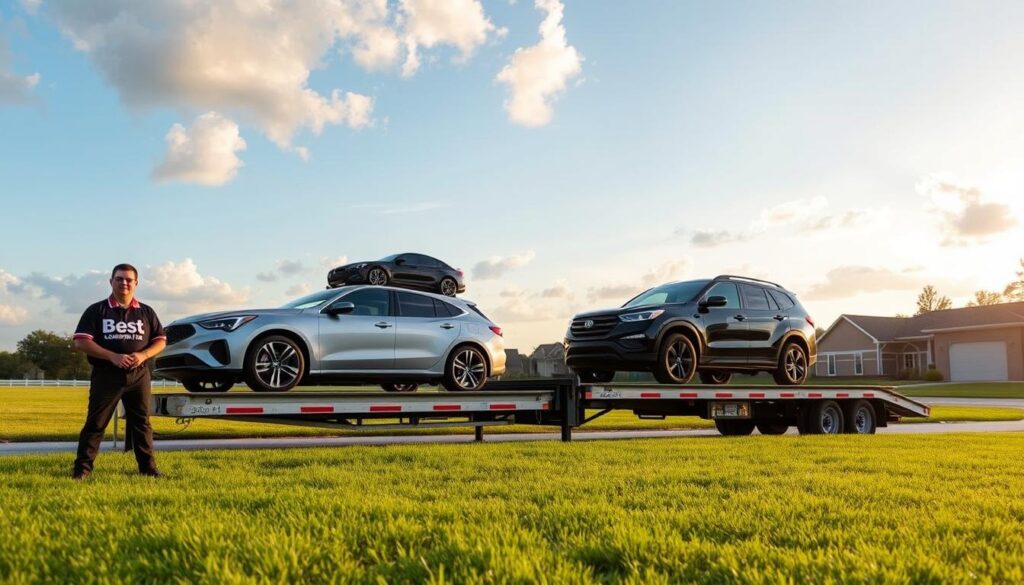
Professional door-to-door service makes pickup and delivery simple and direct. Drivers meet customers at a practical address for pickup and hand off at the destination. This reduces time and avoids terminal handling.
Pickup and delivery are the default options. Large trucks will meet at curbside when access allows. If streets, trees, or tight turns restrict entry, the carrier coordinates a nearby meeting point for safe transfer.
The company offers nationwide coverage across all 50 states, including major hubs such as New Orleans and other metro endpoints. Customers get clear routing and realistic timelines for cross-state moves.
Logistics and trust
The operations team handles routing, carrier scheduling, and dispatch coordination. Partners like Richards Auto Logistics and Sherpa Auto Transport provide vetted, insured carrier capacity.
- One dedicated contact for updates during pickup, transit, and delivery.
- Documented inspections and clear handling standards.
- Proactive communication to keep shipments on schedule.
| Feature | Door-to-Door | Terminal Option |
|---|---|---|
| Convenience | High — carrier meets you | Moderate — you drop off/pick up |
| Access limits | Meeting point may be required | Terminal handles large trucks |
| Coverage | Nationwide, all 50 states | Nationwide, hub-dependent |
Auto Transport Services Available for Church Point Drivers
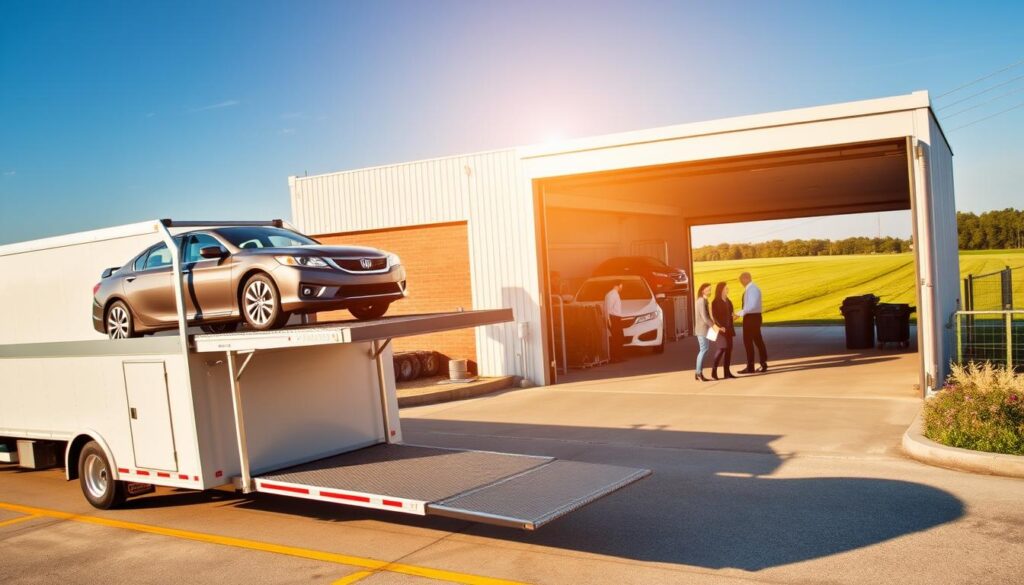
A range of options covers budget moves to high-value, specialty handling. The company matches each request to the right service based on vehicle value, condition, and timeline.
Open auto transport for affordable, everyday car shipping
Open carriers are the most cost-effective choice for standard cars. They focus on secure tie-downs, efficient routing, and routine inspections to keep costs low.
Enclosed auto transport for luxury, exotic, classic, and antique vehicles
Enclosed trailers provide full shielding from road debris and weather. Customers often ask about low-clearance loading and capacity; trailers commonly carry two to seven vehicles depending on size.
Expedited car transport for priority pickup and faster delivery
Expedited service gets priority dispatch. It speeds pickup and reduces transit time when deadlines matter, subject to lane demand and carrier availability.
Inoperable vehicle shipping with winch loading
Non-running vehicles are loaded with winches and rollover ramps. The carrier arrives prepared, so owners do not need to make a vehicle drivable before pickup.
Electric vehicle transport with added handling and equipment considerations
EV moves require planning for weight distribution, loading angles, and battery state-of-charge. Partners like Richards Auto Logistics and FastHaul Auto Transport provide compatible carriers and protocols.
The company recommends the right option for each vehicle rather than a one-size-fits-all approach. Customers get clear guidance and an itemized quote tailored to their needs.
How Our Car Shipping Service Works From Quote to Delivery
Every move follows a simple, documented workflow to protect your vehicle and schedule.
Request an itemized quote
Fast, transparent quotes list each cost so there are no hidden fees. Any change to fees triggers confirmation before dispatch.
Carrier assignment
Shipments are matched with insured, vetted carriers. Partners like Richards Auto Logistics and Sherpa Auto Transport meet quality and safety checks.
Pickup inspection & documentation
At pickup, staff document vehicle condition and sign the Bill of Lading. This record protects the owner and the carrier.
In-transit updates
Customers get timely updates from real people who can answer questions and adjust plans as road conditions change.
Delivery inspection & handoff
On delivery, condition is confirmed against pickup notes. Final paperwork completes the handoff and closes the job.
“An itemized approach prevents surprises and gives clear checkpoints from estimate to final delivery.”
| Step | Who Acts | Customer Role |
|---|---|---|
| Quote | Sales team | Review and approve quote |
| Assignment | Dispatch & carriers | Confirm pickup window |
| Pickup & BOL | Driver & inspection team | Attend inspection, sign BOL |
| Transit updates | Support staff | Ask questions as needed |
| Delivery | Driver & recipient | Inspect, sign, accept condition |
Car Shipping Costs in Louisiana and What Affects Your Rate
Knowing how rates are calculated gives customers a practical frame to compare quotes. Typical pricing in the state runs from about $500 to $1,500 for many moves. Exact fees depend on distance, route demand, and service options selected.
Distance and lane demand are the biggest drivers. High-traffic corridors, especially near I-10, I-20, and routes through New Orleans, usually lower rates because more carriers run those lanes.
Vehicle size and condition also change pricing. Larger SUVs and trucks take more space and weight, which raises operational costs. Non-running or inoperable vehicles need winch gear and extra time, adding to fees.
Open trailers are the cost-effective option for everyday models. Enclosed service costs more due to limited slots and added protection for high-value vehicles.
Seasonality affects availability and timeframes. Summer moves and winter snowbird demand push rates up. Holidays can cause both higher fees and longer transit days.
Itemized quotes help planning. A clear, line-by-line estimate explains fees, expected days of transit, and any add-ons. For a quick comparison of service choices, visit our shipping services.
“Transparent pricing and itemized quotes prevent surprises and make approvals straightforward.”
Estimated Transit Time and Pickup Scheduling for Church Point Auto Transport
Clear pickup scheduling reduces surprises and keeps shipments on track from loading to handoff.
Once a vehicle is loaded, delivery windows depend on mileage, driver hours, weather, and multi-stop routing. Typical regional moves complete quickly. Many Louisiana routes finish in 1–7 days, while longer routes may take up to 1–10 days.
Common delivery windows for regional vs. cross-country service
Regional lanes often finish within the shorter days range. Cross-country runs require more time and coordination for driver shifts and routing.
How flexible pickup dates can reduce delays and lower rates
Pickup scheduling is the variable that most affects total timeline. A flexible pickup window—often up to five days—lets carriers optimize routing and lower rates.
Holiday traffic, peak season volume, and effects on transit
Holidays and peak season create congestion and limited carrier availability. These conditions increase delays and extend days in transit (Sherpa Auto Transport, updated 2026).
- Operational note: Shipments move when drivers are available and routes align.
- Communication: Customers receive human updates with revised ETAs if timelines shift.
- Plan ahead: For firm deadlines, request expedited support early or get a fast quote.
Insurance, Vehicle Protection, and Safety Standards During Transport
Knowing how protection works before pickup reduces disputes and speeds claims resolution.
Insurance basics: Carriers in professional networks typically carry cargo insurance. Customers should request policy limits and a summary of covered events before dispatch. Ask for a written statement so coverage is clear if damage occurs during transport.
Covers and pre-shipment checklist
Take time-stamped photos of vehicle exterior and interior. Wash the vehicle first so scratches and chips show clearly.
Note all marks on the Bill of Lading at pickup. Keep copies of photos and signed documents until delivery confirms the condition.
Loading, tie-downs, and driver standards
Secure loading uses stable angles and rated straps to prevent shifting. Proper tie-down care minimizes contact and stress points on the frame.
Drivers show professionalism through punctual updates, careful inspections, and clear paperwork. The company’s vetted carriers follow these standards for high-value moves and enclosed shipments.
| Item | What to Request | Why It Matters |
|---|---|---|
| Policy summary | Coverage limits & exclusions | Sets liability for damage |
| Photos | Time-stamped exterior/interior | Proves pre-shipment condition |
| Bill of Lading | Detailed condition notes | Baseline for claims |
Local Route Planning Around Church Point, New Orleans, and Key Louisiana Highways
Linking local pickups to nearby interstate hubs reduces empty miles and speeds up delivery. Planners map each move to major corridors to cut time and cost.
Hub-city advantages near I-10, I-20, and I-49
Highway lanes with dense carrier activity offer more capacity and tighter schedules. I-10 and I-20 often lower rates because many carriers run those corridors.
Near New Orleans, lane depth improves options for fast pickup and reliable delivery. That hub effect benefits nearby towns by connecting them to major runs.
Urban vs. rural pickup considerations
Downtown pickups can face tight streets, low clearances, and restricted loading zones. Suburban or highway-accessible meeting points make loading safer and faster.
Rural lanes usually have less carrier frequency. That raises the price and expands ETA windows. The company plans meeting locations to avoid access constraints.
Smarter routing to reduce delays and cost
Smart routing focuses on fewer deadhead miles and better carrier matching. Fewer empty runs lowers fees and reduces the chance of preventable delays.
- Use hub connections to compress routes.
- Choose nearby meeting points when streets limit large trucks.
- Match vehicle needs with carrier capabilities for efficient handoffs.
The operations team coordinates pickup and delivery details to protect the vehicle and the timeline. For a nearby example of route planning, see the Rock Springs route example.
| Factor | Hub Routes | Rural Routes |
|---|---|---|
| Carrier density | High — competitive pricing | Low — limited runs |
| Access | Good — highway-ready | Variable — meeting points required |
| Typical ETA | Shorter — tighter windows | Longer — more variability |
Weather, Hurricane Season, and Other Reasons Shipments Can Be Delayed
High winds, flooding, and hurricane systems often change planned routes and extend transit days. Coastal weather in this region can force carriers to pause operations for safety. Those decisions protect drivers and the vehicle during severe conditions.
How coastal weather patterns can impact timelines
Storm surge and flooded roads reduce safe access for large rigs. Wind events can close bridges or make open trailers unsafe.
Hurricane season brings unpredictable closures and detours. That affects both pickup and delivery windows when carriers wait for safe conditions.
What we do to communicate changes and keep delivery on track
Safety-first holds are used instead of risky driving. When pauses happen, the team reschedules or reroutes to avoid unnecessary risk.
Customers receive direct updates on pickup shifts, revised ETAs, and clear next steps. Updates focus on confirmed milestones, not vague estimates.
“When a hurricane threat arose, Sherpa Auto Transport noted the carrier paused and provided step-by-step timing updates that eased stress.”
- Explain risk factors: coastal storms, heavy rain, and high winds can block routes.
- Manage delays by rescheduling and finding alternate lanes when safe.
- Communicate changes: updated pickup windows, new ETAs, and action items for customers.
| Weather Factor | Typical Impact | Company Response |
|---|---|---|
| Hurricane systems | Multi-day route closures | Pause moves; reschedule and reroute |
| Flooding | Local road inaccessibility | Choose alternate meeting points |
| High winds | Unsafe open-vehicle travel | Hold until wind subsides or use enclosed options |
Delays can affect time on the road, but they are managed with clear steps to protect the shipment and the driver. For more on common causes and how delays are handled, see our top reasons behind delays.
Why Customers Choose Our Church Point Car Transport Company
Customers rely on this company for clear quotes, service choices that match vehicle needs, and steady updates from real people. The team builds trust with practices that remove surprises and protect each shipment.
Transparent pricing and itemized quotes that prevent surprise fees
Itemized quotes list every fee so customers can approve costs with confidence. This approach eliminates hidden fees and speeds budgeting and approvals.
Tailored options for daily drivers, classics, EVs, and non-running vehicles
The company offers open trailers for economy moves, enclosed carriers for high-value vehicles, expedited lanes for urgent timelines, winch loading for non-running units, and EV-ready handling protocols. Each option is matched to the vehicle and timeline.
Dedicated support with clear updates from pickup to delivery
The support team gives timely, human updates at each milestone. Customers get direct answers about pickup windows, route changes, and delivery ETAs.
Carrier quality standards: insured partners and careful vetting
Insured, vetted carriers such as Richards Auto Logistics, FastHaul Auto Transport, and Sherpa Auto Transport meet strict checks for safety and loading practices. This reduces risk and preserves condition during transit.
“Transparent quotes, tailored options, and vetted carriers make planning simple and predictable.”
| Decision Driver | What Customers Want | Company Practice |
|---|---|---|
| Price clarity | No surprises; clear fees | Itemized quote with fee confirmation |
| Service fit | Options for different vehicle needs | Open, enclosed, expedited, winch, EV-ready |
| Communication | Real-time, human updates | Dedicated contact for each shipment |
| Carrier quality | Insured, professional handlers | Vetting, insurance verification, loading standards |
Dependable partner: The company serves one-time customers and repeat commercial shippers who need consistent care and accountability. For a related route example and quick quote, see this Corpus Christi route page or call (307) 288-5972.
Conclusion
Trustworthy, business-grade vehicle moves close the loop with clear fees and confirmed timelines.
Typical local costs range from about $500–$1,500 and many routes finish in 1–7 days. For an exact price and ETA, request an itemized quote that reflects route, vehicle specs, and preferred pickup window.
The company offers open and enclosed options, expedited lanes, winch loading for inoperable units, and EV-ready handling. These choices protect budget and condition while matching service needs.
Request a detailed quote now to confirm pickup and delivery details and let the team assign a vetted carrier. Email info@bestcarshippinginc.com or call (307) 288-5972.
Expect transparent communication, documented inspections, and insured carrier standards from pickup to final handoff.