
BestCarShipping Inc. provides a dedicated hub for customers who need reliable vehicle movement. The team sets clear expectations for pickup, delivery, and ongoing communication.
Safety and transparency guide every step. Drivers perform documented inspections and the office issues clear paperwork. Dispatch offers consistent updates from pickup through delivery.
Customers can request a quote and compare options right away. Door-to-door service is standard. If access is limited, staff will arrange a nearby meeting point to keep schedules on track.
The main choices—open, enclosed, expedited, and inoperable—match different budgets and protection needs. This approach gives clients practical options and peace of mind while their vehicle is handled.
Contact for immediate assistance: (307) 288-5972 or info@bestcarshippinginc.com. Request scheduling based on route and vehicle details.
Key Takeaways
- Professional coordination for pickup, delivery, and updates.
- Documented inspections and clear paperwork for peace of mind.
- Door-to-door service with fallback meeting points for access limits.
- Options include open, enclosed, expedited, and inoperable moves.
- Request a quote and confirm scheduling by route and vehicle details.
Trusted Auto Transport Service in Elton and Across Louisiana
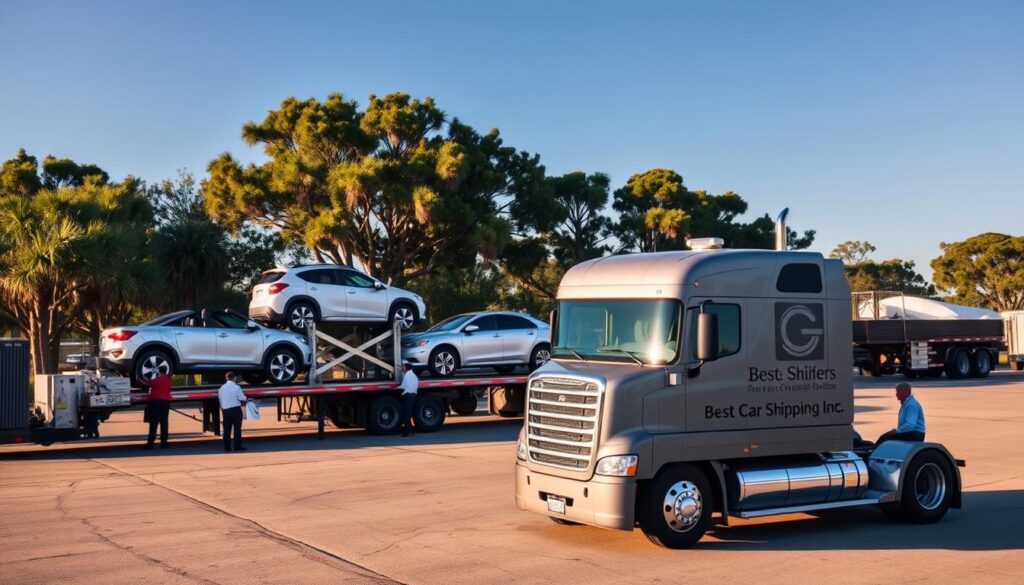
BestCarShipping Inc. coordinates reliable moves through defined lanes and clear roles. Brokers confirm schedules and paperwork. Carriers provide equipment and handle pickup. Drivers execute the delivery and perform inspections.
Who this service is for
Residents relocating, online buyers, dealers, military families, students, and businesses benefit most. Fleet projects and one-off moves receive tailored pickup windows and documentation. The team manages permits and special handling when needed.
Why the state is well-positioned
Major interstates—I‑10, I‑20, I‑14, I‑220, I‑49, I‑59 and I‑69—create strong east/west coverage. That routing lets carriers bundle loads and keep transit predictable. Pricing stays competitive when lanes run frequently through regional hubs.
What to expect
- Scheduling confirmation and dispatch coordination.
- Driver contact once assigned and pickup inspection notes.
- Clear paperwork and regular transit updates.
| Role | Primary Responsibility | Customer Touchpoints |
|---|---|---|
| Broker | Matches lanes, confirms booking, issues paperwork | Quotes, confirmations, billing |
| Carrier | Provides trailer and scheduling | Dispatch updates, equipment details |
| Driver | Picks up, inspects, delivers | Pickup call, ETA, delivery sign-off |
Need help arranging a move? Call (307) 288-5972 or email info@bestcarshippinginc.com for a clear plan and fast confirmation.
Car Shipping & Auto Transport in Elton, Louisiana
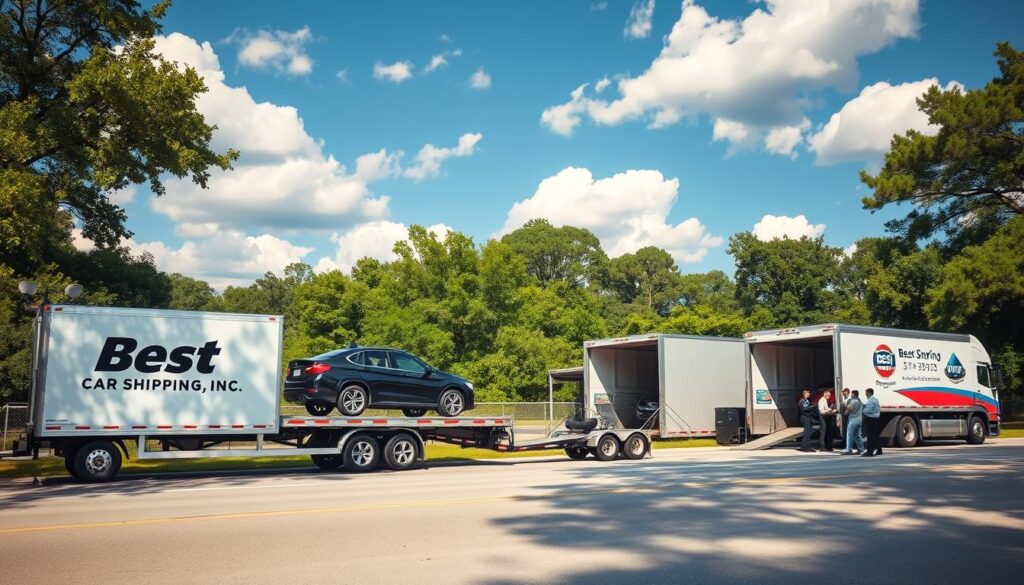
Clients receive clear pickup and delivery plans that account for street access, truck size, and local rules.
Door-to-door definition: The carrier will attempt pickup and delivery at the given address when it is safe and legal for a large truck. If access is restricted, the team arranges a nearby, truck-friendly staging point to avoid delays.
Common access limits include tight turns, narrow roads, low-hanging trees, and local restrictions. These issues can prevent direct driveway pickup. A nearby meeting point keeps the shipment on schedule and reduces extra miles for the driver.
Shipments to or from the area link quickly to major corridors—I‑10, I‑20, I‑49, I‑55, and I‑12. That routing improves scheduling and lowers deadhead miles. Reliable carrier assignment depends on accurate vehicle details, operating condition, and route timing.
Expectations for timing: Pickup and delivery are provided as windows rather than exact minutes. Dispatch keeps customers informed throughout the process and offers one clear point of contact for updates and questions.
Auto Transport Options Available
Available service tiers range from budget-friendly open trailers to enclosed hauls for high-value vehicles.
Open carrier service for everyday vehicles
Open trailers are the default for most daily drivers. They offer wide carrier availability and lower cost. Expect savings of roughly 30–50% compared with covered options.
Enclosed protection for luxury and classics
Enclosed transport shields high-value vehicles from road debris and weather. Capacity is limited, so price is commonly 40–60% higher. This option suits collectors and exotic models.
Expedited moves when timing matters
Expedited service targets faster pickup and routing. It reduces layovers and gets priority carrier matches. Expect higher price and tighter pickup windows.
Inoperable vehicle requirements
To prevent day‑of cancellations, carriers require the vehicle to roll, steer, and brake. If special equipment is needed, the team confirms that at quote time.
Choosing the right option: Balance budget, risk tolerance, and schedule. The company explains what each service includes and confirms equipment and cost before dispatch. For local pricing and quotes, see Louisiana car shipping.
How the Vehicle Shipping Process Works From Start to Finish
A clear, step-by-step process gives customers confidence from start to finish. The workflow is designed to be predictable and easy to follow.
Request a fast quote and confirm your route
To get a fast quote, customers provide accurate origin and destination, year/make/model, vehicle condition, preferred service type, and desired time window. This information lets dispatch match lanes and provide a firm price.
Carrier assignment, scheduling, and dispatch coordination
Dispatch assigns a vetted carrier based on route demand and equipment needs. The carrier confirms pickup windows, driver contact, and expected transit days. Customers receive booking confirmation and a clear point of contact.
Pickup inspection and the Bill of Lading explained
At pickup the driver documents the vehicle condition. The Bill of Lading records pre-existing marks and the agreed shipment terms. That document is the official receipt and governs claims if issues appear later.
Transit updates, delivery inspection, and final signature
During transit, dispatch and the driver provide status updates and ETA changes. On delivery, customers compare the vehicle to the Bill of Lading and note any new damage immediately.
Final signature completes the process. The driver and customer sign the paperwork to confirm receipt. Clear communication and professional handling keep the shipment on schedule from start to finish.
| Step | Action | Customer Role |
|---|---|---|
| Quote | Provide route, vehicle details, and timing | Confirm information for accuracy |
| Carrier Assignment | Match carrier and schedule pickup | Receive and review confirmation |
| Pickup & BOL | Document condition and sign Bill of Lading | Review and keep a copy of BOL |
| Transit | Provide updates and ETA changes | Monitor status and prepare for delivery |
| Delivery | Inspect vehicle and sign final paperwork | Note any issues immediately |
For a quick quote and to confirm routing options, visit instant quote page or call (307) 288-5972.
Instant Quote Guidance for Elton Auto Transport
Start with the nearest truck-accessible point and precise vehicle information to get a dependable instant quote. Provide exact addresses or the closest practical meeting location, plus year, make, model, and operability.
Details that impact quote accuracy
Distance and miles directly affect cost. Rural pickups add deadhead miles and may raise the price.
Vehicle condition and modifications (lift kits, oversized tires, low clearance, or inoperable status) must be disclosed up front to avoid day‑of changes.
Flexible pickup windows vs. exact dates
Flexible windows lower price because carriers can consolidate loads and reduce empty miles. Exact dates require priority scheduling, limit carrier availability, and usually increase cost.
| Factor | Why it matters | How to improve quote accuracy |
|---|---|---|
| Pickup location | Affects routing and miles | Provide truck‑friendly address or meeting point |
| Vehicle specs | Determine equipment needed | List make/model, dimensions, and condition |
| Schedule type | Impacts availability and price | Choose flexible window when possible |
Transparency note: Quotes cover the listed services but can change with seasonal demand, fuel, and carrier availability. Once confirmed, key terms are locked and dispatch provides final pickup and delivery details.
Louisiana Car Shipping Costs and What Impacts Price
Rates vary widely across the state, so understanding the main cost drivers helps customers set realistic expectations. Typical trips often fall between $825 and $1,225, but final numbers depend on several variables.
Distance, miles, and route selection
Distance is the biggest cost factor. More miles mean higher fuel and driver time.
Route choice and lane frequency also matter. Direct corridors lower empty runs and can cut price.
Vehicle size, condition, and equipment needs
Large or heavy vehicles reduce trailer capacity. That raises per-unit price.
Inoperable units often require winch gear. Special equipment adds to the estimate.
Seasonality, demand, and carrier availability
Summer, holidays, and major events tighten capacity. Carrier demand pushes rates up.
Booking early and keeping timing flexible helps protect both cost and pickup reliability.
Urban vs. rural pickup considerations near Elton
Rural pickups can increase deadhead miles and scheduling work. Metro corridors offer more frequent carrier flows and lower marginal fees.
Open vs. enclosed pricing expectations
Open trailers are the budget choice for everyday vehicles. Enclosed transport offers more protection but costs more.
| Factor | Impact on Price | Customer Tip |
|---|---|---|
| Distance & miles | Primary driver of cost | Provide exact addresses; choose main corridors |
| Vehicle size/condition | Affects capacity and equipment fees | Disclose mods and operability at quote time |
| Season & carrier demand | Can raise prices during peak periods | Book early; use flexible windows |
| Pickup location | Rural adds deadhead miles; urban lowers fees | Choose truck‑friendly meeting points if needed |
Final note: Request quotes early, share accurate vehicle details, and accept flexible pickup windows to keep price predictable and ensure timely delivery. For a quick estimate, contact BestCarShipping at (307) 288-5972 or info@bestcarshippinginc.com.
Popular Louisiana Auto Transport Routes and Current Market Price Ranges
Use these 2026 benchmarks to plan budgets and timing for popular long‑distance routes starting in Louisiana.
Outbound and inbound lanes: The table below lists common routes, typical days on the road, and price ranges to help estimate costs. “Days” refers to actual transit time on the truck and does not include time to assign a carrier or schedule pickup.
| Route | Typical days | Price range (2026) | Notes |
|---|---|---|---|
| Louisiana → Minnesota | 2–3 days | $799–$999 | Quick corridor; hub access helps keep price down |
| Louisiana → Oregon | 5–7 days | $999–$1,199 | Long haul; expect higher fuel impact |
| Louisiana → Massachusetts | 3–4 days | $799–$999 | Reliable eastbound lanes |
| Louisiana → Washington | 5–7 days | $1,099–$1,299 | West coast premium applies |
| Louisiana → Arizona | 3–4 days | $999–$1,199 | Mid-range long haul |
| Minnesota → Louisiana | 2–3 days | $749–$949 | Inbound economy lanes |
| Oregon → Louisiana | 5–7 days | $1,149–$1,349 | Higher due to westbound demand |
| Massachusetts → Louisiana | 3–4 days | $899–$1,099 | Consistent east‑to‑south service |
| Washington → Louisiana | 5–7 days | $999–$1,199 | Carrier availability varies by season |
| Arizona → Louisiana | 3–4 days | $949–$1,149 | Competitive but seasonal |
Routing hubs matter: High-volume nodes such as new orleans and baton rouge often lower the final price due to frequent carrier runs and staging options.
Pricing note: These ranges reflect 2026 market conditions. Fuel, seasonality, and exact pickup or delivery addresses can change the final number. For a live quote and a tailored route review, contact BestCarShipping at (307) 288-5972 or info@bestcarshippinginc.com.
Estimated Delivery Times for Louisiana Vehicle Transport
Timing estimates help plan move dates, work schedules, and vehicle availability with confidence.
Short-haul benchmarks: For runs under 200 miles, expect transit to complete in 1–2 days after pickup. This covers most regional moves and lets customers plan final delivery on a nearby date.
Long-haul benchmarks: Cross‑country runs up to roughly 2,000+ miles commonly take several days. A practical benchmark is about 7–9 days of transit depending on lane flow and stops.
Dispatch time and the pickup window are separate from transit days. Booking lead time and assigned pickup windows add to the total calendar timeline.
Variables that affect shipment days
- Traffic, road construction, and unexpected detours.
- Weather and seasonal demand that slow lanes.
- Federal driver hour limits and required rest breaks.
- Distance and chosen route; longer miles equal more days.
Proactive communication: The team issues regular updates so customers can adjust plans. For specific timing, call (307) 288-5972 or email info@bestcarshippinginc.com.
| Distance | Typical transit days | When to expect delivery |
|---|---|---|
| < 200 miles | 1–2 days | Local scheduling; short windows |
| 200–1,000 miles | 2–5 days | Regional lanes; moderate variability |
| 1,000–2,000+ miles | 5–9 days | Cross‑country; plan flexible windows |
Major Louisiana Corridors That Influence Carrier Availability
Connected interstates act as arteries, sending regular carrier traffic through regional hubs.
Freight density on main corridors drives carrier availability more than isolated local demand. High-frequency lanes let dispatch stack loads and shorten wait times.
Primary routes:
- I‑10, I‑20, I‑49, I‑55, and I‑12 form the backbone of regional movement.
- I‑59, I‑69, and I‑220 support feeder lanes and staging near large terminals.
Examples make the logic practical. New Orleans → Houston is about 350 miles via I‑10. Shreveport → Dallas runs ~190 miles on I‑20. Baton Rouge → Memphis is ~360 miles via I‑55.
Elton ties into these patterns through nearby lanes. Vehicles are routed toward high-volume metro corridors for faster matching and lower marginal cost. This approach favors reliability and predictable timing over shortcuts.
| Corridor | Typical lane | Notes |
|---|---|---|
| I‑10 | New Orleans ↔ Houston (~350 miles) | Daily runs; high capacity |
| I‑20 | Shreveport ↔ Dallas (~190 miles) | Regional shuttle lanes |
| I‑55 | Baton Rouge ↔ Memphis (~360 miles) | Frequent carrier options |
Nearby Hubs We Commonly Serve Around Elton
Serving nearby metro and port centers lets the company match more carriers and improve pickup reliability.
New Orleans and port-area demand
New Orleans creates high-volume lanes due to port activity and metro freight. That demand increases availability of both open and enclosed equipment and helps place a carrier quickly. Local metro flows also improve options for vehicles that need special handling.
Baton Rouge industrial corridors and staging
Baton Rouge supports staging near interstate splits. Industrial corridors provide truck-friendly meeting points. Customers benefit from predictable pickup windows and fewer day‑of changes.
Lafayette, Lake Charles, Monroe, and Shreveport routes
These cities act as practical anchors along I‑10, I‑20, and I‑49. They let dispatch consolidate loads and shorten route time. More frequent lanes mean better pricing and fewer scheduling surprises for customers.
- Broader network advantage: Nearby hubs widen carrier choice and reduce empty miles.
- Customer benefit: Improved pickup reliability and more competitive pricing.
- Access solutions: The team recommends the best hub-based location when a pickup address is hard for large trucks.
Common Pickup and Dropoff Zones That Keep Delivery Smooth
Strategic staging zones reduce driveway problems and keep schedules reliable across busy corridors. These locations speed loading, cut risk, and protect vehicles when residential access is limited.
Truck-friendly meeting points and accessible staging areas
- Wide entrances and legal parking that allow multi-car carriers to turn safely.
- Good lighting and visible signage for quick handoffs to the assigned driver.
- Clear access lanes that avoid tight turns, low overhangs, or local parking restrictions.
Airport, interstate, and metro-area pickup patterns
Common staging zones include the New Orleans port area, Louis Armstrong Int’l Airport (MSY), Metairie/Kenner, Baton Rouge industrial corridors, Lafayette I‑10 exits, Lake Charles truck stops, Shreveport I‑20 interchange, Monroe I‑20 exits, and the Slidell I‑12 corridor.
Drivers favor airport lots and interstate interchanges to keep the route efficient and maintain delivery windows.
The team confirms the exact meeting location before pickup. This ensures a safe handoff, preserves the shipment schedule, and reduces the chance of last‑minute changes. For questions about a specific pickup or delivery location, contact (307) 288-5972 or info@bestcarshippinginc.com.
Traffic Patterns and Timing That Can Affect Pickup and Delivery
Scheduling that accounts for local traffic reduces surprises and helps meet expected delivery windows.
Urban congestion directly alters pickup and delivery windows. Drivers must navigate heavy interchanges and bridge choke points, which adds unplanned miles and delays. Dispatch plans around known hotspots to keep timelines realistic.
Known bottlenecks on I‑10 and key interchanges
Several metro choke points routinely affect routes. The New Orleans I‑10 CBD and Crescent City Connection see severe rush-hour backups. The Baton Rouge I‑10/I‑12 split regularly slows freight flows.
Shreveport’s I‑20/I‑49 junction has high truck density that can lengthen transit time. These areas often force staging at nearby truck‑friendly locations to protect the scheduled pickup or delivery window.
Rush-hour and holiday-weekend considerations
Morning rush (roughly 7–9am) and evening rush (4–6pm) are the most disruptive for handoffs. When feasible, dispatch avoids scheduling pickups during those windows to reduce risk of missed appointments.
Holiday weekends and storm evacuations increase congestion and tighten carrier availability. During those times, customers should expect longer booking lead times and potential extension of delivery days.
| Issue | Typical impact | How dispatch mitigates |
|---|---|---|
| Rush hours | Longer ETA, missed narrow windows | Schedule outside peak, use staging points |
| Interchange bottlenecks | Added miles and slow progress | Reroute via higher-capacity corridors |
| Holiday/storm demand | Carrier shortages; gridlock | Book earlier; provide contingency alerts |
Practical tip: Flexible pickup times and clear staging locations give dispatch the tools to limit delay exposure. For specific questions about timing or to set a secure pickup window, visit our El Monte service page or call (307) 288-5972.
Seasonal Weather and Road Conditions in Louisiana
Severe seasonal weather shapes how routes are scheduled and how long moves actually take.
Hurricane season runs June through November. Evacuation orders can create major delays and force reroutes. Dispatch builds contingency plans and notifies customers when timelines expand.
Flooding and low-lying closures are common after heavy rain. Detours add miles and extra days to the expected route. Drivers avoid unsafe roads to protect the vehicle and maintain insurance coverage.
Fog, heat, and open-trailer considerations
Fog near rivers and coastlines reduces visibility and slows progress. That changes delivery windows and can shift pickup times.
Summer heat increases demand for moves. Higher demand raises price and limits carrier availability. Open trailers expose vehicles to sun and road debris, so timing matters for protection and cost.
Best windows for cost and reliability
Book outside major holidays and peak storm months when possible. Early booking and flexible pickup windows improve availability and lower price.
“Proactive monitoring and clear updates reduce surprise delays and protect schedules.”
| Weather Issue | Typical Impact | How the team responds |
|---|---|---|
| Hurricane / evacuations | Major delays; possible route suspension | Contingency routing; customer alerts |
| Flooding / road closures | Longer miles; added days | Alternate routing; safety-first decisions |
| Fog / low visibility | Slower travel; shifted windows | Adjusted ETAs; staging options |
| Summer heat & demand | Higher price; limited availability | Book early; consider enclosed options |
Practical advice: Schedule moves well before June or after November when possible. The team monitors route conditions continuously and communicates changes quickly to protect the vehicle and the schedule. For questions, call (307) 288-5972 or email info@bestcarshippinginc.com.
Local Events That May Impact Scheduling Near Major Louisiana Cities
Event calendars can quickly alter how carriers reach a pickup point and how long a route will take.
Large festivals and big-game days change traffic patterns and staging availability. That affects estimated delivery windows even when mileage is unchanged.
New Orleans festivals—Mardi Gras, Jazz & Heritage, and the French Quarter Festival—produce road closures, banned turns, and dense downtown crowds for roughly two weeks around peak events. Carriers often must use alternate pickup points or staging lots to avoid restricted zones.
Baton Rouge sees game-day gridlock around major venues. LSU football weekends create heavy congestion and reduce truck-friendly access near stadiums. That can shift pickup time by several hours or add buffer days to the schedule.
Customers should disclose event-sensitive dates early. Early notice lets dispatch plan alternate routes, reserve staging, and prevent missed appointments.
Best practice: build buffer days when scheduling moves close to major festivals or sporting events. When access is restricted, the team arranges a nearby, truck-friendly meeting point to keep the shipment on track.
| Event Type | Typical Impact | Recommended Action |
|---|---|---|
| New Orleans parades & festivals | Road closures, restricted turns, heavy downtown congestion | Use alternate staging; allow extra days for pickup/delivery |
| French Quarter & Jazz events | High pedestrian volumes and limited truck access | Schedule outside peak hours; confirm meeting point |
| Baton Rouge game days | Stadium gridlock and limited truck-friendly lots | Avoid game windows or add buffer days; choose nearby hub |
| Regional holiday weekends | Increased traffic and carrier demand | Book early; expect longer lead times |
Need a plan around an event date? Share dates at booking and visit our event planning guide for routing tips. For direct help, call (307) 288-5972 or email info@bestcarshippinginc.com.
Louisiana Regulations, Insurance Standards, and Documentation
Clear verification of carrier authority and documentation protects a customer’s asset from day one. The company confirms active FMCSA authority and valid insurance before assigning a carrier. That step reduces risk and gives a single point of accountability for the move.
Carrier vetting and FMCSA insurance expectations
The broker validates the carrier’s DOT and MC numbers and checks current insurance coverage. Customers may request proof of public liability and cargo coverage for the assigned carrier.
Drivers must present paperwork that matches the booking. This protects the owner and clarifies who is responsible during transit.
OMV steps for new residents
New residents must arrange a VIN inspection at the state OMV within 30 days of arrival. Bring the title, proof of insurance, and ID before getting plates.
Keeping ownership documents handy speeds registration and avoids fines. Do not leave personal papers inside the vehicle during pickup.
Emissions, tint, and parish rules
Emissions testing and tint limits vary by parish. Jefferson and St. Charles have specific checks; other parishes may enforce different rules.
Confirm local requirements before registration to avoid unexpected repairs or reinspection.
| Topic | Requirement | Customer action |
|---|---|---|
| Carrier vetting | Active FMCSA authority; insurance on file | Request carrier proof; review credentials |
| Insurance | Public liability and cargo coverage | Retain proof; ask questions before pickup |
| OMV | VIN inspection within 30 days; title & insurance for plates | Schedule inspection; bring originals |
| Local rules | Parish-specific emissions and tint laws | Verify parish requirements before registration |
Documentation at pickup: The Bill of Lading records condition at origin and at delivery. Keep a copy and photograph the vehicle during handoff.
“Confirm carrier credentials and keep your title and insurance ready to speed registration.”
For help verifying carrier details or to arrange reliable vehicle transport, visit our reliable vehicle transport page or call (307) 288-5972. Email info@bestcarshippinginc.com with questions about documentation and coverage.
Prepare Your Car for Pickup in Elton for Peace of Mind
A short checklist on the day of pickup reduces surprises and helps the driver complete the inspection quickly.
Cleaning and photo documentation matter. Wash the vehicle so the inspector can see blemishes clearly. Take time-stamped photos of all sides, the roof, wheels, and any existing damage.
Personal items and accessories should be removed. Valuables and loose items are not covered by carrier insurance. Secure or remove roof racks, spoilers, and aftermarket parts and disclose any modifications at booking.
Keep fuel about a quarter tank. Provide working keys, disable alarms, and verify battery charge, fluid levels, and tire pressure. A designated adult should be present to sign the Bill of Lading and confirm condition.
| Task | Why it matters | Action |
|---|---|---|
| Clean & photo | Accurate condition record | Wash, time-stamp images |
| Remove personal items | Not covered by insurance | Take valuables with you |
| Prep keys & alarms | Speed pickup and inspection | Provide keys; disable alarm |
“Fewer pickup issues mean fewer schedule shifts and better delivery outcomes.”
Conclusion
Before you finalize booking, confirm the service type, timing flexibility, and accurate vehicle details to protect price and timing. This simple step reduces day‑of changes and keeps shipments on schedule.
Choose open or enclosed, accept a flexible pickup window when possible, and disclose modifications or operability at quote time. Plan around major corridors, weather, and event days to improve carrier availability and reduce unexpected delays.
What to do now: request a firm quote, confirm route and pickup/delivery windows, prepare the vehicle for inspection, and be present to sign paperwork. Benchmarks: short runs often take 1–2 days; long hauls can approach 7–9 days depending on distance and lane demand.
Need help? Contact BestCarShipping Inc. at (307) 288-5972 or info@bestcarshippinginc.com for clear pricing, vetted carrier selection, and a reliable, documented process that protects your vehicle and schedule.