
Car shipping companies move vehicles across Canada with clear timelines and protective handling. For coast-to-coast moves — a distance of 9,306 km — reliable auto transport services use methods like auto carrier, enclosed transport, rail, and flat deck to match capacity and schedule.
The right provider sets expectations up front. Customers compare lanes, request a quote, and weigh timing against protection levels. Short regional delivery differs from long haul in scheduling, capacity, and cost.
This page focuses on full-service options, not a single recommendation. It evaluates accountability, coverage, communication, safety, cost transparency, and delivery timelines as core pillars.
Readers will learn how to choose companies, review transport options (truck, enclosed, rail), pick top providers, understand pricing drivers, assess insurance, and follow simple booking steps. By the end, users can shortlist services and move forward with a confident booking process.
Key Takeaways
- Understand transport methods: carrier, enclosed, rail, flat deck.
- Compare quotes by lane, timing, and protection standards.
- Long hauls across Canada have different scheduling needs than short runs.
- Evaluate providers on safety, communication, and cost transparency.
- Follow clear booking and insurance steps to protect a vehicle.
How to Choose Car Shipping Companies for Shipping Across Canada
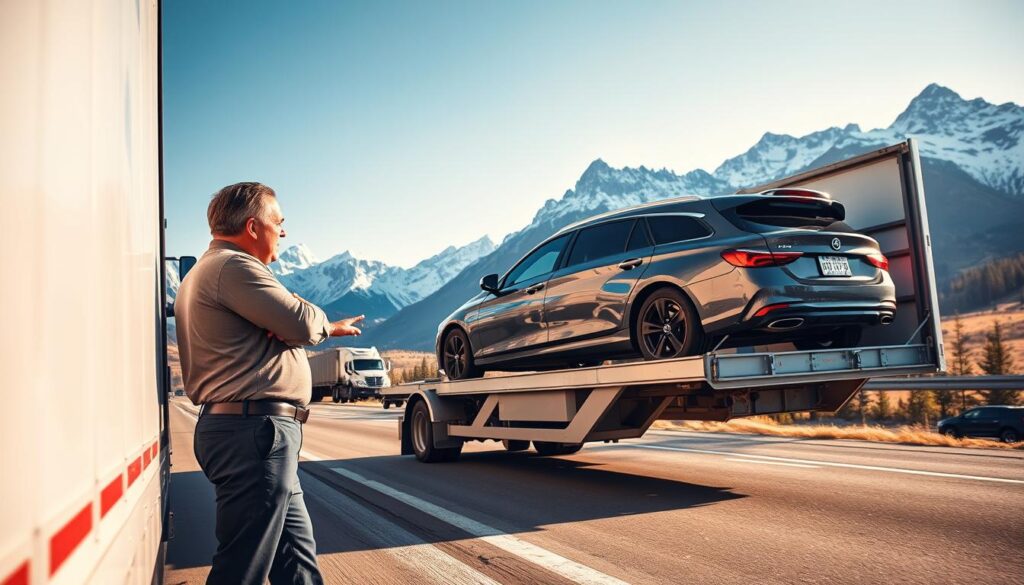
Selecting the right provider starts with knowing who will actually move and insure your vehicle. Confirm whether the firm operates its own fleet or acts as an intermediary. Firms that say “we are not brokers” reduce handoffs and make accountability clearer.
Ask who signs the bill of lading, holds insurance, and handles claims. Able Auto Transport and Hansen’s Forwarding operate managed fleets; Hansen’s adds bonded drivers and secured, fenced yards with 24/7 surveillance.
Coverage, Capacity, and Scheduling
Check provinces served, lane frequency, and the ability to handle private and commercial vehicle volume. Fleet size and lane density affect available pickup windows and the accuracy of a quote.
Tracking and Customer Support
Trackable shipments should include pickup confirmation, live status updates, and exception alerts. Expect named contact points and after-hours support for time-sensitive moves.
Security and Screening
Prefer providers with bonded drivers, controlled terminals, and documented storage procedures. Before booking, ask about inspection reports, who to call for claims, and policies if timing changes.
Request a quote to compare service levels and delivery timelines before you commit.
Car Shipping Options Across Canada: Truck, Enclosed Transport, and Rail
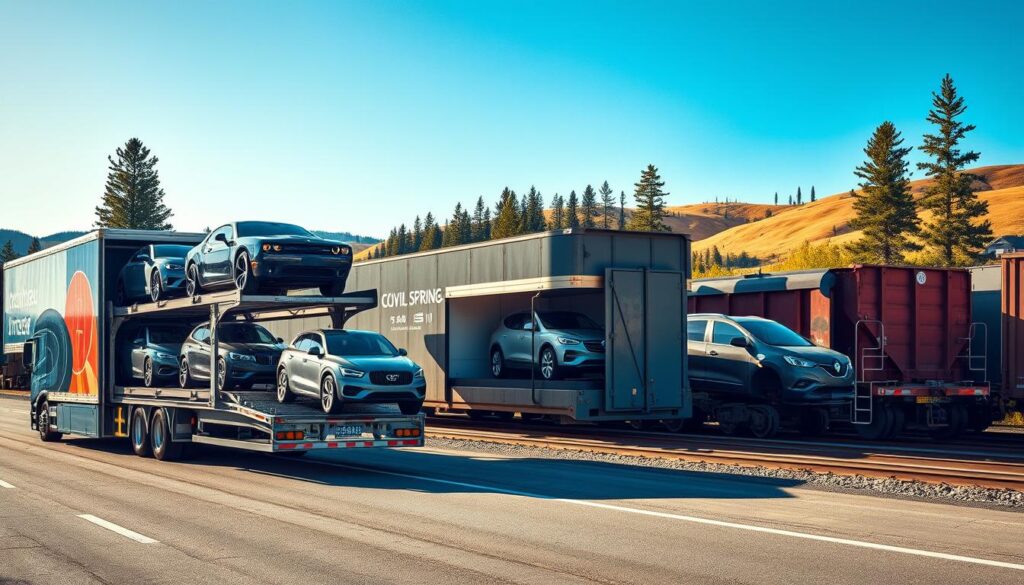
Deciding how to move a vehicle depends on its value, the route, and how fast it must arrive. Match the mode to budget and protection needs.
Multi-car auto carrier transport for long-haul moves
Auto carriers usually carry 6–10 units on open trailers. Shared loads make this a cost-effective choice for standard vehicles on long routes.
Enclosed transport for high-value and classic cars
Enclosed transport typically carries 1–2 vehicles. Use it for vintage, exotic, or sports models to reduce exposure to weather and road debris.
Rail transport: value with longer windows
Rail auto racks can hold up to ~20 vehicles across 2–3 decks. Rail is often cheaper but can add several days due to consolidation and schedules.
Flat deck and short-distance recovery
Flat deck rigs suit short moves, rescues, and non-running vehicles. They offer flexible loading for unusual or damaged units.
Door-to-door vs. terminal-to-terminal
Door-to-door adds convenience but can raise cost. Terminal pickup may save money but needs access to a yard or drop point.
Compliance note: Rail usually bans personal items inside the vehicle. Truck policies vary by carrier discretion.
| Option | Typical Capacity | Cost | Transit Time |
|---|---|---|---|
| Open auto carrier | 6–10 vehicles | Moderate | Direct truck days |
| Enclosed transport | 1–2 cars | High | Direct truck days |
| Rail auto rack | Up to ~20 vehicles | Lower | Longer (consolidation delays) |
| Flat deck / recovery | 1–2 units | Variable | Short runs |
For details on cross-border arrangements or shipping a car from the US to, request a quote and match the method to your timeline and risk tolerance.
Top Pick for Full-Service Auto Transport: Hansen’s Forwarding
For customers who want managed accountability, Hansen’s Forwarding is a clear full-service choice. The company runs its own fleet and manages the entire process instead of acting as a broker.
Operational scale and rail access
40+ years of experience and a fleet of 270+ transport vehicles support high-volume, cross-country moves. A partnership with CP Rail adds access to major rail lines and helps balance capacity on long lanes across canada.
Protection and visibility
Hansen’s holds insurance while vehicles are in their possession. Bonded drivers, fenced yards, on-site guards, and 24/7 surveillance secure parked units.
GPS-tracked trucks and vehicle tracking reduce “where is my vehicle” gaps and improve ETA accuracy.
Who it serves and how to book
The provider supports individuals, dealerships, corporate fleets, and moving firms. Corporate customers can use a portal for booking, tracking, and bulk invoice payments.
Simple process: get a quote, pay online, prepare for pickup, then track delivery to completion. Note seasonal openings for November snowbird shipments from the Prairies to Arizona and California through the Calgary office.
| Feature | What it means | Benefit |
|---|---|---|
| Fleet size | 270+ vehicles | Reliable capacity for long lanes |
| Rail partnership | CP Rail access | Efficiency on cross-country routes |
| Security & insurance | Bonded drivers, fenced yards, 24/7 surveillance, in-possession insurance | Higher safety and claims clarity |
| Technology | GPS trucks, live tracking | Clearer ETAs and customer visibility |
Best for Coast-to-Coast Trucking With an In-House Fleet: Able Auto Transport
Able Auto Transport brings 25+ years of experience moving vehicles across Canada with an owned fleet and a clear promise: “we are not brokers.”
Their model reduces handoffs. Fewer intermediaries means clearer responsibility for scheduling, drivers, and final delivery.
Proven track record and fleet control
Owning carriers gives the company direct oversight of timelines and handling. Customers report on-time arrival and vehicles delivered in good condition.
Service model that matters
Door-to-door delivery and trackable shipments provide visibility and convenience. Live updates help a customer know status without calls.
Who should pick Able Auto Transport
- Standard personal vehicles and repeat lanes.
- Customers who prefer direct trucking and straightforward communication.
- Shippers seeking the best car shipping option with in-house accountability.
Before booking, confirm pickup windows, access limits for large carriers, and how tracking updates are sent. Ask for a written quote and a clear delivery time estimate.
Best Fit by Customer Type: Personal Moves, Dealerships, and Corporate Fleets
Choosing the right provider starts by matching the move to the provider’s strengths. Volume, schedule flexibility, and reporting needs determine the best fit.
Relocation and seasonal moves
Individuals often need clear pickup windows and simple door-to-door delivery. Door-to-door can raise cost but adds convenience for residential addresses.
Snowbirds should plan early. Hansen’s notes November openings for shipments from the Prairies to Arizona and California via Calgary. Early booking secures preferred time and space.
Dealer inventory and repeat lanes
Dealers need predictable transit targets and damage-prevention processes. Repeat-lane scheduling reduces dwell time and protects inventory value.
Corporate portals and centralized workflows
Large fleets require direct booking, vehicle-level tracking, standardized documentation, and consolidated billing. Hansen’s corporate portal supports bulk invoice payments and reporting for logistics teams.
Service discipline matters: consistent customer service and customer support should apply whether moving one vehicle or hundreds. For a quick comparison or to request a quote, visit request a quote.
Car Shipping Cost in Canada: What Impacts Your Quote
Knowing how a quote is built makes it easier to spot real value versus hidden fees. A clear estimate lists distance, load type, handling and any special services. This helps customers compare offers from different providers fairly.
Distance and route examples
Long, cross-country lanes cost more per move but less per kilometer when consolidated. Busy routes with frequent runs lower rates. Remote or low-frequency lanes add surcharges.
Open carrier vs. enclosed pricing
Open trailers spread cost across many units. Enclosed transport carries fewer vehicles and adds protection, so it generally costs more.
Rail vs. truck tradeoffs
Rail often reduces base cost but increases delivery windows and coordination at terminals. Truck routes offer direct door delivery but can be pricier for long hauls.
Terminal pickup, door delivery, and non-running vehicles
Terminal pickup saves money. Door delivery adds convenience and may be limited by access. Inoperable condition triggers winching or crane fees and special equipment charges.
| Price Driver | Effect on Cost | Decision Tip |
|---|---|---|
| Distance & lane frequency | Higher for remote/low-frequency routes | Book early or choose consolidation |
| Load type | Enclosed = higher, open = moderate | Use enclosed for high-value vehicles |
| Mode (rail vs. truck) | Rail lower cost, longer time | Pick rail for budget, truck for speed |
| Vehicle condition | Non-running = extra fees | Repair or plan for special equipment |
Risk and value matter: verify insurance, inspection standards, and documentation. Higher cost can reflect better protection and clearer claims handling.
For a tailored quote or questions about the process, contact info@bestcarshippinginc.com or (307) 288-5972.
Delivery Time Expectations for Car Shipping Across Canada
Delivery windows vary widely; realistic timelines reduce surprises for everyone. For moves across canada, ETA depends on lane, mode, and consolidation schedules. Customers should plan using ranges, not exact dates.
Typical long-haul timelines
Use these anchor points when planning: Edmonton to Toronto can take up to 6 days. Vancouver to Toronto can take up to 10 days.
Weather, route stops, and terminal consolidation can extend those ranges by several days.
Why book a few weeks ahead
Providers prefer booking weeks in advance to match capacity and avoid last-minute rate spikes. Early booking yields tighter pickup windows and fewer scheduling surprises.
Seasonality, method, and communication
Peak months and winter conditions reduce available trailers and may slow linehaul time. Direct trucking lanes move faster. Rail adds terminal coordination and extra days.
- Milestones to expect: pickup confirmation, in-transit update, ETA revision, delivery notice.
- Good customer service means proactive alerts when times shift.
For cross-border options or a tailored timeline, request a quote at cross-border transport or contact info@bestcarshippinginc.com.
Insurance, Inspections, and Vehicle Condition Standards
Strong proof of coverage and a clear inspection record are non-negotiable before any vehicle move. Ask for written policy details and confirm who holds liability while the unit is in custody.
What to request before pickup
Request a copy of the insurance policy with limits, deductibles, and listed exclusions. Verify whether the provider or an insurer accepts responsibility during transit and storage.
Pre-shipment inspection steps
Document the unit with photos in good light. Capture close-ups of existing scratches, dents, glass, wheels, and the interior.
Keep dated notes and email the inspection record to the listed contact. This prevents disputes at delivery.
Secure handling expectations
Expect bonded drivers, fenced yards, and controlled access at terminals. Hansen’s model — fenced lots, guards, and 24/7 surveillance with in-possession insurance — is a solid benchmark for safety.
Confirm the claims process: ask customer support for escalation steps, required evidence, and submission deadlines. For a vetted list of trusted options, see best shippers.
How to Ship Your Car: Booking, Prep, Pickup, and Tracking
A short checklist before pickup saves time and prevents extra fees at delivery. Follow a simple workflow to reduce delays and keep the move on schedule.
Prepare the vehicle
Clean the exterior so inspection photos show existing marks clearly. Confirm the vehicle is drivable and leave about half a tank of fuel.
Provide a full set of keys and note any pre-existing damage in writing. Non-running units must be disclosed up front; special equipment may add time and cost.
Remove valuables and personal items
Remove all valuables. Many rail routes prohibit personal belongings inside the vehicle. Even for truck transport, personal items can complicate claims.
Simple process model
Get a quote, pay online, prepare for pickup, then track delivery. This model matches leading providers and gives clear milestones for the customer to follow.
Day-of pickup and delivery checklist
- ID and proof of ownership ready.
- Keys handed to the driver at pickup; confirm receipt.
- Take timestamped inspection photos: all sides, interior, odometer, and known damage.
- Fold mirrors, remove antennas, and secure loose parts if possible.
- Confirm contact numbers and that the delivery address is accessible for a large trailer.
When customers follow these steps, they report fewer issues and a smoother experience they would definitely use again.
| Step | What to do | Why it matters |
|---|---|---|
| Quote & booking | Request and confirm a written quote; book early | Locks price and pickup windows |
| Prep vehicle | Clean, half tank, keys, note defects | Smooth inspection and clear claims evidence |
| Remove items | Take out valuables; follow rail rules | Avoid denied loads and claim complications |
| Pickup day | Photos, ID, driver confirmation | Final proof of condition at handoff |
| In-transit | Track updates and ETA notices | Reduces uncertainty and improves planning |
For a streamlined booking and to learn more about the process, request a quote at vehicle transport services or contact info@bestcarshippinginc.com / (307) 288-5972.
Conclusion
A focused decision uses accountability, protection, and clear timelines to match a provider to a move.
When comparing car shipping companies, weigh coverage, communication, and how the provider handles claims. Choose between open auto carrier, enclosed transport, or rail based on value, cost, and delivery time.
Request a detailed quote with vehicle details, pickup and drop addresses, and target dates to avoid surprises. Verify insurance, take dated inspection photos at pickup, and confirm how tracking updates are shared.
Standard vehicles often fit open transport. High-value units may justify enclosed transport. Rail can cut cost but add time. Pick a provider that explains the process, sets realistic expectations, and offers strong customer support — then move forward with confidence; many customers say they highly recommend, highly recommend, highly recommend this approach.
Questions or ready to book? Email info@bestcarshippinginc.com or call (307) 288-5972.