
BestCarShippingInc offers a nationwide, door-to-door solution built for minimal disruption. The team promises clear timelines, transparent pricing, and professional handling from pickup through final delivery.
Licensed and insured carriers form the core of the network. Documented inspections and proactive updates are standard. Customers avoid long drives, terminal coordination, and multiple handoffs.
When a large truck can’t access a neighborhood, trained drivers arrange safe alternatives in local spots. This keeps the process predictable and secure for each vehicle and owner.
Request a quote or speak with a transport specialist at (307) 288-5972 or info@bestcarshippinginc.com. Learn more about top providers via our recommended shippers.
Key Takeaways
- Nationwide door-to-door service with clear timelines and pricing.
- Licensed, insured carriers and documented inspections provide trust.
- Proactive communication keeps customers informed at every step.
- Alternatives planned when large trucks cannot reach residential streets.
- Easy quote and live specialist support at (307) 288-5972 or info@bestcarshippinginc.com.
Door-to-Door Auto Transport Service You Can Count On in the United States
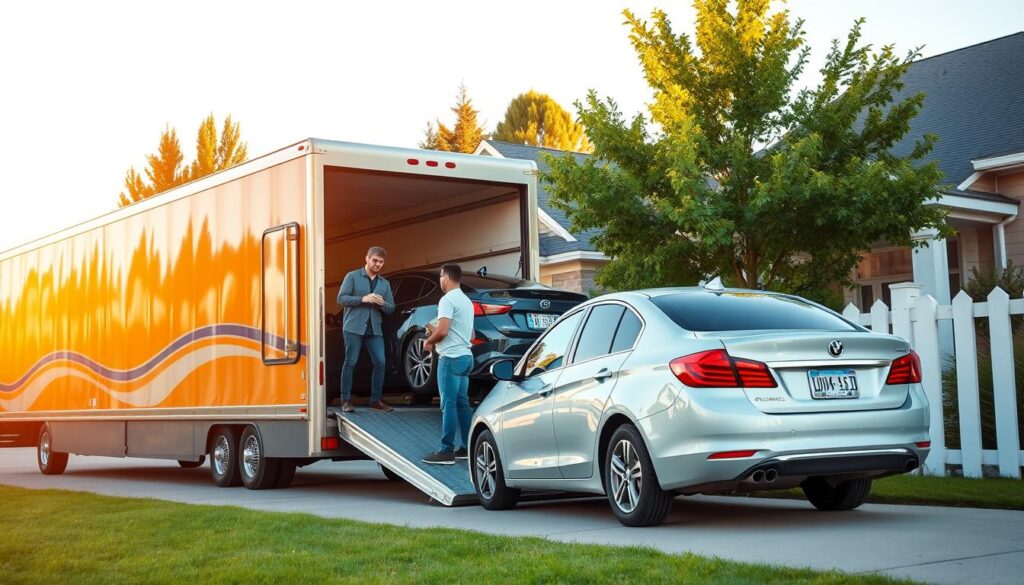
Door-to-door auto transport removes extra steps and puts pickup and delivery at a convenient address. Customers book this option for relocations, online purchases, dealer transfers, military moves, student relocations, and fleet needs.
What door-to-door means: pickup and delivery at a home, business, dealership, or seller address when access is safe and legal. This eliminates terminal handling and reduces downtime for owners.
A standard large carrier can reach 80 feet and weigh as much as 80,000 pounds. If roads are narrow, weight-restricted, or under HOA limits, the driver will arrange a nearby, safe meeting point.
- Fewer steps: less coordination than terminal options.
- Predictable timing: the company plans alternate pickup points when needed.
- Caregiver approach: protecting each vehicle is the main priority.
| Use Case | Typical Pickup | Access Solution |
|---|---|---|
| Relocation | Home or apartment | Rear street or designated curb |
| Dealership transfer | Dealer lot | Dock or service entrance |
| Online purchase | Seller address | Nearby wide intersection |
Learn more about full-range auto transport services in the USA for tailored options and transparent timelines.
Car Shipping Direct: What to Expect From Pickup to Delivery
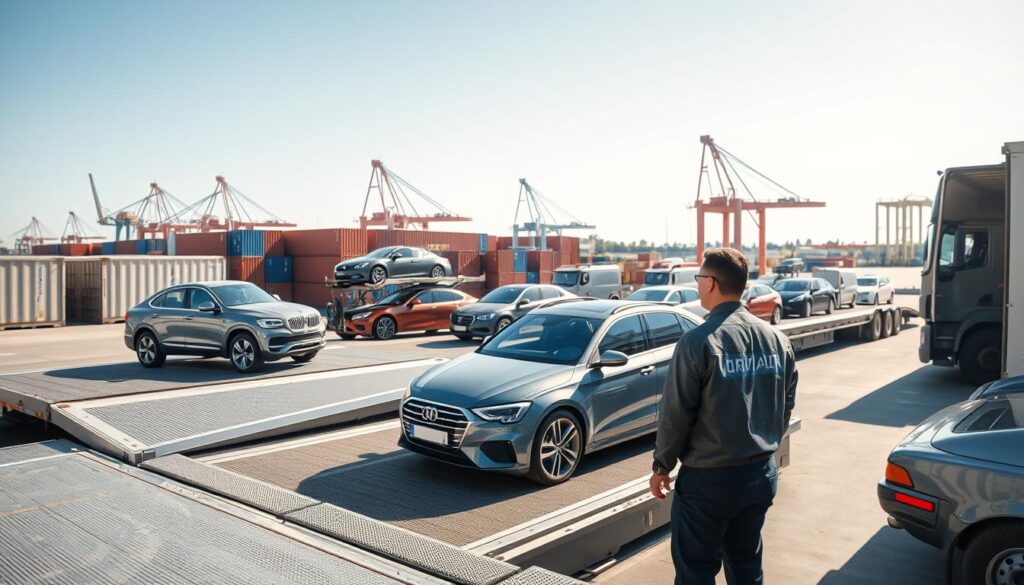
Pickup begins with a confirmed window and an assigned carrier. After booking, dispatch contacts the customer to set a pickup time and assign a driver. This creates a clear start to the transport timeline.
Direct pickup from home, dealership, or seller
Door-to-door service covers loading, transit, and unloading at the requested location. Common pickup sites include residences, offices, dealer lots, auctions, and private sellers.
Bring clear access details and a contact phone number to prevent delays. Photos of the pickup spot help when streets are narrow or parking is limited.
Delivery coordination when streets have restrictions for large carriers
If a truck cannot reach the delivery address, the driver calls the recipient and selects a nearby safe meeting spot. This keeps the planned time and minimizes extra handling.
Transparent updates from dispatch to driver handoff
Customers receive step-by-step updates as the shipment moves from dispatch to the driver. ETAs are practical and tied to real checkpoints, not vague estimates.
- Dispatch assigns a carrier and confirms a pickup window.
- Driver calls ahead for access and final directions.
- Documented inspections occur at pickup and delivery to protect vehicle condition.
| Stage | What Happens | Customer Role |
|---|---|---|
| Booking & Dispatch | Carrier assigned and pickup window confirmed | Provide address, phone, and access notes |
| Pickup | Inspection, loading, and bill of lading | Meet driver or authorize alternate contact |
| Delivery | Driver confirms access, unloads, and completes inspection | Verify condition and sign paperwork |
Common questions are handled proactively: who will call, what if no one is available, and how schedule changes are managed. For help, contact BestCarShippingInc at (307) 288-5972 or info@bestcarshippinginc.com.
How Our Car Shipping Process Works
Each shipment follows a repeatable workflow designed to protect your vehicle and timeline. The aim is clear: an accurate quote, reliable movement, and a documented handoff at delivery.
Get an instant quote based on route, vehicle, and timing
The online quote uses route, pickup and drop-off addresses, vehicle details, trailer type, and desired timing. This produces a practical price that reflects real-route factors.
Schedule your shipment with flexible pickup windows
Pickup windows align with carrier routes while keeping customers in control. The team offers options so a scheduled window fits daily plans and reduces wait time.
Vehicle pickup, loading, and the bill of lading inspection
On pickup day the assigned driver performs a pre-load inspection. Both parties sign a bill of lading that records condition and supports claims if needed.
Transit, tracking, and communication during transportation
Customers receive progress updates and can reach dispatch for changes. Practical ETAs are tied to checkpoints so tracking stays meaningful.
Delivery inspection, paperwork, and completion
Delivery includes a final inspection against the bill of lading. Once paperwork is signed, the shipment is closed and support remains available for follow-up.
Auto Shipping Options for Different Vehicles, Budgets, and Timelines
Customers choose from three service tiers to match vehicle value, timetable, and budget. BestCarShippingInc evaluates risk, route, and urgency to recommend the proper option.
Open transport: efficient and cost-effective
Open transport is the standard option for most vehicles. It uses shared trailers and efficient routing to keep cost down and availability high.
Ideal for routine moves, relocations, and dealer transfers where protection needs are standard.
Enclosed transport: premium protection
Enclosed transport shields luxury, classic, or collector vehicles from weather and road debris. It adds a layer of protection for higher-value assets.
Choose this for concours events, collector sales, or when the vehicle’s condition must remain pristine during transit.
Expedited service: when time matters
Expedited options prioritize your shipment on dispatch and reduce transit time. Expect higher rates and limited carrier slots, but faster delivery.
Use expedited service for tight relocation deadlines, auction wins with short pickup windows, or event deliveries.
- Business fit: relocation deadlines — open or expedited.
- High value: enclosed for luxury and classics.
- Urgent moves: expedited for prioritized routing.
BestCarShippingInc matches the proper carrier and service to each shipment. Contact (307) 288-5972 or info@bestcarshippinginc.com for a tailored recommendation.
What It Costs to Ship a Car and What Impacts Your Quote
Quotes begin by mapping the route: miles, fuel needs, and seasonal demand shape the baseline price.
Key pricing factors: distance, fuel, demand, and route
Route-driven pricing sets the starting point. Longer lanes and high-demand corridors raise the base price because fuel and time increase.
Seasonality and lane congestion also push rates up during peak months or holidays.
Vehicle factors: make, weight, and condition
Vehicle size and weight change how trailers are loaded. Heavy or oversized models need special allocation and cost more.
If a vehicle is inoperable, loading equipment and extra labor add to the quote.
Service choices that change price
Open trailers are cost-effective. Enclosed transport gives added protection at a higher rate.
Expedited moves reduce transit time but increase fees. Pickup at a remote location can also raise the price versus terminal-to-terminal handling.
Real-world examples and expectations
Benchmark routes: Las Vegas to Los Angeles averages $400–$600 and takes about 2–4 days. Las Vegas to New York City is roughly $800–$1,000 and often runs 8–10 days.
For an accurate quote, submit full vehicle details, dates, and precise pickup/drop-off location up front. That is the fastest way to lock a firm number.
| Route | Typical Cost | Typical Days |
|---|---|---|
| Las Vegas – Los Angeles | $400–$600 | 2–4 |
| Las Vegas – New York City | $800–$1,000 | 8–10 |
| Short regional lane | $200–$400 | 1–3 |
Questions about cost or a detailed quote? Contact BestCarShippingInc at (307) 288-5972 or info@bestcarshippinginc.com.
Estimated Shipping Times and Transit Planning
Transit windows vary widely, so realistic planning starts with lane type and carrier schedules. Short hauls move faster; long-distance lanes require multi-day planning and slotting with a carrier.
Sample delivery windows: short hauls vs cross-country routes
Use these Nevada lane estimates to plan work and travel: California–Nevada takes about 2–4 days. Texas–Nevada is typically 4–6 days.
Florida–Nevada and New York–Nevada both commonly run 7–9 days. These windows include pickup scheduling and transit time.
How seasonality and route demand can add days
High-volume corridors often load faster because carriers run those lanes frequently. Low-demand lanes may require extra days while a carrier is found.
Peak moving periods and severe weather tighten capacity. That can add pickup or delivery days even when transit itself is steady.
- The team helps pick pickup windows that lower wait time and extra cost.
- Proactive updates keep customers informed if ETAs shift for legitimate road or capacity reasons.
For a firm timeline and cost estimate, request a quote at how much does it cost to ship a or call (307) 288-5972.
Shipping a Non-Running Vehicle or Specialty Vehicles
Non-running vehicles and specialty units require specific loading plans before a route is assigned.
Disclose inoperable condition at booking. This ensures the right trailer and handling crew are scheduled. If a unit cannot roll, brake, or steer, teams arrange winch-assisted loading, ramps, or lift equipment.
Inoperable vehicle handling
Typical needs include winches, extra labor, and secured tie points. Providers document the condition and note added time or cost for special loading.
Specialty vehicle considerations
Motorcycles, ATVs, EVs, and trucks require tailored securement and carriers experienced with those types. EVs need clear communication about battery charge and access to prevent delays.
“Matching the right carrier and trailer protects condition and limits risk during transport.”
- Accurate details up front reduce surprises.
- Proper securement methods protect value.
- Special handling may change price and scheduling.
For Spanish-language inquiries, see transporte de carros or contact the team for a precise assessment.
How to Prepare Your Car for Shipment
Preparation reduces surprises on pickup and protects the vehicle during transport. A short, practical routine saves time and lowers the chance of disputes at delivery.
Cleaning, photos, and documenting vehicle condition
Wash the vehicle and take time-stamped photos of all sides, the interior, and any existing damage. Photos support the inspection and prove condition at pickup and delivery.
Fuel level, alarms, toll tags, and personal items policy
Leave roughly a quarter tank of fuel. Disable alarms and remove toll tags to avoid activation or fees during transit.
Most carriers restrict personal items. Some allow one piece of luggage up to 100 lbs in the trunk. Confirm what is permitted before pickup so there are no surprises when the driver arrives.
Meeting your driver near major routes to help reduce cost
When residential access is tight, meet the driver at a nearby main road or public lot. This can shorten the pickup window and reduce cost for the customer.
Final step: keep keys available, note the pickup location, and save contact details for questions. Proper preparation is part of BestCarShippingInc’s care for each shipment. For help call (307) 288-5972 or email info@bestcarshippinginc.com.
Receiving Your Vehicle: Delivery Day Standards That Protect Customers
The delivery moment focuses on verification: confirming ETA, reviewing condition, and completing the bill of lading.
Arrival protocol: the assigned driver confirms identity, shows paperwork, and reviews the agreed pickup notes with the recipient.
Final inspection and claims support
Inspect the vehicle carefully before signing. Check exterior panels, glass, wheels, and visible trim for any new marks.
Record any changes immediately. The bill of lading is the official comparison between pickup and delivery condition and supports claims if new damage is found.
Accessories, contents, and shipment completion
Open the trunk and check the cabin for accessories or personal items. Verify that the shipment is complete before you sign final paperwork.
- Confirm arrival time and meet the driver for a joint inspection.
- Compare notes on the bill of lading and add any new entries before signing.
- Document problems with time-stamped photos and a short written note on the delivery form.
No rushed handoffs: professional providers support customers through claims with clear documentation steps and responsive communication. For questions or support, contact BestCarShippingInc at (307) 288-5972 or info@bestcarshippinginc.com.
| Step | What to Check | Why it Matters |
|---|---|---|
| Meet & Verify | Driver ID, ETA, paperwork | Ensures correct carrier and scheduled delivery |
| Visual Inspection | Panels, glass, wheels, trim | Records any new damage for claims |
| Accessory Check | Trunk, glove box, cargo areas | Confirms shipment is complete |
| Document & Sign | Bill of lading, photos, notes | Provides official evidence for claims |
Insurance Coverage and Customer Care During Auto Transport
Insurance and customer care form the backbone of a trusted transport experience. Vehicles move under the carrier’s cargo insurance. That policy is the primary protection for loss or damage during transit.
Carrier cargo insurance and contingent coverage up to $250,000
Before dispatch, the company verifies each carrier’s policy limits and proof of insurance. This step confirms the carrier is authorized and covered for the planned service.
Contingent cargo coverage adds an extra layer. If a trucker’s policy does not fully cover a valid claim, contingent coverage can apply up to $250,000.
Why communication matters: live support and shipment tracking
Live support, clear escalation paths, and documented updates are standard operating practice. These measures lower risk by reducing missed handoffs and surprises at delivery.
- Real-time tracking helps customers coordinate travel and moving dates.
- Proactive alerts speed resolution when schedules shift.
- Customer care teams guide claims with documented inspections and paperwork.
Questions about coverage or the best service for your vehicle? Call (307) 288-5972 or visit our Sanford auto transport page for details and a targeted quote.
Where We Ship: Nationwide Routes, City Coverage, and Door-to-Door Delivery
BestCarShippingInc operates coast-to-coast lanes to serve both personal owners and business fleets nationwide. The network supports state-to-state transport and coast-to-coast movement with scheduled routes and vetted carriers.
State-to-state and coast-to-coast vehicle transport across the U.S.
Services cover every state and major metro area. Popular lanes have frequent runs and clearer ETAs.
Examples of high-demand lanes and typical transit times
High-volume routes reduce wait time and often lower cost because carriers run them regularly.
| Route | Typical Delivery Days | Sample Cost |
|---|---|---|
| California → Nevada | 2–4 days | $650 |
| Texas → Nevada | 4–6 days | $1,010 |
| Florida → Nevada | 7–9 days | $1,340 |
| New York → Nevada | 7–9 days | $1,540 |
Urban vs rural pickup locations and how location impacts cost
Pickup and drop-off location affects routing and price. Dense urban areas offer more carrier traffic and lower deadhead miles.
Rural or restricted-access sites can add time and cost due to longer approach distances or special equipment needs.
- Nationwide coverage: state-to-state and coast-to-coast routes for personal and business needs.
- Lane popularity: popular corridors yield faster, more reliable scheduling.
- Door-to-door practicality: when access is limited, drivers coordinate a nearby safe delivery point while protecting vehicles.
- Reliability: transparent updates, documented inspections, and professional processes that scale nationwide.
Conclusion
Choosing a trusted transporter means predictable arrival windows, clear paperwork, and fewer surprises at handoff. Customers select this service for reliable delivery, protected handling, and steady communication throughout the process.
Reliable in practice means verified carrier coverage, documented inspections at pickup and delivery, and consistent updates from dispatch to driver. Open options suit value needs, enclosed protects higher-value vehicles, and expedited choices speed tight timelines.
Provide accurate route details, vehicle type and condition, and your preferred time window for an accurate quote. To confirm availability, request a quote or schedule pickup with a transport specialist at (307) 288-5972 or info@bestcarshippinginc.com.