
Instant, route-specific pricing is available for owners and logistics coordinators who need clarity now, not a callback later. This page delivers fast online estimates using pickup and delivery locations, vehicle details, carrier type, delivery speed, and seasonality.
Trusted coordination begins with clear communication and professional service handling. Reliable providers show no hidden fees and include standard cargo insurance. That reassures customers and protects a valuable asset during transport.
Understand what a quote is: a snapshot based on real shipment variables. It is not a final bill. Factors such as open versus enclosed carriers, door-to-door versus terminal delivery, vehicle size and timeline flexibility can change the final price.
Request pricing or speak to support for inoperable vehicles, rural routes, or expedited needs. For fast help with Canada routes, email info@bestcarshippinginc.com or call (307) 288-5972. For route-specific pricing, see our service details.
Key Takeaways
- Get instant, route-based estimates tailored to pickup and delivery points.
- Quotes reflect vehicle condition, carrier type, speed, and seasonality.
- Top providers prioritize transparent fees and cargo insurance.
- Main choices affecting cost: open vs enclosed, door-to-door vs terminal, size, and timeline.
- Contact support for special cases at info@bestcarshippinginc.com or (307) 288-5972.
Instant car shipping quotes that fit your route, vehicle, and timeline

See a route-specific price in seconds using pickup and delivery details.
What you’ll need to generate a fast, accurate vehicle shipping quote
Prepare precise pickup and delivery locations, preferred dates, and basic vehicle information. Include make, model, year, and whether the vehicle runs.
Also indicate preferred carrier type (open or enclosed) and any access restrictions at either end. These inputs cut guesswork and speed up the result.
Why instant quotes beat manual estimates for budgeting and planning
Instant tools reduce back-and-forth messages. They capture the key variables at once and produce consistent comparisons across service types.
Operationally, “timeline” means the pickup window, requested delivery speed, and scheduling leeway. Flexibility often improves availability and lowers cost.
- Start with pickup/delivery addresses and preferred dates.
- Provide vehicle make/model and running condition.
- Select carrier type and any special handling needs.
- Expect verification for complex moves (inoperable or rural access).
Business-friendly transparency presents clear line items for budgeting and approvals. Use the instant tool to set expectations before booking transportation.
If uncertain which service fits your needs, proceed with a quick estimate or contact support at (307) 288-5972 or email info@bestcarshippinginc.com. For a route-specific request, start here: vehicle transport quote.
How our car shipping cost calculator creates your vehicle transport quote
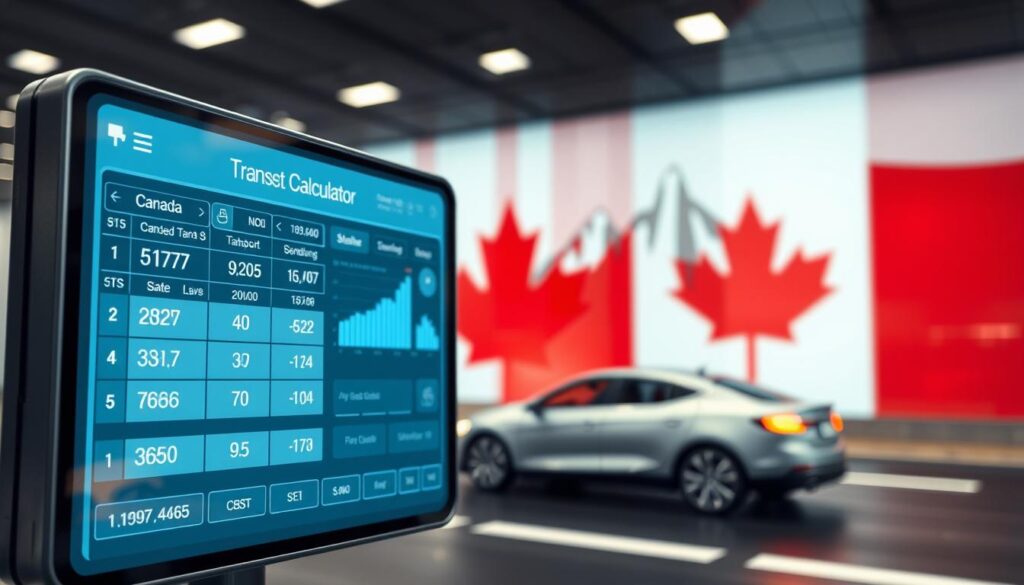
The tool converts route data, vehicle specs, and service selections into a practical transport price. It factors distance, access type, and available carrier routes to reflect real-world constraints.
Pickup and delivery locations across Canada
Metro access improves availability. Major-city pickup and delivery points usually lower the rate by reducing deadhead miles and wait time. Remote locations may add handling fees and delay scheduling.
Vehicle details that change pricing
Make, model, size, and weight determine trailer space and capacity tradeoffs. Larger vehicles reduce slot counts and raise per-unit cost.
Vehicle condition and inoperable arrangements
Standard pricing assumes the vehicle can brake, steer, and roll. If a vehicle is inoperable, extra equipment and labor—winch or forklift—add cost and planning time.
Carrier type and delivery speed
Open carriers offer lower prices. Enclosed carriers provide more protection at higher cost. Standard windows are economical. Expedited service shortens delivery time but increases the rate.
Professional coordination ensures safe loading, documented inspections, and clear updates from pickup to delivery. Run the calculator to get a tailored estimate, then confirm any special requirements with support at (307) 288-5972.
What impacts car shipping quotes in Canada
A handful of clear elements determine how much a vehicle move will cost and how long it will take. These factors help owners plan money and time with realistic expectations.
Distance and per-mile efficiency
Longer routes raise total cost but often lower the price per mile. Carriers optimize linehaul runs, so a longer run can be more efficient per unit while still costing more overall.
Urban versus rural pickup and delivery
Major-city pickup and delivery points improve scheduling density. Meeting near a metro hub usually reduces fees and speeds transit for most customers.
Season, weather, and availability
Winter snow and reduced daylight slow transit and tighten capacity. Book early in peak seasons to protect timelines and limit weather-related delays.
Trailer capacity and vehicle size
Large SUVs and trucks reduce available slots on a trailer. That can raise the per-vehicle price when space is limited.
Insurance, risk, and service quality
Insurance and documented inspections are part of total value. Choose a reputable company with clear claims procedures to reduce risk of damage.
| Element | Effect on Cost | Practical Tip |
|---|---|---|
| Distance | Higher total, lower per-mile | Consider longer consolidated routes for savings |
| Access (Urban/Rural) | Urban lowers cost, rural adds fees | Meet at a nearby terminal or hub |
| Trailer capacity | Large vehicles raise per-unit rates | Disclose vehicle size early |
| Insurance & quality | Higher protection increases value | Choose providers with inspections and claims support |
The best quotes balance money saved with reliable service and protection from avoidable damage. For route-specific pricing and current availability, request a route service estimate or contact support at (307) 288-5972 or info@bestcarshippinginc.com.
Auto transport options across Canada: choose the right shipping service
Choosing the right transport method depends on vehicle value, route, and tolerance for exposure. This short guide helps match priorities: cost, speed, and risk management.
Open auto carrier transport
Best overall pricing and wide availability. Open carriers load 4–12 vehicles on a trailer. They suit most cars and reduce wait time. Expect exposure to elements and road grit. Carry documented inspections and confirm insurance limits.
Enclosed transport
Protection-first option for high-value and classic vehicles. Enclosed trailers shield against weather and flying debris. Costs rise, but so does peace of mind. Use this when damage avoidance is a priority.
Flatbed and rail options
Flatbed moves usually handle one vehicle. They fit short runs or special loading needs. Pricing is higher per unit. Rail can lower cost for terminal-to-terminal moves across country. It trades door-level flexibility and speed for savings.
- Match choice to value, exposure tolerance, route length, and timeline.
- Confirm insurance and insist on documented inspections for every service.
Compare service tiers to see value side-by-side and request tailored estimates at compare service tiers.
Pickup and delivery choices: door-to-door vs terminal-to-terminal
Deciding between door-level pickup and a terminal drop shapes cost, timing, and what the customer must handle. Choose the method that fits priorities: saving money or saving time.
When door-to-door service makes the most sense
Door-to-door is best for limited local support or tight schedules. It removes the need to travel to a yard. Professional providers handle the full handoff at the pickup and final delivery points.
How terminal shipping can reduce your costs
Terminal-to-terminal lowers rates by consolidating loads at secure yards near major cities. Customers drop off and pick up at a yard, which saves money when route density is high.
Checklist for any shipping company
- Confirm yard location and access hours.
- Verify on-site security and vehicle holding procedures.
- Ask which documents are required at pickup and delivery.
- Review company policies and read recent customer reviews.
The best quote depends on whether you value money saved or time saved. Request both door-to-door and terminal pricing to compare side-by-side. For help, contact info@bestcarshippinginc.com or call (307) 288-5972.
Estimated transit times for shipping a car across Canada
Delivery timelines reflect more than miles — they include scheduling, routing, and seasonal limits. Pickup windows and linehaul distance together determine total transit time. Plan around both to set realistic expectations.
Short-haul example: local moves completed in as little as three days
For short distances inside a metro area, transit can be fast. When capacity is available and pickup is flexible, local moves in the Greater Toronto Area may finish in about three days.
Long-haul example: Toronto to Vancouver routes taking up to ten days
Longer across country routes increase linehaul time. A typical Toronto to Vancouver transport can take up to ten days depending on scheduling and route density.
What can delay delivery: weather, route density, and carrier availability
Common delay drivers include winter storms, seasonal road limits, and limited carrier frequency on low-density routes. Distance is the main driver, but these factors add time.
- Flexible pickup windows improve dispatch speed and reduce missed targets.
- Book earlier during peak or winter seasons to meet business or relocation needs.
- Confirm estimated pickup and delivery windows with a coordinator before booking.
Next step: Request a transport estimate, then confirm the expected transit and delivery windows with a coordinator at (307) 288-5972 or email info@bestcarshippinginc.com.
Conclusion
Fast, route-specific pricing helps owners balance cost, protection, and delivery time.
Use the instant tool to see clear estimates that reflect route, vehicle details, and timeline choices. This makes planning and budgeting straightforward for moves across Canada.
Key selection levers remain carrier type, pickup versus terminal delivery, vehicle condition, and seasonality. Review these items before you finalize service to avoid surprises.
Choose a provider that pairs fair pricing with documented inspections, clear insurance terms, and strong communication. Check recent reviews and confirm inspection procedures before booking.
Get pricing now or speak with support for special needs and scheduling: info@bestcarshippinginc.com or (307) 288-5972. Reliable service starts with a verified estimate and a clear plan.