
Hansen’s Forwarding offers a full-service approach to long-distance vehicle relocation. With 40+ years of experience and a fleet of 270+ carriers, the company pairs GPS-tracked trucks with a rail partnership to keep schedules predictable.
Safety and clarity guide every move. Customers get documented inspections, insured carrier possession, and steady communication. The process reduces stress and sets clear expectations for handling, timing, and budget.
This transport partner serves personal and business needs. Clients choose open or enclosed carriers, door-to-door or terminal delivery, and planned routes that scale to shipment size. Transparent pricing appears before booking to avoid surprises.
Request a quote by phone at (307) 288-5972 or email info@bestcarshippinginc.com. For regional details, see Ontario transport options.
Key Takeaways
- Forty years of experience and a large fleet ensure reliable service.
- GPS tracking and inspections provide visibility and protection.
- Options include open vs. enclosed and door-to-door vs. terminal.
- Transparent pricing and clear timelines before booking.
- Contact by phone or email to request a tailored quote.
Ship Vehicles Across Canada With a Transport Partner You Can Trust

From single-unit moves to fleet transfers, experienced teams deliver consistent, accountable vehicle handling.
Who uses cross-country transport? Relocation clients, seasonal snowbirds, dealerships moving inventory, and corporate fleet coordinators all rely on professional service.
The company’s team supports one vehicle or many. Business customers use a portal for direct booking, tracking, and bulk invoicing to simplify operations.
Coast-to-coast reach across canada gives routing flexibility. Scalable capacity reduces delays during peak periods and helps meet tight timelines.
- Trust criteria: proven experience, clear accountability, and steady communication from pickup to delivery.
- Seasonality: early planning is essential for snowbird routes and winter constraints.
- Caregiver stance: the company protects both the vehicle and the customer’s schedule with disciplined operations.
Confirm route coverage and ideal timing by requesting a quote. Early booking improves availability and reduces risk during peak windows.
Car Shipping Within Canada Services
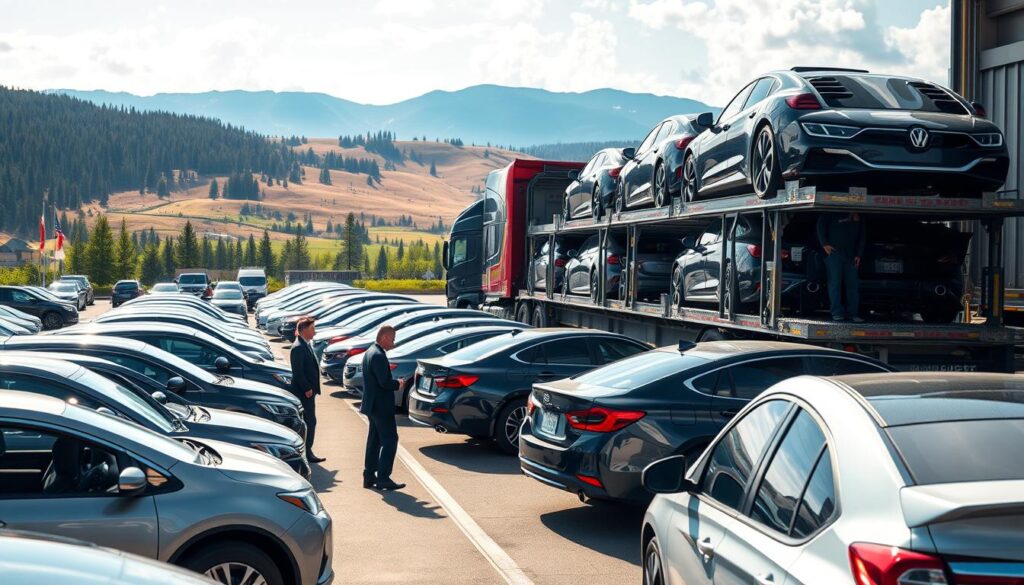
Service selections are designed to balance speed, cost, and asset protection.
Door-to-door vehicle delivery
Door-to-door provides the highest convenience. A carrier picks up at the requested address and completes delivery at the destination address. This reduces extra handling and saves time.
Terminal-to-terminal drop-off and pickup
Terminal-to-terminal is cost-conscious and often faster on major corridors. Customers drop off and collect at secure facilities. This option improves scheduling flexibility on busy lanes.
Open-air vs. enclosed transport
Open-air vehicle transport is the economical, common method for standard models. Enclosed transport offers extra protection for luxury, classic, and high-value cars.
Truck and rail-supported routes
Truck routes are ideal for regional moves and first/last-mile service. Rail-supported lanes speed long hauls and reduce handling when paired with a large fleet and CP Rail access.
“Choose service options at quote stage so pricing and timing match expectations.”
- Consider value, budget, and risk tolerance when selecting a service.
- Confirm pickup windows, handoff points, and inspection steps during booking.
- Request detailed service options in the quote for accurate timelines.
| Service | Best For | Typical Benefit |
|---|---|---|
| Door-to-door | Convenience seekers | Minimal handling; direct delivery |
| Terminal-to-terminal | Budget-conscious shippers | Lower cost; fixed schedules |
| Open-air | Standard vehicles | Most economical |
| Enclosed | High-value models | Added protection |
Where We Ship Across Canada
Hansen’s network maps key corridors to keep transit predictable and fast.
Major corridors and cross-country routes for faster transit planning
Routes use primary lanes and CP Rail access to speed long hauls. Typical examples include Toronto–Calgary, Vancouver–Montreal, and Delta, BC–Halifax.
Planned corridors reduce handling and lower variability in transit time. Estimated days depend on dispatch windows, linehaul movement, and final-mile delivery.
Urban and regional pickup options based on carrier availability
Destination accessibility affects routing. City terminals and regional hubs offer predictable pickup dates.
Remote-area moves need extra coordination. Seasonal carrier capacity and demand also change available pickup dates.
- Terminal pickup: often faster on main lanes and better for tight timelines.
- Residential pickup: adds last-mile time but is more convenient.
- Weather, road restrictions, and rail availability shape practical routing.
| Route Type | Best For | Typical Days |
|---|---|---|
| Major corridor (rail-supported) | Cross-country loads | 6–12 days |
| Regional hub to hub | Faster, scheduled lanes | 2–5 days |
| Remote delivery | Rural or seasonal spots | Variable; plan early |
Customers should confirm the best route and destination plan during the quote process. Call (307) 288-5972 or email info@bestcarshippinginc.com to align routing with timelines and service needs.
How Our Vehicle Shipping Service Works From Quote to Delivery
From estimate to handoff, the process is structured for predictability and care. Customers receive a clear path and simple steps that reduce risk and save time.
Get a free quote with transparent pricing
Fast quote: A written estimate shows what is included and which variables may change price. Taxes, access fees, and route details appear up front.
Schedule pickup and confirm booking details
Booking steps: After acceptance, a deposit reserves the lane. Pickup windows, verified addresses or terminals, and final booking details lock dispatch schedules.
Prepare for pickup with pre-shipment guidance
Owners receive a checklist for documents, keys, and a short inspection. Following guidance reduces delays on pickup day and ensures smooth handoff.
Track your vehicle during transit with status updates
GPS-tracked carriers provide scheduled status messages. Customers have a clear escalation path to customer service if questions arise.
Delivery and final inspection at your destination
Delivery coordination sets a time window. Drivers complete a final inspection and documentation at drop-off to confirm condition.
- Typical way: Quote → Booking → Prepare → Track → Receive.
- Transit days: Vary by lane and demand. The company commits to proactive updates.
- Need a fast quote? Request one online or confirm booking timelines by phone at (307) 288-5972 or email info@bestcarshippinginc.com.
| Step | Action | Customer Role |
|---|---|---|
| Quote | Written estimate with inclusions | Review and accept |
| Booking | Deposit and schedule pickup | Confirm addresses/details |
| Prepare | Pre-shipment checklist | Provide keys/docs |
| Transit & Delivery | Track via GPS; final inspection | Receive and sign |
For more information or to start a quote request, contact the team to confirm timelines and service details.
Car Shipping Options Built Around Your Timeline and Needs
Flexible pickup windows let the operations team optimize routes while keeping target timelines intact.
How scheduling works: Pickup windows are set to balance carrier routing and customer availability. This approach lets carriers consolidate loads and still meet delivery expectations.
Delivery coordination reduces missed handoffs. Teams set appointment times, confirm addresses, and keep contingency plans for weather or delays.
Seasonal demand affects lanes across the country. Winter routes slow due to weather. Peak periods tighten capacity and require earlier booking to secure preferred dates.
- Risk reduction: Early booking improves lane availability and lowers last-minute changes.
- Operational practice: Dispatch optimizes routes while preserving promised delivery targets.
- Customer focus: The team balances speed, cost, and protection when advising on timing.
| Scenario | What the team does | Customer action |
|---|---|---|
| Winter route | Adjusts windows; adds buffer days | Book early; allow flexible pickup |
| Peak season | Prioritizes lanes; reserves carriers | Confirm booking and deposit |
| Time-sensitive delivery | Assigns priority carriers; confirms appointments | Provide exact addresses and contact |
For cross-border needs or to reserve capacity, consult the cross-border transport guide and contact the team at (307) 288-5972 or info@bestcarshippinginc.com.
Car Shipping Cost and Quote Factors
A clear pricing estimate begins with the route and distance between pickup and delivery points.
Distance, route, and destination accessibility
Distance, route, and destination access
Quotes start with mileage and lane density. Longer hauls raise linehaul costs. Remote or tight-access dropoffs add handling time and fees.
Vehicle size, type, and condition
Large vehicles and high-clearance models cost more to load and secure. Non-operational units need winching or special equipment. Both factors increase the final quote and require clear notes on condition.
Transport method: open vs. enclosed
Open transport is the lower-cost choice for standard vehicles. Enclosed carriers add protection and charge a premium. Match the method to the vehicle’s value and your risk tolerance.
Operational status and special handling
Non-running units, modified builds, and low-clearance vehicles require extra handling. Those needs affect labor and equipment line items on a written quote.
Fuel surcharges, timing, and carrier capacity
Fuel surcharges fluctuate. Seasonal demand raises rates and tightens carrier availability. Fleet scale and rail partnerships help balance lanes and limit spikes.
- How a quote is built: distance → route density → destination access → vehicle specs → transport method → surcharges.
- Business shipments: multi-vehicle lanes offer volume discounts and predictable forecasting for regular moves.
- Truck availability: low-volume routes may carry higher per-unit costs due to lane imbalance.
| Factor | Impact on Price | What to Provide |
|---|---|---|
| Distance & Route | High impact | Exact pickup and destination |
| Vehicle Size & Condition | Medium–High | Model, dimensions, operability |
| Transport Method | Variable (open vs. enclosed) | Protection preference |
| Timing & Capacity | Seasonal variance | Desired pickup/delivery dates |
Request a precise quote with exact vehicle details and destination. Call (307) 288-5972 or email info@bestcarshippinginc.com to get a tailored quote that reflects current fuel surcharges and lane availability.
Estimated Transit Time for Shipping a Car Within Canada
Estimate windows for long-haul moves help planners set realistic expectations for delivery and final-mile coordination.
Typical cross-country benchmark:
Toronto to Vancouver example
UUCargo and industry experience show this lane typically takes about 7–10 days in transit for linehaul movement. This example gives a practical benchmark for cross-country planning.
What affects those days
Weather, scheduling, and route demand
Winter storms and road restrictions can add buffer days. High route demand and consolidation windows also change pickup timing.
Dispatch timing and load consolidation influence total time. Linehaul transit is the core movement. Total door-to-door time includes pickup windows and final-mile coordination.
“Plan a modest buffer for critical dates such as move-in, dealership turnovers, or fleet redeployments.”
Practical guidance:
| Item | Expectation | Action |
|---|---|---|
| Linehaul transit | 7–10 days (Toronto–Vancouver example) | Use as baseline for cross-country moves |
| Pickup & final-mile | 1–3 extra days | Allow pickup windows and delivery appointments |
| Weather & demand impact | Variable; can add multiple days | Request lane estimates at booking |
Customers shipping a car should request current lane estimates when they book. For firm timelines, contact the team at (307) 288-5972 or email info@bestcarshippinginc.com.
Safety, Insurance Coverage, and Damage Prevention
Owners should expect documented safeguards and active monitoring whenever a vehicle is in transit.
Insurance while in carrier possession
What “in carrier possession” means: the company holds responsibility when the vehicle is under its direct control. Coverage usually protects against collision, theft, and handling damage during pickup, storage, and movement.
Confirm policy limits, deductibles, and who files claims. Ask for written insurance details before booking.
Secure facilities and professional drivers
Reputable operations use fenced yards, 24/7 surveillance, access control, and full-time guards. These reduce theft and unauthorized entry.
Drivers are bonded and trained in standardized loading and unloading. Proper procedures cut the risk of damage during handling.
Condition reporting and delivery verification
Inspect and document condition at pickup. Drivers complete written checks and photos to create a baseline record.
On delivery, compare notes and images. If damage is found, document it immediately and follow the carrier’s claims path.
- Prevention first: secured lots, trained drivers, and standard loading practices.
- Confirm details: insurance limits, claim contacts, and inspection steps.
- If damage occurs: photograph, sign notes as needed, and contact customer service promptly.
| Control | What it Prevents | Customer Action |
|---|---|---|
| Insurance coverage | Handling loss, theft, transit damage | Request policy summary and limits |
| Secured yard & surveillance | Unauthorized access; vandalism | Ask about site controls and hours |
| Trained drivers & procedures | Loading/unloading damage | Confirm handling protocols |
| Inspection & photo records | Dispute resolution; proof of condition | Keep copies of pickup and delivery reports |
For full policy details and assistance, consult the best shippers list or contact the team at (307) 288-5972 or info@bestcarshippinginc.com.
Vehicle Tracking, Communication, and Customer Service
Visibility is built into the operation: GPS feeds, portal access, and driver check-ins inform every step. Hansen’s trucks provide live position data so customers see progress and timing in a clear way.
GPS-tracked transport and shipment visibility
GPS tracking reduces uncertainty on long hauls. The corporate portal shows status, estimated arrival windows, and route stops. Drivers add notes and photos when needed for clarity.
Customer support for questions, updates, and documentation
The customer service team issues scheduled updates by email or phone. Typical messages include pickup confirmation, midpoint status, delay notices, and delivery ETA. Documents — receipts, booking confirmations, and delivery records — are sent on request.
- Common questions answered up front: schedule changes, terminal procedures, pickup and delivery expectations.
- Escalation path: local dispatcher → operations manager → executive support for time-sensitive issues.
- Communication is part of the service, not an add-on; it is central to trust and predictability.
Have questions before booking? Call (307) 288-5972 or email info@bestcarshippinginc.com to confirm fit and process with the team.
Why Choose a Carrier With Its Own Fleet Instead of a Broker
When a company operates its own fleet, customers get predictable timelines and a single point of responsibility. That clarity reduces handoffs and speeds decision-making on pickup and delivery.
More control over scheduling, handling, and service quality
Direct oversight lets the operations team enforce loading standards. Drivers follow consistent inspection and handling protocols. This lowers damage risk and improves on-time performance.
Capacity advantages with large fleets and rail partnerships
Owning 270+ units and a CP Rail partnership gives stronger lane coverage. Access to more trucks and rail slots improves resilience during peak demand. Long-haul lanes move faster with rail-supported transport and fewer transfers.
Fleet ownership benefits business buyers. Predictable performance, centralized coordination, and fewer handoffs cut administrative work. Mature operations use experience to prevent avoidable delays and handling issues.
Confirm during your quote whether the company is a broker or a carrier. Ask about fleet size, rail partners, and service guarantees before you book.
Preparing Your Car for Transport
A short pre-shipment routine prevents last-minute reschedules and protects the asset.
Remove personal items and secure loose accessories
Remove all personal belongings. These items are not typically covered by transit insurance and may shift during movement. Stow or remove loose accessories, roof racks, and non-permanent trim.
Secure mirrors and fold antennas where possible. Label or bag small parts to avoid loss and claims disputes.
Fuel level guidance and basic maintenance checks
Keep fuel near a quarter tank. Too much weight raises handling risk; too little may affect vehicle systems.
Check battery charge, tire pressure, and for fluid leaks. Report any mechanical issues to customer service so the team plans special handling.
Document existing condition with photos before pickup
Take time-stamped photos of all sides, interior, and noted blemishes. Clear images speed inspections at pickup and delivery and support any claim if needed.
- Pre-shipment checklist: remove items, secure accessories, quarter-tank fuel, battery and leak checks, photos.
- Driver verification: expect the driver or terminal team to confirm keys, paperwork, and visible condition before loading.
- Questions? Ask about modified vehicles or special needs. Request preparation details from customer service to avoid delays.
For cross-border guidance and to confirm requirements, review the cross-border guidance or contact the team at (307) 288-5972 or info@bestcarshippinginc.com.
Conclusion
The path is clear: quote → schedule → prepare → track → deliver. Confirm the right service level, route, and inspection notes to protect condition and avoid surprises.
Trust signals matter. Insured carrier possession, documented inspections, secure handling, and live tracking keep the process accountable for both personal and commercial moves.
Align pickup timing with your destination plan and add a modest buffer for weather and demand. When ready, request a detailed quote and lane availability at (307) 288-5972 or info@bestcarshippinginc.com.
For cross-border needs review Canada‑to‑USA transport. Thanks for trusting the team to protect and move your vehicle with care and accountability.