
BestCarShipping Inc. delivers reliable, transparent auto transport services across the United States. The team matches vetted carriers and trailers to protect each vehicle and meet schedules. Customers get clear pricing and steady updates from pickup to delivery.
Typical Bay Area notes: San Mateo car shipping commonly ranges from $675 to $1,700, with transit time of 1–10 days depending on distance and vehicle type. These baselines help set expectations before you get an instant quote.
How it works: Book in minutes, choose open or enclosed options, and rely on a dedicated coordinator to monitor pickup, routing, and delivery. The process keeps costs clear and timelines predictable.
For immediate assistance call (307) 288-5972 or email info@bestcarshippinginc.com. The team protects your vehicle and your schedule by matching the right carrier, route, and trailer type.
Key Takeaways
- Reliable nationwide service with door-to-door and flexible meeting points.
- Clear pricing and communication from pickup through delivery.
- San Mateo shipping typically costs $675–$1,700; transit 1–10 days.
- Options include open or enclosed carriers based on protection needs.
- Get an instant quote and speak to a coordinator at (307) 288-5972.
Get an Instant Quote for Car Shipping Anywhere in the United States

Receive an immediate estimate to plan your vehicle move and protect your budget. The instant quote tool gives a fast market snapshot so customers can compare options and pick dates with confidence.
What you’ll need to get a fast, accurate quote
Provide accurate pickup ZIP or city and delivery ZIP or city. Add the vehicle year, make, and model.
Indicate whether the vehicle is running or inoperable, preferred trailer type (open or enclosed), and a target pickup date.
Instant quote vs. final price and what can change
An instant quote is a quick market estimate based on live routing and carrier availability. It helps plan budget and transit time but is not the final contract.
“The final price is confirmed once a carrier and schedule are secured.”
Common reasons price can change include peak-season demand, tight pickup windows, narrow or hard-to-access streets, rural delivery points, oversized vehicles, and last-minute schedule shifts.
- Book 1–2 weeks in advance to secure better rates and carrier choice.
- The team provides proactive explanations before booking and updates during scheduling and pickup.
Request an instant quote online or call (307) 288-5972 to have a coordinator build your shipment plan. Transparent quoting helps protect budgets for relocations, business moves, and time-sensitive deliveries.
Why Choose Our Auto Transport Services for Safe, Reliable Vehicle Shipping
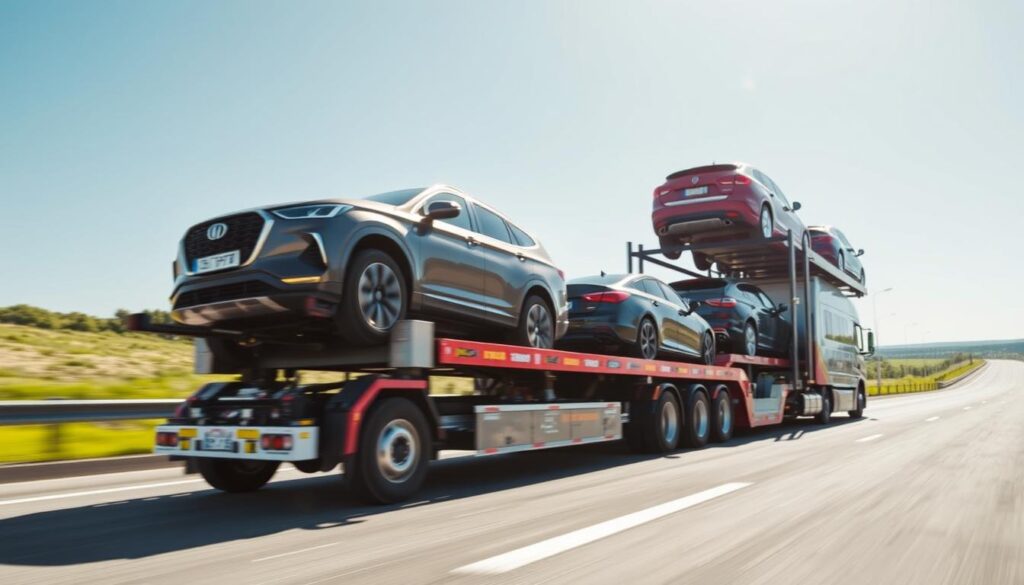
Reliable vehicle moves depend on vetted carriers, transparent fees, and a straightforward pickup-to-delivery workflow. This section explains the standards that make shipments predictable and secure.
Transparent pricing designed to reduce surprises
Clear pricing logic shows how rates are built. Estimates list mileage, trailer type, and any access fees.
Final charges are documented at booking so customers avoid hidden costs and last-minute changes.
Door-to-door convenience for busy schedules
Door service saves time compared with terminal-only options. Drivers meet at homes or offices when access allows.
This reduces customer disruptions and speeds the pickup and delivery process.
Nationwide coverage across all 50 states
Service spans state-to-state and cross-country lanes. Common metro-to-metro routes have consistent availability.
Customer-first support and real-time updates
A single coordinator handles scheduling confirmations and in-transit communication.
Customers receive documented pickup delivery records and can request status updates at any time.
- Standards: clear pricing logic, reliable scheduling, documented handling at pickup and delivery.
- Vetting: carriers are checked for records, accident history, and customer feedback to reduce risks.
- Support: single point of contact, confirmations, and progress updates during transit.
“The goal is a predictable outcome — the vehicle arrives on time, intact, with paperwork completed correctly.”
Ready to schedule? Call (307) 288-5972 or email info@bestcarshippinginc.com to get a secure quote and a clear plan today.
Car Transport Agency Services Built for Every Type of Move
Moving a vehicle long-distance calls for a service that matches schedule, protection, and clear pricing.
Across-country shipping for relocations and long trips
Across country shipments suit job relocations, military PCS, seasonal moves, and extended travel plans.
Scheduling typically requires a 1–2 week window to secure the right carrier, route, and trailer type.
State-to-state and regional options within California and beyond
Regional lanes support shorter delivery windows and faster pickup-to-delivery times.
Bay Area pickups often feed major routes, making it simple to ship car san to long-haul carriers without extra delays.
Single-vehicle and multi-vehicle shipping for families and businesses
Services scale from one vehicle to coordinated fleet moves for dealerships or small businesses.
Benefits: consolidated pickup dates, simplified paperwork, and potentially lower per-vehicle cost.
- What to expect operationally: confirmed pickup windows, carrier assignment, inspection paperwork, and delivery sign-off.
- How choice affects cost: open vs. enclosed trailers, distance, and access constraints are the main drivers.
Ready to coordinate multiple vehicles or special timing? Call (307) 288-5972 to discuss options and receive a tailored plan.
Popular Car Shipping Routes From San Francisco and San Mateo to New York and Beyond
Routes, distance, and seasonal demand largely determine pricing and typical delivery windows. That rule helps set expectations for any move from the Bay Area to the East Coast.
San Mateo to New York City snapshot: vehicle san shipments cover about 2,923 miles. Typical cost ranges from $1,350 to $1,675, with transit times near 4–10 days. Exact pricing depends on address-level pickup and timing.
Quick route snapshots
| Route | Mileage | Cost range | Transit days |
|---|---|---|---|
| San Mateo → New York City | 2,923 mi | $1,350–$1,675 | 4–10 days |
| San Mateo → Boston | 3,116 mi | $1,350–$1,700 | 4–10 days |
| San Mateo → Washington, D.C. | 2,830 mi | $1,250–$1,550 | 4–10 days |
| San Mateo → Chicago | 2,149 mi | $1,125–$1,375 | 3–7 days |
| San Mateo → Miami | 3,103 mi | $1,275–$1,550 | 4–10 days |
| San Francisco → New York (benchmark) | ~2,923–2,980 mi | ~$1,758 (estimate) | ~6–8 days |
Bay Area pickup density often improves carrier availability. Tight streets or complex access may require a nearby meeting point instead of doorstep pickup.
Book earlier for peak seasons. East Coast lanes fill fast during summer and late-year moves. Early booking secures better pickup windows and lower cost risk.
Ready to lock in pickup and delivery? Get an instant quote via our San Francisco vehicle shipping guide and confirm a realistic plan for your route.
Car Shipping Cost: What You Can Expect to Pay Right Now
Expect straightforward pricing that reflects distance, vehicle size, and trailer choice. San Mateo baseline rates typically range from $675–$1,700 (updated 2026). Distance, limited access, and peak-season dates push a shipment toward the upper end.
Local and short-distance examples
Bay Area lanes are often lower-cost and faster. For example, San Francisco city limits to Los Angeles is roughly $230 (≈383 miles) with a 2–5 day transit window.
Cross-country estimates
Coast-to-coast estimates vary by address and timing. Typical examples: San Francisco → New York ~$1,758 (≈2,913 miles, 6–8 days) and San Francisco → Miami ~$1,902 (≈3,170 miles, 8–10 days). These are estimates and can change with demand.
How vehicle type and trailer choice affect price
Larger vehicles use more space and weight. Expect SUV/Crossover adders around +$103 and pickup trucks about +$390 over a sedan baseline.
Enclosed transport is a premium. On average, enclosed trailers add roughly +$688 (≈+66%) versus open service.
Upgrade guidance: choose enclosed for luxury, classic, exotic, or custom vehicles where exposure risk matters more than cost.
Ready to confirm cost and the best trailer type? Get an instant quote and compare open vs enclosed options, or review local plans like San Jose shipping options. Call (307) 288-5972 or email info@bestcarshippinginc.com for personalized advice.
What Impacts Your Auto Transport Price Most
Most quotes reflect a clear hierarchy of factors, with distance usually at the top.
Distance and route accessibility
Distance is the primary driver of price and transit time. Longer lanes use more fuel and take more hours, so mileage raises cost directly.
Nearby highways like US-101 and I-280 around San Mateo and san francisco make pickups simpler. Easy lanes increase carrier options and often lower the final price when customers meet at highway-accessible points.
Seasonality and peak-demand periods
Summer months (May–September) are peak demand. Rates rise and carrier availability tightens.
Holiday windows—especially the week before Thanksgiving and long holiday weekends—also push prices up and can delay delivery.
Vehicle size, weight, and condition
Larger or heavier vehicles require more trailer space or special equipment. Inoperable units need winches or flatbeds and reduce the pool of available carriers.
Pickup and delivery location constraints
Dense urban streets, narrow lanes, low trees, and restricted parking add time and risk. These challenges can create access fees or require a nearby meeting point to avoid extra cost.
How the team helps: coordinators guide customers to avoid last-minute date changes and inaccessible addresses that add charges. Provide flexible pickup windows and book 1–2 weeks ahead to improve pricing and scheduling outcomes.
- Top tip: choose highway-accessible meeting points near US-101 or I-280 when possible.
- Book early: flexible dates lower cost and secure more carriers.
For personalized guidance, call (307) 288-5972 or email info@bestcarshippinginc.com.
Estimated Transit Time and Delivery Windows for Vehicle Shipping
Transit time and delivery windows help set realistic expectations for any shipment. Transit time refers to the actual days a vehicle spends en route. A delivery window is the scheduled range when pickup or delivery may occur.
Typical transit times by distance and region
Regional moves inside a state or nearby states typically take 1–3 days. Mid-distance lanes often land in the 2–5 day range. Cross-country and coast-to-coast services commonly fall between 4–10 days.
Why coast-to-coast routes often land in the 4–10 day range
Long lanes require coordinated routing and multi-vehicle loading. Carriers combine shipments to maximize efficiency. Mandatory driver rest rules and scheduled stops add time. These factors produce the common 4–10 day window for coast-to-coast moves.
How holidays, traffic, and weather can affect delivery timing
Peak holiday weeks increase demand and cause carrier delays. Heavy congestion in metro areas can stretch pickup and delivery windows. Winter storms and major weather systems create reroutes and slowdowns. Northern California rain may also add a day or two.
| Distance Category | Typical Transit Time | Common Factors |
|---|---|---|
| Regional (0–500 mi) | 1–3 days | Local pickups, highway access, quick carrier turnaround |
| Mid-distance (500–1,300 mi) | 2–5 days | Cross-state lanes, consolidated loads, scheduled stops |
| Cross-country (1,300+ mi) | 4–10 days | Multi-stop routing, driver rest rules, peak-season pressure |
Operational tips: allow wider pickup windows, avoid peak holiday weeks, and confirm timelines with status updates. Clear communication reduces surprises and improves on-time delivery performance.
Ready to schedule? Pick dates that match move-in deadlines or business needs and get an accurate ETA when you request a quote via Seattle vehicle shipping service. For questions call (307) 288-5972 or email info@bestcarshippinginc.com.
Open Transport vs Enclosed Transport Options
Choosing between open and enclosed options starts with how much protection you need and what you are willing to pay.
Open auto shipping: the practical, best-value choice
Open shipping is the industry standard for everyday vehicles. It is widely available and typically the lowest price option.
Most standard cars travel safely on open trailers. Carriers move many vehicles together, which keeps cost down and scheduling frequent.
Enclosed transport: a protection upgrade for high-value vehicles
Enclosed transport shields vehicles from weather, dust, and road debris. It is commonly chosen for luxury, classic, exotic, and custom vehicles.
Expect an average premium of +$688 (+66%) over an open baseline (updated 2026). Use this figure to quantify the trade-off when planning budget and risk tolerance.
How to choose the right type
Tie the decision to budget and risk tolerance, not fear. If a vehicle has collector value, custom paint, low clearance, or will appear at shows, enclosed often makes sense.
Both options follow documented inspection steps and carrier insurance requirements. Customers receive inspection records and policy details at pickup.
Confirm trailer availability and precise pricing for your route and dates by checking enclosed options or requesting an instant quote for service details at enclosed car shipping. For help call (307) 288-5972 or email info@bestcarshippinginc.com.
Door-to-Door Pickup and Delivery Service That Works in Real Neighborhoods
Door-to-door service brings pickup and delivery to your front step when street access allows. The team confirms a safe loading spot and a clear arrival window.
How door service works for homes, offices, and flexible meeting points
What to expect: drivers call before arrival, perform an inspection, and load the vehicle with documented notes. On delivery day they repeat the inspection and confirm sign-off.
Navigating tight streets and access limits in the Bay Area
San Francisco and San Mateo neighborhoods often have narrow roads, low trees, and steep hills. These limits may require a nearby meeting point.
- Accessible options: homes, workplaces, or larger parking lots near highway corridors.
- Smart choices: meet close to US-101 or I-280 to reduce delays and possible access fees.
- Communication: the driver or dispatcher will coordinate precise arrival windows and confirm a safe loading area.
“A short, planned meeting point often prevents delays and protects the vehicle during loading.”
The team acts to reduce friction. Coordinators review the location and work with the carrier to protect your vehicle during pickup and delivery. Confirm whether your address supports direct access or if a nearby pickup plan is needed. Call (307) 288-5972 or email info@bestcarshippinginc.com.
How Our Car Shipping Process Works From Booking to Delivery
From quote acceptance to final sign-off, each step is documented to protect the owner and the carrier. The process is simple and built for predictable results.
Reserve your shipment and schedule pickup dates
After you accept a quote, a coordinator confirms the pickup window and tentative date. Flexible dates improve price and widen carrier availability.
Vehicle inspection and the Bill of Lading at pickup
Drivers complete a detailed inspection and the Bill of Lading (BOL) at pickup. The BOL records condition and protects both parties.
Transport, tracking updates, and communication
The assigned carrier moves the vehicle on the scheduled trailer. Customers receive regular updates while the shipment is in transit.
Final inspection, delivery sign-off, and receiving your vehicle
On delivery, perform a final walk-around with the driver and sign the paperwork. If an issue appears, note it on the BOL and take photos.
| Step | What happens | Customer action |
|---|---|---|
| Book | Quote accepted, pickup window set | Confirm dates and contact info |
| Pickup | Inspection & BOL signed | Review condition, sign paperwork |
| Transit | Carrier moves vehicle; updates sent | Track ETA, stay reachable |
| Delivery | Final inspection and sign-off | Inspect, document, keep records |
Need help aligning dates or timelines? Call (307) 288-5972 or email info@bestcarshippinginc.com to speak with a coordinator and schedule service that matches your move or closing time.
Preparing Your Car for Transport to Prevent Delays and Claims
A few simple checks before pickup can prevent delays and reduce claim risk. Follow a brief checklist so the carrier inspection is quick and the delivery stays on schedule.
Remove personal items, toll tags, and valuables
Take out personal items, loose objects, and toll passes such as FasTrak. These are not covered by carrier cargo policies and can cause disputes.
Clean and document condition with photos
Wash the vehicle before pickup so scratches and dents are visible. Take time-stamped photos from four angles and close-ups of any existing damage.
Mechanical checklist and fuel level
Confirm battery charge, correct tire pressure, and no fluid leaks. Leave roughly a quarter tank of fuel—enough for loading maneuvers but light for safety.
Secure or remove accessories
Remove or tightly secure roof racks, spoilers, antennas, and loose trim. Items that stick out increase damage risk during loading and transit.
| Task | Why it matters | Quick tip |
|---|---|---|
| Remove personal items & toll tags | Not covered by carrier insurance; avoids loss claims | Check glovebox and trunk |
| Clean & photograph | Documents pre-existing condition for delivery inspection | Use phone timestamps; include close-ups |
| Mechanical checks | Prevents delays and unsafe loading | Battery charged, tires firm, no leaks |
| Fuel level | Safety and weight control | Leave ~1/4 tank |
| Secure accessories | Reduces damage and claims | Remove loose items or tape securely |
Need help? For modified vehicles or special handling questions, call (307) 288-5972 or email info@bestcarshippinginc.com. Coordinators will guide prep to keep pickup and delivery on time.
Personal Items in the Vehicle: What’s Allowed and What’s Not
Owners should know what personal items are allowed inside a vehicle before pickup to avoid delays and extra fees.
Domestic moves: Many domestic shipments allow up to 100 lbs of personal items. Those items must be stored in the trunk or secured below the window line so they do not shift or block visibility.
Weight limits and safe placement
Keep loose items out of passenger areas. Place permitted items in the trunk or under seat level where they cannot move during loading or transit.
Port shipments and ocean rules
For port or ocean segments, the rule is stricter: vehicles are typically required to be empty. Terminals and customs enforce this to meet safety and inspection standards.
- Why limits exist: weight changes handling, affects secure loading, and personal property is not covered under standard vehicle coverage.
- Do not pack: valuables, firearms, hazardous materials, fragile items, or anything that can shift and cause damage.
- Disclose items: tell the coordinator about any belongings so the carrier can confirm compliance before pickup.
Confirm rules for your route and carrier before loading. Review the full process in our complete guide or call (307) 288-5972 / email info@bestcarshippinginc.com to ensure a smooth pickup and delivery.
Insurance Coverage, Carrier Vetting, and Safety Standards
A clear insurance baseline protects owners and sets expectations before pickup. Customers should know what liability and cargo coverage mean and what to verify before a shipment begins.
Carrier insurance minimums and what they include
Typical minimums: $1,000,000 liability and $100,000 cargo. Liability covers third-party damage. Cargo covers the vehicle itself while on the trailer.
How policies are verified before dispatch
The team confirms an active policy before a carrier leaves for pickup. Carriers may name the company as a Certificate Holder. Customers can request the certificate and keep it with shipment records.
Why vetting matters for safety and on-time delivery
Vetted carriers reduce breakdowns and unsafe handling. They improve the odds of timely delivery and lower claim risk. At pickup and delivery, the Bill of Lading and inspection photos form the primary evidence if an issue arises.
Shipping higher-value vehicles? Discuss enclosed options and insurance documentation before booking. Learn more on the Upton shipping page or call (307) 288-5972 / email info@bestcarshippinginc.com for detailed coverage answers.
Specialty Auto Transport Service for High-Value and Unique Vehicles
Specialty moves demand specific equipment and careful planning to protect high-value vehicles.
What “specialty” means: higher-value units, non-standard dimensions, low ground clearance, or items needing unique loading methods. These shipments use specialized gear and experienced crews.
Classic and luxury shipping with added protection
Enclosed options and careful routing reduce exposure to debris and weather. This choice often matters for collector and luxury vehicles.
Motorcycles, oversized units, and specialized equipment
Motorcycles require dedicated securement, wheel chocks, and specific documentation. Oversized or modified units need exact dimensions and weight to match the right trailer and winch systems.
How the team matches equipment: coordinators verify specs, assign carriers with the right trailers, and confirm availability before booking. This lowers damage risk and schedule failures.
| Specialty Type | Equipment Needed | Primary cost drivers |
|---|---|---|
| Classic & luxury | Enclosed trailer, climate control options | Limited availability, higher handling |
| Motorcycle | Wheel chocks, soft straps, single-rider rigs | Securement complexity, dedicated space |
| Oversized / Modified | Flatbed, liftgate, custom ramps | Dimensions, permits, route planning |
Expect higher cost when specialized equipment is scarce or route permits are needed. Request a tailored quote and confirm equipment availability before selecting dates. Call (307) 288-5972 or email info@bestcarshippinginc.com.
Bay Area Focus: Car Shipping in San Francisco and San Mateo Made Simple
Choosing a staged pickup point can ease loading in steep, crowded neighborhoods while keeping schedules reliable.
San Francisco streets can be narrow, steep, and tightly parked. This makes self-driving long distances or last-minute pickups stressful.
Why dense city driving makes professional service a smart alternative
Professional teams reduce wear and parking hassle. They handle loading in tight spots and protect the vehicle from extra miles.
Hub-city advantages and how meeting near highways can lower cost
San Mateo sits close to US-101 and I-280. Meeting a carrier near these corridors improves routing and often lowers final cost and time.
Nearby service areas and regional pickup flexibility
Service covers ZIPs 94401, 94402, 94403, 94404, 94497 and nearby cities like Redwood City, Daly City, Burlingame, and Menlo Park.
- Smart tip: choose a highway-accessible meeting point to avoid access fees.
- Local reach: pickup and delivery options match both neighborhood and nationwide needs.
Plan a pick-up that fits your schedule. Call (307) 288-5972 or email info@bestcarshippinginc.com to set the best solution for San Francisco or San Mateo.
Conclusion
A clear plan—route, date, and protection choice—makes the whole shipment predictable and lowers risk.
Confirm route and timing, then decide between open or enclosed service. Prepare the vehicle, remove personal items, and document condition before pickup and delivery inspections.
Focus on three buying factors: cost drivers, realistic transit time windows, and highway-accessible pickup/delivery locations. These choices shape price and ETA.
For high-intent moves—like San Francisco or San Mateo to New York—exact pricing comes from a tailored quote tied to your details. Request pricing now and speak with a coordinator for time-sensitive or multi-vehicle moves.
Call (307) 288-5972 or email info@bestcarshippinginc.com. The team’s promise: protect the vehicle, the timeline, and your peace of mind from booking through delivery.