
Best Car Shipping Inc. delivers a focused service that keeps inventory moving with predictability and care.
The company moves new, used, certified pre-owned, trade-ins, and specialty vehicles between lots, auctions, reconditioning centers, ports, and buyer destinations. Teams follow dealership-ready processes to protect high-value assets and to keep schedules tight.
Expect clear communication, real-time visibility, and concise documentation from dispatch through delivery.
Those benefits translate into faster turn-ready inventory, less internal labor tied up, and reduced mileage and wear on saleable units. Best Car Shipping Inc. positions itself as a caregiver partner that proactively coordinates and carefully handles every movement.
Request a quote or schedule service: (307) 288-5972 or info@bestcarshippinginc.com. Learn more about open options at open carrier solutions.
Key Takeaways
- Dedicated dealership service to move inventory reliably.
- Coverage for new, used, CPO, trade-ins, and specialty units.
- Focus on scheduling dependability and condition protection.
- Transparent documentation and operational visibility.
- Commercial value: faster turn-ready stock and lower internal cost.
- Caregiver approach: proactive coordination and careful handling.
Dealer Auto Transport Built for Modern Inventory Movement Across the United States
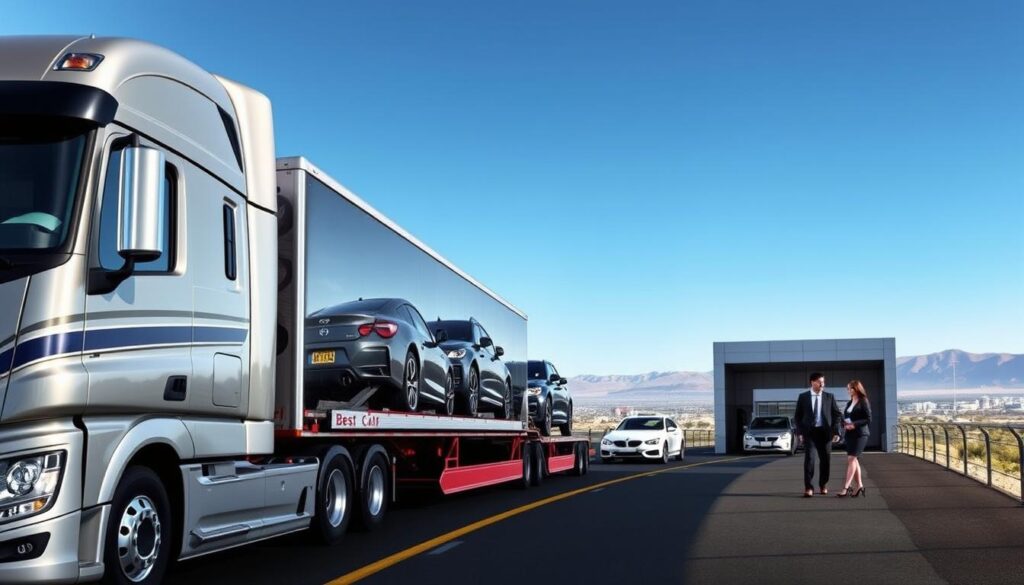
Best Car Shipping Inc. designs national routing to keep inventory aligned with market demand. Schedules match dealer windows and lot capacity so units arrive ready for retail display.
Move new vehicles from ports, factories, and distribution hubs to retail rooftops
New-vehicle logistics depend on precise pickup windows and ramp-to-lot coordination. Teams confirm capacity, dispatch the right equipment, and manage delivery paperwork to avoid dock delays.
Rebalance used and certified pre-owned inventory between dealership locations
Strategic transfers reduce overstock and fill regional gaps without delaying sales. Short, scheduled moves keep margins intact and free up showroom space.
Route trade-ins to reconditioning centers, auctions, or wholesale partners
Structured routing lowers internal handling and protects resale value. Documented pickups and condition checks reduce disputes and speed reconditioning.
Support store openings, closures, and one-time inventory rebalancing projects
Project-based moves use capacity planning and standardized paperwork to prevent disruption. Nationwide coverage supports local, regional, and cross-country needs with consistent reliability.
Process: plan routes, confirm capacity, dispatch suitable equipment, deliver, document, and reconcile.
Car Transport for Dealerships: When It Makes Sense to Outsource Shipping
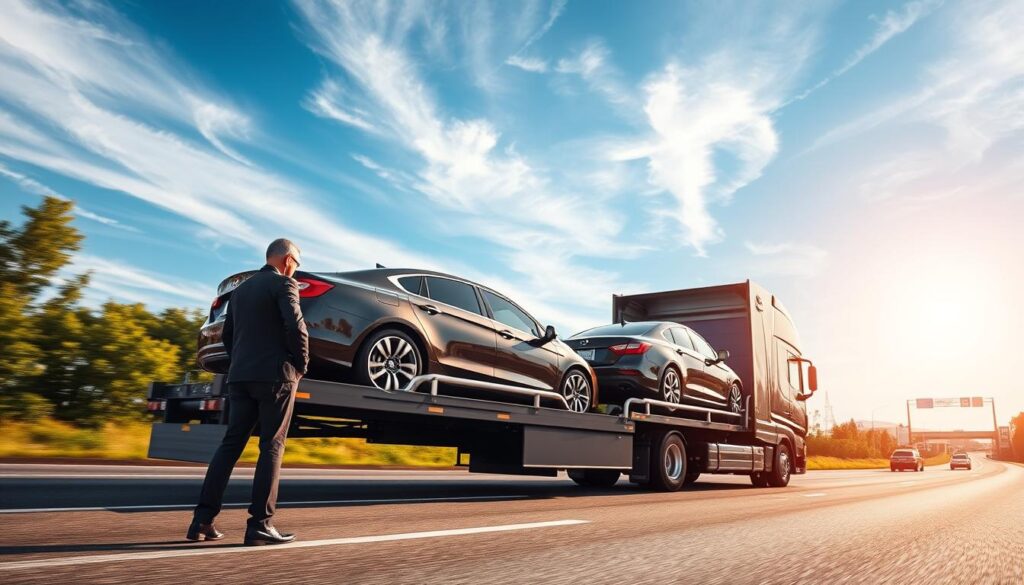
When distance, volume, or tight deadlines bite, professional shipping becomes the smarter option.
Practical triggers that justify outsourcing include cross-state moves over 100 miles, weekly inventory shuffles, and rush customer requests. These scenarios cost staff time and add miles to retail-ready units.
Operational drag is measurable. Employees on the road miss sales tasks. Extra mileage reduces resale value. Downtime slows reconditioning and delivery.
Customer speed and scalable capacity
When a buyer wants a specific model out of state, dealer-to-dealer shipping often delivers fastest. Reputable auto transport services scale to handle dozens of units weekly without tying up dealer resources.
Experience matters: professional dispatchers coordinate lane capacity, paperwork, and multi-state permits to prevent delays and surprises.
| Decision Trigger | In-house Cost | Outsourced Benefit |
|---|---|---|
| Distance & urgency | Staff hours lost; extra miles | Faster pickup; predictable windows |
| High weekly volume | Fleet upkeep; scheduling strain | Scalable capacity; lower per-unit cost |
| Customer out-of-state requests | Slow delivery; unhappy buyers | Faster fulfillment; better satisfaction |
Accountability comes as a single point of contact, standardized updates, and documented pickup/delivery windows. For Spanish-language shipping options see transporte de carros.
Auto Transport Services Dealerships Prefer for Speed, Flexibility, and Protection
Dealers choose a mix of hauling options to match inventory value, timing, and showroom readiness.
Open carrier shipping is the routine, cost-efficient choice for standard inventory. It moves batches quickly and uses widely available carriers. Open trailers often carry about 10 units, which lowers per-unit cost and speeds scheduling.
Enclosed transport protects luxury, exotic, and classic vehicles. Enclosed trailers typically hold 6–7 vehicles. They reduce exposure and preserve condition during longer moves or high-value transfers.
Door-to-door coordination simplifies pickups and delivery to lots, auctions, reconditioning centers, or an end customer’s destination. This option reduces internal handling and paperwork.
Non-running or inoperable units need winches and extra handling time. Teams plan loading buffers and use specialized equipment to avoid damage and delays.
| Option | Typical Capacity | Best Use | Operational Note |
|---|---|---|---|
| Open carrier | ~10 vehicles | Routine inventory, fast lanes | Lower cost; wide carrier availability |
| Enclosed trailer | 6–7 vehicles | High-value and condition-sensitive moves | Higher rate; added protection |
| Door-to-door service | Varies | Lot-to-lot or buyer delivery | Direct delivery; reduces dealer labor |
| Non-running handling | Single or multi-load | Towed or winched units | Extra loading time; special equipment |
Operational safeguards include professional loading, signed handoffs, and documented condition checks. For a local example and scheduling options see car shipping and auto transport Upton.
How the Dealership Vehicle Shipping Process Works from Dispatch to Delivery
A standardized process makes each shipment predictable and reduces internal friction. Quotes are more than a price. They confirm route feasibility, carrier capacity, equipment match, and realistic pickup windows based on dealership hours.
Request and route confirmation
Dispatch verifies lanes, capacity, and timetables before booking. This step sets ETAs and assigns the correct equipment to protect vehicle condition.
Vehicle prep that prevents delays
Dealers prep units by checking fluids, tire pressure, brakes, and battery state. Loose items are removed and alarms disabled. Special notes cover low-clearance or modified vehicles.
Pickup, staging, and loading buffers
Drivers use staged spots to keep sales and service lanes moving. Planned loading buffers reduce waiting time and avoid lot congestion.
Condition documentation and tracking
Walkaround photos and a signed inspection report (Bill of Lading) create clear accountability. Real-time tracking and targeted communication share milestones and ETA updates.
Final delivery and quick turn-ready handoff
Delivery includes a brief walkthrough and signed confirmation. This final step minimizes time-to-list and gets vehicles retail-ready fast.
Questions or to schedule service: Best Car Shipping Inc. at (307) 288-5972 or info@bestcarshippinginc.com.
Dealership Car Shipping Costs and the Biggest Pricing Factors
A reliable cost plan begins with per-mile benchmarks and clear pass-through charges. This helps finance teams budget routine moves and urgent transfers without surprises.
Distance benchmarks
Industry averages run about $1–$3 per mile per vehicle. A 500-mile move commonly starts near $800 per unit. Use these numbers as planning anchors when quoting lanes within a state or across the country.
Volume economics
Full truckloads (often 8+ units) lower the per-vehicle cost. Typical full-load ranges sit around $800–$1,500 per vehicle depending on lane and timing. Consolidation reduces hauling costs and carrier handling time.
Timing, fees, and insurance
Peak season, urgent requests, and severe weather raise rates and affect availability. Expect ancillary fuel, tolls, and route fees to add roughly 10%–20% to base charges.
Insurance is non-negotiable. Premiums often run about 1%–1.5% of vehicle value. Confirm coverage limits in writing.
- Tip: Compare quotes on scope and protections, not just headline price.
- Contact: Best Car Shipping Inc. at (307) 288-5972 or info@bestcarshippinginc.com.
Transport Methods for Moving Cars Between Dealerships
Selecting the right hauling option reduces delays and preserves resale value across moves.
Truckload shipping with multi-vehicle carriers
Truckload hauling is the workhorse. Multi-vehicle carriers give predictable capacity and scalable scheduling.
This method supports dealer networks moving batches of vehicles with consistent windows and documented handoffs.
Open vs. enclosed trailer capacity
Open trailers commonly carry about 10 cars. Enclosed trailers usually hold 6–7 units.
Plan loads to avoid partial-truck inefficiency. Choose enclosed when condition protection is a priority.
Towaways and single-unit moves
Towaways handle urgent trades and one-off transfers. They shorten lead time and meet time-sensitive customer commitments.
Rail shipping for high-volume, long-distance movement
Rail can cut cost on long lanes with high volumes. It offers less flexibility in pickup, routing, and delivery timing than truck options.
Decision criteria: prioritize delivery predictability, condition protection, paperwork, and multi-location support to reduce delays and speed readiness.
Delivery Timelines and Scheduling for Dealer-to-Dealer Transport
Clear delivery windows let stores plan merchandising, recon, and customer ETAs with confidence. Best Car Shipping Inc. sets realistic pickup and arrival ranges to reduce surprises and downtime.
Typical transit windows
Local and regional moves commonly arrive in 1–3 days. Cross-state lanes typically run 2–5 days. Longer, across country routes often take 5–10+ days, depending on routing and consolidation.
What extends shipment time
Routing complexity, heavy traffic, severe weather, and peak seasonal demand are the main causes of delay. Multi-stop carriers may add stops that change an ETA by a day or more.
- Set expectations: Build buffers into schedules so recon and lot staff can plan.
- Align pickup windows: Match collections to store hours to avoid staging congestion.
- Use tracking: Live tracking and prompt communication give staff time to adjust workflows.
Best practice: confirm schedules early and allow loading buffers on busy lots. Best Car Shipping Inc. confirms lanes, updates ETAs rapidly, and keeps the dealer point of contact informed until the vehicle is checked in.
For regional examples and lane timing, see Seattle delivery options or call (307) 288-5972 for a specific timeline.
Vehicle Safety, Insurance, and Condition Protection During Transport
Protecting inventory during movement starts with written insurance terms and a strict condition-check routine. Confirm carrier cargo insurance limits, deductibles, and exclusions in writing. Typical premiums run about 1%–1.5% of vehicle value; document coverage and claims workflow before loading.
What to confirm in writing
Require a signed statement that lists cargo limits, deductible amounts, and excluded items (aftermarket parts, personal property). Note how claims are filed and what Evidence (photos, BOL) the carrier will accept.
Inspections that reduce disputes
Use pre-load and post-delivery walkaround inspections. Take timestamped photos and attach a signed Bill of Lading. This simple process limits disagreements and speeds claims.
Keys, alarms, and special handling
Disable alarms and secure keys in a known chain-of-custody. Add written notes for low-clearance, modified, EV, or non-running vehicles so crews bring the correct gear.
- Operational care: use trained loaders and fit equipment to the vehicle to avoid damage.
- Standardize the process: inspections, photos, signed reports, and clear communication at each handoff.
- Business benefit: fewer incidents, faster reconciliation, and vehicles arriving ready for sale or recon.
Shipment Tracking, Communication, and Proof-of-Delivery for Dealership Operations
Clear, timely updates turn complex inbound and outbound movements into predictable inventory events. Real-time tracking and structured communication are operational musts when multiple stores manage concurrent shipments.
Live status and ETA management
Real-time tracking gives dealer teams precise ETAs. Stores use status updates to schedule recon, merchandising, and customer pick-ups.
Defined communication workflow
Dispatch, carrier, and dealer contacts follow a single escalation path. That path reduces delays and keeps everyone aligned when schedules shift.
Proof-of-delivery and paperwork flow
Signed BOLs, timestamped photos, and condition notes close each move. This documentation speeds reconciliation and payment processing.
- Why it matters: consistent updates lower admin work and protect resale value.
- Operational promise: exact quotes, no surprise charges, and professional drivers with regular updates.
- Business result: faster turn-ready inventory, simpler accounting, and higher customer satisfaction.
Best Car Shipping Inc. operates as a service partner focused on asset protection and smoother day-to-day workflows. Contact (307) 288-5972 or info@bestcarshippinginc.com for a process that prioritizes delivery visibility and reliable service.
Why Best Car Shipping Inc. Is the Transport Company Dealerships Choose
A dependable logistics partner turns scheduled moves into repeatable, low-risk inventory events.
Nationwide carrier network: The company maintains lanes in-state, regional, and across-country. Carrier access is matched to dealer windows so pickups and deliveries align with lot hours.
Reliable scheduling and updates: Dispatch provides predictable ETAs, live tracking, and frequent status notes. That consistency mirrors top-rated customer experience themes: on-time delivery, clear communication, and professional drivers.
Flexible options and clear pricing
Open service moves routine inventory at competitive rates. Enclosed service protects high-value vehicles that need extra condition care.
Transparent quotes reduce surprises. Written fees and clear billing speed approvals and reconciliation across dealer groups.
| Capability | Best use | Customer benefit | Operational note |
|---|---|---|---|
| Nationwide lanes | In-state, regional, cross-country | Predictable capacity | Matches dealer pickup windows |
| Open shipping | Routine inventory | Lower per-unit cost | Fast scheduling |
| Enclosed shipping | High-value units | Added condition protection | Fewer exposure risks |
Operational strengths: coordinated pickups on busy lots, disciplined documentation, and fast handoffs that keep vehicles retail-ready.
To schedule commercial service or request a dealer quote, call (307) 288-5972 or email info@bestcarshippinginc.com.
Conclusion
Effective final steps focus on uptime, condition control, and predictable handoffs.
Dealers gain faster inventory movement, less internal burden, and stronger protection of each car from pickup through delivery. Choose the right method—open or enclosed—based on value and timing. Insist on documented inspections and written insurance limits before loading.
Predictable delivery and clean paperwork support sales velocity, recon scheduling, and customer commitments. Best Car Shipping Inc. delivers a direct, business-oriented approach that prioritizes asset care and operational clarity.
Request a quote, confirm routes and pickup windows, and align documentation standards prior to dispatch. Call (307) 288-5972, email info@bestcarshippinginc.com, or review stress-free tips at stress-free vehicle tips.