
MVS Canada and allied providers present professional vehicle relocation with over 30 years of combined experience. The company holds membership in the BBB and the Halifax Chamber of Commerce, signalling solid credentials and consistent care.
Safe, on-time delivery is the core promise. Documented processes, photo-supported inspections, and proactive tracking keep the customer informed from pickup to handoff. These steps reduce surprises and protect valuable assets during transit.
Customers choose a transport method—open, enclosed, rail, or flatbed—and decide on door-to-door or terminal delivery. Timing, route capacity, vehicle type, and access can affect outcomes. The quote process clarifies these variables up front so buyers can plan with confidence.
Request a fast, no-obligation quote and speak with a coordinator at (307) 288-5972 or email info@bestcarshippinginc.com. For details on open transport options visit open transport options.
Key Takeaways
- Trusted providers offer documented inspections and active tracking.
- Reliability is shown through credentials like BBB and industry memberships.
- Choose transport method and delivery model based on vehicle and route needs.
- Quotes explain variables: season, capacity, timing, and access.
- Contact coordinators for a fast, no-obligation quote and clear guidance.
Auto Transport Across Canada for Personal and Commercial Vehicles

A coordinated network across provinces enables timely movement of vehicles from Vancouver to Halifax and every major corridor in between.
MVS Canada relies on an extensive cross-Canada network of vetted partners. Hansen’s adds capacity with 270+ vehicles and a CP Rail partnership to reach major rail lines.
Services support individual owners relocating, dealerships moving inventory, corporate fleets, and moving companies bundling relocation work. Nationwide coordination reduces delays on long routes and keeps schedules predictable.
Coverage, capacity, and cross-border options
Capacity drives availability on high-demand lanes across canada. Strong national networks and owned assets help maintain steady service during peak seasons.
Where available, Canada–U.S. shipping supports seasonal moves such as prairie-to-Arizona routes. Customers should plan documentation and timing in advance for border handoffs.
- Clear tracking and consistent communication across the country.
- Structured options for repeat commercial bookings with portal access and centralized updates.
For details on cross-border solutions see Canada-to-US shipping. The next decision is choosing the right transport method for the vehicle and risk profile.
Choose the Right Car Transporter for Your Vehicle
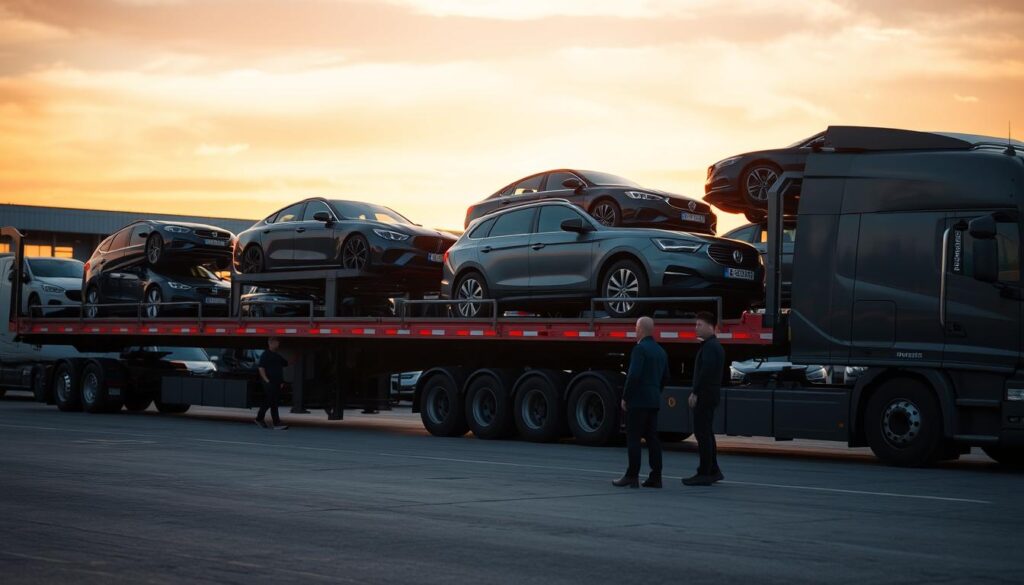
Deciding how to move a vehicle means balancing cost, protection, and timeline needs. Use a simple framework: low risk and low cost, moderate protection, or premium handling for high-value vehicles.
Open auto carrier car shipping for efficient, cost-effective transport
Open carriers commonly haul 4–12 vehicles and are the most budget-friendly choice. They offer wide capacity and steady lane availability. Expect exposure to weather, dust, and road salt; thorough inspection reports protect both parties.
Enclosed vehicle transport for exotic, antique, and high-value cars
Enclosed transport provides stronger protection and careful handling. It is the premium option for classic or exotic vehicles. MVS Canada also offers a white-glove door-to-door service for high-value items.
Rail vehicle shipping for terminal-to-terminal savings and capacity
Rail can move up to ~30 vehicles and often lowers per-unit cost. It is usually terminal-to-terminal and may add transit time. This choice fits customers who can manage pickups at secure yards.
Flatbed vehicle transport for short distances and special situations
Flatbed shipments suit short hauls, inoperable vehicles, or unique access constraints. They usually carry one vehicle, which raises per-unit cost but solves special loading needs.
How vehicle size and condition affect loading, space, and pricing
Larger SUVs and pickups use more deck space and can increase rates. Non-running vehicles or those without working brakes need special equipment and add to charges. Disclose condition upfront to avoid delays and extra fees.
For Spanish-language options, see transporte de carros.
Door-to-Door vs Terminal-to-Terminal Car Shipping
Choosing between doorstep pickup and yard pickup changes both convenience and cost for anyone moving a vehicle across the country.
Door-to-door service for convenience at pickup and delivery
Door-to-door service means a driver collects the vehicle from a home or business and delivers it to the destination address. This fits busy schedules, residential moves, and locations without nearby yards.
If a street can’t handle a carrier, the driver will arrange a nearby meeting point. That keeps timing predictable while limiting neighborhood disruption.
Terminal-to-terminal shipping for potential cost savings in major cities
Terminal-to-terminal can be cheaper, especially on major city lanes. Customers drop off and pick up at secure yards to simplify routing and speed yard handling.
For details on how this option works, see our terminal-to-terminal service.
Secure yards and controlled handoffs for vehicle protection
Security matters. Hansen’s keeps vehicles in fully fenced yards with full-time guards and 24/7 surveillance. Check-in/check-out is documented and photographed for clear handoffs.
Convenience is important, but disciplined processes protect the customer’s asset. The right choice depends on location, flexibility, and budget. A quote should make the model and costs clear so customers can decide with confidence.
How Our Vehicle Shipping Service Works
The process is designed around transparency: quote, prepare, monitor, and confirm on arrival. This workflow reduces surprises and protects the asset throughout transit.
Request a fast, no-obligation quote
Provide route, dates, vehicle type, running condition, and delivery model. MVS Canada returns a no-obligation price and clear timing. Customers can pay online to secure a booking.
Schedule pickup or drop-off and prepare your vehicle for shipping
Dispatch sets a pickup window or terminal appointment. Prepare by removing personal items, verifying fuel level, and documenting exterior condition with photos.
Track your vehicle with online, GPS-style updates
FedEx-inspired tracking shows location and progress. Hansen’s provides GPS-tracked trucks and portal access for corporate accounts. Testimonials praise timely updates and helpful communication.
Delivery and final inspection
Drivers conduct a final walk-around and provide a full inspection report at handoff. Documentation closes the shipment and confirms condition on arrival.
“Helpful tracking and clear reports made the move easy.”
Next: pricing and transit time depend on distance, method, and season. For booking details, request car shipping info or call (307) 288-5972.
Car Transport Pricing, Timing, and What Impacts Your Quote
A clear pricing model explains why similar routes can cost very different amounts. Quotes combine lane pricing, distance, and demand. Route density across the country changes availability and affects rates.
Distance and lane demand across the country
Short hauls often finish in about three days. Cross-country moves, such as Toronto to Vancouver, can take up to ten days depending on dispatch and capacity.
Transport method, seasonality, and capacity
Open carriers commonly cost less but expose vehicles to weather. Enclosed options add protection and cost. Rail can move large volumes—up to ~30 vehicles—but is terminal-based and may extend time.
Add-ons, fuel, and special handling
Common extras include fuel surcharges and charges for non-running vehicles or oversized space. Inoperable units need special lifts and increase fees. Hansen’s operational scale (270+ trucks) helps availability but peak seasons tighten windows.
| Factor | Effect on Price | Effect on Time | Notes |
|---|---|---|---|
| Distance / Lane Density | High impact | Directly proportional | Longer lanes cost more and add days |
| Transport Method | Open = lower, Enclosed = higher | Rail may add days | Choice balances risk and cost |
| Seasonality | Peaks raise rates | Can delay pickups | Winter and relocation season matter |
| Special Handling | Flat fee or hourly | Can add scheduling time | Non-running or oversized units need extra care |
- Ask for a detailed quote that lists lane pricing and surcharges.
- Compare companies on tracking, inspection reports, and secure yards—not just price.
- Confirm special handling needs and timing before booking to avoid surprises.
Professional providers will explain variables up front and keep customers informed. To compare cross-border options, see ship my car from Canada to.
Conclusion
Start by confirming coverage and then choose the right method—open, enclosed, rail, or flatbed—and your delivery model. This simple decision path clarifies cost and convenience before booking.
Reliable means regular tracking updates, controlled handoffs, photo-documented inspections, and clear accountability at every step. Those practices reduce risk and keep timelines predictable.
The core promise is direct: protect the vehicle, keep the customer informed, and deliver as scheduled whenever conditions allow. Request pricing and scheduling by calling (307) 288-5972 or emailing info@bestcarshippinginc.com.
Please share pickup/delivery cities, dates, vehicle type, and running status to get an accurate quote. Learn more about our reliable auto transport services and let the company reduce risk and workload while keeping your asset secure.