
If your car won’t start after jump start attempt, the most likely culprit is a battery that will not hold a charge. This situation can leave a vehicle immobile and create safety concerns on the roadside.
A loud clicking noise often signals the starter motor is failing to engage due to weak power. A faulty alternator or a severely degraded battery can also prevent the engine from turning over.
When basic jumping procedures do not revive the car, the safest choice is to call a professional towing service. Our team at (307) 288-5972 offers secure transport and on-site assessment. We use reliable tools like the LOKITHOR Jump Starter for many recovery cases, but some vehicles need full tow support.
For fast, professional help or to learn about economical transport options, check our cheap auto shipping services. We prioritize safety and clear communication when a vehicle remains immobile.
Key Takeaways
- A dead battery is the top reason a vehicle stays dead after a jump start.
- Clicking often means the starter motor lacks sufficient power.
- Faulty alternators can stop a battery from staying charged.
- Professional towing is usually the safest next step.
- Call (307) 288-5972 for prompt roadside assistance and transport.
Understanding Why Your Car Won’t Start After Jump Start Attempt
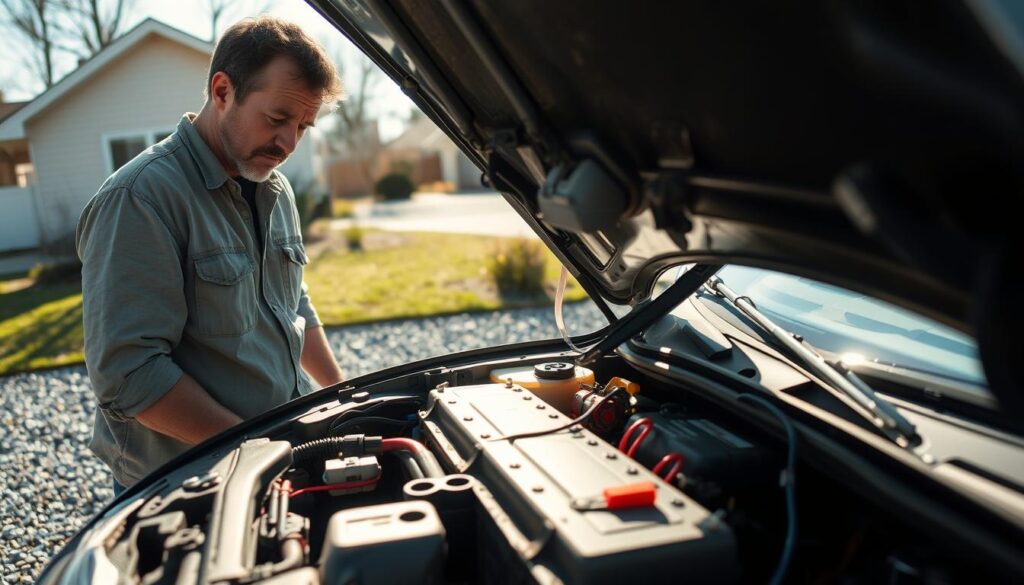
A rapid clicking sound or a silent response often signals the electrical delivery is failing. The starter solenoid tries to engage, but insufficient current prevents the engine from turning over.
Common reasons include a battery that no longer accepts a charge and a weak alternator that cannot replenish the system. These faults mimic a simple drain but persist even after a jump.
Sometimes the issue is a complex electrical fault rather than a single component. The starter motor may fail to engage, or wiring and grounds may reduce current flow. Professional diagnostics isolate the true cause.
- Battery condition and charge retention.
- Starter engagement and solenoid action.
- Alternator output and electrical system health.
When the vehicle does not respond to a jump, contact a trained team for fast assessment and safe transport. Call (307) 288-5972 or email info@bestcarshippinginc.com.
Assessing Battery Health and Charge Retention
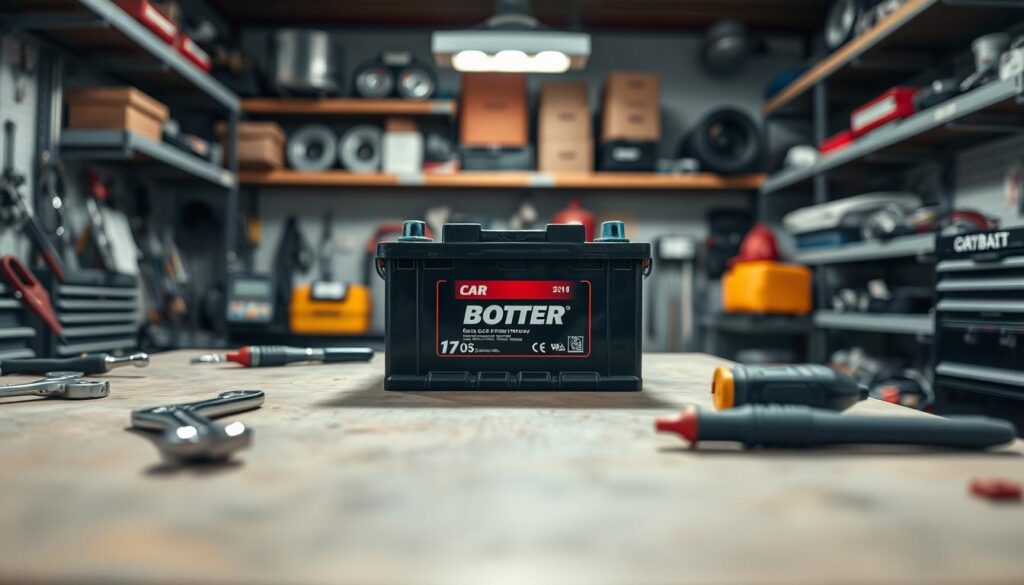
Quick checks reveal whether the battery still supplies reliable current. Begin with a visual inspection for bulges, leaks, or heavy corrosion at the terminals.
Battery Degradation
Batteries degrade over time. Deep discharges and long periods without a proper charge reduce capacity. A degraded unit may not hold charge even after charging.
This loss of capacity is one of the leading reasons car owners face repeated failures. Make sure terminal connections are clean to improve contact and reduce false readings.
Testing Voltage
Use a voltmeter to measure resting voltage. If the reading is below 12.4 volts, the battery may need replacement to avoid cold-weather failures.
- Test with a diagnostic tool to confirm if the battery can hold charge effectively.
- If voltage reads under 12.4 V, you may need a new unit to prevent future car start problems.
- Our diagnostic process identifies whether the battery is the primary issue affecting vehicle power.
| Voltage (Resting) | Condition | Recommended Action |
|---|---|---|
| 12.6 V or higher | Good | No immediate service; monitor |
| 12.4 – 12.6 V | Marginal | Load test and inspect terminals |
| Below 12.4 V | Weak / Degraded | Replace battery; check charging system |
If testing shows the battery cannot hold charge, arrangement for professional service is advised. Contact the team at (307) 288-5972 or email info@bestcarshippinginc.com for reliable assessment and safe transport.
Inspecting Starter Motor and Solenoid Functionality
A failing starter or a weak solenoid is a common reason a vehicle remains immobile after power is applied. When the solenoid gets current, it should engage the starter motor. If the motor is worn, you may hear a single or repeated clicking noise instead of an engine crank.
A thorough inspection checks terminal tightness, starter wiring, and solenoid response. Technicians test voltage at the unit and look for internal shorts or worn brushes.
Common Starter Failure Symptoms
- Clicking noise with no crank — often a failing starter motor.
- Intermittent engagement — signs of worn internal parts.
- High draw on the battery or slow engine crank — starter requires significant power.
- Electrical faults within the starter that prevent the engine from cranking properly.
Replacing a starter or alternator ranges from $300 to $800, while a new battery typically costs $100–$300. For reliable diagnosis and safe transport, contact the team at (307) 288-5972 or email info@bestcarshippinginc.com.
Identifying Poor Electrical Connections and Wiring Issues
Even a strong battery can fail to deliver power if terminal contacts are corroded or wiring is damaged. Bad connections reduce current flow and can prevent the engine from cranking despite a healthy battery.
Quick checks include inspecting terminals for white or green buildup and ensuring cable clamps are snug. Cleaning and tightening often restore proper flow to the electrical system.
Damaged cables or frayed wiring will restrict power to the starter and can create intermittent issues with vehicle operation. Technicians trace wiring and replace compromised runs to prevent car starting failures.
- Poor wiring is a common cause of electrical system failure, even when the battery reads good.
- Inspect battery terminals for corrosion; this is a primary reason your car may not start.
- Secure, tight connections ensure the starter gets full current to crank the engine.
“A secure connection is vital; simple cleaning or a cable replacement often resolves persistent issues.”
To make sure the problem is not deeper, call (307) 288-5972 or email info@bestcarshippinginc.com for a professional inspection and safe transport if needed.
Evaluating Alternator Performance
A malfunctioning alternator often shows itself when electrical systems fail to recharge during normal driving. A failing alternator can allow the battery to drain even while the engine runs.
Key indicators include dimming lights, warning lamps on the dash, or rapid battery depletion in multiple cases. Technicians test charging output at idle and under load.
- Faulty alternator will prevent the battery from maintaining a reliable charge and may cause a dead battery shortly after a jump start.
- In many instances, a failing alternator paired with a weak battery leads to stalling or quick power loss.
- Typical replacement costs range from $300 to $800 depending on the vehicle model and parts required.
Our service evaluates alternator output, inspects belts and connections, and confirms whether the alternator is the primary fault. For fast diagnostics and secure transport, call (307) 288-5972 or email info@bestcarshippinginc.com.
Managing Excessive Electrical System Loads
Heavy accessory loads can mask the real fault by siphoning voltage from the starter during a crank.
Before any further attempts, disable lights, HVAC, audio, and other accessories. Reducing draw lets the battery deliver full power to the starter and improves the chance of a successful car start.
Aftermarket devices can create a continuous drain. Poorly installed wiring or auxiliary batteries often produce parasitic draws that deplete the battery overnight. These faults may also stress the alternator while driving.
- Turn off accessories and let the vehicle rest for a few minutes to recover battery voltage.
- Disconnect nonessential aftermarket equipment if safe and practical.
- Inspect wiring and ground straps for loose or corroded connections that cause high draw.
If the issue persists, the team can test battery health, alternator output, and wiring integrity. Call (307) 288-5972 or email info@bestcarshippinginc.com for a professional inspection and secure transport.
Impact of Extreme Weather Conditions on Starting
Severe cold can sap a battery’s capacity and prevent the engine from turning over, even when tests show acceptable voltage.
Low temperatures slow chemical reactions inside the battery. This reduces available cold-cranking amps and raises the chance of failed car starting in freezing weather.
In some cases, a healthy unit still struggles. The starter needs a burst of power. Cold reduces that burst and amplifies existing weaknesses.
Practical steps include using a battery warmer or an ultra-low temperature jump starter designed to supply ample cold-cranking amps. These tools improve reliability in harsh conditions.
| Issue | Effect | Recommended Action |
|---|---|---|
| Cold temperatures | Lower cranking amps; slow chemistry | Use battery warmer; park in sheltered area |
| Marginal battery age | Fails under load in freezing cases | Replace battery; carry cold-rated jump starter |
| Accessory draw in cold | Reduced reserve capacity | Disable nonessential loads; seek professional help |
If severe weather compromises your vehicle, the team provides towing to warmer facilities and professional assessment. Call (307) 288-5972 or email info@bestcarshippinginc.com for fast, reliable service.
Troubleshooting Fuel System and Ignition Components
A faulty fuel pump or a clogged fuel filter can silently deny the engine the fuel it needs to run.
Fuel Pump Issues
Symptoms include no fuel pressure, intermittent stalling, or an engine that cranks but does not fire.
When the fuel pump is worn or broken, the system cannot deliver petrol or diesel to the injectors. A failing pump often requires professional replacement to restore reliable operation.
Clogged Fuel Filters
A clogged fuel filter prevents fuel from reaching the engine. Filters should be replaced every 15,000–20,000 miles to avoid sudden failures.
Technicians make sure to check both pump and filter during diagnostics. This step identifies whether fuel delivery is the core problem before recommending repairs.
“Regular filter maintenance and prompt pump replacement reduce the risk of being stranded and protect engine components.”
| Issue | Signs | Recommended Action |
|---|---|---|
| Fuel pump failure | Engine stalls; low fuel pressure | Test pressure; replace pump if below spec |
| Clogged fuel filter | Hard starting; loss of power | Replace filter every 15K–20K miles |
| Contaminated fuel | Poor combustion; injector damage | Flush system; replace filter and pump if needed |
- A clogged fuel filter is a common reasons car start failures occur.
- We make sure to check the fuel pump and filter during diagnostics to find the underlying problem.
- Our technicians troubleshoot the fuel system to confirm it is not the reason engine attempts are failing.
For professional diagnostics and safe transport, call (307) 288-5972 or email info@bestcarshippinginc.com.
Addressing Security System and Key Fob Malfunctions
Electronic immobilizers sometimes block engine engagement when they fail to authenticate a key signal. This security response can mimic serious mechanical faults but is often resolved with simple checks.
First, verify the key fob battery. A weak battery reduces range and may stop the remote from communicating with the security system. Replacing the battery is a low-cost fix that prevents many no-response events.
If the fob seems dead, try holding it directly against the start button. Many vehicles allow the immobilizer to read the transponder this way.
- A malfunctioning key fob can prevent the vehicle from moving by failing to talk to the immobilizer.
- Technicians will test the fob battery and the security module to isolate the issue.
- Keep a spare key fob to prevent being stranded if the primary unit fails.
| Symptom | Likely Cause | Immediate Action |
|---|---|---|
| No response from ignition | Dead key fob battery | Replace battery; hold fob to start button |
| Intermittent recognition | Weak signal or antenna fault | Test fob and receiver; seek diagnostic service |
| Security lockout | Immobilizer fault | Transport to dealership or qualified shop |
When remote troubleshooting fails, the team can assist with secure transport and diagnostics. For localized support, consider scheduling service or transport such as Upton auto transport. Call (307) 288-5972 or email info@bestcarshippinginc.com for prompt help.
Mechanical Engine Seizure and Internal Faults
Mechanical seizure can present as a loud click while the starter struggles against internal resistance.
In rare cases the engine itself is locked up. The crankshaft will not turn. A quick manual check with a wrench at the crank pulley can confirm refusal to rotate.
If the crank will not move, do not force the starter motor. Forcing can cause more damage and raise repair costs.
- A seized engine is a serious mechanical issue that will prevent car starting and needs professional inspection.
- If you hear loud noise but no rotation, internal failure or seized components may be present.
- In such cases, towing to a specialized repair shop is typically required to avoid further damage.
Our team can safely transport the vehicle for detailed diagnostics and repair. Call (307) 288-5972 or email info@bestcarshippinginc.com for secure handling and care.
| Symptom | Likely Cause | Recommended Action |
|---|---|---|
| Clicking noise, no crank | Seized internal component | Do not force starter; tow to repair shop |
| Crankshaft will not budge | Mechanical seizure (bearings, seized pistons) | Manual inspection; specialist engine service |
| Starter smokes or strains | Starter damage from forcing | Replace starter; inspect engine for collateral damage |
Professional Roadside Assistance and Towing Services
If a vehicle remains immobile despite basic remedies, arranging professional roadside assistance protects you and the engine from further damage.
When to Call for a Tow
Request a tow when a dead battery refuses to hold charge, wiring problems persist, or the electrical system shows intermittent faults. If the engine will not crank or safety is at risk, do not continue repeated attempts.
Call the RAC hotline at 0333 2000 999 for immediate breakdown help and policy setup. For local support, contact the team at (307) 288-5972 or email info@bestcarshippinginc.com.
Benefits of Professional Diagnostics
Trained technicians identify root causes fast. They test battery condition, alternator output, and starter function. This saves time and reduces repair cost.
The first 24 hours of new customers are placed on Roadside Assistance Only policy. Technicians use tools like the LOKITHOR Jump Starter to supply reliable power when safe and practical.
| Trigger | Immediate Action | Contact |
|---|---|---|
| Dead battery that won’t hold charge | On-site test; tow to repair facility | (307) 288-5972 / info@bestcarshippinginc.com |
| Intermittent electrical issues | Full diagnostics; secure transport if needed | 0333 2000 999 / (307) 288-5972 |
| Engine fails to crank | Do not force; arrange tow and inspection | Info via email or phone for fast response |
Conclusion
Stay calm, assess visible signs, and avoid repeated efforts that may cause more damage. ,
Essential information is provided above to help identify whether the battery or the engine is the likely cause. Use the checklist to rule out simple faults before arranging professional help. For secure transport or longer moves, consider our long-distance towing options.
For assistance, call (307) 288-5972 or send an email to info@bestcarshippinginc.com. The team offers prompt diagnostics and reliable service to move your car safely to a qualified repair facility.