
BestCarShippingInc delivers a professional, predictable process for moving a vehicle into Canada. The company focuses on reduced risk, clear routing, and steady communication from booking to delivery.
Clients should book early to secure preferred dates and ensure timely pickup handover. Transport occurs on controlled carriers and ends with delivery that adds no extra mileage to the car.
Trust is measurable: provider data shows strong outcomes — ACERTUS reported a 99.4% damage-free delivery rate and Mr. Car Shipper documented a 0.72% damage incidence in a reviewed period. These figures back careful handling and accountability.
Expectations: timelines and pricing depend on route, transport type, and pickup/delivery access. Request a quote to get a tailored estimate and next steps.
Questions or immediate scheduling are welcome. Contact: info@bestcarshippinginc.com or (307) 288-5972 for customer-first support.
Key Takeaways
- Professional process reduces risk and protects your vehicle.
- Transparent communication from booking through delivery.
- Performance metrics show strong damage-free rates.
- Timing and cost vary by route and access; book early.
- Contact info for fast scheduling: email or phone provided.
Canada Vehicle Transport Services Built for Safety, Speed, and Peace of Mind
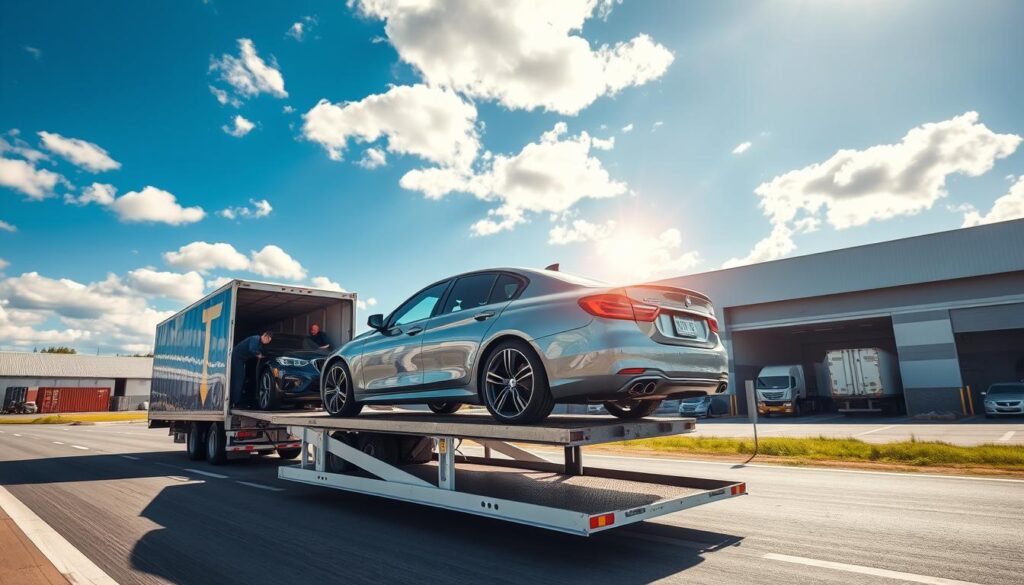
When timelines matter, a dedicated team and purpose-built equipment make vehicle moves across Canada reliable and predictable.
Who we ship for:
- Families relocating with daily drivers and personal needs.
- Dealership logistics coordinators needing scheduled deliveries.
- Collectors and museums moving antiques, show cars, and prototypes.
- Specialty owners requiring careful routing and condition documentation.
What we ship:
- Daily drivers and family sedans.
- Antiques, vintage Ferraris, and show vehicles.
- Prototypes, movie vehicles, and museum pieces.
The specialized team leverages experience to meet tight pickup windows and event deadlines. Clear pickup instructions and flexible scheduling address customer needs. Trained personnel and appropriate equipment reduce operational risk and improve on-time performance.
| Vehicle Type | Protection Level | Typical Client |
|---|---|---|
| Daily driver | Standard secured transport | Families, private owners |
| Show & vintage | Enclosed, climate-controlled | Collectors, museums |
| Prototype & movie units | Special handling, dedicated trailer | Manufacturers, event coordinators |
How Car Shipping Works From Pickup to Delivery in Canada

Reserve transport dates in advance to lock in optimal routing and avoid scheduling surprises.
Booking early and scheduling
Book early to secure preferred dates and better routing. Early reservations reduce last‑minute changes and improve transit time estimates. Expect a clear pickup window when booking.
Pickup location and key handover
Choose a safe pickup spot: a driveway, business lot, or nearby open area. At pickup, the driver documents the vehicle condition and accepts the keys for transit.
Loading and transit
Providers perform careful loading to prevent damage. The vehicle is loaded on a carrier with no added mileage, limiting wear and tear during transport.
Delivery and final inspection
On arrival at the destination, the customer or agent signs off after a condition check against pre‑transit photos. Delivery includes documented confirmation and closure of the move.
| Step | Customer Action | Typical Timeframe |
|---|---|---|
| Booking | Confirm date and pickup details | Book 7–21 days before move |
| Pickup | Provide keys and initial inspection | Pickup window: 2–6 hours |
| Transit | Track progress via updates | Transit: 2–10 days (varies) |
| Delivery | Inspect and sign off | Delivery window: scheduled arrival day |
Cars shipping Options for Canada: Open, Enclosed, and Single-Vehicle Transport
Choosing the right transport method balances budget, timing, and the level of protection you need.
Open multi-car transport
Open carriers move up to 10 vehicles per load and are the most cost-effective option. They work well for standard vehicle moves when budget is a priority.
Most runs operate terminal-to-terminal because large carriers have limited residential access. Door-to-door may be available for an extra fee or when local access allows a safe pickup.
Enclosed transport
Enclosed trailers carry one or two vehicles and provide maximum protection from weather and road debris. This is the recommended option for show vehicles, antiques, or any high-value vehicle where condition matters most.
For more on premium protection, request an enclosed transport service quote tailored to the route and vehicle type.
Single trailer and flatbed solutions
Single-trailer or flatbed services suit short-haul moves, non-runners, and low-clearance or specialty vehicles. They offer faster, dedicated handling but typically cost more than shared loads.
- Decision factors: match options to budget, risk tolerance, and timing.
- Pickup logistics: choose terminal pickup for large carriers or arrange a nearby meeting point for faster turnaround.
- Ask for a quote: pricing depends on vehicle type, route, and service level; include what is covered in the price.
Preparing Your Car for Transport to Canada
A clear checklist before pickup prevents last-minute hold-ups and supports claims if needed.
Documentation: what to keep accessible and protected
Keep ownership papers and any sale or transfer documents in a sealed folder. Store copies with the customer and the carrier. If the vehicle is part of a sale, ensure documents are easy to access at border crossings.
Personal items and valuables: what to remove and what to discuss in advance
Remove valuables and loose items from the interior. Personal items can shift and cause damage. If you must ship approved items inside the car, disclose them before pickup so the company can note limits and liability.
Pre-shipment cleaning and photos to document vehicle condition
Wash the vehicle to reveal scratches and chips. Take time-stamped photos from multiple angles. These images document the pre-move condition and simplify any claims process.
Operational checks: lights, brakes, roofs, tires, and fuel level for loading
Confirm lights, brake lights, and warning indicators work. Test convertible or foldable roofs. Ensure the car has at least a half tank of fuel and correct tire pressure. If the vehicle does not run, notify the service so proper equipment is arranged.
| Item | Customer Action | Why it matters |
|---|---|---|
| Documentation | Provide originals and copies in protected folder | Speeds border processing and supports claims |
| Personal items | Remove valuables; disclose approved items | Prevents damage and clarifies liability |
| Condition photos | Wash vehicle; take time-stamped photos | Documents pre-existing damage for clarity |
| Operational checks | Test lights, brakes; half tank fuel; set tire pressure | Ensures safe loading and on-time pickup |
Following these steps helps the carrier meet schedules and reduces avoidable risk. For a full preparation checklist and detailed guidance, see how to prepare a car for or contact the team at info@bestcarshippinginc.com or (307) 288-5972.
Shipping a Car From the US to Canada: Customs, Requirements, and Border-Ready Support
A proactive customs strategy keeps delivery windows intact and reduces border delays.
Working with a customs-bonded carrier
A customs-bonded, licensed, and insured company handles cross-border moves with fewer handoffs. This reduces paperwork errors and lowers the chance of a missed delivery window.
Coordinating timing and paperwork
Align booking dates with document readiness. Customers should prepare ownership papers and transaction records ahead of pickup.
Keep originals and copies protected and accessible at handover and when the vehicle reaches the border.
Handling special cases: purchases, sales, and third-party pickups
For buyer-collected or dealer moves, confirm release procedures with the seller. Verify contacts and ensure the pickup party understands prep responsibilities.
“Clear instructions and timely pre-checks simplify cross-border transport and reduce surprises.”
- Key documents: title, bill of sale, and power of attorney if a third party collects the vehicle.
- Timing tip: book transit after paperwork is finalized to avoid delays at customs.
For border-ready support and detailed requirements, contact info@bestcarshippinginc.com or call (307) 288-5972. For cross-border service details, see best car shipping company Canada to.
Damage Prevention, Insurance, and Secure Handling During Transit
Strong handling protocols and purpose-built equipment form the foundation of safe vehicle transit.
Professional loading practices
Trained staff follow checklists and document the condition before and after loading. This system reduces avoidable damage and speeds claims resolution.
When clearance is tight or a car is low to the ground, crews use hydraulic tailgate lifts to load without stressing bumpers or undercarriage. That method lowers risk for specialty and low-clearance vehicles.
Equipment that reduces risk
Air-ride trailers minimize vibration. Specialty straps and soft-loop tie-downs prevent shifting and concentrate pressure away from painted surfaces. These tools support stable, secure transportation across long routes.
Visibility and security
GPS tracking and advanced security systems give live location and access alerts. This visibility improves accountability and reduces theft risk while a vehicle moves in transit.
Claims and accountability
All moves are performed by licensed, insured providers. Customers should confirm coverage limits at booking for each car and route.
Documentation guides any claim: time-stamped photos, signed condition reports, and provider logs. Performance metrics back this approach — ACERTUS reported a 99.4% damage-free delivery rate, and Mr. Car Shipper showed a 0.72% damage incidence in the reviewed period — reinforcing the focus on careful, consistent care from pickup to delivery.
Transit Time, Pickup Windows, and Delivery Planning Across Canada
Transit planning across Canada starts with realistic expectations about distance and lane frequency. Customers should plan for variable timeframes based on route demand and the chosen service type.
What affects transit time
Distance: Longer routes naturally take more time and may add days for driver rest and transfers.
Route density: Frequent lanes run weekly or daily and reduce idle days. Sparse lanes add scheduling buffer and increase time.
Transport type: Enclosed or dedicated moves often take different routes than multi-vehicle carriers and can change transit speed.
Door-to-door vs terminal-to-terminal
Door-to-door increases convenience but can cost more and may be limited by residential access.
Terminal-to-terminal is predictable and often faster on busy lanes. Meeting at a nearby open area protects timing and vehicle safety when residential access is constrained.
- Plan pickup readiness: confirm keys, documents, and availability at the destination.
- Book early: early reservations cut idle days and tighten pickup windows.
- For multiple vehicles: staging at a terminal or coordinated pickup reduces complexity and improves schedule reliability.
BestCarShippingInc designs services for Canada’s geography. Customers who align pickup, documentation, and delivery availability cut delays and keep the move on time. For scheduling help, contact info@bestcarshippinginc.com or (307) 288-5972.
Conclusion
BestCarShippingInc delivers a safe, reliable car move into Canada with clear communication and proven handling practices. The team offers flexible service options and a predictable pickup-to-delivery workflow.
Customers should pick the right transport type, prepare the vehicle, align dates early, and plan a condition inspection at delivery. Documenting condition with photos and a signed report reduces risk and speeds any claim process.
Request a quote with vehicle type, origin, destination, preferred dates, and whether you need open or enclosed transport. For open transport details see open transport.
Contact BestCarShippingInc at info@bestcarshippinginc.com or (307) 288-5972 to schedule service or get routing support.