
This guide explains what copart car shipping means in practice today. It frames the transport step that buyers manage after a successful purchase. Timelines, budget choices, and pickup options shape the path from yard to delivery.
Buyers will find a step-by-step operational resource for predictable timelines and controlled costs. The guide covers three practical approaches: Copart Delivery, hiring a third-party transporter, or self pickup. Each option shows when it makes the most business sense.
Many auctioned vehicles are salvage or non-running. That fact changes equipment needs, carrier selection, loading method, and risk for the shipment. Plan transport early and add an estimate to bidding to avoid preventable fees.
Protect the asset with clear documentation and insurer-ready transporters. Make sure account data, pickup contacts, and delivery addresses are correct before placing an order. For detailed carrier options and open transport info see open car transport.
Key Takeaways
- Plan transport early and include costs in your bid.
- Choose delivery, third-party, or self pickup based on condition and budget.
- Expect salvage or non-running vehicles that need special handling.
- Confirm documentation and contacts to prevent delays.
- Verify transporter insurance and release requirements before pickup.
How Copart works after you win an online auto auction vehicle
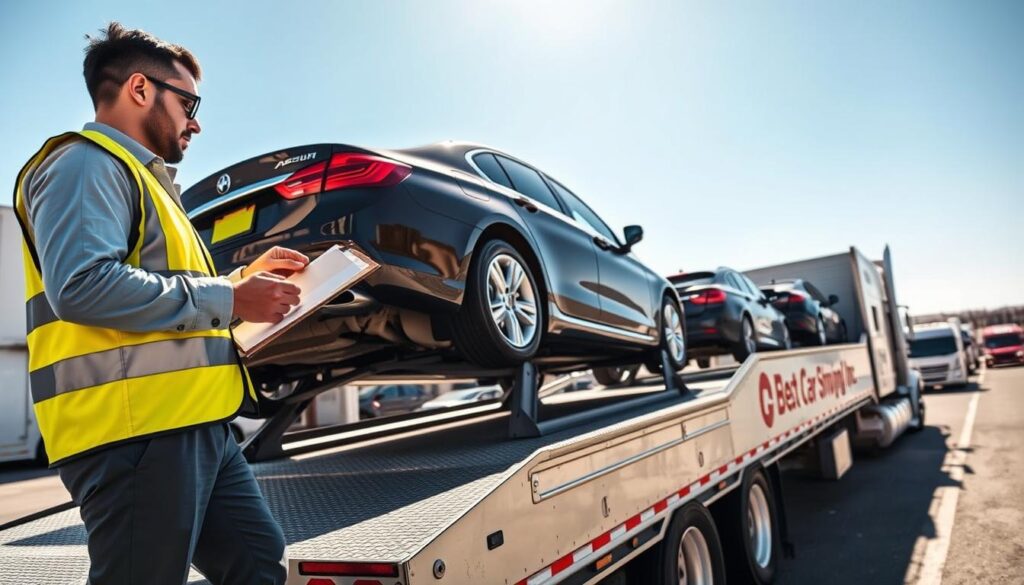
Winning an online auction begins a short, decisive window to move the vehicle from the yard. Act fast. The buyer must complete payment, confirm release readiness, and then arrange transport from the specific lot where the vehicle is stored.
What happens between winning the bid and arranging transportation
The post-auction process starts immediately. Once payment posts, verify lot number, membership details, and payment status. Then initiate the ship car order or dispatch your chosen carrier without delay.
Why Copart isn’t a traditional transport company and what that means for buyers
Copart runs the copart online auto platform and manages yard operations. It does not manage carrier selection or control transporter add-on fees. That means buyers must handle scheduling, risk controls, and insurance as part of a standard logistics workflow.
“Every day matters after purchase; delays can trigger storage fees and disrupt delivery windows.”
Quick checklist:
- Confirm lot and lot location.
- Verify membership and payment.
- Schedule pickup or order copart transportation / third-party carrier.
Note: Non-running or heavily damaged units need extra equipment and time. The following sections detail storage timelines, options, and required documents to prevent pickup failures.
copart car shipping basics to know before you book transport

Timing matters: the yard holds a vehicle free for a limited period after purchase. Buyers generally have a three-day no-charge window, and that includes the purchase day. Use this period to arrange pickup and avoid added costs.
Storage timelines to avoid extra charges
Most online bids get three free days. Buy It Now sales often allow two free days. After those days, storage fees begin and vary by lot. Weekend and holiday fee rules are applied unless the free window covers those dates.
When weekend and holiday storage fees can apply
Calendar timing is a real cost driver. If a holiday or weekend falls outside the initial no-charge window, a storage fee will be assessed. Verify site-specific details early to prevent surprises.
How vehicle condition affects transport requirements
Non-running or salvage vehicles change loading needs. Expect winch-capable trucks, flatbeds, or forklifts. Damaged vehicles may have loose parts or missing keys, increasing handling time and risk of damage.
- Control fees: pre-plan and book transport quickly to use the free days.
- Verify requirements: make sure the transporter has auction and salvage experience.
- Check details: confirm lot policies and pickup windows to save time and money.
Shipping car Copart options: delivery, third-party shipping companies, or self pickup
Deciding how to move the vehicle right after payment avoids storage fees and delays. Buyers have three practical choices. Each option changes cost, time, and responsibility.
Using Copart Delivery for the easiest ordering and payment flow
Copart Delivery is ordered from the Payments Due screen via “Order Delivery.” The estimate appears with other fees, and the buyer pays in a single transaction. This service simplifies the order and reduces coordination tasks for the buyer.
Typical Copart Delivery timing within 100 miles versus long-distance shipments
Expect a few business days for local delivery within roughly 100 miles. Long-distance runs can take up to three weeks depending on routing and carrier loads. Plan early to match expected arrival times.
Sending a third-party transporter using the Payments Due workflow
Choose “Send to Transporter” on Payments Due to grant access. The transporter receives the Copart Transportation App link and a Gate PIN. They must book an appointment and check in per yard rules.
What your transporter needs to pick up
- App access: Copart Transportation App link and instructions.
- Gate PIN: Unique entry code supplied after the Payments Due step.
- Appointment: Booking and QR or app check-in at arrival.
Liability and risk
Copart is not responsible for damage caused by third-party transporters. Third-party companies may charge add-on fees that fall outside the delivery estimate. Maintain carrier insurance and a clear contract.
Picking up vehicles yourself and Virtual Queue rules
Select “Schedule Pickup” on Payments Due to set an appointment. About two hours before your slot you get a confirmation link by text. Use the link or QR code at the gate to hold your place in the Virtual Queue.
Important: Vehicles cannot be driven off the facility. Yard staff load the vehicle onto your trailer or flatbed for legal and liability reasons. Arrive on time to avoid losing your spot and incurring storage fees.
| Option | How to order | Timing | Responsibility |
|---|---|---|---|
| Delivery | Payments Due → Order Delivery | Days local / Up to 3 weeks long haul | Copart handles pickup and delivery logistics |
| Third‑party transporter | Payments Due → Send to Transporter | Depends on carrier availability | Buyer contracts and insures transporter |
| Self pickup | Payments Due → Schedule Pickup | Appointment and Virtual Queue | Buyer arranges trailer; yard staff load vehicle |
“Arrive on time and confirm transporter insurance to limit delays and exposure to extra fees.”
Copart shipping costs, fees, and how to get an accurate estimate
Budget control starts before the bid closes. Buyers should forecast transport costs and add them to the total price. Early planning avoids last-minute fees and bad outcomes.
The biggest price drivers
Distance and pickup/delivery location are primary levers. Vehicle size, weight, and operability (running vs non-running) also change the rate. Non-running units need winches or flatbeds, which raises the fee.
Practical per‑mile expectations
Shorter hauls often average about $1.00 per mile. Very long routes can drop to roughly $0.50 per mile. Long hauls cost less per mile because carriers reduce deadhead miles and consolidate loads.
When to run a calculator and shop quotes
Run a shipping cost calculator while bidding, not after winning. Compare multiple quotes from reputable companies and verify carrier experience for salvage or non-running loads.
Extra fees to watch
- Storage charges if pickup passes the free days.
- Expedited service premiums for faster delivery.
- Transporter add-on fees for winching, stairs, or remote locations.
Tip: The cheapest quote may fail tight pickup windows. Choose a company that balances price with proven experience to protect the shipment and the overall budget.
Documents and requirements for Copart transportation and delivery
Clear paperwork speeds pickup and protects the buyer and carrier. Before arranging transport, confirm account IDs, payment status, and authorization documents so the lot visit proceeds without delays.
Account essentials every buyer must have on file
Upload a government-issued ID to the account early. Reviews can take 1–3 business days. Keep the membership number and the vehicle lot number handy for every booking and gate check.
Payment proof and release readiness
Make sure payment posts and release status shows clear. A scheduled transporter can be refused entry if holds or unpaid balances remain. Provide payment proof to coordinators before dispatch.
Power of Attorney and state rules
Some states require a notarized Power of Attorney for title or release; others accept non-notarized forms. Verify the rule tied to the purchase state to avoid pickup failures.
Transport paperwork that protects you
- Written contract or order confirmation from the company handling transportation.
- Insurance confirmation showing active cargo and liability coverage.
- Bill of lading used to record condition at pickup and delivery.
Why documentation matters: the bill of lading is the primary record for condition disputes. Complete, verified documents prevent yard delays, reduce storage fees, and simplify any claim process.
“Clean documentation is the fastest path to a smooth transportation and delivery outcome.”
Conclusion
Moving a winning lot on time requires selecting the right pickup method and confirming paperwork before dispatch.
Plan early, act fast, and book transportation within the lot’s free days. This lowers storage fees and reduces total costs.
Choose Copart Delivery for simplicity. Use a vetted transport company for flexibility and savings. Opt for self pickup only if you can meet yard rules and equipment needs.
Control risk: confirm insurer coverage, get a bill of lading, and keep clear documents for the shipment and any claims.
For scheduling, quotes, and carrier coordination contact Best Car Shipping Inc. or review our list of best car shippers. Email info@bestcarshippinginc.com or call (307) 288-5972.