
The “copart shipping estimate” gives buyers a quick price and time snapshot on the Vehicle Details page. It is an initial guide, not a final quote. Buyers must confirm pickup rules, vehicle condition, and delivery type to avoid last-minute cost changes.
The next step after winning an auction is transport planning. Copart holds vehicles free for up to three days, including the purchase day. After that, storage fees may apply and can vary by location, so timelines matter.
This guide is for individual buyers, business buyers, and logistics coordinators in the United States. It previews three pathways: Copart Delivery, a third‑party carrier, and self pickup. Each option fits different budgets, timing, and compliance needs.
The article explains why estimates differ route-to-route — distance, lane demand, vehicle operability, and pickup availability all cause variation. It also lays out a clear decision framework: confirm origin, enter destination correctly, compare carriers, choose open vs enclosed transport, and verify pickup logistics before booking.
Need help planning a time-sensitive pickup? Request a quote and support at info@bestcarshippinginc.com or call (307) 288-5972. For fast, defensible options consider our cheap car shipping and regional Denver transport pages.
Key Takeaways
- Use the copart shipping estimate as an initial snapshot, then verify details before booking.
- Plan transport immediately after an auction to avoid storage fees after three days.
- Choose between Copart Delivery, third‑party carrier, or self pickup based on cost and timing.
- Route, vehicle condition, and appointment slots cause estimate variance.
- Follow the decision framework: origin, destination, carrier comparison, transport type, pickup logistics.
- Contact info@bestcarshippinginc.com or (307) 288-5972 for time-sensitive support and quotes.
Understanding your shipping options after a Copart auction win in the United States

Buyers face three operational choices after closing a bid: Copart Delivery, a third‑party carrier, or picking the vehicle up themselves. Each path follows a distinct workflow and has different risks, costs, and timing.
Copart Delivery shows the delivery line item on the Payments Due screen. The cost appears alongside vehicle and auction fees. Buyers select units, click “Order Delivery,” and pay in the same checkout flow for a seamless dispatch.
Third‑party transporter
Use “Send to Transporter” to initiate third‑party pickup. The transporter receives an email with a Gate PIN and a download link for the Copart Transportation App. The app is required to book appointments and check in at the yard.
Risk point: Copart does not control third‑party add‑on fees or liability for damage. Confirm insurance and accessorial charges with the carrier before booking.
Self pickup at a Copart location
Choose “Schedule Pickup” to reserve a slot. A virtual queue link arrives by text about two hours before your window. Copart staff will load the vehicle, but buyers cannot drive vehicles off the lot.
- Bring a truck/trailer or a qualified transporter.
- Title may be picked up on site for a $20 fee if status allows, but wait times can occur.
Decision guide: Use Copart Delivery for speed and convenience, a dedicated transport service for non‑running or salvage units, and self pickup when you control equipment and timing. For local carrier help, see local transport options or contact info@bestcarshippinginc.com for guidance.
How to get a copart shipping estimate and lock in a realistic auto transport quote
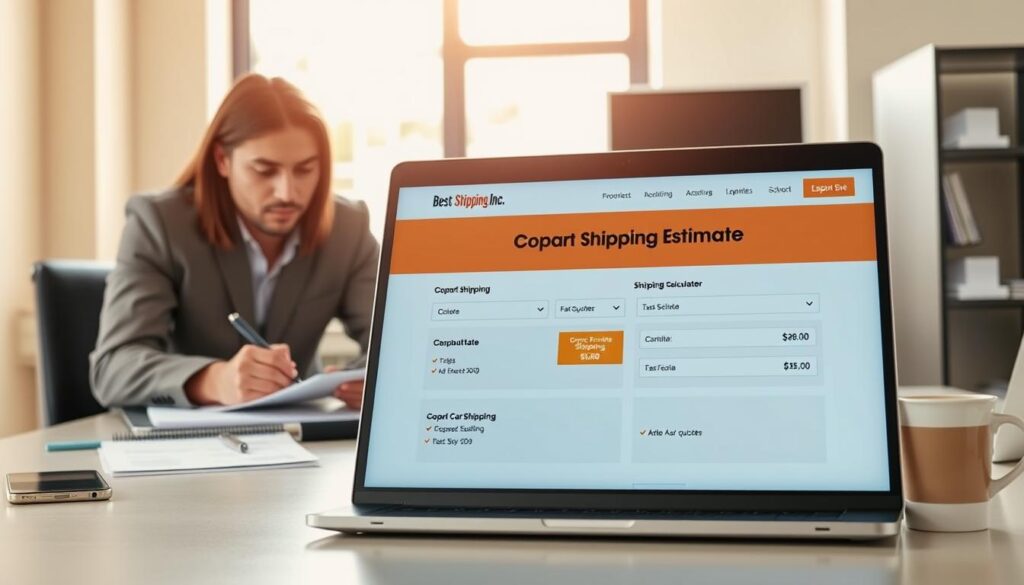
After you win a lot, converting the on‑screen number into a bookable quote requires a short checklist. Follow these steps to avoid surprises and lock a practical rate.
Use the Shipping Estimate box and confirm origin
Open the Vehicle Details page and find the Shipping Estimate box under the lot images. Confirm the listed yard as the origin. Mistakes here change price and pickup rules.
Enter destination type correctly
Pick the right delivery type: residential door‑to‑door, business/commercial, or port for export. Each choice affects equipment, appointment windows, and final cost.
Compare Copart Delivery vs independent carriers
Capture the platform quote, then request a carrier bid using the same origin, destination, and vehicle condition notes. Long hauls often price lower per mile than short runs.
Choose open or enclosed transport
Use open trailers for routine units. Select enclosed for high‑value, restored, or fragile cars to reduce road‑debris risk.
Verify pickup needs and communication
- Non‑runner checklist: declare non‑running status, confirm winch/loader capability, and allow extra handling time.
- Confirm how the carrier books with the yard, required Gate PINs, and app access before payment.
- Demand clear dispatch windows, driver contact, and tracking updates; ask how exceptions are handled if the yard delays loading.
Pro tip: Use customer reviews that show on‑time pickup, damage‑free delivery, and transparent fees. For regional pickup help, see regional pickup help or contact support at info@bestcarshippinginc.com.
Copart shipping cost factors, timelines, and fees that can change your estimate
Know the variables that can turn an on-screen number into a larger invoice before you arrange a pickup.
Primary cost drivers and distance benchmarks
Distance and lane demand set the base rate. Short routes often approach about $1.00 per mile. Long hauls can average nearer $0.50 per mile, but lanes and capacity change that math.
Delivery timing ranges
Local moves inside ~100 miles commonly finish in a few business days. Cross‑country routing and limited carrier capacity can stretch delivery to about three weeks.
Storage deadlines and calendar nuance
Yards hold vehicles free for up to three days including purchase day. Late pickup triggers storage fees that vary by location.
Buyers should note weekends and holidays. Those days can count against free time unless the purchase type specifies a different window.
Vehicle condition, salvage handling, and added care
Non‑running or damaged units need winch gear, extra loading time, and a carrier briefed on missing keys or altered steering. That leads to accessorial fees.
Required pickup paperwork
- Bill of sale
- Title status or proof of title readiness
- Valid photo ID
- Buyer number for gate verification
Preventive checklist: make sure the carrier has the correct yard address, a confirmed appointment, equipment notes for non‑runners, and a written agreement on who pays accessorials before dispatch.
For clearer planning and reliable carrier options, consider our service overview at Smooth Rides — Best Car Shipping Inc and contact support at info@bestcarshippinginc.com for urgent coordination.
Conclusion
Plan pickup immediately after an auction win to protect your budget and timeline.
Confirm the origin yard, enter the correct destination type, and compare Copart Delivery with independent carrier pricing. Verify equipment needs and book an appointment before the free holding window closes.
Act fast to avoid storage fees. Copart Delivery is the simplest path. Third‑party carriers give more price control. Self pickup gives the most oversight but needs the right gear and compliance.
Decision checklist: documentation ready, pickup appointment confirmed, carrier insurance verified, condition disclosed, and delivery contact confirmed.
Need help now? Request an auto transport plan or a fast car shipping quote from Best Car Shipping Inc. at info@bestcarshippinginc.com or (307) 288-5972.