
Deciding whether to fix a major fault or move a vehicle is a major choice for owners facing sudden failures. This introduction helps owners weigh short-term budget limits against long-term reliability. It highlights practical factors such as engine and transmission issues, possible replacement needs, and overall financial impact.
Monthly payments on new models average $479, so owners often ask if a big fix makes sense. Dave’s Auto Center has offered dependable service since 1990, giving real-world context for maintenance and replacement planning.
Best Car Shipping Inc. offers clear guidance and logistics support when moving a vehicle becomes part of the plan. Reach out for transparent estimates and help weighing every option: call (307) 288-5972 or email info@bestcarshippinginc.com. For a quick quote on moving your vehicle, visit vehicle transport quote.
Key Takeaways
- Balance monthly payments and long-term value before choosing a major fix.
- Engine or transmission replacement can change the replacement versus move equation.
- Use trusted shops like Dave’s Auto Center for service history and advice.
- Best Car Shipping Inc. provides clear logistics and communication for moves.
- Contact experts at (307) 288-5972 for personalized guidance.
Understanding the Mechanics of Engine Failure
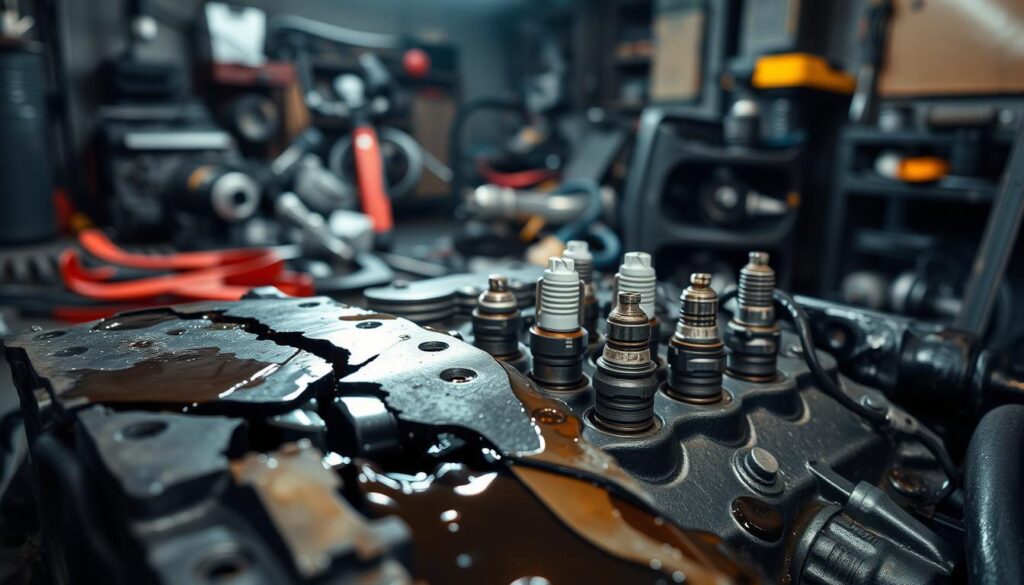
Recognizing how internal combustion breaks down is the first step in choosing the right path for a troubled vehicle. The motor converts fuel into mechanical energy through rapid, repeated explosions. When parts wear, that process fails and the whole drive system suffers.
Identifying Catastrophic Damage
Metal shavings in oil often mean severe wear from age or high mileage. Heavy smoke or odd exhaust color signals internal harm and needs immediate attention.
“A seized motor is no small issue; it often indicates total internal collapse and requires expert evaluation.”
The Difference Between Repair and Replacement
A skilled mechanic inspects whether the harm is limited to replaceable components or if the block itself failed. Proper diagnostics prevent wasted funds on a minor fix when the core is beyond salvage.
- Seized condition means the motor is locked and cannot function.
- Excessive smoke suggests ongoing internal damage.
- The line between a simple fix and a full replacement depends on whether a rebuild can restore core parts.
Best Car Shipping Inc. recommends documented inspection before any decision. Contact (307) 288-5972 or info@bestcarshippinginc.com for guidance when moving forward.
Factors Influencing the Cost to Repair Engine vs Transport Car
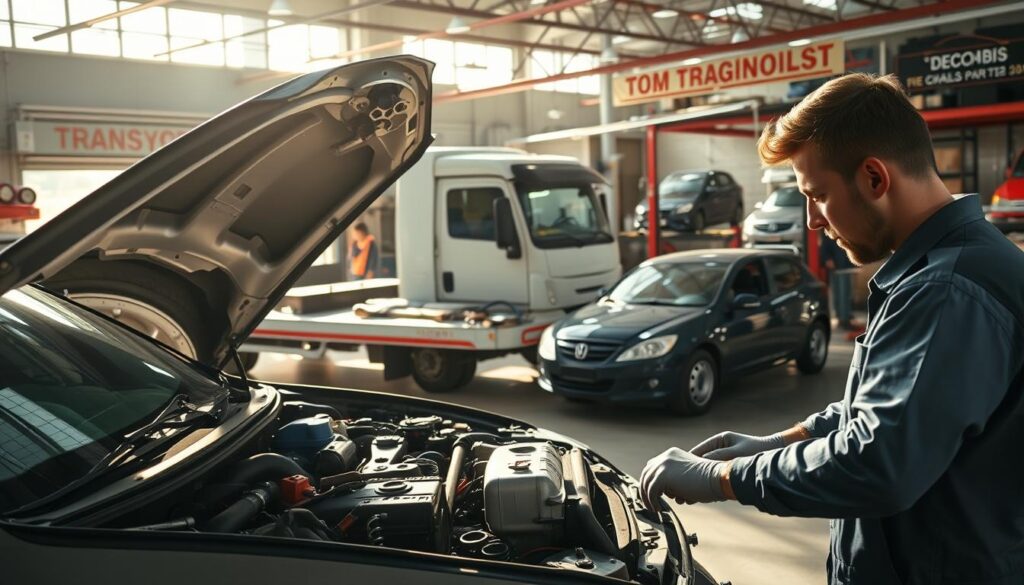
Owners should weigh hours of labor, mileage, and the likelihood of hidden damage before deciding on major work or a move.
Labor drives much of the final figure. Replacing a motor commonly requires 15 to 20 hours of shop time. That affects scheduling and overall pricing.
Model and condition matter. High mileage often means extra parts like gaskets and cooling system components. Older vehicles may need more teardown time and parts sourcing.
Transmission options can alter the plan. A rebuilt or remanufactured transmission often runs between $2,500 and $4,500 plus shop fees and can be a more economical path when the block is sound.
- Make and model influence parts availability and hours.
- Hidden damage raises the likelihood of additional parts and labor.
- Getting multiple quotes protects your budget and clarifies expected hours.
Practical step: compare estimates and use a trusted tool like the car shipping calculator when moving is under consideration. Contact (307) 288-5972 or info@bestcarshippinginc.com for guidance.
Comparing Engine Replacement Options
Selecting the right unit requires balancing upfront expense, warranty coverage, and proven quality. This section outlines the main paths and practical trade-offs for a vehicle with major internal failure.
New Crate Engines
New units from the manufacturer offer top reliability and full factory warranty. Prices often range from $5,000 to $10,000 plus substantial labor hours for installation.
Advantage: longest expected life and dealer support. Drawback: availability can be limited and lead times may extend downtime.
Remanufactured Units
Remanufactured units remove the core and re-machine parts like pistons and bearings. This restores internal tolerances and meets high quality standards.
Benefit: a rebuilt option often balances performance and value. The rebuilding process uses precise tooling and testing to match factory specs.
Used Unit Risks
Used units are the least expensive choice. But history and maintenance records are frequently unknown.
Risk: hidden damage, worn gaskets, or poor previous service can lead to repeat failures. Always demand a warranty and document condition before purchase.
- New: best reliability, highest price, strong warranty.
- Remanufactured: middle ground, tested components, restored core.
- Used: low purchase price, higher uncertainty and risk.
| Option | Typical Price Range | Quality | Warranty |
|---|---|---|---|
| New factory unit | $5,000–$10,000+ | Highest | Manufacturer warranty |
| Remanufactured unit | Mid-range | Restored to spec | Limited shop warranty |
| Used unit | Lowest | Variable | Often minimal |
“Choose an option that matches vehicle value and expected service life. Warranty protection matters most.”
The Role of Vehicle Value and Long-Term Reliability
Assessing equity and long-term reliability helps decide whether an investment in major work is sensible.
Replacing a major unit often represents roughly 10%–20% of a new vehicle’s price. That makes replacement viable when the vehicle holds solid market value and low mileage.
High mileage or poor overall condition reduces resale value. Owners should compare projected post-service value against total projected outlay. If the numbers show diminishing returns, selling or trading may be wiser.
Assessing Resale Value and Equity
Key checks: current market price, mileage, transmission history, and overall service records. A remanufactured unit with a strong warranty can raise reliability and protect equity.
- Compare projected post-replacement market value with total projected outlay.
- Consider additional repairs on high-mileage vehicles before committing.
- Balance emotional attachment against practical life and financial numbers.
“A warranty-backed replacement often restores confidence and preserves resale value.”
| Factor | What to evaluate | Impact on decision |
|---|---|---|
| Market value | Current trade-in or private sale price | High value favors replacement |
| Mileage & condition | Odometer reading; transmission and body condition | High mileage lowers returns |
| Warranty options | New, remanufactured, or used unit coverage | Better warranty increases long-term reliability |
Hidden Costs and Labor Considerations
Unexpected findings during teardown can quickly expand both parts lists and labor time. Dealers often charge the highest hourly rates, reflecting brand expertise and overhead. That premium affects final estimates and scheduling.
Replacing a major unit commonly reveals ancillary needs. Cooling lines, sensors, wiring harnesses, and mounts may require attention. A professional mechanic will flag these items early.
Common surprises:
- Mounts, seals, and gaskets discovered worn during disassembly.
- Transmission work that needs drivetrain removal, increasing shop hours.
- Specialized electronics or control modules that add parts and time.
Practical advice: insist on a detailed estimate that lists potential parts and labor. Ask shops to document secondary issues before starting work. That lowers the chance of billing surprises and ensures a durable rebuild or replacement.
“A clear, itemized quote protects owners and streamlines repairs.”
For guidance on moving a vehicle instead, check shipping charges or contact (307) 288-5972 or info@bestcarshippinginc.com.
When to Consider Replacing Your Vehicle Instead
A single major failure coupled with other issues can tip the scales toward replacement rather than rebuild. Owners should weigh current mileage, remaining life, and ongoing service needs.
Consider replacement when the block has extensive damage and the transmission is failing. Repeated bills and long labor times reduce the value of continuing repairs.
A full rebuild often runs $2,500–$4,000, which can be far less than buying new. Still, rebuilding parts only makes sense when other systems are sound.
- If multiple major systems need work, replacement is the practical option.
- Choose a rebuilt engine or replacement engine only with a solid warranty.
- Install a replacement engine professionally when you decide to keep car ownership.
“When ongoing expenses exceed the vehicle’s worth, replacement preserves reliability and peace of mind.”
| Situation | Recommended Action | Why |
|---|---|---|
| Block severely damaged | Replace vehicle or full replacement engine | High labor and uncertain lifespan |
| Transmission failing plus engine issue | Replace vehicle | Multiple major systems raise ongoing expense |
| Limited internal damage | Rebuild components or rebuilt engine | Lower outlay and restored reliability |
For professional advice about moving a vehicle or next steps, contact Best Car Shipping Inc. at (307) 288-5972 or info@bestcarshippinginc.com.
Maintenance Strategies to Prevent Future Failures
Routine attention to fluids and filters is a small investment that pays off in reliability. Regular checks limit wear and extend service life. These steps help avoid major work later and keep systems stable.
Importance of Fluid Maintenance
Keep oil fresh and monitor the cooling system. Clean oil and proper coolant prevent overheating and internal wear.
Use quality fluids and certified parts when topping off or replacing items. Better products extend life and improve overall performance.
Monitoring Early Warning Signs
Watch for odd noises, slipping gears, or sudden power loss. Early diagnosis stops small faults from becoming catastrophic.
- Follow the manufacturer’s fluid and service schedule for best protection.
- Have unusual sounds or performance drops inspected promptly by a professional.
- Record every service visit; detailed history supports resale and proves quality care.
- Address warning signs quickly to avoid major internal failures that need full engine replacement.
“Preventive maintenance preserves reliability and lowers the chance of unexpected failures.”
Need help planning routine care or moving a vehicle after a major event? Contact Best Car Shipping Inc. at (307) 288-5972 or info@bestcarshippinginc.com for guidance.
Conclusion: Making the Right Choice for Your Budget
A clear comparison of projected spending and expected service life helps owners make a confident choice.
Balance immediate cost against long-term reliability. Review the numbers and consider how a transmission or replacement engine affects future value and labor needs.
Dave’s Auto Center offers strong warranties on remanufactured units. That warranty can protect parts and provide peace of mind when choosing between a rebuild or a new engine.
Have a qualified mechanic inspect your model and document projected hours and parts. Prioritize regular maintenance to extend life and protect resale value.
When uncertain, contact Best Car Shipping Inc. at (307) 288-5972 or info@bestcarshippinginc.com for guidance on your next option.