
Enclosed shipping reduces exposure and keeps a vehicle safe from pickup through delivery. This page describes a dedicated service named covered transport for cars that targets owners of valuable or sensitive cars who want extra protection.
BestCarShippingInc offers a clear, national solution that coordinates logistics end-to-end. Customers see that enclosed options carry a premium; rates often run about $1,000 to $3,000 and are roughly 40–60% higher than open alternatives. Yet this choice delivers greater peace of mind.
The company emphasizes vetted carriers, documented pickup and delivery, and steady communication. This auto transport and vehicle transport approach suits collectors, exotic owners, and anyone who values careful handling.
To request a quote, call (307) 288-5972 or email info@bestcarshippinginc.com. Learn how open carrier options compare at open carrier options. Next, the page will explain what enclosed means, when it’s worth it, cost drivers, transit time, insurance, and prep steps.
Key Takeaways
- Enclosed service minimizes exposure and increases protection of your car.
- Pricing varies by lane; expect a 40–60% premium versus open options.
- National coordination includes dispatch, scheduling, and documentation.
- Trust comes from vetted carriers, clear communication, and records at pickup and delivery.
- Get a quote by phone or email to confirm timing and cost.
Covered Car Shipping That Protects Your Vehicle From Pickup to Delivery
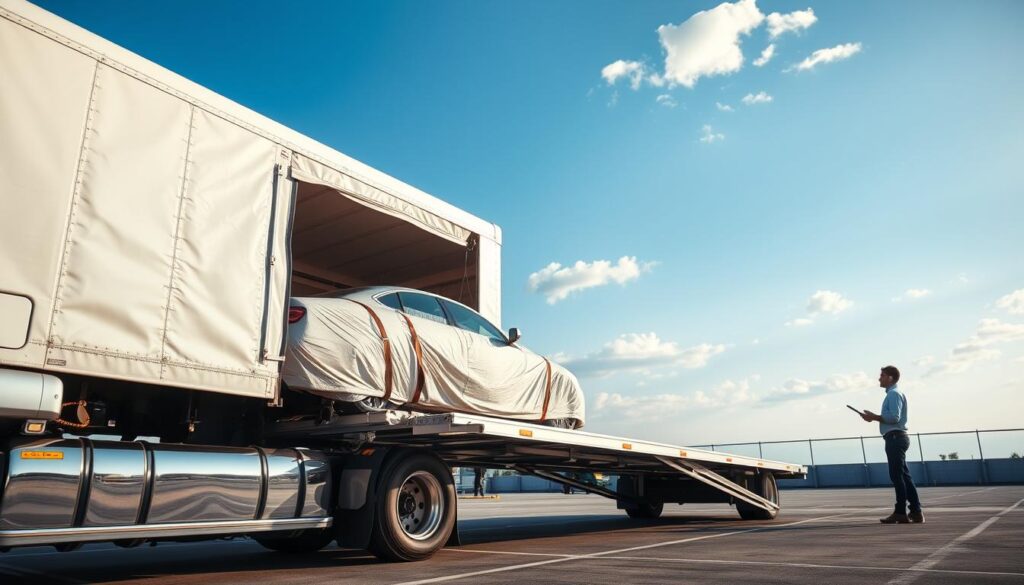
An enclosed trailer limits exposure to rain, wind, and airborne debris during every mile of a shipment.
Enclosed protection reduces direct contact with roadway grit and flying particles. This lowers the chance of paint chips and saves time on post-shipment cleaning.
Owners of luxury and classic vehicles often select this service to preserve finish and value. It is ideal for collector vehicles and any shipment that needs extra peace of mind.
BestCarShippingInc works with a nationwide carrier network that serves all 50 states year-round. The company aims for door-to-door pickup and delivery when safe and legal. Communication is continuous, and inspections occur at pickup and again at delivery to document condition.
Why customers choose it
- Less exposure to weather and road debris
- Preserves paint and reduces cleaning
- Reliable schedules across metro and rural areas
| Exposure | Impact on Paint | Cleaning Need |
|---|---|---|
| Open-air haul | Higher risk of chips | Often requires detailing |
| Enclosed trailer | Minimal risk | Light touch-up only |
What Covered (Enclosed) Auto Transport Means
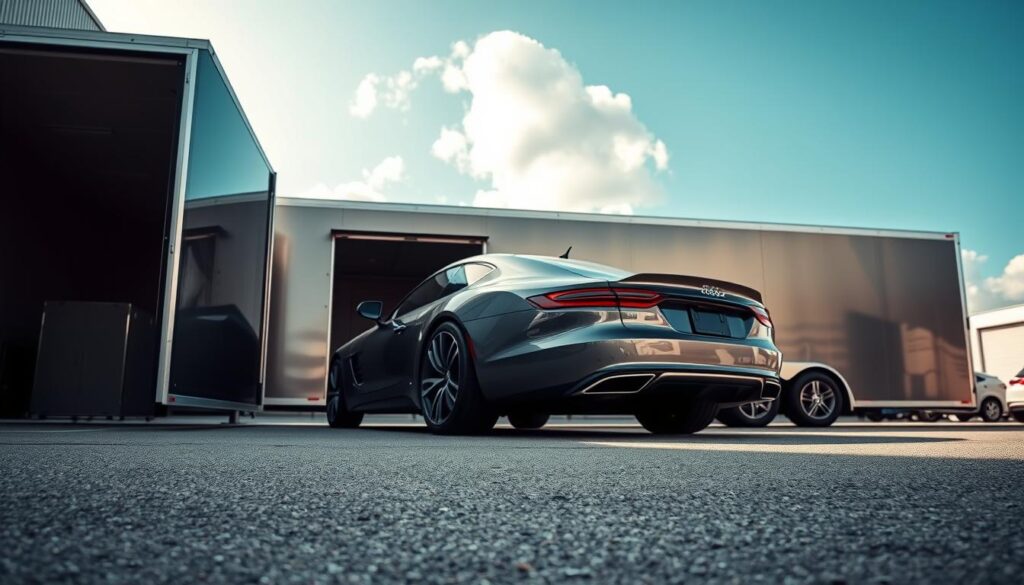
Shipping a car inside a fully covered trailer keeps it away from wind, rain, and grit. This method means the vehicle rides inside a sealed trailer rather than on an open carrier rack. It minimizes exposure during every mile of shipment.
How enclosed trailers differ from open-air car shipping
Open shipping typically carries many vehicles on multi-level rigs. Those vehicles face weather, road dust, and debris.
By contrast, enclosed transport carries fewer vehicles per trailer. That yields added protection and gentler handling.
Common enclosed equipment options used in vehicle transport
- Hard-sided enclosed trailers: Fully sealed boxes used for high-value vehicles.
- Lower-clearance ramps and lift systems for sports and exotic car loading.
- Single-car and multi-car enclosed configurations sized to limit movement.
| Option | Capacity | Best Use |
|---|---|---|
| Single-car hard-sided | 1 vehicle | Exotics and show vehicles |
| Multi-car enclosed | 2–6 vehicles | Collectors and small fleets |
| Low-clearance lift rigs | 1–2 vehicles | Low-slung sports cars |
Enclosed carriers are less abundant than open options, which can affect scheduling and price. The focus remains consistent: documented handling at pickup and delivery to preserve vehicle condition. Learn more about specific offerings with enclosed car shipping.
When Covered Transport for Cars Is the Right Choice
Select enclosed shipment when preserving a vehicle’s finish and minimizing in-transit risk is the top priority. This option delivers extra protection and careful handling for high-value units.
Decision guidance: Enclosed car transport is practical when exterior finish and reduced risk matter more than cost. Use it if a vehicle’s condition must remain showroom-ready.
Low ground clearance and exotics
Low-slung sports models need gentle loading and secure tie-downs. Reduced exposure lowers the chance of scrapes and underbody contact during long distance moves.
Classics, vintage, and collector needs
Collectors request white-glove handling to protect original paint and trim. Careful routing and experienced carriers preserve provenance and value.
Custom paint, mods, and seasonal risk
Special finishes and aftermarket parts benefit from enclosed shipping during dusty routes or winter storms. Match the method to vehicle value, acceptable risk, and desired experience.
Practical checkpoint: Verify carrier insurance and coverage limits before pickup. Confirm documentation of condition and estimated time to delivery.
Open vs Enclosed Transport: Comparing Protection, Availability, and Price
Choosing between open and enclosed options often comes down to value, timing, and risk tolerance.
Open rigs are the baseline choice for most everyday car shipping needs. They offer broad carrier availability, efficient routing, and lower cost. That makes them the common option when speed and affordability matter.
Enclosed service adds a controlled environment and reduced exposure to weather and debris. This extra care protects finish and sensitive trim. Owners of high-value vehicles often select this to limit in-transit risk.
How buyers typically compare options
- Protection level: open = standard; enclosed = high protection.
- Equipment availability: open = abundant; enclosed = limited supply.
- Scheduling flexibility: open = more pickup windows; enclosed = may need longer lead time.
- Total price and costs: open = lower; enclosed = premium added.
Expect realistic availability: enclosed capacity can be more limited on some lanes. That may affect pickup time and scheduling. Requesting a quote early improves options and pricing.
| Factor | Open | Enclosed | Typical Difference |
|---|---|---|---|
| Protection | Standard exposure | Reduced exposure | Higher safety with enclosed |
| Availability | High; many carriers | Limited; fewer trailers | May need more lead time |
| Scheduling | Flexible windows | Less flexible | Pickup time can increase |
| Price | Lower cost baseline | Premium protection | About 40–60% higher |
Match the method to vehicle value and acceptable risk rather than choosing by price alone. To get a tailored quote and transit time, call (307) 288-5972 or email info@bestcarshippinginc.com.
Benefits of Fully Enclosed Vehicle Shipping Services
A sealed trailer limits casual access and environmental risk, improving outcomes at delivery.
Increased security and reduced risk of theft or tampering
Enclosed equipment restricts visual and physical access. This lowers temptation and cuts the chance of interference during long moves.
Maximum protection from rain, wind, dust, and road debris
The trailer body shields finish from rain, wind-driven grit, and dust. That reduces cleaning and lowers cosmetic risk on arrival.
Lower risk of in-transit damage compared with open carriers
Fewer external variables mean fewer chips and scratches. Owners of higher-value vehicle shipments see clearer results at delivery.
Real-time visibility with modern tracking capabilities
Many shipping services now include GPS-enabled tracking and online status updates. Customers receive proactive notices and clearer ETA information.
Documentation and accountability are routine. Inspections at pickup and a signed Bill of Lading support insurance review and coverage claims if needed.
| Benefit | Operational Result | Buyer Outcome |
|---|---|---|
| Limited access | Less tampering risk | Fewer surprises at delivery |
| Weather shield | Reduced contamination | Lower cleaning need |
| GPS tracking | Real-time updates | Greater transparency |
Covered Car Shipping Cost: What to Expect in Today’s Market
Price ranges reflect demand, distance, and how accessible pickup and delivery locations are.
Typical cost and what affects it
Enclosed service commonly ranges from about $1,000 to $3,000. Final costs depend on route, season, vehicle size, and pickup constraints.
What “route dependent” means
High-demand corridors and major highways often have lower per-mile price. Remote, rural, or low-volume lanes can increase the price.
Timing and transit expectations
Many common lanes complete in roughly 3–7 days once a carrier is dispatched. Transit time refers to miles-in-motion.
Total calendar time also includes carrier assignment and dispatch windows. That can add days before the vehicle moves.
Next step: Request a quote with vehicle details and exact pickup and delivery zip codes to get an accurate price and ETA. Call (307) 288-5972 or email info@bestcarshippinginc.com.
| Item | Typical Range | Notes |
|---|---|---|
| Price | $1,000 – $3,000 | Route, season, and size affect total |
| Transit time | 3 – 7 days | Common lanes after dispatch |
| Total calendar time | Dispatch + transit | May add several days for carrier assignment |
Key Factors That Affect Your Enclosed Auto Transport Quote
Understanding what drives a quote helps owners avoid surprise fees at pickup.
Distance and route demand
Distance is a primary driver of price. Routes near major interstates usually reduce per-mile costs.
Remote or rural locations raise fees and add time. High-demand lanes improve carrier availability.
Vehicle size and weight
Larger or heavier vehicles take extra trailer space. SUVs and pickups often cost more than sedans.
Taller or wider vehicles can limit carrier options and raise the final quote.
Seasonality and peak surcharges
Summer demand can increase price by about 20–40%. Flexibility in booking date can lower costs.
Book early when possible to avoid peak-season surcharges and limited carrier capacity.
Pickup and delivery accessibility
Narrow streets, low clearances, or HOA rules may require a nearby meeting point. That can change pickup delivery logistics and add fees.
Speed and expedited options
Expedited pickup reduces wait time but increases the quote. Fast options can sometimes be arranged in 2–5 days depending on carrier availability.
Checklist to improve quote accuracy:
- Exact pickup and delivery ZIP codes
- Vehicle make, model, and dimensions
- Preferred pickup window or flexibility
- Any site access notes or restrictions
- Desired speed (standard or expedited)
| Factor | How it affects price | Typical impact |
|---|---|---|
| Distance / Route | Per-mile and availability | Interstate routes = lower; rural = higher |
| Vehicle size | Space and lifting needs | Sedan = baseline; SUV/pickup = higher |
| Season | Carrier demand and surcharges | Summer +20–40% typical |
| Access | Loading location constraints | May require meeting points or added stops |
| Expedite | Scheduling premium | Reduces wait; raises cost |
Provide complete, accurate details when requesting a quote. For a tailored estimate and scheduling, visit car shipping and auto transport Upton or call (307) 288-5972.
Transit Times and Scheduling: How Long Vehicle Transport Takes
Timing a shipment well improves carrier selection and often lowers the final price. Scheduling depends on carrier capacity, lane demand, and how flexible the customer is.
Typical planning window
Book 1–2 weeks ahead for best pricing and wider carrier choice. This window gives dispatch teams time to match lanes and confirm pickup windows.
Peak season guidance
During busy months, plan earlier. Book 3–4 weeks ahead when demand spikes. Early booking reduces stress and limits rush fees.
Faster options and transit expectations
Expedited pickup can often be arranged in 2–5 days, usually at a premium. Longer distances add transit days. Weather and traffic can change delivery timing.
“Proactive coordination with the driver and dispatch prevents missed appointments and smooths the pickup process.”
Practical tip: Confirm readiness the day before pickup and provide clear access notes. That simple step improves on-time performance and keeps shipments on schedule.
How Our Covered Car Transport Process Works
The team follows a repeatable workflow that reduces risk and keeps customers informed every mile.
Request a quote and confirm shipment details
Requesting a quote requires origin and destination ZIPs, vehicle make and model, operability, and a preferred pickup window. Providing clear details yields a faster, more accurate price.
Carrier assignment and dispatch coordination
Dispatch matches the shipment to an available carrier based on route and schedule. The operations team confirms timing and assigns a driver with enclosed equipment when possible.
Pickup inspection and Bill of Lading
Drivers document the vehicle condition and note existing damage on the Bill of Lading before loading. This paperwork protects customers and helps any later claims.
In-transit updates and tracking
Customers receive tracking links and status updates during transit. The team sends ETA notices and alerts if delays affect delivery timing.
Delivery inspection, sign-off, and completion
On arrival, inspection compares condition to the pickup record. After sign-off, the team closes the order and remains available for follow-up to ensure a smooth experience.
“Clear steps, timely updates, and documented inspections make shipping predictable and secure.”
Door-to-Door Pickup and Delivery Across the United States
Door-to-door pickup and delivery aims to place a vehicle as close to the customer’s address as safety and local rules allow.
Practical meaning of door-to-door service
The carrier will attempt pickup and delivery at the provided addresses. Drivers confirm access before arrival. If a location is safe and legal, the driver will load or unload at the door.
Common access constraints and alternatives
Large rigs can be blocked by narrow streets, low branches, parked cars, or municipal weight limits. In those cases, a nearby meeting point is chosen.
Realistic meeting points and communication
Typical meeting areas include grocery store lots, shopping centers, or public parking that allow safe loading. The driver coordinates a firm time window and confirms the exact meeting location by phone.
Safety, compliance, and nationwide coverage
Safety and compliance guide every decision. Meeting points protect the vehicle, the carrier equipment, and customer property. BestCarShippingInc serves metro and rural areas across the United States through a vetted carrier network. For more on choosing the right partner, see best car shippers.
| Constraint | Effect | Typical Solution |
|---|---|---|
| Narrow street | Rig cannot enter | Meet at nearby lot |
| Low clearance | Risk to equipment | Alternate loading area |
| Weight/permit limits | Restricted access | Designated public lot |
Insurance and Coverage: What Protects Your Vehicle During Shipping
Reviewing carrier certificates and policy limits gives customers confidence before the driver arrives.
Carrier insurance standards and verification
A reliable carrier holds active policies that protect third-party liability and cargo. Reputable providers often verify certificates showing at least $1,000,000 liability and $100,000 cargo as market references.
Ask the company to email proof. Confirm the carrier name, effective dates, and listed limits before pickup.
What to review before pickup
Check cargo limits, deductibles, and exclusions. Make sure the vehicle’s declared value matches coverage needs.
Important: note any site restrictions and how they affect policy application at delivery.
How claims are supported
Document condition with clear pre- and post-shipment photos. The Bill of Lading records existing damage and guides any claim.
A disciplined claims process, timely photos, and verified insurance speed resolution and reduce stress for the car owner.
Want extra peace of mind? See a vetted option at best car shipping company or call (307) 288-5972.
Preparing Your Car for Enclosed Transport
Simple steps taken prior to pickup protect value and make the loading process smoother.
Remove personal items and secure loose accessories
Clear all personal items from the vehicle. Carriers often limit belongings to a small weight allowance and do not insure personal property.
Tip: Remove items that sit above the window line and secure or detach loose accessories such as roof racks, antennas, and spoilers.
Clean the exterior and photograph the vehicle’s condition
Wash the exterior so scratches and marks are visible. Photograph the vehicle from multiple angles and keep timestamps.
These photos document condition at pickup and support any later insurance review.
Fuel level, battery check, and leak-free requirements
Keep fuel at roughly a quarter tank to reduce weight while allowing short moves at pickup or delivery.
Confirm the battery is charged and that there are no active fluid leaks. Drivers will not load a vehicle with unsafe leaks.
Keys, alarms, and pickup-day readiness checklist
Provide the correct key and disable alarms before the driver arrives. Confirm access details and an accurate pickup window to save time.
- Exact pickup address and best contact number
- Key and remote present; alarms off
- Quarter tank of fuel; battery charged
- Photos of condition saved and shared if requested
- Loose parts secured or removed
Final note: Preparation is part of quality service. A clear checklist reduces delays at pickup, supports smooth shipping, and helps protect the vehicle through delivery.
Specialty Vehicle Shipping Services We Support
This company coordinates specific solutions when vehicles require extra care, added documentation, or synchronized pickup windows.
Classic and collector vehicle shipping
Classic owners often choose enclosed service to preserve original finish and reduce exposure. Careful loading, documented inspections, and gentle handling protect value and provenance.
Luxury and exotic handling with enhanced protection
High-end models need precise loading and tighter security. The service matches low-clearance equipment and vetted carriers to meet heightened protection expectations.
Multi-vehicle and family relocation shipments
Coordinated moves align pickup windows and delivery timing. Grouping vehicles reduces coordination work for the owner and helps maintain consistent delivery standards.
Company role: The logistics team manages routing, carrier selection, and communication. Documentation, inspection, and delivery procedures stay consistent across units and vehicle categories.
| Service Type | Typical Need | Operational Focus |
|---|---|---|
| Classic / Collector | Preserve finish | Detailed inspection & gentle loading |
| Luxury / Exotic | Enhanced security | Low-clearance gear & vetted carriers |
| Multi-vehicle Moves | Aligned delivery | Synchronized scheduling & single point ops |
Why Customers Choose Our Enclosed Car Shipping Service
A straightforward pricing model and steady updates are primary reasons clients choose this service.
Predictable pricing and no-surprise billing. The company issues a clear quote early. That limits last-minute changes and helps owners plan their budget.
Vetted carriers and consistent quality standards. Each carrier meets insurance and safety checks. Drivers follow documented handling steps to protect the vehicle during every mile.
Nationwide logistics and cross-country experience
The team coordinates shipments across the country. They plan realistic timelines and keep customers updated through dispatch and delivery.
What matters most to customers
- Predictable timelines: Reliable pickup windows and clear ETAs.
- Open communication: Proactive updates and quick responses to questions.
- Quality carriers: Vetted partners with proven handling records.
- Accountability: Inspection records and signed paperwork at pickup and delivery.
Compare wisely: Evaluate insurance certificates, process clarity, and communication standards—not only the lowest price.
Customer care commitment: The team is available before pickup, during shipping, and at delivery to answer questions and resolve issues.
| Decision Driver | What to Expect | Buyer Outcome |
|---|---|---|
| Transparent quote | Clear fees sent early | Fewer surprises |
| Vetted carriers | Insurance and safety checks | Lower damage risk |
| Nationwide reach | Cross-country planning | Consistent delivery |
Get a Quote for Covered Transport for Cars Today
A precise estimate depends on the vehicle’s specs, exact pickup and delivery addresses, and scheduling flexibility. Provide clear details and the team will return a timely, transparent quote.
Details that improve accuracy: vehicle type, condition, and locations
Supply exact pickup and delivery ZIP codes. This reveals route demand and lane options.
List vehicle year, make, and model. Size and operability affect carrier selection and costs.
Note condition and operable status. Include visible damage and whether the vehicle can roll for loading.
How flexible pickup windows can help lower costs
Wider pickup windows let dispatch optimize routes. That improves carrier routing and often lowers the final cost.
Booking 1–2 weeks ahead typically supports better pricing. During peak season, allow more lead time to avoid rush premiums.
- Call (307) 288-5972 or email info@bestcarshippinginc.com to request a quote.
- Provide origin/destination ZIPs, vehicle details, and preferred pickup window.
- Review options, confirm a schedule, and finalize dispatch once a carrier is assigned.
“Clear details and flexible timing let operations match the right carrier and protect the vehicle from pickup to delivery.”
| What You Provide | Why It Matters | Expected Result |
|---|---|---|
| Exact pickup & delivery ZIPs | Determines lane demand | More accurate quote & realistic ETA |
| Year / make / model | Defines size and loading needs | Proper equipment selection; lower surprises |
| Flexible pickup window | Allows route optimization | Potential lower costs and fewer delays |
Request your vehicle transport quote at vehicle transport quote or contact the team by phone or email to begin. The process is designed to be clear, fast, and protective of the vehicle every step of the way.
Conclusion
When preserving a vehicle’s finish is essential, an enclosed option offers measurable benefits during every mile.
Core value: Enclosed shipping reduces exposure and raises handling standards to protect finish and trim. It suits owners of luxury, classic, exotic, or condition-sensitive vehicles who prioritize protection over lowest price.
Expect a higher price than open service, but meaningful risk reduction at delivery. Success depends on accurate quote inputs, flexible scheduling when possible, and clear communication with the operations team.
Insurance discipline: Verify carrier coverage, photograph condition before pickup, and use the Bill of Lading exactly as documented to support any claim.
Questions? Call (307) 288-5972 or email info@bestcarshippinginc.com. Review the frequently asked questions or ask specific questions about route distance, time, and options.
FAQ
What is enclosed (covered) car shipping and how does it differ from open-air service?
Who should choose enclosed transport for their vehicle?
How much more does enclosed shipping cost compared with open transport?
FAQ
What is enclosed (covered) car shipping and how does it differ from open-air service?
Enclosed shipping uses a fully enclosed trailer to shelter vehicles from weather, road debris, and dust. Open-air service exposes vehicles on multi-car carriers. Enclosed offers stronger protection and is recommended for high-value, modified, or show vehicles.
Who should choose enclosed transport for their vehicle?
Owners of luxury, exotic, classic, or low-clearance sports cars typically choose enclosed transport. It also fits vehicles with custom paint, recent restorations, or collector-grade condition. Seasonal weather risk and long-distance moves are common reasons, too.
How much more does enclosed shipping cost compared with open transport?
Enclosed shipments generally run about 40–60% more than open carriers. Typical enclosed quotes range from
FAQ
What is enclosed (covered) car shipping and how does it differ from open-air service?
Enclosed shipping uses a fully enclosed trailer to shelter vehicles from weather, road debris, and dust. Open-air service exposes vehicles on multi-car carriers. Enclosed offers stronger protection and is recommended for high-value, modified, or show vehicles.
Who should choose enclosed transport for their vehicle?
Owners of luxury, exotic, classic, or low-clearance sports cars typically choose enclosed transport. It also fits vehicles with custom paint, recent restorations, or collector-grade condition. Seasonal weather risk and long-distance moves are common reasons, too.
How much more does enclosed shipping cost compared with open transport?
Enclosed shipments generally run about 40–60% more than open carriers. Typical enclosed quotes range from $1,000 to $3,000 depending on route, distance, and vehicle size. Exact pricing depends on market demand and pickup/delivery accessibility.
What factors most affect an enclosed auto transport quote?
Price drivers include distance and route demand, vehicle size and weight, time of year (peak-season surcharges), and pickup/delivery access. Expedited pickup and tight urban or rural locations can raise the quote.
How long does enclosed vehicle shipping take?
Transit times vary by lane but many routes take 3–7 days. Plan a 1–2 week booking window for best pricing. During peak season, book 3–4 weeks ahead. Expedited options can sometimes arrange pickup within 2–5 days.
What is the process from quote to delivery?
The process starts with a quote and shipment confirmation. A vetted carrier is assigned and dispatched. The carrier performs a pickup inspection and creates a Bill of Lading. Customers receive in-transit updates and tracking. On delivery, both parties complete an inspection and sign off.
Is door-to-door pickup and delivery available nationwide?
Door-to-door service is available across the United States for most addresses. In some cases, a nearby meeting point is safer or required due to local restrictions or carrier size. The company will advise the best option during booking.
What insurance and coverage protect my vehicle during shipping?
Carriers maintain insurance that covers in-transit damage. Customers should verify carrier insurance limits and request documentation before pickup. The Bill of Lading and photos taken at pickup and delivery support any claims.
How should I prepare my vehicle for enclosed shipping?
Remove personal items and secure loose accessories. Clean the exterior and photograph the vehicle’s condition. Keep fuel level low, ensure the battery is charged, and fix any fluid leaks. Provide keys and disable alarms before pickup.
Do you transport specialty vehicles like classics and exotics?
Yes. The service supports classic car shipping, collector vehicles, luxury and exotic cars, and multi-vehicle family relocations. Enclosed carriers provide the extra protection these vehicles need.
How does the company ensure carrier quality and reliability?
The company vets carriers for safety, insurance, and service standards. Carriers are selected based on experience, equipment, and performance history to ensure secure, on-time shipments nationwide.
Can I track my shipment in real time?
Yes. Modern tracking tools provide in-transit visibility and status updates. The dispatch team also offers coordinated communication so customers know pickup and delivery windows.
What should I include when requesting a quote?
Provide vehicle type, year, condition, pickup and delivery locations, and any access notes. Indicate if you need expedited service or have special handling requests. These details improve quote accuracy and carrier matching.
How do pickup and delivery accessibility issues affect cost and scheduling?
Tight streets, loading restrictions, and remote addresses can require a smaller carrier or nearby meeting point, which may increase cost and impact scheduling. The carrier assesses access before pickup and confirms the safest plan.
How are claims handled if damage occurs during transit?
Claims require the Bill of Lading, photos from pickup and delivery, and the carrier’s incident report. The company assists with documentation and communication to resolve claims with the carrier or insurer promptly.
What payment options and deposit requirements apply?
Payment terms vary by carrier but typically include a deposit at booking and the balance due at pickup or delivery. The company outlines accepted payment methods and any third-party broker arrangements when confirming the booking.
How can I contact the company for questions or to get a quote?
Customers can email info@bestcarshippinginc.com or call (307) 288-5972 to request a quote, discuss options, or schedule a shipment. Representatives provide transparent pricing and guidance throughout the process.
,000 to ,000 depending on route, distance, and vehicle size. Exact pricing depends on market demand and pickup/delivery accessibility.
What factors most affect an enclosed auto transport quote?
Price drivers include distance and route demand, vehicle size and weight, time of year (peak-season surcharges), and pickup/delivery access. Expedited pickup and tight urban or rural locations can raise the quote.
How long does enclosed vehicle shipping take?
Transit times vary by lane but many routes take 3–7 days. Plan a 1–2 week booking window for best pricing. During peak season, book 3–4 weeks ahead. Expedited options can sometimes arrange pickup within 2–5 days.
What is the process from quote to delivery?
The process starts with a quote and shipment confirmation. A vetted carrier is assigned and dispatched. The carrier performs a pickup inspection and creates a Bill of Lading. Customers receive in-transit updates and tracking. On delivery, both parties complete an inspection and sign off.
Is door-to-door pickup and delivery available nationwide?
Door-to-door service is available across the United States for most addresses. In some cases, a nearby meeting point is safer or required due to local restrictions or carrier size. The company will advise the best option during booking.
What insurance and coverage protect my vehicle during shipping?
Carriers maintain insurance that covers in-transit damage. Customers should verify carrier insurance limits and request documentation before pickup. The Bill of Lading and photos taken at pickup and delivery support any claims.
How should I prepare my vehicle for enclosed shipping?
Remove personal items and secure loose accessories. Clean the exterior and photograph the vehicle’s condition. Keep fuel level low, ensure the battery is charged, and fix any fluid leaks. Provide keys and disable alarms before pickup.
Do you transport specialty vehicles like classics and exotics?
Yes. The service supports classic car shipping, collector vehicles, luxury and exotic cars, and multi-vehicle family relocations. Enclosed carriers provide the extra protection these vehicles need.
How does the company ensure carrier quality and reliability?
The company vets carriers for safety, insurance, and service standards. Carriers are selected based on experience, equipment, and performance history to ensure secure, on-time shipments nationwide.
Can I track my shipment in real time?
Yes. Modern tracking tools provide in-transit visibility and status updates. The dispatch team also offers coordinated communication so customers know pickup and delivery windows.
What should I include when requesting a quote?
Provide vehicle type, year, condition, pickup and delivery locations, and any access notes. Indicate if you need expedited service or have special handling requests. These details improve quote accuracy and carrier matching.
How do pickup and delivery accessibility issues affect cost and scheduling?
Tight streets, loading restrictions, and remote addresses can require a smaller carrier or nearby meeting point, which may increase cost and impact scheduling. The carrier assesses access before pickup and confirms the safest plan.
How are claims handled if damage occurs during transit?
Claims require the Bill of Lading, photos from pickup and delivery, and the carrier’s incident report. The company assists with documentation and communication to resolve claims with the carrier or insurer promptly.
What payment options and deposit requirements apply?
Payment terms vary by carrier but typically include a deposit at booking and the balance due at pickup or delivery. The company outlines accepted payment methods and any third-party broker arrangements when confirming the booking.
How can I contact the company for questions or to get a quote?
Customers can email info@bestcarshippinginc.com or call (307) 288-5972 to request a quote, discuss options, or schedule a shipment. Representatives provide transparent pricing and guidance throughout the process.