
Enclosed carrier auto transport means moving a vehicle in a fully covered trailer to protect it from weather, road gravel, salt, and public handling. This method is the premium choice in Canada for owners of luxury, classic, collector, and high-value vehicles.
The service prioritizes condition and discretion over minimum cost. It reduces exposure to winter salt, highway debris, and handling risks that commonly affect cars during long hauls.
Readers with commercial intent will learn which problems this option solves and how to decide if the added protection is worth the price. The guide explains process control, documented inspections, and professional handling without marketing hype.
Expect clear comparisons—enclosed vs open—and a preview of scheduling and availability impacts on timelines. High-level price drivers include distance, vehicle size, pickup access, and timing. These explain why quotes can vary.
Service steps are concise: door-to-door pickup, inspection, secure loading, transit updates, and delivery verification. For a comparison of standard methods, see open car shipping options.
Key Takeaways
- Fully covered trailers protect high-value vehicles from salt, debris, and weather.
- Ideal for luxury, classic, and collector vehicles that need careful handling.
- Price varies by distance, size, access, and scheduling needs.
- Expect documented inspections, secure loading, and transit updates.
- Enclosed service reduces risk and preserves vehicle condition during Canadian winters.
What Enclosed Auto Transport Is and Why It’s the Premium Car Shipping Option
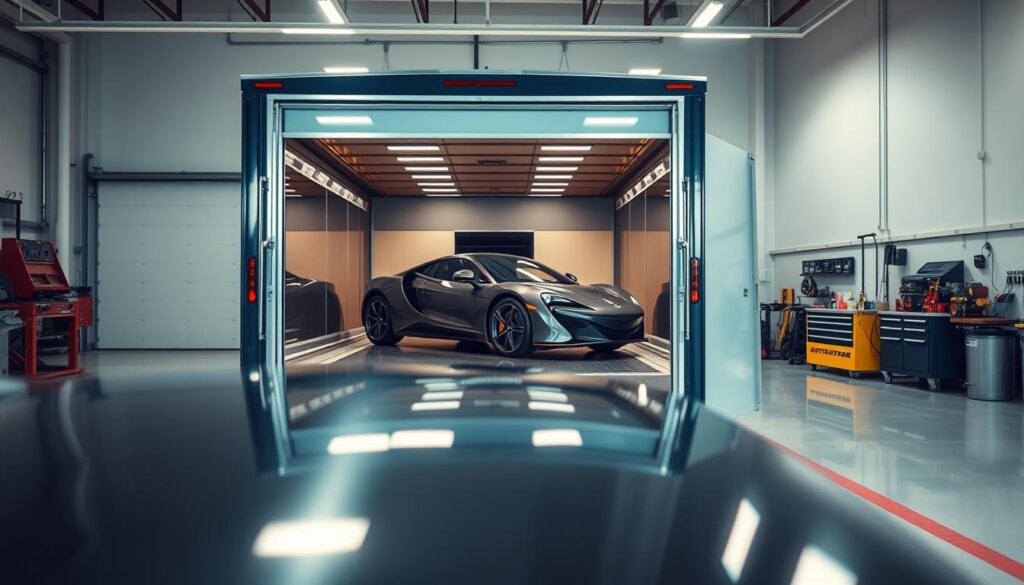
A fully covered trailer creates a controlled environment that shields a vehicle from rain, snow, gravel and roadside salt. This method limits public access and lowers handling risk during long runs across Canada.
How covered trailers protect vehicles from weather, road debris, and public handling
Covered trailers keep cars away from rock chips, dust, and highway grime. They also reduce incidental contact at stops because vehicles remain out of sight.
Why Canadian winter conditions increase the value of premium shipping
Snow, freezing rain, gravel and road salt raise the chance of finish and undercarriage damage. For high-value cars, this practical protection preserves resale value and appearance.
Specialized loading and securement for low-clearance cars
Professional teams use low-angle ramps or lift gates to avoid scraping splitters and belly pans. Vehicles are tied down with soft wheel straps to protect finishes and avoid stress on suspension components.
“Fewer units per trailer, tighter loading standards, and closer supervision define the premium service level.”
Next: The extra protection affects capacity, routing, availability, and cost compared with open options. For specific covered services, see enclosed car shipping.
Enclosed Carrier Auto Transport vs Open Transport in Canada
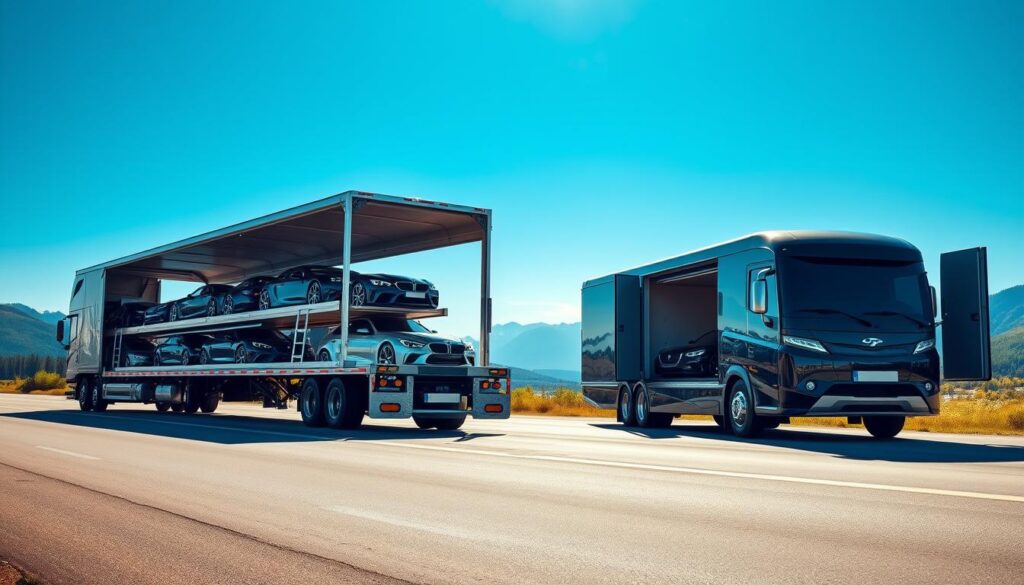
A direct comparison shows how full enclosure and open rigs differ in protection, handling, and scheduling across Canada.
Protection: Full-cover trailers block weather, gravel, dust, and road salt. Open transport leaves cars exposed and usually results in a dirtier finish after long runs on salted roads.
Capacity and handling differences
Open carriers commonly haul 8–10 cars per load. That higher capacity means more loading events and more handling risk.
Enclosed trailers typically carry 1–7 vehicles. Fewer units per load reduce cumulative handling and lower exposure to road debris.
Cost and availability expectations
Cost: Expect enclosed auto shipping to run about 40% higher than open options. The premium reflects specialized equipment, lower capacity, and tighter loading standards.
Time and availability: Open transport usually dispatches faster because it is more common. Enclosed services can be slower on some lanes due to limited availability.
“Risk equals exposure risk (weather/debris) plus handling risk (number of load/unload events).”
Quick comparison matrix
| Factor | Full-cover service | Open transport |
|---|---|---|
| Weather & road debris | Blocks rain, gravel, dust, salt | Exposed; likely dirt and chips |
| Capacity per load | 1–7 cars | 8–10 cars |
| Cost impact | ~40% higher | Lower baseline cost |
| Dispatch time / availability | Can be slower on tight lanes | Often faster and more available |
Decision takeaway: For daily drivers, open transport usually suffices. For high-value, low-clearance, or collector cars on salted Canadian roads, choosing covered service is often prudent despite higher cost.
When Enclosed Vehicle Transport Is Worth the Cost
Deciding whether to pay for full-cover shipping comes down to vehicle value, clearance, and seasonal risks.
Best-fit vehicles
Luxury and exotic cars, restored classics, custom builds, and other high-value vehicles gain the most from covered service. Appearance and originality matter when resale value or show condition is critical.
Low ground clearance
Low-clearance sports cars often scrape on steep ramps. Some providers use lift gates or low-angle ramps to avoid damage. When ramps are the only loading method, covered trailers may be the only safe option for these vehicles.
Seasonal and long-distance triggers
Winter shipping across Ontario or long-haul routes raise corrosion risk from salt, freezing rain, and gravel. For preserved finishes and delicate undercarriages, enclosed car shipping reduces exposure and claim likelihood.
When open is sufficient
An open car run usually suits standard commuter vehicles. If minor grime is acceptable and repair costs are low, open transport remains a cost-effective option.
“Match service level to vehicle value, clearance, season, and your tolerance for risk—not only to the lowest quote.”
| Use case | Recommended way | Why |
|---|---|---|
| Show cars and collectors | Enclosed vehicle transport | Protects finish and originality |
| Low-clearance sports cars | Enclosed car transport | Lift gates/low-angle ramps prevent scraping |
| Everyday commuter | Open transport | Lower cost; minor grime acceptable |
How Enclosed Car Shipping Works: Door-to-Door Process From Pickup to Delivery
This section maps the door-to-door workflow so owners know each step from pickup scheduling to final delivery.
Quote inputs that affect routing
Key details in a quote are operability, exact dimensions, pickup access, and date flexibility.
These factors determine whether a low-angle ramp, lift gate, or direct route is used and they affect pricing and scheduling.
Vehicle prep checklist before pickup in Canada
Make these checks:
- Remove personal items; carriers do not carry household goods.
- Keep about a quarter tank of fuel and a charged battery.
- Disable toll tags, fold mirrors, leave one key set, and take photos for records.
Inspection, Bill of Lading, and loading methods
At pickup a joint inspection is recorded on the Bill of Lading with photos and notes. This documents condition for delivery.
Loading methods reduce risk: lift gates for low cars, low-angle ramps, soft wheel straps, and padded tie points.
In-transit updates and delivery best practices
Drivers provide status updates and the office usually confirms delivery 24–48 hours ahead.
On delivery, inspect in good light, compare to the Bill of Lading, note exceptions before signing, and have an authorized adult present for handoff.
| Stage | What happens | Customer action |
|---|---|---|
| Quote | Assess operability, size, access, dates | Provide accurate vehicle details |
| Pickup | Joint inspection; Bill of Lading signed | Confirm checklist and photos |
| Delivery | Final inspection; sign-off or note claims | Inspect, compare, sign or note exceptions |
Customer care focuses on predictable handling, clear updates, and a documented chain of custody from pickup to delivery. For route-specific info, see car transport options.
Cost of Enclosed Auto Transport in Canada: Real Pricing Drivers and Route Examples
Pricing for secure car moves depends on lane distance, vehicle size, and how quickly a customer needs delivery.
Sample CAD routes and typical ranges (transit days in brackets):
| Route | Price (CAD) | Transit |
|---|---|---|
| Toronto → Ottawa | $900–$1,300 | 1–2 days |
| Toronto → Montreal | $1,100–$1,600 | 2–3 days |
| Toronto → Vancouver | $3,200–$4,800 | 7–10 days |
| Ottawa → Calgary | $2,800–$4,200 | 6–9 days |
| GTA local delivery | $450–$850 | same/next day |
What raises the cost: larger SUVs or trucks use more trailer space; non-running vehicles need winch loading; rural pickup adds mileage and routing time; expedited service charges a priority premium.
Timing and availability matter. Winter demand and road constraints tighten availability and push prices higher. On long lanes, driver hours and logistics planning also increase cost—often about a 40% premium versus open options.
Practical takeaway: flexible dates and accessible pickup locations usually save more than dropping protection. Plan around transit windows to balance cost and security when selecting this option.
Security, Insurance, and Damage Prevention With Enclosed Carriers
Understanding when responsibility shifts and how documentation protects you reduces surprises at delivery.
When the carrier is accountable: responsibility begins after the signed pickup inspection and ends when the delivery inspection is complete. That period covers loading, active transit, and unloading.
What is not covered: pre-existing damage, mechanical failures unrelated to handling, and personal items left inside the vehicle are usually excluded. Customers should remove valuables before pickup.
Why fewer claims occur with covered service
Fewer vehicles per trailer, limited public access, and controlled loading cut exposure to chips and salt. Lift-gate equipment and soft tie-downs reduce scraping and stress on suspension components.
Insurance and documentation best practices
Higher cargo insurance helps, but clear records prevent disputes. Follow this checklist before pickup and delivery:
- Timestamped photos of all sides and the underbody where visible.
- Notes on existing chips, scratches, and mechanical issues.
- Confirm details on the Bill of Lading and keep a copy.
- Inspect on delivery and sign only after verifying condition.
“Proper handling and clear documentation make claims rare and resolvable.”
For premium handling and added protection options, see premium enclosed car services. Professional teams in Canada focus on security and fair delivery outcomes.
Choosing the Right Enclosed Transport Service in Canada
Selecting the right professional service means verifying proof of process, not just price. Buyers should focus on verifiable credentials, clear equipment lists, and trained staff. This reduces risk and sets expectations for delivery.
What to verify before you book
Ask for: operating license, insurance limits, and a record of vetted providers. Confirm safety history and whether drivers receive specialty handling training.
Equipment and handling to request
Request hydraulic tailgate lifts to avoid ramp scraping. Ask about air-ride trailers, adjustable soft-strap tie-downs, and GPS tracking for status visibility.
Interior protection matters too: seat covers, steering wheel wraps, floor mats, and scratch-proof coveralls keep the cabin pristine.
Coverage, routing and pickup details
Ensure service covers major corridors—Toronto, Montreal, Calgary, Vancouver—and provincial lanes. Verify options for residences, dealerships, auctions, or safe meeting points when streets limit large trailer access.
Final evaluation
- Confirm the provider can handle your car dimensions, clearance, and operability.
- Ask which trailer configuration (single, dual, multi) will be used.
- Choose the provider that proves process control, communication standards, and equipment fit for your vehicle.
“The right provider proves process control, not just price.”
Conclusion
The buying choice is simple: match protection to the vehicle’s value, clearance, route length, and season rather than picking the cheapest option.
For high-value and low-clearance vehicles in Canada, full-cover service reduces exposure to weather, road salt, and debris. It also limits handling and uses documented inspections to protect condition and resale value.
Open transport remains a practical option when cost is the priority for everyday vehicles. In any case, confirm inspection documentation, take photos, and verify carrier responsibility windows at pickup and delivery.
Next step: request a precise enclosed auto quote with operability, access, dates, and size. For related services, see car resellers shipping or call (307) 288-5972 for assistance.