
Intercity Lines has moved cars across the United States since 1980. The company focuses on safe, reliable auto transport for classic car owners and everyday drivers alike.
The process begins with a careful inspection and the right equipment. A specialized truck or trailer and secure tie-downs make sure each vehicle stays protected during transit.
The team follows a clear checklist. They document condition, use ramps or lifts, and place cars to balance weight on the trailer. This lowers risk and saves time at pickup and delivery.
For owners, choosing a trusted transport company matters. Intercity Lines refines the process for every classic car to give peace of mind. Read about open car transport options and prepare your shipment with confidence.
Key Takeaways
- Intercity Lines offers experienced, professional auto transport since 1980.
- Specialized trucks and trailers are essential for shipping non-running cars.
- Inspection and secure tie-downs protect your car throughout transport.
- The process reduces damage risk and saves time at pickup and delivery.
- Choose a reputable transport company for classic car shipping and peace of mind.
Understanding the Challenges of Shipping Inoperable Vehicles
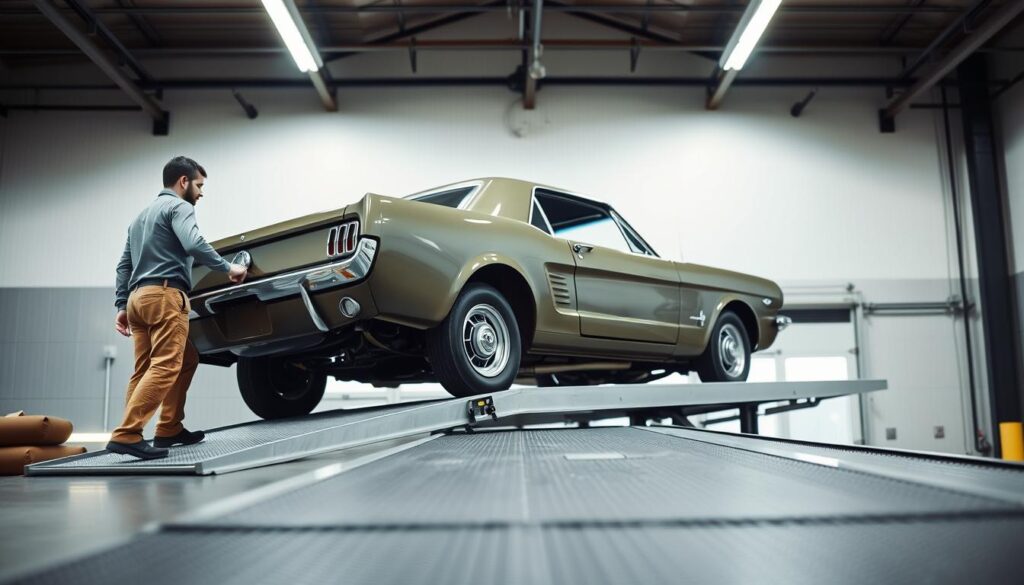
Shipping a classic that won’t roll or steer introduces extra steps and special equipment. This increases time and may raise the price with a standard non-run fee.
Disclosure matters. Owners must report whether the car can roll, steer, or use its brakes. That information determines the size of the truck or flatbed and the type of trailer required.
- A non-running car creates a specific problem for transport companies because it may not move under its own power.
- If the car cannot steer or use brakes, a tow truck or winch-equipped flatbed is often required for safe transfer.
- Many auto transport companies add a modest fee for inoperable units; expect a few hundred dollars in most cases.
- Explore options to find a transport company with the right gear for classic car shipping and care.
Choosing the right team reduces risk. A reliable transport company will outline the process, confirm equipment needs, and give a clear estimate. Review the terms and conditions before booking to make sure expectations are set.
How Carriers Load Non Running Vehicles Safely
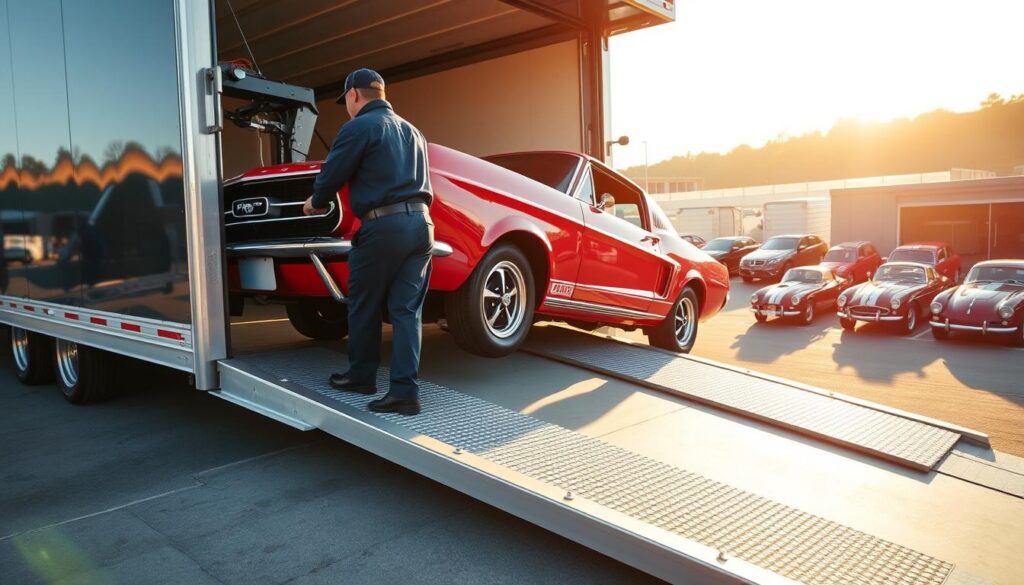
Loading an immobile classic requires specialized gear and steady technique. Intercity Lines combines trained crews with purpose-built equipment to protect each classic car during transfer.
Winch and Ramp Systems
Teams commonly use winches to pull a car gently onto a trailer. Winches reduce strain on the body and prevent further damage.
Proper rigging is critical. Crews pick soft straps, rated anchors, and frame points to secure a vehicle without harming finishes or brakes.
- Winches and ramps move inoperable cars onto flatbeds or decks with precision.
- Tow trucks or regional flatbed services handle short moves; large carriers serve broader routes.
- Timing and planning shorten loading time and keep schedules on track.
Hydraulic Lift Gate Technology
Hydraulic lift gates and articulating interior decks offer a safer way than simple ramps. Intercity Lines uses this tech to lower risk for classic car shipping.
“Advanced lifts help ensure each classic is handled like a museum piece.”
The result: consistent, careful placement onto the trailer and steady support during transport.
Evaluating Your Transport Method Options
Deciding between open and enclosed transport affects protection, cost, and logistics. Owners should weigh exposure, handling, and budget before booking.
Open Versus Enclosed Trailer Protection
Open trailers are cost-effective and common for standard moves. They offer good service and faster pickups for many cars.
Enclosed transport costs roughly 30% to 40% more than open options. It shields the vehicle from debris, weather, and road wear.
- Enclosed carriers use a lift gate to place low-clearance classics safely onto the trailer.
- Drivers secure each classic with soft tie-downs and use a winch when needed to keep the auto stationary.
- Transport companies present both options so owners can balance budget and protection.
If the classic car is high value, choose enclosed transport to preserve condition. For everyday or lower-value cars, open car shipping is a practical option.
Recommendation: Ask the transport company about lift gates, winch use, and tie-down methods to make sure handling meets expectations.
Essential Preparation Steps for Your Vehicle
Owners who follow a short pre-shipment checklist reduce risk and speed up handling. Proper prep helps the team place the classic onto the trailer quickly and safely.
Managing Fluid Leaks and Levels
Top off all fluids, especially antifreeze. Antifreeze prevents the engine block from cracking in transit. Low levels can cause costly damage.
Disabling Alarm Systems
Turn off alarms and disconnect the battery when advised. This prevents false alerts during winch operation and while on the road.
Securing Loose Components
Remove or secure loose parts and personal items. Soft straps and padding protect trim. Transport companies will not accept responsibility for items left inside.
| Prep Item | Why It Matters | Action |
|---|---|---|
| Fluids | Protects engine and brakes from damage | Top off antifreeze and oil |
| Electricals | Prevents alarm and power issues | Disable alarm; disconnect battery |
| Loose Parts | Avoids damage to trim and interior | Remove or secure; pack personal items |
Need assistance? Advisors at the transport company can walk owners through each step. Proper preparation saves time and ensures safe car shipping, whether you choose open enclosed transport or an enclosed trailer for extra protection.
For local service details, visit car shipping Milledgeville.
Selecting a Reliable Auto Transport Company
Before you book, confirm the company holds proper licensing and at least $2 million in cargo insurance for each shipment. This coverage protects your classic car from pickup to delivery.
Make sure you are working with a direct motor carrier rather than a broker. A direct carrier provides fuller control of the transport process and clearer responsibility for the trailer, winch use, and truck operations.
- Check online reviews and ask local repair shops for recommendations.
- Request proof of insurance and operating authority.
- Ask about specific equipment for loading, including winch procedures and tie-downs.
“Choosing a partner with strong insurance and experienced crews is the best way to protect a classic car in transit.”
| Check | Why It Matters | What to Request |
|---|---|---|
| Licensing | Legal operation and accountability | Motor carrier number and DOT authority |
| Insurance | Financial protection during shipping | Proof of $2M cargo coverage per load |
| Equipment & Skill | Safe handling of low-clearance or immobile vehicles | Winch use, lift gate, soft straps, trained crew |
| Reputation | Reliability and on-time service | References, reviews, and service examples |
Request quotes from multiple providers to compare service and price for enclosed car transport or open enclosed options. Contact the team at info@bestcarshippinginc.com or (307) 288-5972 with questions about insurance, licensing, or methods for your vehicle.
Factors That Influence Your Shipping Quote
Price reflects factors like vehicle dimensions, required winch service, and chosen trailer type. Distance and transport options shape the overall estimate.
Size and weight of the car are primary drivers of cost. Larger classics need more space and may require specialized tie-downs.
The typical coast-to-coast transit time is about 10–14 days with a professional carrier. Longer routes and tight delivery windows can raise the price.
- If a winch or tow truck is required for safe loading, the quote will include that service fee.
- Enclosed trailers increase protection and cost compared with open trailer options.
- Transparent quotes list all fees so owners know what to expect for car shipping.
- Providing full details about your classic car’s condition helps plan the most efficient route.
Contact: Shipping advisors can provide an accurate, itemized estimate tailored to each classic car.
| Factor | Impact on Quote | Notes |
|---|---|---|
| Size & Weight | Major | Determines trailer space and handling requirements |
| Distance & Route | Major | Typical coast-to-coast: 10–14 days |
| Winch / Tow Need | Moderate | Adds equipment and labor fees |
| Open vs Enclosed | Moderate | Enclosed offers more protection at higher cost |
For a clear quote, contact info@bestcarshippinginc.com or call (307) 288-5972. The team explains options and confirms pricing for classic car shipping.
Ensuring Safety During the Loading Process
A controlled, step-by-step approach reduces risk when placing a classic onto a trailer.
Professional winches and rated tie-downs are the first line of defense. Crews use soft straps to protect the frame and body when each car is loaded onto the trailer.
All loose parts are secured before any loading unloading begins. That protects both interior trim and exterior finishes during transport.
- The size of the vehicle determines placement for proper weight distribution.
- Drivers confirm brakes and steering condition before final fastening.
- Teams follow a strict safety protocol and verify every item is fastened before departure.
SGT Auto Transport treats every non-running unit with the same care as a high-value classic. For questions or to arrange safe handling, call (864) 546-5038.
For owners preparing a car for pickup, review the checklist to speed handling and reduce risk: prepare a car for transport.
“By using the right equipment and following industry standards, the team ensures each vehicle remains secure throughout shipping.”
Conclusion
Successful transport ends with careful coordination, verified insurance, and precise handling at pickup and delivery. Trust and verified coverage, ensures owners’ peace of mind,
Plan the pickup, prepare the car, and choose the right trailer to lower risk. Confirm licensing and proof of insurance before you commit.
Professional teams provide the equipment and expertise needed for secure transit. For owners who want extra detail on rail options, see train auto transport.
Questions about quotes or service? Contact info@bestcarshippinginc.com or call (307) 288-5972 for clear guidance from a trusted partner in auto transport.