
This guide explains how market size is measured today: by volume, geographic reach, and the ability to move vehicles through high-capacity sales consistently.
The focus is practical. Readers who buy, sell, or manage transport will get clear criteria to compare firms on real performance rather than marketing claims.
The article profiles Manheim, ADESA, Copart, IAA, America’s Auto Auction, Barrett-Jackson, Mecum, and GSA channels. Each company entry will cover access rules, typical inventory mix, and pre-bid steps buyers should take.
Key topics include fees, condition disclosures, and title status—factors that affect delivered price more than the winning bid. The piece also outlines who can buy, how bidding works, what inventory to expect, and post-sale transport steps.
For logistics help or questions about transport planning and documentation, contact Best Car Shipping at info@bestcarshippinginc.com or call (307) 288-5972.
Key Takeaways
- “Largest” is defined by throughput, reach, and consistent vehicle movement.
- Profiles focus on access, inventory mix, and buyer prep before bidding.
- Fees, disclosures, and title status often change final cost more than the bid.
- Use this guide to match sources to needs: wholesale, salvage, collector, or fleet buys.
- Post-sale logistics and documentation planning are essential for smooth delivery.
How America’s biggest car auctions work in today’s market

A clear view of the process from registration to title transfer keeps logistics on schedule.
Who can buy and sell
Registration is the first step. Most venues require ID, proof of age (18+), and payment details. Dealers use business credentials. Public lanes let non-dealers join when allowed.
In-person lanes vs online bidding
In-person lanes run fast. Bidders see cars and decide quickly. Simulcast and mobile platforms let remote buyers join in real time. When inspection isn’t possible, rely on condition reports and photos.
Common costs to plan for
Beyond the hammer price, buyers should budget entry fees (~$20), buyer’s fees (around 5%), taxes, transportation, and reconditioning. Payment often needs cash or certified funds.
Operational checklist and due diligence
- Register early and confirm ID and payment method.
- Review condition reports and vehicle history before bidding.
- Set a firm budget and stick to it to avoid emotional overbids.
- Confirm pickup windows, storage rules, and shipping arrangements after the sale.
| Stage | What to prepare | Typical timing | Common costs |
|---|---|---|---|
| Registration | ID, dealer or personal credentials, payment info | Same day or pre-register | Admission fee ($0–$25) |
| Bidding | Condition report, max bid, financing ready | Minutes per lot | Buyer’s fee (~5%) |
| Payment & title | Certified funds; title paperwork | Immediate to 1–3 days | Taxes, title fees |
| Pickup & transport | Pickup authorization, carrier booking | Pickup window 3–14 days | Transportation, storage, repairs |
Largest auto auction companies in the United States
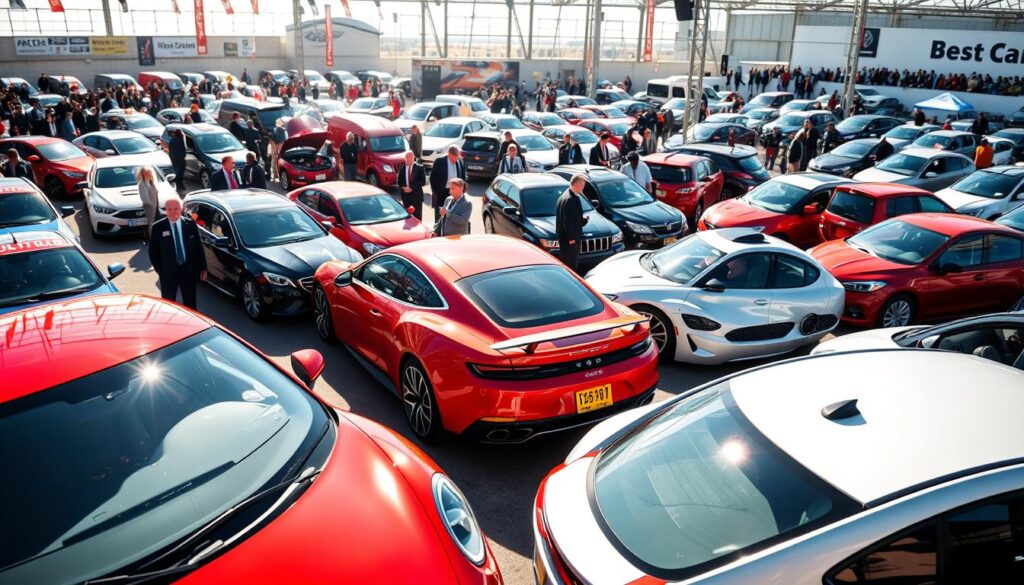
Choosing the right marketplace means matching goals to what each operator offers. The five core firms below cover most buyer needs. They differ by inventory type, tools, and regional reach.
Manheim Auto Auction
Scale and wholesale focus. Manheim runs many locations across the U.S. and north america. It processes millions of vehicles yearly and supports in-person lanes plus online tools like Manheim Express.
Services include inspections, reconditioning, transportation, and history reports. This makes regional pickup and fast cycle times easier for dealers and fleet buyers.
ADESA Auto Auctions
ADESA has a broad north america footprint and steady fleet and dealer inventory. LiveBlock and simulcast tools suit institutional sellers. Buyers get predictable lanes and options for financing and transport.
Copart and IAA
Copart is online-first and focused on salvage and insurance vehicles. Detailed photos and condition notes are key when inspection isn’t possible.
IAA handles many total-loss and repo units. Professional buyers prioritize title type, damage category, and post-sale handling with these auctions.
America’s Auto Auction
America’s Auto Auction is dealer-focused with lanes for fleet, rental, and lease returns. It offers both live and online formats and steady dealer supply.
- Create an account and confirm eligibility (dealer or public access).
- Review fees, condition reports, and title notes before bidding.
- Arrange transportation immediately after purchase to avoid storage costs.
| Operator | Primary focus | Typical inventory | Key advantage |
|---|---|---|---|
| Manheim | Wholesale network | Dealer trades, fleet | Scale, services, fast cycle |
| ADESA | Fleet & dealer lanes | Rental, lease, fleet | Consistent supply, financing |
| Copart | Salvage, online | Insurance loss, salvage | Extensive photos, app access |
| IAA / America’s Auto Auction | Salvage & dealer remarket | Total-loss, repos, lease returns | Title clarity, dealer-focused lanes |
Collector-focused auction houses for high-end and classic cars
Collector-focused sales blend spectacle with strict provenance checks that shape final values. These events attract bidders who pay premiums for rarity, restoration quality, and clear history. Presentation matters; cars often appear on stage with full documentation.
Barrett-Jackson: televised events and luxury spectacle
Barrett-Jackson runs high-visibility events that draw media and celebrity attention. Major gatherings typically occur in January, April, and October.
Expect strong competition. The public format and broadcast exposure can push prices above typical market benchmarks.
Mecum Auctions: scale and a wide range of categories
Mecum offers a broad selection of classic and vintage vehicles plus motorcycles, tractors, and memorabilia. Its scale gives buyers access to a wide variety of specialty assets in one place.
What to expect as a buyer: competition, pricing, and event-style bidding
Buyers should research comparable sales and set strict limits before bidding. Fast lanes and televised moments increase emotional bids.
Risk control steps include prioritized inspections, document verification, and provenance checks. Arrange enclosed transport and insurance ahead of events to protect high-value purchases.
| Operator | Focus | Typical selection |
|---|---|---|
| Barrett-Jackson | High-end, televised events | Collector car, restored classics |
| Mecum | Large-scale collector markets | Vintage cars, motorcycles, memorabilia |
| Buyer expectations | Event-driven bidding | Premium prices, strong competition |
Salvage, insurance, and repo auto auctions with huge inventory
Salvage listings move volume quickly and attract buyers who can assess repair scope remotely.
Why these markets matter. Salvage sales supply rebuilders, parts operations, exporters, and cost-focused buyers with steady inventory.
What “salvage” covers. It ranges from collision and flood to theft recovery and total-loss insurance titles. Title type and damage category drive risk and compliance needs.
How condition data guides smarter bids
Copart and IAA publish condition reports, high-resolution photos, and vehicle history to support remote decisions.
Practical workflow: review reports and photos, verify history, estimate repair scope, then set a conservative budget that adds fees and shipping.
Pricing reality. Salvage can look like a deal. Towing, storage, parts, and labor can change final prices. Model delivered and repaired costs before bidding.
| Item | Source | Buyer action | Post-sale need |
|---|---|---|---|
| Condition report | Operator listing | Verify key faults | Estimate repairs |
| Photos | High-res gallery | Check structural damage | Plan parts/order |
| Title & history | VIN checks | Confirm status | Compliance, reissue title |
| Transport | Carrier quotes | Choose flatbed for non-running vehicles | Arrange insurance, quick pickup |
Other major ways to find deals: government auctions and public-access platforms
Buyers can tap government disposals and intermediary platforms to expand selection beyond dealer lanes.
GSA and other government sales move ex-agency cars, trucks, and SUVs that were fleet-serviced on schedule. These listings often show disciplined maintenance and clear disposal records, which appeals to fleet buyers seeking reliable used cars at competitive prices.
How to evaluate government listings
Check condition notes, mileage, and any maintenance records. Timelines for pickup and titling are strict; plan logistics early.
Auto Auction Mall: access without a dealer license
Auto Auction Mall acts as an intermediary to open dealer-only lanes to the public. It exposes more inventory but the buyer still pays platform fees, transport, and any reconditioning needed.
- Compare inventory selection and locations across the U.S.
- Weigh fee structures versus direct government sales.
- Decide how much inspection limitation the buyer will accept.
“Treat the delivered price — fees, transport, and repairs — as the procurement benchmark, not the hammer bid.”
| Channel | Typical selection | Fee profile | Best for |
|---|---|---|---|
| Government auctions (GSA) | Ex-agency cars, trucks, SUVs | Low buyer fees; strict pickup windows | Fleet buyers, resale with clear maintenance |
| Intermediary platform | Dealer-only inventory via service | Platform and handling fees; higher access cost | Public buyers seeking dealer-grade selection |
| Decision factors | Selection, locations, inspection limits | Fees, timelines, financing options | Choose by tolerance for remote bidding limits |
Procurement checklist: confirm eligibility, list all fees, plan payment method, and book shipping before pickup to avoid storage charges.
Risk management: verify listing details and treat total delivered cost as the approval metric for any deal.
Conclusion
Success begins with choosing the right channel for the intended use of the car. The right company depends on your needs — wholesale volume, salvage sourcing, collector-grade purchases, or government fleet buys.
Discipline wins: set clear limits, model total costs, and confirm pickup windows and storage rules before you bid. A repeatable process reduces surprises.
Plan post-sale logistics and arrange transport early. For reliable scheduling and protective handling, request reliable shipping options and routing from Best Car Shipping.
If you purchased a car at auction, call (307) 288-5972 or email info@bestcarshippinginc.com to book service and protect your asset in transit.