
Fast, all-in cost estimates in under a minute. This page helps vehicle owners and logistics teams plan a move, purchase, relocation, or fleet transfer into Canada with clear, practical pricing. Use the free calculator with no upfront payment and get a quick transport estimate based on typical lane data and market conditions.
“Instant” means a rapid, best-match result—not a final invoice. The number reflects distance, timing, and industry factors. Final pricing is set once a carrier is assigned, and our team flags any major changes before pickup.
BestCarShippingInc positions this page as a buyer’s guide. It helps customers compare options and avoid surprises at delivery. Transparent communication is a priority: learn what information affects an estimate and how to protect the vehicle during transit.
Request a transport quote and speak with a coordinator at (307) 288-5972 or info@bestcarshippinginc.com for route-specific guidance.
Key Takeaways
- Get an all-in estimate in under a minute with no payment needed.
- Instant results use best-match lane data and typical market rates.
- Final charges may vary once a carrier is assigned.
- Clear steps and pricing logic reduce stress and surprises.
- Contact a coordinator at (307) 288-5972 or info@bestcarshippinginc.com for help.
Who this guide is for and what an instant transport quote can include
People arranging cross-border vehicle transport will find practical guidance here. The audience spans homeowners moving to Canada, seasonal travelers, online buyers and sellers, dealerships, and logistics teams coordinating multi-vehicle moves.
Common scenarios include door-to-door relocation planning, dealer transfers, snowbird moves, and online vehicle purchases that need timely pickup delivery windows. These situations often rely on a reliable transport service to plan timing and budgets.
What an instant estimate typically includes
An instant estimate uses lane data, distance, vehicle profile, and carrier type. It helps with budgeting and internal approvals. Accurate inputs produce estimates that closely match real-world pricing.
What instant estimates can’t fully account for
Limitations include last-minute carrier availability, severe weather, permit needs, and sudden route changes. Final pricing can change when scheduling constraints tighten. Historical costs guide the number, but no fixed rate is guaranteed.
| Included | Why it matters | Not covered | Impact |
|---|---|---|---|
| Lane and distance | Sets base miles | Last-minute reroutes | Can raise time and cost |
| Vehicle profile | Size and weight | Special handling needs | Adds fees at pickup |
| Carrier type | Open vs enclosed | Carrier capacity shifts | May change delivery window |
- Provide detailed pickup and delivery locations to improve accuracy.
- Recognize market dynamics; final scheduling triggers the confirmed price.
What you’ll need to get an accurate car shipping quote to Canada

Gathering precise pickup and delivery details is the single best way to get an accurate transport estimate to Canada.
Key checklist items that carriers need:
- Pickup and delivery locations — include ZIP or postal codes and note if endpoints are rural. Metro-to-metro lanes usually have better driver availability and steadier rates.
- Vehicle details — make, model, year, and dimensions. Larger vehicle types take more trailer space and raise per-load costs.
- Condition — confirm if the vehicle is operable. Inoperable vehicles need winch or forklift handling and add labor fees.
- Timing — give the first available pickup date and state flexibility. A wide pickup window lowers rates; exact-day or expedited requests increase cost.
Pro tip: Accurate inputs reduce re-runs and align carrier schedules with real-world availability. When details are ready, carriers assign faster and estimated days match final transport timelines.
Typical costs and price ranges for vehicle shipping
This section lays out standard cost benchmarks so customers can quickly assess any offer. Use these figures as a sanity check when comparing rates to ship a vehicle across the border into Canada.
Average benchmarks and common ranges
Average cost: about $650 for a standard shipment. Typical market ranges run roughly $500–$2,000 depending on lane and timing.
Per-mile expectations and short-route premiums
Expect per-mile rates near $0.40–$2.00 on long lanes. Short moves often cost $1–$2 per mile. Fixed operational costs raise the per-mile on short routes.
Open vs enclosed transport impact
Enclosed transport adds protection and raises the price. Typical averages by distance (open / enclosed):
| Distance | Open | Enclosed | Why it differs |
|---|---|---|---|
| <500 miles | $630 | $930 | Limited capacity and added protection |
| 500–2,500 miles | $1,135 | $1,550 | Longer haul efficiency vs reserved space |
| >2,500 miles | $1,350 | $1,830 | Lower per-mile but higher total and demand for enclosed slots |
Tip: A higher price can secure faster pickup, better protection, or reduced exposure to road debris and weather. Always confirm carrier type, pickup window assumptions, and whether the vehicle is operable when evaluating any price.
Key factors that change your quote for car shipping
Simple changes to timing, pickup points, and service type can alter a vehicle’s transport cost materially. This section breaks down the main variables that raise or lower rates so buyers can choose wisely without sacrificing reliability.
Distance and route density
Distance sets the baseline. Longer hauls usually lower per-mile rates. Popular routes with high density often show better overall pricing because carriers reload faster.
Metro vs rural pickup and availability
Meeting in a major city usually reduces rates. Rural pickup or delivery can increase fees due to limited driver availability and longer deadhead miles.
Carrier type and service level
Open carriers are the most economical. Enclosed, flatbed, or expedited services raise the price but add protection or speed. Choose the carrier type that matches value and risk tolerance.
Time of year, demand, and weather
Peak season and bad weather reduce driver availability and push rates higher. Off-peak weeks often bring lower rates and easier scheduling.
Vehicle size, accessories, and clearance
Tall racks, roof boxes, and oversized vehicles limit placement on trailers. These items can add handling fees and higher quoted rates.
“Adjust what you can—timing, meeting points, and service level—to improve pricing without sacrificing safety.”
Practical checklist:
- Be flexible on pickup days to lower rates.
- Meet in a metro terminal when possible.
- Disclose accessories and non-standard height early.
| Factor | How it changes rates | Buyer action |
|---|---|---|
| Distance & routes | Longer distance lowers per-mile; dense routes more competitive | Combine flexible dates and major lanes |
| Location type | Rural adds pickup fees and delays | Arrange city meetups when feasible |
| Carrier & service | Enclosed/expedited raise cost; open is cheaper | Match service to vehicle value and timeline |
Car transport service options to compare before you book
Not all transport services offer the same balance of price, protection, and convenience. This section compares common methods so buyers can match value, timing, and risk tolerance.
Open auto carrier
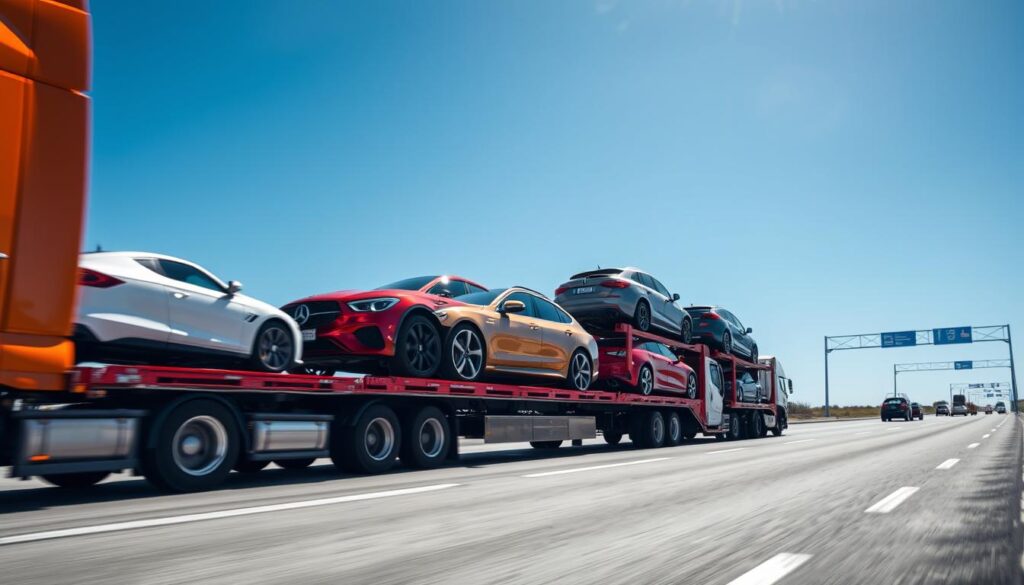
Best price and wide availability. Auto carriers hold multiple vehicles (4–12) and give the lowest per-unit cost. The tradeoff is exposure to weather and road grit. Use this when the vehicle value and risk tolerance align.
Enclosed transport
Protection-first option. Enclosed transport is recommended for classic or luxury vehicles. It costs more but reduces damage risk from debris and salt.
Rail transport and flatbed
Rail: Budget-friendly and efficient for long lanes. Rail often requires terminal-to-terminal handling and adds transit days.
Flatbed: A single-vehicle solution. Useful for short moves or recovery-style loads. Expect a higher per-vehicle rate and specialized loading.
Choose based on vehicle value, schedule sensitivity, and whether terminal logistics are acceptable.
Pickup and delivery choices that impact convenience and cost
Choosing how a vehicle is collected and returned can cut costs and simplify the move. Pickup and delivery decisions drive both convenience and total costs. Small changes in meeting points or delivery type often yield meaningful savings without lowering service quality.
Door-to-door vs terminal-to-terminal
Door-to-door offers maximum convenience. A driver meets the owner at the address. That adds labor and access fees, which raises prices.
Terminal-to-terminal asks customers to drop at a secure yard. Companies favor terminals because they can load multiple vehicles efficiently. That usually lowers costs and improves availability in busy lanes.
Meet in a major city to reduce costs
Meeting in a metro area increases carrier availability and cuts deadhead miles. Drivers can reach terminals faster. This often trims days in transit and reduces overall transport prices.
Access limits and safe handoff planning
Large carriers need clear space, legal parking, and no low branches. Pick a safe, paved spot near a main road. A reliable company will confirm details and keep communication clear as schedules shift.
Compare vehicle transport options at vehicle transport options to choose the best balance of cost, convenience, and protection.
How vehicle type and condition affect transport pricing and risk
Different vehicle profiles alter trailer space, loading needs, and ultimately the final price a carrier sets. This section ties vehicle characteristics to the real mechanics behind rates and risk exposure.
Sedans, SUVs and trucks: footprint and cost differences
Sedans typically fit compactly and lower per-unit costs. They let carriers load more vehicles on an open trailer.
SUVs and pickups are taller and wider. They can displace one or two standard cars and raise the carrier’s per-trailer load cost.
Result: larger profiles often lead to higher rates and less flexible scheduling.
Non-running vehicles: extra handling and fees
Inoperable vehicles require winch or forklift service at pickup and delivery. That adds labor, time, and explicit handling fees.
Carriers usually expect a vehicle to roll, steer, and brake for standard loading. If it does not, buyers should disclose condition to avoid day-of-pickup price changes.
When enclosed transport is the right choice
Enclosed transport reduces exposure to elements and road debris. It is recommended for high-value vehicles or customers sensitive to cosmetic damage.
Choosing enclosed trade-offs higher costs against lower damage risk. Accurately report accessories and height to secure correct pricing and avoid surprises.
- Report operability and addons early.
- Match vehicle type to service level to control costs.
- Choose enclosed transport when protection outweighs added price.
How long car shipping to Canada can take
Transit windows vary widely; realistic planning begins with distance and route density. This gives buyers a practical delivery window to align travel, housing, or business handovers.
Distance-based timelines and real examples for planning
Distance is the main driver. Typical bands used by carriers are simple to apply:
- <500 miles — 2 to 3 days.
- 500–2,500 miles — 4 to 7 days.
- >2,500 miles — 7 to 10 days.
Short moves inside the Greater Toronto Area often complete in about 3 days. A Toronto-to-Vancouver transport can take up to 10 days.
How carrier availability and transport type influence delivery days
Carrier availability and route density speed or slow progress. High-demand lanes let drivers reload frequently and cut days. Sparse routes add wait time and longer transit.
Transport type matters. Enclosed or rail options may add handling steps and extend days. Professionals focus on reliable windows rather than unrealistic guaranteed time unless expedited service is selected.
Plan tip: build a buffer for weather and peak-season capacity when arranging shipping. That protects schedules and reduces last-minute changes.
When to ship to get better rates and smoother scheduling
Selecting the right month to move a vehicle has a direct effect on price and availability. Timing affects carrier schedules, transit windows, and final transport costs.
Winter realities
Winter can slow transit due to weather and shorter daylight. Book December pickups at least 3–4 weeks ahead to avoid holiday slowdowns.
January demand may rise unexpectedly. February often shows the lowest costs as carriers return to regular lanes.
Spring and summer planning
Peak season runs from late spring into summer. High demand raises rates and reduces availability.
Book early to secure transport slots and avoid last-minute price pressure.
Fall: balanced choice
Fall offers milder roads and steadier capacity. October and November often deliver lower rates and good availability.
Flexible timing is the strongest lever to lower total price without risking reliability.
“Plan around seasonal patterns to reduce reschedules and secure steady pickup windows.”
| Season | Typical impact | Buyer action |
|---|---|---|
| Winter | Weather delays; holiday slowdowns | Book 3–4 weeks early in Dec; expect Feb savings |
| Spring/Summer | Peak demand; higher rates | Reserve early; allow schedule flexibility |
| Fall | Mild weather; steady availability | Target Oct–Nov for lower price and better slots |
Compare seasonal options and request tailored car shipping quotes at car shipping quotes to match timing to service needs. Proper scheduling gives customers smoother pickup and more predictable delivery for their vehicle transport services.
Insurance, protection plans, and reducing damage risk
Knowing what insurance covers and what it does not prevents surprises at pickup and delivery. This section outlines standard cargo coverage, optional gap protection, and the inspection steps that protect vehicle value during transport.
Standard cargo insurance basics and what to verify before pickup
Most carriers include basic cargo insurance in their services. Customers should confirm policy limits and whether specific per-vehicle caps apply.
- Ask the carrier to state coverage limits in writing.
- Note any exclusions and special handling fees before pickup.
- Document existing marks with photos and notes.
Gap protection options
Gap protection (such as an AFTA PLAN) is an optional layer for higher-value vehicles. It covers value gaps beyond standard policies and gives added peace of mind.
Inspection and documentation at pickup and delivery
Inspect and record condition on the Bill of Lading at both pickup and delivery. Signed documentation shortens disputes and speeds resolution if damage occurs.
Ask questions in writing and review protection choices before booking. Learn more about transport protection plans at transport protection plans or contact (307) 288-5972 / info@bestcarshippinginc.com.
How to choose a reliable company and avoid pricing traps
Selecting a reliable provider matters more than chasing the lowest number. This short checklist helps customers vet companies and avoid risky offers when arranging transport to Canada.
What to look for in reviews, ratings, and signals
Read multiple reviews. Look for consistent notes about on-time pickup, clear communication, and problem resolution.
Pay attention to patterns. One-off complaints are different than repeated service failures.
Why extremely low offers can be a red flag
Very low quotes often mask poor carrier selection or bait-and-switch tactics.
Underpriced jobs may face delayed dispatch or surprise costs at pickup.
Transparency essentials
Ask for line-item pricing and written confirmation of carrier type, vehicle operability assumptions, and expected pickup window.
Confirm insurance limits and who handles claims.
| Signal | What it means | Buyer action |
|---|---|---|
| Consistent positive reviews | Reliable communication and on-time deliveries | Prioritize these companies |
| Very low price | Possible hidden fees or weak carrier matches | Request written details and carrier identity |
| Clear line items | Transparent costs and fewer surprises | Accept only documented quotes |
Practical step: ask who the carrier is, confirm coverage, and request final numbers in writing. When in doubt, call (307) 288-5972 or check company transport options.
Conclusion
Finalizing transport details early gives customers better rates and steadier carrier availability.
Define the route and confirm the vehicle profile and condition. Choose the right carrier type and set a realistic pickup window to protect timing and costs.
Distance, metro access, seasonality, service level, and vehicle size remain the largest pricing levers. Open transport usually gives the best prices. Enclosed adds protection. Rail and flatbed suit specific needs.
Verify cargo insurance, consider gap protection, and document condition at pickup and delivery. Avoid extremely low offers; ask for clear line items and carrier ID.
Request a transport quote or discuss next steps at (307) 288-5972 or info@bestcarshippinginc.com. See local Cincinnati transport options.