
Spotting a pool of red oil beneath your vehicle demands quick action. Early identification helps prevent major damage and keeps drivers safe on the road.
This guide outlines how to tell whether the issue comes from the gearbox area or the power steering, and what steps to take next.
Owners who ignore persistent leaks risk costly repairs and sudden failures. Simple checks at home can narrow the source before you call a professional.
Acting fast preserves performance and protects your investment. Whether a seasoned owner or a new driver, clear signs and a calm response make a big difference.
Key Takeaways
- Red puddles should be inspected immediately to avoid severe damage.
- Distinguish between gearbox and steering system origins with basic checks.
- Ignoring repeated leaks can lead to expensive, cascading repairs.
- Early, professional inspection is the safest course of action.
- Prompt attention helps maintain vehicle reliability and driver safety.
Understanding the Signs of a Transmission Fluid Leak Red Oil Under Car
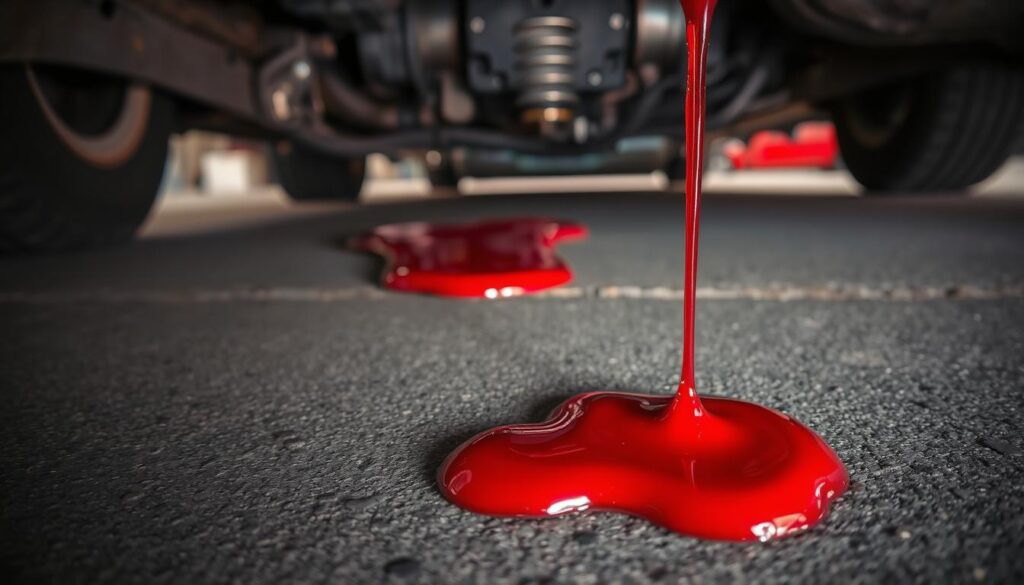
Noticing colored puddles near your parked vehicle demands a quick check. Early detection prevents small problems from becoming major failures.
Transmission fluid is usually a bright reddish-brown and feels slick. A change to a darker hue or thicker consistency signals aging or contamination. Smell helps too: it often has a petroleum-like scent, while power steering fluid tends to be thinner and smell different.
The Importance of Immediate Action
Act quickly when you spot a puddle. Consult the owner manual to confirm proper levels and recommended service intervals. The Society of Automotive Engineers finds proactive maintenance lowers the risk of severe failure.
| Appearance | Texture | Scent | Likely Source |
|---|---|---|---|
| Bright reddish-brown | Slick, medium viscosity | Petroleum-like | Transmission supply or pan |
| Lighter, thinner | Low viscosity | Distinct, lighter scent | Power steering system |
| Dark brown | Thick, gritty | Burnt or stale | Aged components or contamination |
Simple checks and timely service protect performance and extend component life.
Distinguishing Between Transmission and Power Steering Fluid
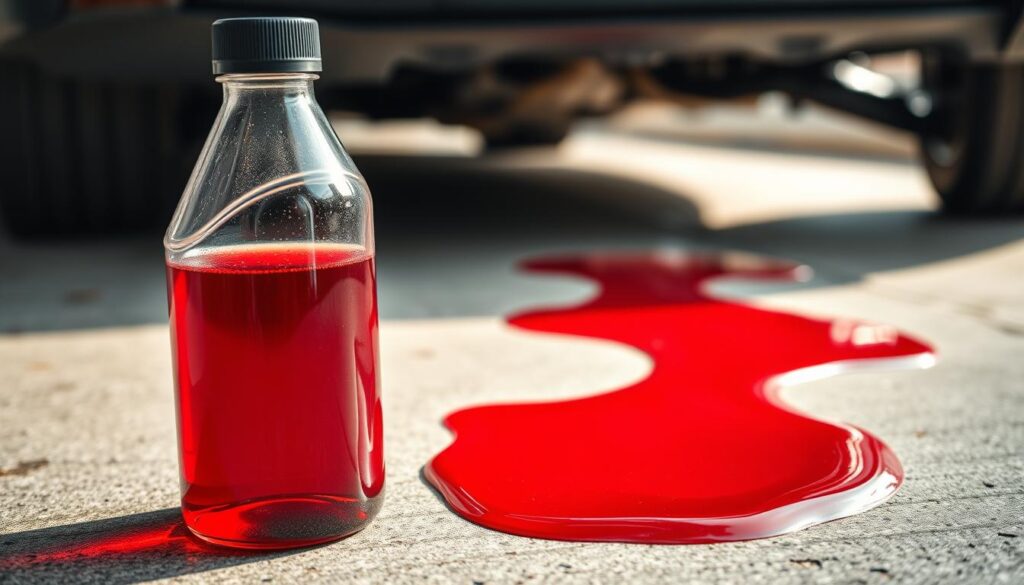
A few basic checks will tell if the problem affects your shifting system or the steering assembly.
Start simple: place a sheet of white paper beneath the suspected spot. The color and consistency show up clearly on paper.
Power steering fluid is thinner and often has a milder smell than transmission fluid. Fresh steering fluid can appear bright, but it darkens with age. In contrast, transmission fluid tends to keep a reddish-brown hue and a petroleum scent.
If the steering system is failing, the vehicle may feel unresponsive or noisy when you turn the wheel. That is a safety issue and needs prompt attention from a technician.
“A dye test at a repair shop will pinpoint the source when visual checks are inconclusive.”
- Check the owner manual to confirm recommended products for your car.
- Do not mix steering fluid with other products; mismatched types harm the system.
- If uncertain, have a certified mechanic run a dye or pressure test to confirm any fluid leak.
Common Mechanical Causes of Fluid Leaks
Regular inspection reveals three mechanical culprits that account for most vehicle fluid problems.
Worn Seals and Gaskets
Heat and age cause seals and gaskets to harden and crack. This wear lets transmission fluid escape and reduces system performance.
Action: Inspect seals during routine service and replace with OEM-quality parts to prevent recurring issues.
Damaged Transmission Pans
Road debris can puncture a pan or distort its flange. A damaged pan often produces visible oil pooling at parking spots.
Over-tightening pan bolts can strip threads and create a new problem. A proper torque spec prevents this.
Cracked Fluid Lines
Vibration and corrosion lead to hairline breaks in metal or rubber lines. A ruptured line causes a rapid loss and sudden steering or gear issues.
Have a certified mechanic test pressure and dye trace if visual checks are inconclusive.
| Cause | Typical Sign | Immediate Step |
|---|---|---|
| Worn seals/gaskets | Slow drip near bell housing | Replace seals; use quality gaskets |
| Damaged pan | Puddle near pan edge | Repair or replace pan; check threads |
| Cracked lines | Rapid loss; wet hoses | Replace lines; pressure test system |
Essential Tools for Diagnosing Your Vehicle
Diagnosing issues starts with the right tools and a cautious approach. A few reliable items make inspections faster and safer when assessing the transmission and nearby systems.
Begin with a sturdy jack and jack stands to raise the vehicle safely. Use a bright flashlight to inspect dark spots near the engine and chassis.
A mirror on a stick helps view hidden areas without disassembly. Keep a clean catch pan ready to collect any escaping fluid during checks.
Professional-grade aids such as fluorescent dye with a UV lamp reveal the exact path of a problem. Clean rags let you monitor if the level drops after initial testing.
| Tool | Purpose | Action |
|---|---|---|
| Jack & stands | Raise vehicle safely | Follow height and weight specs |
| Flashlight & mirror | Visual inspection in dark areas | Check seals and hoses |
| Catch pan & rags | Collect and observe samples | Note color and level |
| UV dye & lamp | Trace hard-to-see paths | Use per product directions |
Proper preparation ensures an accurate assessment before repairs. If uncertainty remains, contact a certified technician for a full diagnosis.
For assistance, email info@bestcarshippinginc.com or call (307) 288-5972.
Step-by-Step Repair Strategies
Start repair work only after you confirm the source and secure the vehicle on stable supports. That prevents injury and avoids adding damage while you inspect components.
Basic repairs begin with simple checks. Place a drip pan and note color and consistency. Consult the owner manual for correct topping procedures and capacity values.
- Raise the vehicle safely with jack stands before replacing a worn pan gasket.
- When cooler lines show cracks, replace them and torque fittings to spec to prevent future leaks.
- Front seal jobs are complex; seek a qualified mechanic with ASE certification when seals or internal parts are involved.
When to Consult a Professional Mechanic
If the vehicle slips, shows unusual noises, or the level drops quickly, internal damage may be present. These signs require expert diagnostics to avoid failure and further repairs.
| Symptom | Likely Cause | Recommended Action |
|---|---|---|
| Slipping gears | Internal wear | Shop diagnosis; possible rebuild |
| Persistent wet spots | Seals or lines | Seal replacement or line repair |
| Noisy steering | Power steering system issue | Inspect pump and hoses; use correct steering fluid |
Choose a reputable repair shop that offers warranties and ASE-certified technicians. DIY work saves money, but professional help preserves performance and long-term component life.
Best Practices for Long-Term Transmission Health
Regular upkeep keeps driveline components working and prevents costly roadside failures. Small, consistent checks make a big difference in service life and performance.
Routine Level Checks
Check your dipstick or level port as directed in the owner manual. Note color and levels at least monthly, and after long trips.
Follow manufacturer steps to avoid contamination when topping off. A planned check helps spot early wear on seals or hoses before damage occurs.
Scheduling Annual Inspections
Have a certified mechanic perform an annual inspection. They can catch minor wear on seals, gaskets, and lines that cause costly repairs later.
Experts also recommend a service flush every 30,000 miles to keep the supply clean and effective. Brands like Gearstar supply quality parts for GM, Ford, and Mopar when replacements are needed.
“Proactive maintenance is the most cost-effective way to protect a vehicle and preserve performance.”
| Action | Interval | Benefit |
|---|---|---|
| Level checks (owner manual) | Monthly | Early detection of wear |
| Service flush | Every 30,000 miles | Removes contaminants; preserves components |
| Professional inspection | Annually | Finds seals, gaskets, cooling issues |
| Cooling system service | Per vehicle schedule | Prevents overheating and damage |
Plan maintenance and use trusted parts to avoid unexpected failures on the road. For more service details or transport needs, visit Wisconsin vehicle transport or contact the team for guidance.
Conclusion: Protecting Your Vehicle from Future Leaks
Prompt attention to any strange puddle keeps a small issue from becoming a serious problem. Check spots often and act when color or feel seems off.
Addressing a fluid leak quickly prevents costly damage and lowers the chance of system failure. Identifying the source early helps avoid major repairs and repeated fluid leaks.
Whether a car owner does a basic fix or calls a trusted mechanic, timely action extends vehicle life. Regular maintenance and vigilance are the best defenses against future repairs.
Do not ignore signs. For service or questions, contact the team at info@bestcarshippinginc.com or call (307) 288-5972.