
West Coast Shipping brings nearly two decades of experience to every move. Their professional team ensures your vehicle reaches its destination in pristine condition. This team offers clear, business-focused guidance to protect the drivetrain and key systems during transit.
Clients receive expert advice on choosing the right transport plan to save time and lower total cost. Each auto plan is crafted to reduce mechanical stress and preserve reliability from pickup to final delivery.
The service prioritizes care. West Coast Shipping treats each vehicle as a valued asset and manages every detail with precision. For a proven open option, see the open car transport choice that fits many needs.
Key Takeaways
- Nearly 20 years of experience guiding safe vehicle moves.
- Professional team offers expert, practical transport advice.
- Plans aim to save time and reduce overall cost.
- Services focus on protecting the transmission and driveline.
- Careful handling preserves your vehicle’s value.
Understanding Your Vehicle Transmission System
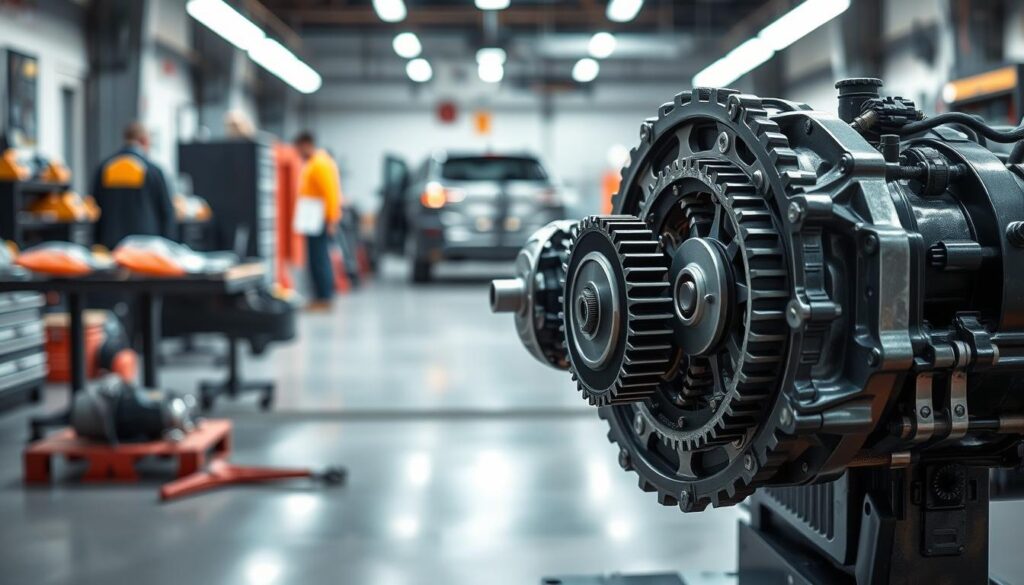
The link between the engine and the wheels relies on a complex assembly of gears and fluid couplings. This system transfers torque so a vehicle can travel at different speeds.
Automatic versus manual designs differ in control and wear. Most drivers now use an automatic transmission that shifts using hydraulic transmission fluid and computer controls. Manual cars still use a clutch and separate gear sets, but they are rare in U.S. sales.
How a torque converter works:
Automatic versus Manual Transmissions
A torque converter is a fluid-filled coupling between the engine and gearbox. It lets the engine idle while the vehicle is stopped on the road.
How Torque Converters Function
Modern units use fluid to transfer torque smoothly through complex gears. Keeping transmission fluid clean protects parts and reduces common transmission problems.
| Component | Role | Maintenance Tip |
|---|---|---|
| Torque converter | Fluid coupling that transfers torque | Check fluid levels and condition regularly |
| Gears & clutch | Change gear ratios and engage power | Listen for grinding or slipping; service worn parts |
| Control module | Manages shifting in modern cars | Scan for codes when erratic shifts occur |
If owners notice a problem, early inspection can prevent major repair and protect engine performance.
Essential Preparation Before Shipping Your Car
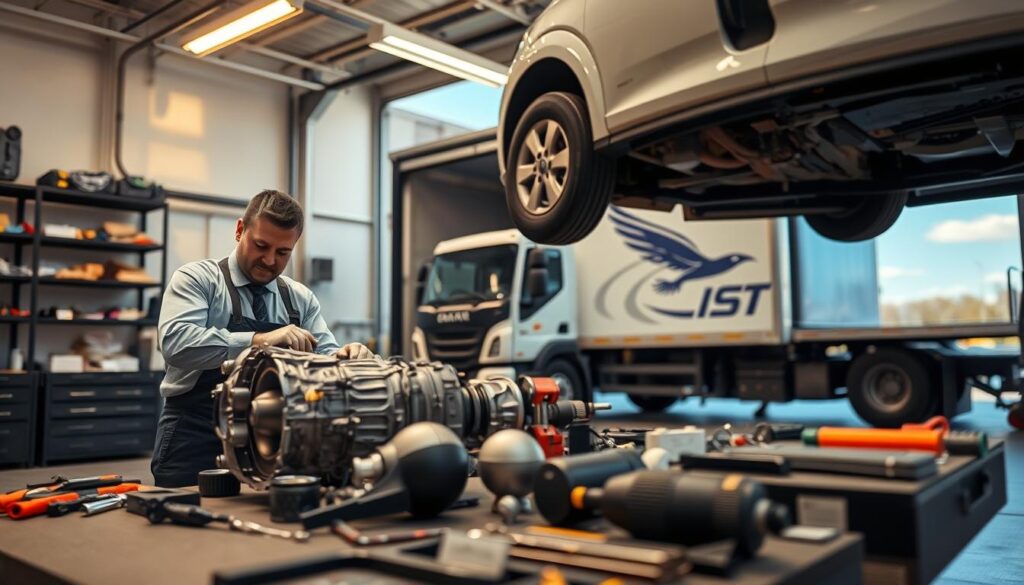
Preparing a vehicle correctly before pickup prevents costly delays and preserves mechanical condition.
Document everything. Take dated photos and note fluid levels. Missing lien paperwork once left a customer’s BMW in Hamburg for three weeks and created more than $2,100 in storage fees.
- Clean the interior and exterior so condition is clear.
- Check fluid levels and battery charge before handoff.
- Remove personal items and disable alarms to avoid delays.
- Confirm coverage—COGSA liability is often capped near $500 per shipment.
| Action | Why it matters | Recommended step |
|---|---|---|
| Documentation | Proves pre-move condition | Photos + dated checklist |
| Fluid & battery check | Prevents mechanical issues | Top off fluids; test start |
| Liability verification | Limits financial exposure | Request written coverage details |
West Coast Shipping’s team brings experience and hands-on support to prepare your cars for transit. For direct assistance, email info@bestcarshippinginc.com or call (307) 288-5972.
Identifying a Transmission Problem After Car Shipping
Inspecting a vehicle right after delivery helps owners spot early signs of gearbox trouble.
Signs of Erratic Shifting
Watch for hesitation, slipping, or hard shifts. These symptoms often show as delayed engagement or rough gear changes. Low fluid or a failing valve body can cause slipping and irregular gear behavior.
Detecting Fluid Leaks
Check under the vehicle for red or reddish-brown fluid. Leaks usually come from seals or hydraulic lines. Low fluid leads to slipping gears and faster wear on parts.
Recognizing Unusual Noises
A whirring, whining, humming, clicking, or buzzing noise is a warning sign. Grinding or loud whining often means worn internal parts and requires prompt repair by a qualified technician.
| Symptom | Likely Cause | Action |
|---|---|---|
| Erratic shifting | Low fluid, valve body fault | Check fluid, scan codes |
| Red fluid leak | Seal or line failure | Contain leak, inspect seals |
| Unusual noises | Worn gears or clutch parts | Schedule professional repair |
If the check engine light illuminates, owners should request a diagnostic scan right away. For care and transport guidance, see the Upton transport service.
Common Causes of Mechanical Issues During Transit
Improper securing or harsh handling on the carrier often turns minor faults into serious mechanical failures.
Rushed loading and limited capacity during peak seasons raise risk. High-demand periods can push costs up 25–40% and force faster turnarounds. Faster loading increases the chance that a loose strap or poor tie-down harms delicate parts.
Neglecting a pre-move check can let worn seals or low fluid levels worsen. What starts as a small fault may escalate into total failure under long-haul stress.
- Improper handling or insecure mounting strains gears and mounts.
- Engine overheating during a long haul can damage internal parts.
- Poor storage or exposure degrades fluids and seals over time.
| Cause | What it affects | Preventive step |
|---|---|---|
| Improper securing | Mounts, gears, valve body | Use experienced handlers and verified tie-downs |
| Low or contaminated fluid | Friction, overheating, seal wear | Top off and inspect transmission fluid before move |
| Rushed loading in peak season | Damage from rough handling | Book early and choose vetted service |
Professional transport service reduces risk. Trained teams protect condition and parts, even on a back road. For moves across state lines, consider scheduling early and using a trusted carrier to ship your vehicle to another state: ship your vehicle to another state.
Professional Inspection and Diagnostic Services
Computerized module checks expose control errors that lead to poor shifting and early wear. Modern automatic systems depend on clear messages from the control module. Without a scan, faults in the valve body or torque converter can go unnoticed.
The Importance of Computer Module Scanning
Early detection saves time and money. Expert technicians use advanced scanners to read stored codes and live data. This step identifies symptoms linked to the engine control and the gearbox control logic.
A full inspection also checks transmission fluid for contamination and low levels. Clean fluid and intact internal parts reduce the risk of major repair.
- Module scans pinpoint faults in the valve body and torque converter.
- Free courtesy checks are often available during routine service.
- Prompt scans when the check engine light appears are vital.
| Service | What it finds | Recommended action |
|---|---|---|
| Computer scan | Control module codes | Diagnose and clear codes; follow up repair |
| Fluid inspection | Contamination, low level | Flush or top off fluid as needed |
| Mechanical check | Worn internal parts | Plan repair or rebuild |
Regular diagnostic service keeps the vehicle reliable. For trusted handling and more details on car shipping services, visit car shipping services. Contact info: info@bestcarshippinginc.com or (307) 288-5972.
Evaluating Repair Versus Replacement Options
A careful review of costs and condition guides the repair-or-replace decision. A major failure can cut resale value by up to 20%, so owners should weigh repair estimates against that loss.
First step: get a detailed diagnostic. If the check engine light is on, technicians will scan codes and inspect fluid condition and gears.
Minor wear and clean transmission fluid often mean targeted repairs. Replacing worn seals, clutch parts, or a valve body can be more cost-effective than a full rebuild.
Extensive internal damage or repeated failures may justify full replacement. Cleveland Auto Repair offers assessments and can be reached at 855-CLE-AUTO to advise on cost and parts quality.
Prioritize quality parts and qualified technicians. Doing so helps restore optimal speed, torque delivery, and long-term reliability while protecting vehicle value.
Choosing Reliable Auto Transport Services
Choosing the right carrier makes the difference between a routine move and costly mechanical setbacks.
Selecting a reliable auto transport service is the best way to prevent a transmission issue during transit. Experienced teams reduce risk and provide consistent, high-quality service that protects your vehicle and engine.
Careful handling matters. Every vehicle receives verified tie-downs and inspection checks, whether carried on a major highway or a back road. This lowers the chance of fluid loss and parts damage.
Transparent communication keeps owners informed with timely updates and documented condition reports. That clarity avoids unexpected costs and reduces time spent resolving repairs.
- Use vetted carriers with proven experience.
- Request written handling and coverage details.
- Confirm pre- and post-move inspections.
Contact the team at info@bestcarshippinginc.com or call (307) 288-5972 to arrange reliable service and protect your vehicles from avoidable issues.
Conclusion
Clear checks and expert handling make long moves safer for valuable vehicles.
Owners who prepare their vehicle and choose a vetted service reduce the risk of transmission damage and costly follow-up work. Early inspections spot common issues and let technicians act before faults grow.
West Coast Shipping’s team delivers professional support and reliable service during every step. Customers receive documented condition reports and direct guidance to protect driveline components.
Contact the team at info@bestcarshippinginc.com or call (307) 288-5972 for fast answers about maintaining cars and arranging expert transport services. Thank you for trusting a partner focused on protection and peace of mind.