
Rohnert Park Transmission & Auto Repair brings nearly 30 years of service to Sonoma County. This opening explains why a slipping transmission is a serious sign to watch. A car that hesitates or revs higher than normal can point to an issue in power transfer from the engine to the wheels.
Early attention matters. Regular maintenance helps keep a car running smoothly and avoids costly repairs. If you notice odd symptoms during acceleration, a certified mechanic can inspect the torque converter and related components.
Addressing problems early saves time and money. Identifying a clear transmission slipping when accelerating fix requires a methodical check. This protects your vehicle and keeps daily use safe and reliable.
Key Takeaways
- Watch for hesitation or high revs as early signs.
- Prompt service can prevent major repairs and replacements.
- Torque converter issues often cause acceleration problems.
- Regular maintenance keeps your car running longer and safer.
- Professional inspection by a mechanic is advised at the first symptom.
Understanding Transmission Slipping
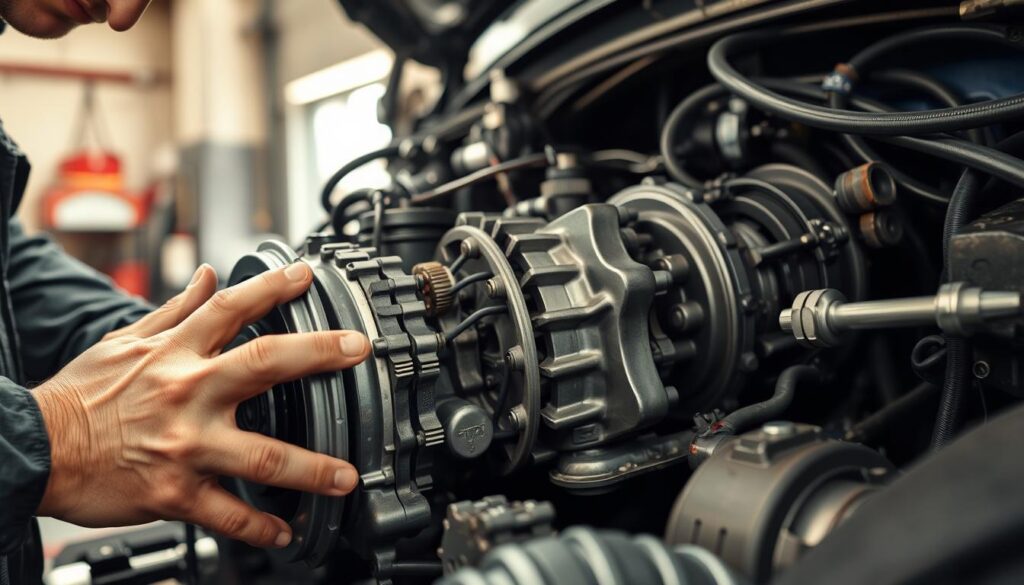
Loss of proper gear engagement often begins as a subtle hesitation under load. This problem happens when a vehicle fails to hold or shift into gears correctly. The result is a clear loss of drive and reduced confidence behind the wheel.
Automatic transmissions depend on stacked clutch packs and hydraulic control to select gears. Over time, clutch material wears and valves or solenoids can fail. Low fluid or contaminated fluid speeds this wear.
Recognizing early signs reduces downtime and repair cost. If the engine revs but speed does not rise, seek same-day diagnostics. Rohnert Park Transmission & Auto Repair offers prompt service and expert evaluation.
| Issue | Likely Cause | What Owner Sees |
|---|---|---|
| Loss of gear hold | Worn clutch packs | Sudden loss of power under load |
| Delayed shift | Low or dirty fluid | Hesitation between gear changes |
| Erratic shifting | Faulty solenoids | Unexpected RPM spikes |
“Early diagnosis prevents major repairs and keeps the car safe for daily use.”
Next step: If your vehicle struggles to stay in gear, contact a certified technician for inspection and service.
Common Symptoms of a Slipping Transmission

A car that hesitates as it shifts into Drive or Reverse often signals internal gear engagement problems. These early signs help owners take action before damage spreads.
Delayed Gear Engagement
Delayed gear engagement happens when the vehicle pauses for several seconds after moving the shifter. The engine may rev, but the gear does not engage right away.
This delay can point to low fluid, worn clutch material, or valve body issues. Owners should not ignore a steady increase in delay time.
RPM Spikes Without Acceleration
RPM spikes without forward motion indicate power is not reaching the wheels. The engine works harder, yet the vehicle does not accelerate as expected.
Other warning signs include a burning smell or grinding and shaking during shifting. These point to overheating fluid, clutch wear, or serious internal damage.
- Delayed engagement between Park and Drive is a frequent early sign.
- RPM jumps with no acceleration show loss of drive to the wheels.
- A burning smell signals overheated fluid that needs immediate attention.
- Grinding or shaking during shifting suggests severe internal wear or clutch damage.
| Symptom | Likely Cause | Owner Action |
|---|---|---|
| Delay to engage | Low or contaminated fluid | Check fluid level; schedule service |
| RPM spikes, no move | Worn clutch / converter issue | Avoid driving; seek diagnostics |
| Burning smell | Overheating fluid | Stop vehicle; call for repair |
“Addressing these signs early reduces repair costs and keeps the vehicle safe on the road.”
How to Perform a Transmission Fluid Check
A quick fluid inspection tells a lot about the health of your car transmission and hydraulic system. This simple step can reveal early signs of trouble before gears or clutch parts suffer further wear.
Evaluating Fluid Condition
Park the vehicle on level ground and warm the engine to operating temperature. With the engine idling, pull the dipstick and inspect the fluid color and smell.
Healthy transmission fluid is red or pink and slightly transparent. If the fluid is dark, cloudy, or smells burnt, schedule a fluid change right away to avoid larger repairs.
- Low fluid levels from leaks cause a loss of hydraulic pressure and often lead to slipping or delayed gear engagement.
- Always use the fluid type listed in your owner’s manual to protect valve bodies and seals.
- If unsure, a certified mechanic can determine whether a fluid change or more extensive service is needed.
Routine checks save time and money. Neglecting this task lets a minor issue become a major repair.
Identifying Potential Fluid Leaks
Finding fluid under your parked car is a clear sign to inspect seals and cooling lines immediately.
Common leak points include the pan, axle seals, gaskets, and transmission cooler lines. Check for red or dark puddles under the vehicle. Note the color and smell; burnt or dark fluid needs prompt attention.
Why this matters: Loss of fluid leads to pressure loss and a higher risk of gear and clutch damage. Low fluid is a common cause of transmission slipping and reduced power to the wheels.
- Inspect the pan and mounting bolts for damage or seepage.
- Look over seals and gaskets for wet spots around the case.
- Check cooling lines for cracks or loose fittings.
If a leak appears, you may need gasket or seal replacement, or a pan replacement in case of damage. A certified mechanic can determine whether a fluid change or a more complex repair is required.
“Addressing leaks early protects internal parts and avoids costly repairs.”
Using Diagnostic Tools for Electronic Issues
An OBD-II scan can expose hidden sensor faults that affect gear engagement. Modern control modules log error codes and live data. A quick scan guides the technician to the right area to inspect.
A certified mechanic uses this data to isolate faulty solenoids, pressure sensors, or wiring faults. These electronic errors often cause operational problems that mimic worn parts.
Advanced diagnostic tests can even suggest internal clutch wear by tracking slip rates and pressure loss. This helps decide if the repair is electrical, software, or mechanical.
- Plug the scanner to read codes and live data.
- Check solenoid and sensor function with targeted tests.
- Use pressure and slip data to assess clutch condition.
| Tool / Test | What It Finds | Recommended Action |
|---|---|---|
| OBD-II Scanner | Stored fault codes, live sensor data | Diagnose electrical faults; clear codes after repair |
| Solenoid Bench Test | Valve operation and resistance | Replace faulty solenoids; retest |
| Pressure & Slip Logging | Clutch engagement quality | Schedule mechanical inspection if needed |
“Accurate diagnostics save time and prevent unnecessary repairs.”
Need help? Contact a certified technician at (307) 288-5972 or email info@bestcarshippinginc.com for a professional evaluation.
Professional Transmission Slipping When Accelerating Fix
Professional diagnosis often reveals whether worn bands or faulty valves are behind loss of drive under load.
Sherman’s Auto Repair in Sarasota provides targeted service. Technicians begin with a controlled drive test. They check hydraulic pressure, band setting, solenoid codes, and fluid condition.
Adjusting transmission bands
Band adjustment can restore proper gear hold. This task varies by model and often requires expert tools.
Incorrect adjustment risks further clutch wear. A trained mechanic will measure and set bands to factory specs to help avoid a full transmission replacement.
Replacing faulty solenoids
Solenoid faults are a common electronic cause of poor shifting and loss of hydraulic pressure.
Replacing solenoids usually requires removing the pan to access the valve body. Changing solenoids often restores correct gear changes and protects clutch packs.
Torque converter repair
The torque converter transfers engine power to the gears. If it fails, the vehicle may need major repairs or replacement.
Converter service is complex. It frequently calls for a drop of the unit and professional reassembly to prevent further damage.
| Service | What It Addresses | Estimated Need |
|---|---|---|
| Band adjustment | Poor gear hold, slipping gears | May need minor adjustment or band replacement |
| Solenoid replacement | Erratic shifting, low hydraulic pressure | Pan removal; moderate labor time |
| Torque converter repair | Loss of power transfer, severe slipping | Complex repair; may lead to full transmission work |
“Addressing root causes early often prevents a full transmission replacement and saves time and money.”
Need professional service? Contact Sherman’s Auto Repair for precise diagnostics and reliable repairs. Call (307) 288-5972 or email info@bestcarshippinginc.com.
When to Seek Expert Mechanical Assistance
Clean fluid and proper level do not rule out deeper internal wear that only a trained technician can diagnose. Automatic systems contain many precision parts. If your car keeps showing signs of loss of drive after fluid checks, the issue is likely internal.
Do not attempt complex repairs without tools or experience. Specialized diagnostic gear and factory procedures reduce the risk of further damage. A qualified mechanic can determine whether you need a targeted repair or a full replacement.
Sherman’s Auto Repair in Sarasota offers professional diagnostics and reliable service. Their technicians provide clear guidance on repairs, replacement options, and maintenance plans to protect your vehicle and investment.
- Seek expert help if fluid is clean but the problem persists; this often indicates internal problems.
- Attempting advanced repairs at home can worsen the issue and raise costs.
- Call (707) 584-7727 to schedule a professional inspection and get an accurate repair estimate.
“Professional diagnostics identify root causes fast and protect your vehicle from unnecessary repairs.”
Conclusion
A timely inspection protects your car and limits costly damage from transmission slipping. Watch for clear signs and act quickly. Early attention saves time and money.
Check transmission fluid level and condition regularly. A clean, correct-level fluid prevents many common problems. If you notice a burning smell or delayed shifting, schedule service or a fluid change right away.
Professional diagnostics identify the root issue. Whether the outcome is a simple fluid change or a full transmission replacement, trained technicians provide the right repair and guidance.
Need help? Contact a qualified mechanic at (307) 288-5972 or email info@bestcarshippinginc.com for prompt, reliable service to keep your car running safely.