
This commercial buyer’s guide helps Canadians compare professional auto transport providers. It focuses on reliability, transparency, and protecting your asset during moves, purchases, or sales across Canada and Canada–U.S. lanes.
“Professional” means documented inspections, clear communication, and verifiable insurance and licensing. It also means route planning and carrier networks matter for timely pick-up and delivery.
Major transport methods include open carriers, enclosed trailers, flatbeds, and rail. Rail often offers lower cost for terminal-to-terminal moves, though it may take longer for residential delivery.
Best car shipping is a fit-based decision. The selected best car solution depends on vehicle value, timing needs, and delivery preferences—not a one-size-fits-all list.
For straightforward guidance and next steps, contact the team at info@bestcarshippinginc.com or call (307) 288-5972. Request a quote or learn more via professional transport options.
Key Takeaways
- Compare providers on inspections, licenses, and insurance for trustworthy service.
- Choose transport mode—open, enclosed, flatbed, or rail—based on cost and timing.
- Route planning and carrier networks affect transit time and reliability.
- Best car shipping is based on fit: value, schedule, and delivery type.
- Contact the team for clear next steps and a direct quote.
How vehicle shipping works in Canada
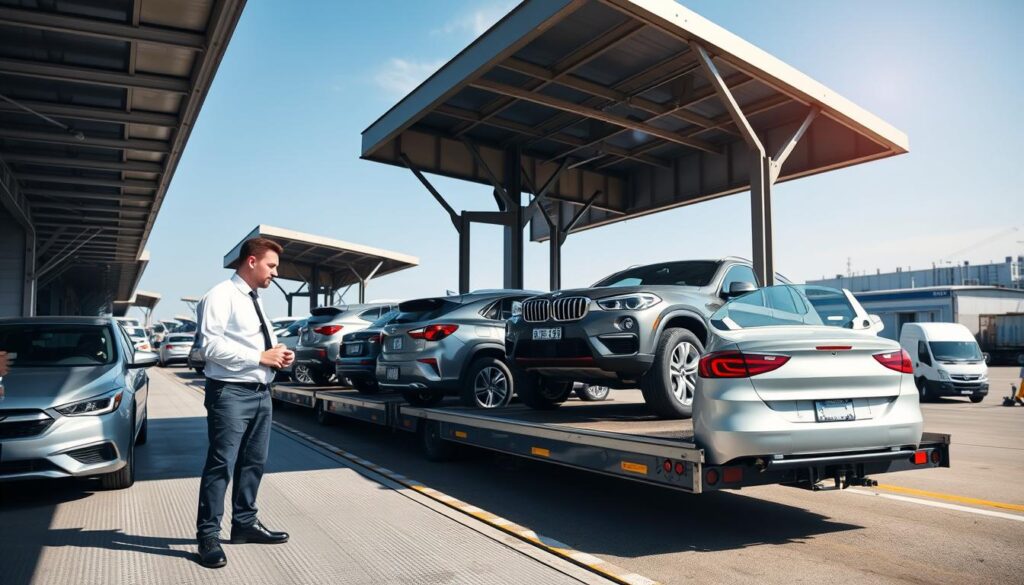
Moving a car across provinces or to the U.S. follows a clear set of steps that balance timing, cost, and risk. Major triggers include relocations, online purchases, dealer transfers, corporate fleet moves, and seasonal snowbird transport to U.S. destinations.
Typical steps from quote to delivery
- Request a quote with postal codes and vehicle details.
- Book and pay online; confirm pickup window.
- Prepare the car for pickup and hand over keys/inspection report.
- Track progress until confirmed delivery.
What information to gather before requesting quotes
Have origin and destination postal codes, year/make/model, running condition, preferred transport type, and delivery method ready. Accurate info reduces pricing surprises and loading issues.
Tracking and scheduling details
Modern services offer GPS-enabled updates or portal visibility. This improves customer service and speeds exception handling. Pickup often uses windows, while routing determines confirmed delivery dates.
| Step | Customer action | Provider action |
|---|---|---|
| Quote | Share postal codes and car details | Provide price and options |
| Pickup | Prepare and hand over keys | Load and begin transport |
| Delivery | Inspect and acknowledge receipt | Confirm delivery and close order |
Types of car shipping options and when to use each
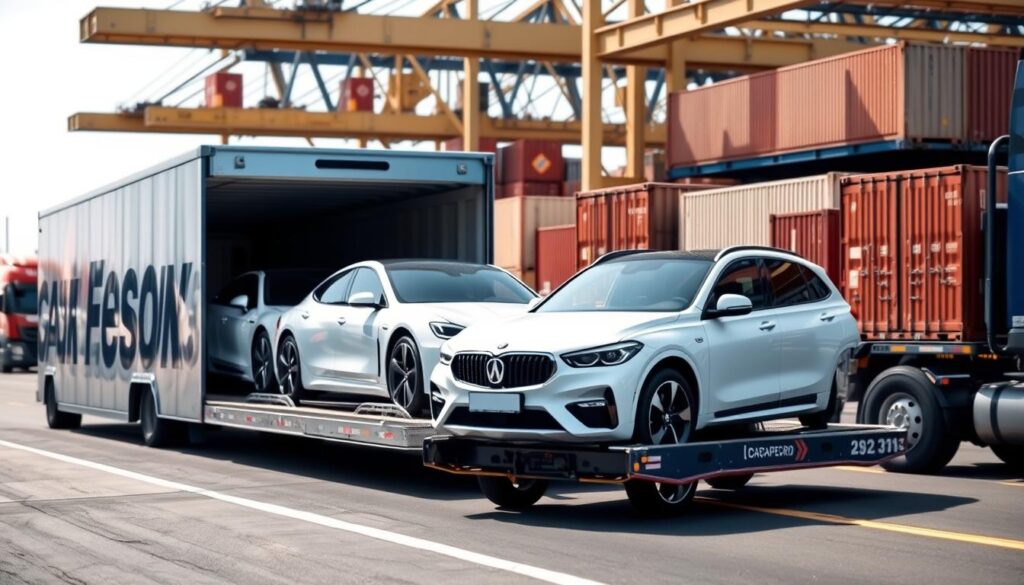
Different modes of auto transport offer clear trade-offs in cost, timing, and protection. Below are the core car shipping options in Canada and when each makes sense for the move.
Open auto carrier transport
Best for everyday moves and the lowest rates. Open carriers carry multiple cars per load, which lowers per-car costs on busy routes. Expect exposure to weather and road grit; minor dust or salt is normal.
Enclosed transport
Use for classics, exotics, and high-end cars. Enclosed trailers shield from elements and debris. For secured protection and special handling, choose enclosed transport.
Flatbed shipping
Flatbeds suit short runs, low-clearance models, or single-car special loads. They provide controlled loading and are ideal when one-on-one handling matters.
Rail transport
Rail moves many cars at lower rates on a terminal-to-terminal basis. It reduces cost but can lengthen delivery windows and requires terminal pickups.
| Option | Risk | Cost | Best fit |
|---|---|---|---|
| Open carrier | Exposure to elements | Low | Standard car moves |
| Enclosed transport | High protection | High | Classic/exotic cars |
| Flatbed | Controlled loading | Medium | Short or specialty moves |
| Rail | Terminal handoff | Lowest | Cost-focused, non-urgent |
Ask about equipment type, loading method, terminal locations, and inspection procedures before you book. These questions clarify service fit and final rates.
What impacts car shipping rates, quotes, and overall value
Costs for auto transport hinge on a few predictable factors that go beyond the headline price.
Distance, route density, and carrier availability
Distance is a primary driver of transit time and price. Major corridors like Toronto–Montreal or Vancouver–Calgary often offer lower per-mile rates due to frequent loads.
Remote lanes or low-frequency routes add mileage and handling fees. Carrier availability changes weekly, especially near holidays and peak periods, which can raise quotes and extend pickup windows.
Size and condition: why larger cars and non-runners cost more
Larger cars such as SUVs and pickups take extra deck space and reduce load efficiency. That directly raises per-unit rates when a carrier packs fewer units per trailer.
Non-runners or cars with non-working brakes need winching, extra labor, or special equipment. These requirements add handling fees and may require a different type of transport.
Timing, seasonality, and capacity constraints
Seasonal demand—winter weather and snowbird peaks—can tighten capacity and lengthen delivery time. Book early for high-demand windows to lock better rates and reliable pickup dates.
Buyer’s checklist to compare true value
- Equipment match: Open vs enclosed vs flatbed suitability.
- Scheduling reliability: Confirm pickup windows and delivery estimates.
- Inspection process: Clear condition reports at pickup and delivery.
- Insurance coverage: Confirm limits and deductible before you book.
- Support responsiveness: Easy tracking and a reachable contact for exceptions.
For an example of cost elements and to get a representative quote, see this detailed guide on estimated charges: how much does it cost to ship a.
Delivery options: door-to-door vs terminal-to-terminal shipping
How a provider handles pickup and drop-off determines transit convenience and final cost. Many Canadian providers offer both delivery choices. Understanding trade-offs helps choose the right transport option for your car.
When door-to-door service makes sense
Door-to-door means the driver coordinates pickup and drop-off as close as safely and legally possible to the addresses provided.
This option is worth the premium for tight schedules, limited local transit, business relocations, or when the owner cannot move the car to a yard. Note that large trucks may still require a nearby meeting point due to street width or municipal restrictions.
How terminal pickup can reduce costs
Terminal-to-terminal lowers rates by consolidating loads at secure yards and using efficient routing.
Expect check-in, ID verification, stated hours, and storage policies. Terminals often reduce price for major-city hubs but require the customer to drop off and collect the car.
“Pick the delivery model that matches schedule and reliability, not just the lowest rate.”
| Option | Cost | Convenience | Best fit |
|---|---|---|---|
| Door-to-door | Higher | High | Tight schedules, limited local transport |
| Terminal-to-terminal | Lower | Medium | Cost-focused moves to major city hubs |
Transit time expectations for Canadian vehicle transport
Clear timelines start with the difference between pure transit time and the full pickup-to-delivery window. Transit time is driving days on the road. The total timeline includes dispatching, pickup windows, and any terminal dwell.
Short-haul example: Greater Toronto Area
A short move inside the GTA often shows about 3 days of total timeline. Dispatching, multi-car loading, and route consolidation add to raw transit time.
This means even nearby moves can take a few days from booking to final delivery.
Cross-country example: Toronto to Vancouver
Toronto to Vancouver typically runs up to about 10 days. Weather, handoffs, and capacity push timing toward the upper end.
How transport type affects delivery windows
Open carriers run frequent routes and often give tighter delivery estimates. Enclosed options offer higher protection but less capacity and longer waits.
Rail can be cheaper, yet it is terminal-based and may add scheduling hold times for residential delivery.
Expect updates at booking, pickup, and en route milestones. Good communication and matched service levels reduce risk and improve the overall customer experience.
vehicle shipping companies: how to compare providers the smart way
Choosing the right provider starts with knowing who will physically move your car and who arranges the transport.
Carrier vs broker: who actually moves your asset
Carriers operate fleets and take direct accountability for loading, transit, and delivery. Brokers arrange hauling and rely on partner carriers.
Ask whether the company is a carrier, a broker, or a hybrid before you book. That affects claims, liability, and response times.
Fleet capacity and network reach
Large fleets and cross-Canada terminals reduce delays on major lanes. A carrier with many trucks often has better availability and tighter pickup windows.
Rail partnerships and pricing
Rail alliances can lower long-haul costs and speed transit on core routes, but they usually require terminal handoffs and added coordination.
Security and technology
- Security: fenced yards, 24/7 surveillance, bonded drivers, and controlled access.
- Technology: online portals, GPS truck tracking, and real-time notifications for better shipment visibility.
Compare checklist: documentation, inspection reports, escalation path, customer service responsiveness, insurance coverage, and online tracking. For a professional example and next steps, see this full-service carrier guide.
Insurance coverage and protection: what to verify before you book
Clear coverage details reduce surprises and speed claims if damage occurs.
It means the carrier maintains a policy that applies while your car is under its care. Confirm limits, deductible amounts, and written exclusions before booking. Ask for the policy name and a copy of the summary.
Documentation that protects you
Request a written inspection at pickup and a signed condition report. Take time-stamped photos before handoff. Keep copies of all forms and emails.
How to handle damage concerns and claims readiness
- Note any damage on delivery paperwork.
- Take time-stamped photos and keep them with the report.
- Notify the provider immediately and request claim instructions.
“A full inspection and a copy of the condition report gave the customer clear proof after a prior bad experience.”
| Item | What to confirm | Why it matters |
|---|---|---|
| Policy limits | Per-incident and aggregate amounts | Determines payout potential |
| Deductible | Amount customer pays first | Affects out-of-pocket cost |
| Documentation | Pre/post photos and signed reports | Speeds claims and proves condition |
Customer service expectation: A professional provider explains coverage clearly, supplies paperwork, and supports resolution without vague responsibility. For a trusted option and next steps, learn more about the best car shipping company.
Customer reviews and ratings: how to spot quality service
Reading review narratives helps separate marketing claims from operational reality. Focus on what customers say about communication, timing, and how issues were handled. These details reveal true service quality more than a single star score.
What to look for in reviews about communication and reliability
Good feedback mentions proactive updates, clear pickup windows, and helpful tracking. Customers often praise when they receive a copy of the inspection report at handoff. Notes like “on-time delivery” and “easy drop-off/pickup” indicate reliable execution.
Red flags: vague timelines, unclear responsibility, and poor follow-through
Watch for repeated complaints about missed dates without explanation. Alerts include fuzzy claims steps or unclear responsibility between a broker and the carrier. One common pattern: cars arriving “a bit dusty”—expected with open transport—but still in sound condition.
- Prefer detailed narratives over one-line praise.
- Cross-check rating sources like Google and BBB for consistency.
- Align review themes with your priorities: timing, care for high-value car, or fast response from customer service.
“A clear inspection report and steady updates made the delivery simple and verifiable.”
Getting an accurate quote from car transport companies
Get precise quotes by asking narrow questions that turn vague estimates into firm commitments.
Questions to ask about pickup windows, delivery dates, and tracking
Ask for the exact pickup window and an estimated delivery range. Confirm whether the service offers door or terminal delivery.
Clarify tracking: a portal, GPS updates, or phone check-ins. Ask who owns responsibility at each handoff and how claims are handled.
Comparing like-for-like quotes across shipping options
Match transport type, delivery method, and condition assumptions. Verify insurance terms, included fees, and any surcharges in writing.
Apply this checklist to known brands such as montway auto transport and to any broker or carrier you consider.
Payment, booking, and preparation for pickup
Confirm deposits, payment timing, cancellation rules, and how documentation is delivered.
Prepare the car: remove personal items, ensure it runs, note fuel level, and take time-stamped photos. Provide correct contact numbers.
Request a like-for-like quote and confirm service level before you book to protect your asset and avoid surprises.
Ready to compare quotes? Email info@bestcarshippinginc.com or call (307) 288-5972 for transparent, professional service.
Conclusion</h2>
A clear decision path helps owners balance cost, protection, and delivery expectations.
Define needs, pick the right transport type, choose door or terminal delivery, and verify timelines. Confirm inspection reports and written coverage before booking.
Remember that the best choice matches risk tolerance and car value, not only the lowest price. Compare carrier vs broker accountability, network reach, yard security, and real-time tracking when evaluating providers.
Use reviews to verify claims, then get key terms in writing: coverage limits, pickup windows, and the claims process. For direct guidance and a quote, contact Best Car Shipping Inc. at info@bestcarshippinginc.com or (307) 288-5972.