
Best Car Shipping Inc. helps Canadian vehicle owners plan transport with clear, market-based pricing. The average car shipping cost sits near $650, and per-mile rates range from about $0.40 to $2.00 depending on route, carrier type, season, and speed.
This introduction defines what the quoted figure means. It is a market-priced service driven by lanes, capacity, and risk. Rates are not one-size-fits-all. Readers will find practical guidance for budgeting and timelines rather than hype.
Reliability and protection are the buying criteria. Choose vetted carriers, verify insurance, and document vehicle condition before pickup. The article previews open carrier vs enclosed transport, operable vs inoperable handling, and how time windows influence prices.
For a fast, accurate quote and scheduling in Canada, contact Best Car Shipping Inc at (307) 288-5972 or info@bestcarshippinginc.com. The goal is clear terms, fewer hidden fees, and a professional experience that protects your money and vehicle.
Key Takeaways
- Average move near $650; per-mile ranges roughly $0.40–$2.00 (Jan 2026 benchmarks).
- Prices reflect lanes, capacity, season, and service type — not a flat rate.
- Prioritize vetted carriers, insurance checks, and condition reports.
- Compare quotes, watch for deposit traps, and avoid unusually low offers.
- Contact Best Car Shipping Inc for a quick, accurate quote and reliable service.
What Auto Shipping Costs Look Like in Canada Right Now
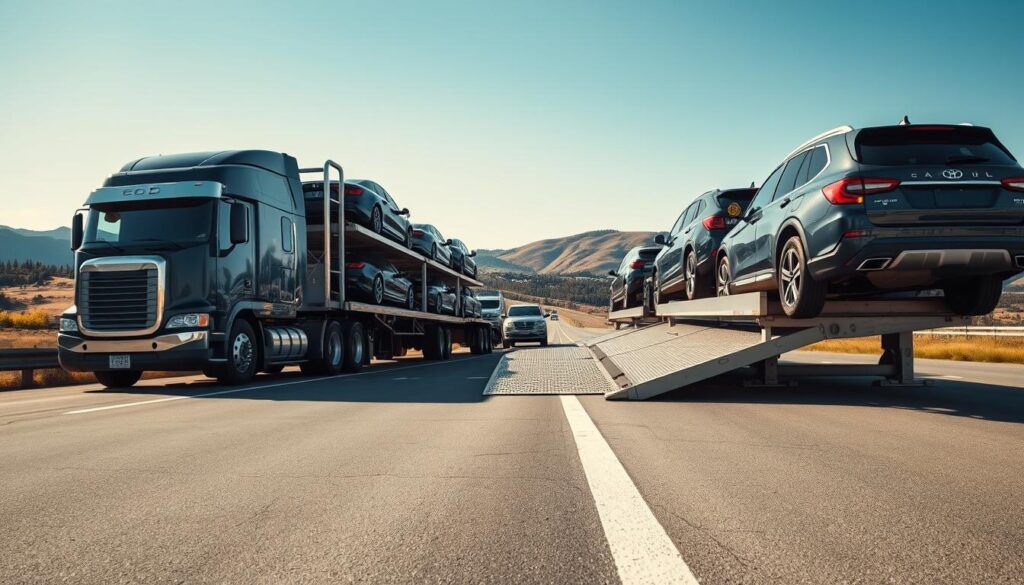
Rates seen in quotes are summaries of many variables, not guarantees for a specific move.
The term average means a midpoint pulled from many lanes and service types. It is a directional number. Buyers should treat it as a planning figure rather than a fixed price for a given pickup and delivery pair.
Typical ranges run from lower-priced short open hauls to premium cross-country enclosed moves. Per-mile pricing reflects lane density, deadhead miles, tolls, fuel, and driver hours — not mileage alone.
Why longer routes often cost less per mile
Fixed pickup and drop effort gets spread over more miles on long hauls. Major metro corridors (Toronto–Montreal, Calgary–Edmonton, Vancouver–Seattle) attract more carriers and tighter prices than rural lanes.
For the most accurate number, request a current quote with postal codes, vehicle specs, and a realistic pickup window. Compare binding vs non-binding offers, service level, and insurance — not just the first price shown.
| Trip Type | Typical Price Range (CAD) | Per Mile Example | When to Expect |
|---|---|---|---|
| Short metro (open) | $300–$600 | $0.60–$1.50/mile | Local moves, high lane density |
| Regional | $600–$1,200 | $0.40–$1.20/mile | Interprovincial corridors |
| Cross-country (enclosed) | $1,200–$2,000+ | $0.50–$2.00/mile | Long distance, premium protection |
| Rural or special handling | $500–$1,500 | $0.80–$2.00/mile | Limited access, extra handling time |
For more detail on per-mile benchmarks, consult this average per-mile guide.
Auto Shipping Cost Benchmarks by Distance and Vehicle Type

Practical benchmarks let buyers sanity-check a quote before booking. The table below shows typical ranges by distance and by whether the move uses open carrier or enclosed transport.
| Distance | Open (CAD) | Enclosed (CAD) | Typical per mile |
|---|---|---|---|
| <500 miles | $630 | $930 | $0.60–$1.50 |
| 500–2,500 miles | $1,135 | $1,550 | $0.40–$1.20 |
| >2,500 miles | $1,350 | $1,830 | $0.50–$2.00 |
Vehicle type matters. Sedans generally run lowest. SUVs and trucks require more trailer space and weight allowance, so prices rise. Examples by distance band: Sedan $425/$725/$925; Compact SUV $455/$775/$1,025; SUV $505/$825/$1,075; Truck $575/$925/$1,275.
Move.org examples at ~500 miles show variety: Challenger $696/$978; CR‑V $743/$1,001; F‑150 $959/$1,055. Longer routes cut the per mile rate but raise the total price. If a quote is far below these ranges, treat it as a risk signal and verify terms, deposits, and carrier availability.
For a quick comparison and to explore budget options, see cheap car shipping.
Open Carrier vs Enclosed Transport: Cost, Protection, and Best Use Cases
How a vehicle travels—on an open rack or inside a covered trailer—matters for both price and protection. Best Car Shipping Inc. explains practical differences so owners choose the right service for their needs.
Why open carrier is usually the cheapest option
Open carrier is the industry standard. High capacity and broad availability make it the most economical way to ship a car for most moves.
Exposed trailers mean vehicles face weather and road debris. Reputable carriers use securement straps and pre/post inspections to reduce damage risk.
When enclosed transport is worth the premium
Enclosed transport is a premium service for luxury, classic, and freshly restored vehicles. It adds shelter from elements and extra handling care.
Move.org data shows enclosed runs roughly 30–50% higher than open in many lanes. That premium suits owners with low risk tolerance.
Insurance and documentation to protect the customer
Confirm standard cargo insurance, limits, and deductibles before you book. Supplemental coverage may be required for high-value vehicles.
- Take photos before pickup and at delivery.
- Review the Bill of Lading carefully.
- Ask the carrier about declared value and claims process.
Bottom line: Choose open carrier for routine moves and enclosed transport for vehicles where extra protection justifies higher cost. For help, contact Best Car Shipping Inc. at (307) 288-5972 or info@bestcarshippinginc.com.
Key Factors That Change Your Car Shipping Cost
Pricing for car transport changes based on clear, measurable factors. Owners who know those drivers can protect their budget and schedule.
Pickup and delivery location
Metro corridors attract more carriers and tighter pricing. Rural or hard-to-reach pickups often add access fees and detours.
Vehicle size, weight, and accessories
SUVs and trucks use more trailer space and raise the price. Aftermarket racks, oversized tires, or lifted suspensions change dimensions and may require special placement.
Operable versus inoperable vehicles
If a vehicle cannot roll, steer, or brake, carriers need winches and extra labor. That service typically adds about $100–$300 per Move.org benchmarks and limits available carriers.
Expedited delivery windows
Tighter pickup or delivery windows reduce routing flexibility. Expedited transport increases the price because it forces carriers to prioritize that load.
Market demand, carrier availability, and fuel
Daily demand and fuel prices shift quotes. When carriers are scarce on a lane, bids rise. Broader economic changes can move prices quickly.
Practical control list: Choose major-route pickup, allow flexible time windows, and prefer open over enclosed transport when protection is not critical. Those actions lower costs you can influence. Fuel, season, and market demand remain outside customer control.
Seasonal Pricing in Canada: The Cheapest Time of Year to Ship
When you schedule a vehicle move, the calendar month often matters as much as distance. Seasonality is a predictable lever. It shifts supply and demand even when the distance and route stay the same.
Winter realities
Winter can offer lower demand and softer prices in many lanes. February is often the cheapest month.
Expect weather delays, fewer daylight hours, and occasional route restrictions. Book with extra lead time. For December moves, plan 3–4 weeks ahead due to driver time off.
Spring and summer peaks
Spring and summer are peak relocation months. Higher demand pushes prices up and tightens carrier availability.
Tight pickup windows and popular lanes during summer raise the chance of expedited fees. If you must move in peak season, get a quote early to lock in delivery expectations.
Fall: a good compromise
Fall (October–November) usually balances availability and weather. Rates often fall below summer levels.
To save money, allow flexible windows, choose open transport when appropriate, and avoid last-minute requests that force expedited service.
- Quick tips: be flexible on dates; book early for peak months; prefer major-route pickup to lower shipping costs.
- Need a firm number? get a quote aligned with your timeline to avoid surprises.
How Quotes Work and Why the First Price You See May Change
Quotes often start as rough market estimates, not firm promises. Brokers post a load and multiple carriers bid based on route, capacity, and timing. The accepted bid becomes the real market price for that booking.
The carrier bidding process
When a customer requests a quote, companies and brokers request bids from carriers. Those bids reflect driver location, backhaul needs, and current demand. That is why an instant online quote can shift as dispatch approaches.
Non-binding versus guaranteed pricing
Non-binding quotes are estimates that can change. Guaranteed pricing locks the number or limits the gap for a fee. Examples include Montway’s 30-day promise, Sherpa’s “Price Lock Promise,” and AmeriFreight’s paid guarantee.
Red-flag checklist and buyer actions
- Unusually low prices or vague fee language.
- Pressure to pay a large, nonrefundable deposit.
- Unclear cancellation or claims terms that risk your money or protection.
Choose companies that explain what affects the final shipping cost and what is included, such as insurance and dispatching. Confirm in writing the pickup window, delivery expectations, insurance limits, and payment timing to reduce surprises and the risk of damage.
How to Get the Best Quote for Shipping Your Vehicle in Canada
Get a precise quote by starting with clear, verifiable pickup and delivery details.
What details you need for an accurate quote
Provide exact origin and destination postal codes, vehicle year/make/model, and size class.
Note if the vehicle is operable or inoperable, the preferred trailer type (open carrier or enclosed transport), and a realistic pickup window.
How to compare companies and services apples-to-apples
Compare quotes using the same pickup window, trailer type, and insurance assumptions.
Match payment terms, declared value, and cancelation rules so the final price reflects the same coverage and obligations.
Door-to-door versus meeting near major routes
Door-to-door is convenient but priced for that convenience. Meeting a carrier at a nearby highway hub can often save money for rural pickups.
Scheduling strategy to lower your price
Wider pickup windows increase carrier bids and lower final prices. Flexibility improves dispatch success and helps you save money.
- Request 2–3 comparable quotes to gauge the market and spot lowball offers.
- Confirm vehicle specs and operability to avoid repricing at dispatch.
- Choose metro pickup points when possible to reduce distance and fees.
For a clear, written quote and confirmed service terms, request a vehicle transport quote at vehicle transport quote or contact Best Car Shipping Inc. at (307) 288-5972 / info@bestcarshippinginc.com.
Booking and Delivery: What to Expect From Pickup to Drop-Off
Book with confidence by knowing the clear steps from quote to final delivery. A simple, professional flow keeps expectations aligned and reduces surprises.
Simple booking flow
The typical process is: quote → schedule → dispatch → pickup inspection → delivery inspection. Each step triggers a status update so customers track the vehicle and plan time.
Dispatch timing and updates
Carriers are assigned based on route planning and capacity. Once a carrier accepts the load, the customer gets a confirmed pickup window and ETA for delivery.
Vehicle prep checklist
- Clean the exterior so inspections are clear.
- Remove loose personal items and valuables.
- Disable alarms and fold mirrors where possible.
- Keep fuel at about a quarter tank to allow loading while avoiding extra weight.
- Check for obvious leaks and document them.
Inspections and the Bill of Lading
The Bill of Lading is the controlling document at pickup and drop-off. Take time-stamped photos at both points and note any differences before signing.
Do this: Photograph the vehicle, document scratches or dents, and compare notes with the carrier during delivery. This protects against later claims of damage and supports a clear claims process.
For a trusted car shipping service and a clear delivery plan, consider the local car shipping services in Upton. Contact Best Car Shipping Inc. for a firm quote and reliable carrier coordination.
Conclusion
A concise checklist helps owners turn market benchmarks into a dependable plan.
First, match benchmark ranges to your needs. Choose open or enclosed transport based on risk tolerance and remember that car shipping cost estimates can be binding or non‑binding.
Key price drivers are distance, lane popularity, vehicle size and condition, pickup access, season, and delivery speed.
Protect the shipment: avoid unusually low offers, demand clear fee language, confirm insurance limits, and document condition on the Bill of Lading.
For an accurate market quote and reliable coordination in Canada, email info@bestcarshippinginc.com or call (307) 288-5972. Get confirmed quotes and book services with confidence.