
This concise guide covers what owners must do when a car faces a flat tire before a move. The auto industry now uses road, rail, sea, and local services for shipping. Each segment has specific risks for wheels and the undercarriage.
Ignored issues such as worn tires or a bad tire valve may cause damage during loading. Shipping staff often focus on belts and locks but miss wheel alignment and rotor clearance.
Owners should document the condition of every vehicle and each tire before loading. A single flat can cause structural stress and extra repair bills. The team at (307) 288-5972 advises clear photos and notes when arranging service.
For rail moves, see the company’s train auto transport options. This guide aims to protect assets and offer a business-oriented plan for safe delivery.
Key Takeaways
- Inspect and record tire condition before shipping.
- Address any flat tire or wheel issues prior to pickup.
- Use clear photos and notes for each vehicle.
- Inform carriers about undercarriage concerns.
- Choose services that offer care and reliable handling.
Understanding the Risks of Driving on Flat Tires
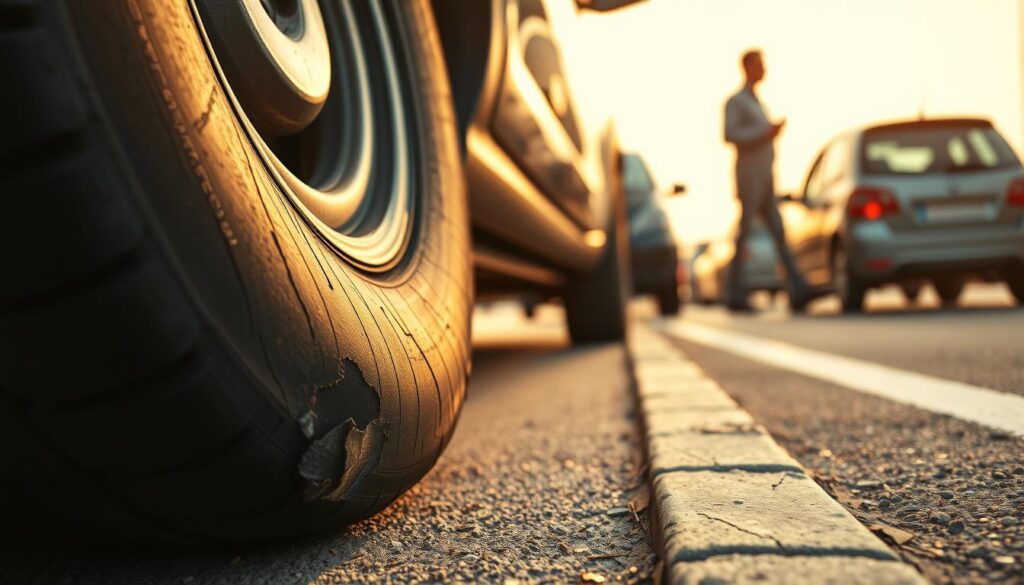
Quick detection of pressure loss limits repair costs and roadside hazards. A true flat tire sits at about 0–5 PSI, while normal pressure is 30–35 PSI. Low pressure harms a wheel fast.
Identifying Signs of Tire Failure
Listen for thumps or feel strong vibration. Those signals often point to a puncture or rapid air loss. A drop below 10 PSI is especially dangerous.
Potential Damage to Vehicle Components
Driving on a depleted tire lets the rim grind against the road. That friction causes permanent wheel and suspension damage.
| PSI Range | Likely Cause | Immediate Risk |
|---|---|---|
| 0–5 PSI | Complete loss of air | Rim damage, blowout, high repair cost |
| 6–10 PSI | Severe underinflation | Brake overheating, rubber failure |
| 11–25 PSI | Slow leak or puncture | Vibration, uneven wear, hazard on road |
| 30–35 PSI | Normal operating | Optimal handling and minimal damage risk |
Temperature shifts also affect pressure: a 10° change alters tire pressure about 2% due to air expansion. Track pressure regularly and document any issues before shipment. For professional handling options, consider transporte de carros.
Can You Transport Car With Flat Tires Safely
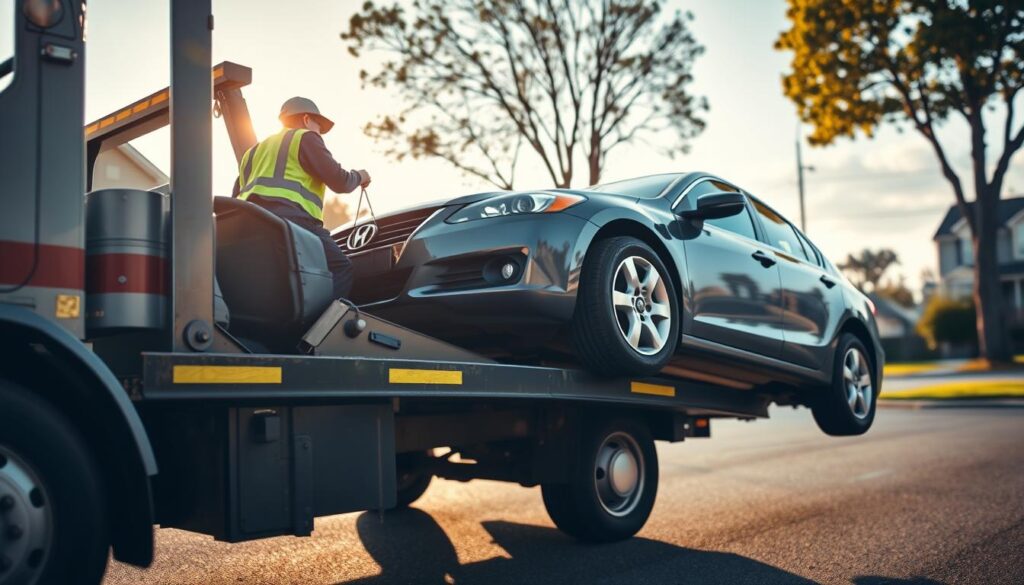
If a stopped vehicle poses an immediate roadway danger, limited movement on a deflated wheel may be needed to reach a safe spot. Safety is the priority. Avoid long drives or high speed.
This guide advises against driving a vehicle that has a severe puncture unless staying put creates a larger hazard, such as blocking a blind curve. Keep speed to walking pace and avoid sharp turns to limit rim damage and further mechanical harm.
When possible, install a spare tire in a safe location. If a spare is unavailable or the wheel is ruined, call professional roadside assistance. Reputable shippers often have equipment to load a vehicle even when a tire is completely deflated.
Driving flat to a repair shop is rarely worth the repair cost or risk of wheel damage. For secure pickup and handling, consider arranging service through a trusted provider or learn more about open alternatives at open car transport. For immediate help call (307) 288-5972 or email info@bestcarshippinginc.com.
Essential Preparation for Shipping Vehicles
Proper preparation begins with crisp photos and basic checks of pressure and wheel condition. A short record protects owners and carriers against later claims. Follow a simple routine the day before pickup.
Documenting Tire Condition
Take clear photos of each tire and the surrounding wheel area. Note any cuts, punctures, or uneven wear.
High-resolution images are the best proof for pre-shipment records. Log the spare and any existing defects in writing.
Managing Tire Pressure Fluctuations
Measure tire pressure before loading. A 35 psi tire left in sun may rise to about 39–41 psi by day’s end.
Account for temperature changes: a 10° shift alters PSI by roughly 2%. Adjust reading times and record the air values.
Choosing a Reputable Shipping Company
Pick a company that follows international codes and uses torque-based tie-downs monitored for alignment and weight distribution.
Good handling prevents damage. For professional pickup options, see the auto transport Upton page or contact (307) 288-5972.
- Document condition with photos to support claims.
- Plan for pressure swings on long distances.
- Confirm tie-down methods and alignment checks before loading.
Professional Handling and Loading Procedures
Loading procedures determine whether a vehicle arrives intact or needs repairs. Poor ramps and rough handling often cause sidewall tears and undue strain on suspension. Cheap providers use substandard equipment that increases risk.
Professional teams follow strict steps to limit harm. They use protective mats to spread weight and prevent flat spots during long stops. Proper tie-downs preserve alignment and keep the wheel stable.
“A secure loading process protects brakes, suspension, and wheel alignment throughout transit.”
- Correct ramps prevent rubber tearing and sidewall punctures.
- Tire mats cushion and distribute weight to avoid flat spots.
- Skilled crews secure each tire to maintain balance and pressure integrity.
- If roadside assistance is needed during loading, trained staff move the vehicle without added damage.
| Issue | Poor Practice | Professional Standard |
|---|---|---|
| Ramp Quality | Thin, sharp-edged ramps | Graded ramps with smooth transitions |
| Tire Protection | No padding; direct contact | Protective mats and wheel chocks |
| Weight Management | Uneven loading | Even weight distribution and monitored tie-downs |
Verify the chosen company uses mats and checks alignment before departure. For further guidance and common procedures, consult the shipping FAQs or contact our team at (307) 288-5972 or info@bestcarshippinginc.com.
Protecting Your Tires During Long Distance Transit
Long hauls expose rubber to heat and sunlight, so proactive shielding preserves integrity. Shipping over many miles increases risk from UV and extreme temperatures. High-quality covers offer a cooling barrier that slows rubber breakdown.
Using Tire Covers and Protective Mats
Tire covers cut UV exposure and reduce surface heating during the day. They help keep tire pressure stable and delay cracking over long distances.
Protective mats also play a vital role. Mats spread the vehicle’s weight to limit flat spots when parked for extended time. This reduces long-term wear and preserves tread shape.
Run-flat technology has limits. These tires typically carry limited weight for about 50 miles at speeds under 50 mph. Shippers should note this restriction before loading vehicles that rely on run-flats.
- Inspect and cover the spare if it travels with the vehicle.
- Request a tire protection package that pairs covers and mats for full coverage.
- Confirm the carrier understands run-flat limitations and weight handling procedures.
For reliable handling and added protection, contact Best Car Shipping Inc. at (307) 288-5972 or info@bestcarshippinginc.com.
Conclusion
Final checks and clear records make the difference between a smooth delivery and costly repair bills. Protecting tires is a critical step. Document the condition before and after pickup to support any insurance claim and to limit risk of post-shipment damage to the vehicle and wheel.
If a flat tire arises during pickup, prioritize safety and call roadside assistance rather than attempting driving flat to a shop. Proper tire pressure and careful handling reduce the chance of long‑distance problems and the need for repair.
Choose a reputable company for reliable handling. For scheduling or questions, contact Best Car Shipping Inc. at (307) 288-5972 or info@bestcarshippinginc.com. Learn about our Plano car transport expert services.