
Feldman CDJR of Woodhaven offers clear, professional help for owners facing an engine overheating issue that appears during stationary periods. This guide explains why a vehicle may heat up while stopped and how an expert mechanic approaches diagnosis.
Quick action prevents costly engine damage. Our team inspects cooling systems, sensors, and fans to find the root cause. Customers get a concise plan and reliable service options.
The staff uses targeted tests to separate a cooling system failure from a simple sensor fault. A trained mechanic can report findings fast and recommend repair steps that restore safe operation and extend engine life.
Key Takeaways
- Seek an expert mechanic promptly to avoid permanent engine damage.
- Feldman CDJR of Woodhaven specializes in diagnosing overheating idle problems.
- Technicians test cooling components and sensors to pinpoint failures.
- Early service preserves vehicle reliability and reduces repair cost.
- Clear guidance helps owners understand causes and repair options.
Understanding Why Your Car Overheats Only When Idling Not Driving
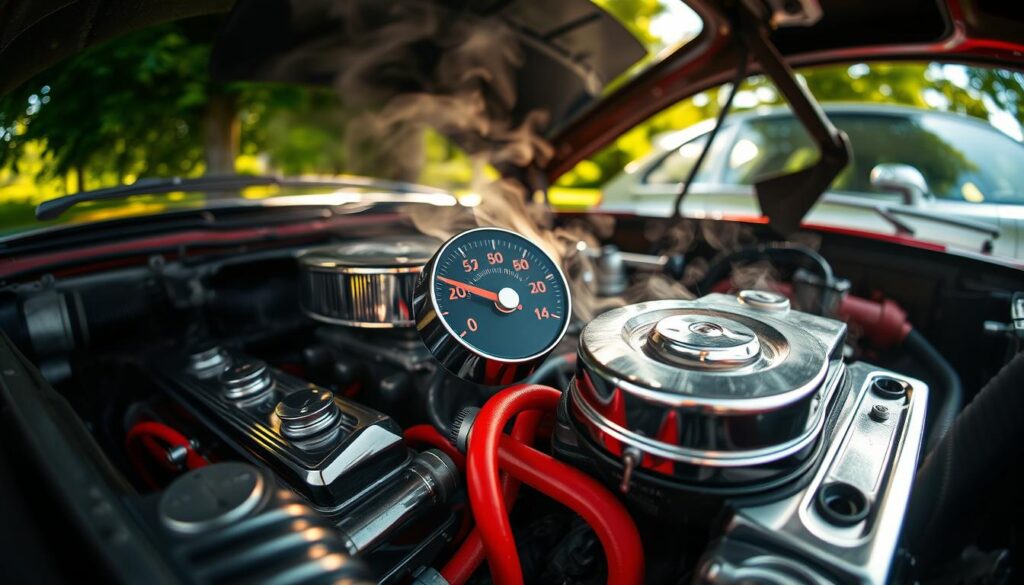
The engine will heat faster at low speeds because airflow through the radiator drops. This is most noticeable after 10–15 minutes stuck in traffic or on hot days. Short bursts of forward motion restore airflow and lower the temperature gauge.
Key reasons include a failing water pump, clogged radiator passages, or a weak cooling fan. Low coolant and a stuck thermostat make the problem worse. Turning on the air conditioning adds extra heat to the radiator and can push a marginal system past safe limits.
A professional mechanic should inspect the water pump, thermostat, and radiator if the temperature gauge climbs during stationary periods. Quick service prevents long-term damage and keeps the vehicle reliable.
- Traffic and heat reduce airflow and reveal cooling weaknesses.
- Mechanical checks target pump, thermostat, and fan operation.
- Prompt repairs prevent serious engine overheating and damage.
| Cause | Common Symptom | What to Check | Urgency |
|---|---|---|---|
| Water pump failure | Rising temperature at idle | Leak, noise, coolant flow | High |
| Clogged radiator | Poor heat dissipation | Coolant level, flow test | Medium |
| Fan or sensor fault | Fan not running at stop | Fan operation, relays, sensor | High |
The Role of the Cooling Fan in Idle Performance
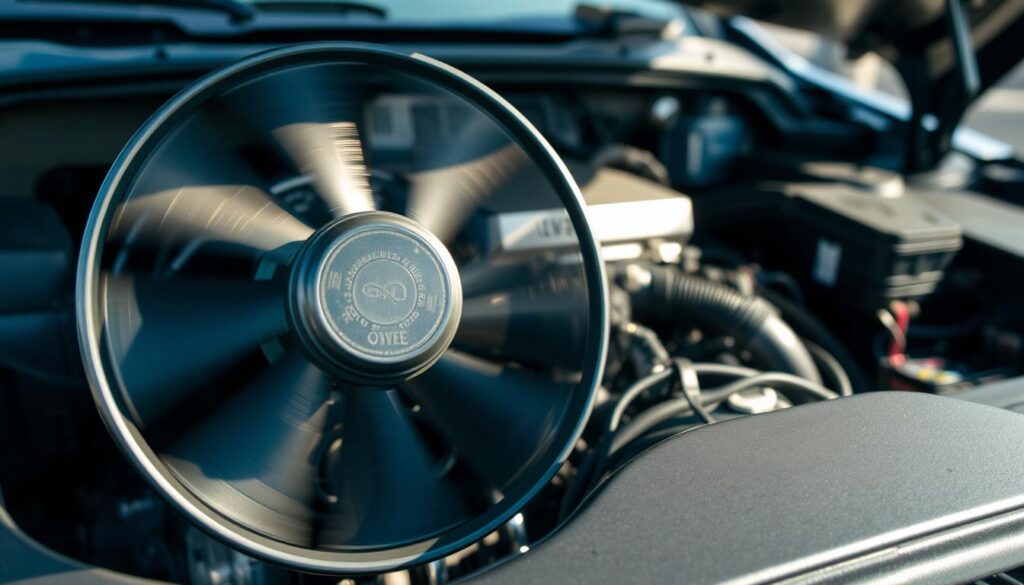
A faulty fan assembly can remove the only effective source of airflow at stop-and-go periods, letting the engine temperature rise quickly. Proper fan function is critical to move air through the radiator and keep coolant temperatures safe.
Fan Motor Failures
A 1993 Corolla with 90k miles may show a failing fan motor. When the fans fail, airflow through the radiator drops. The result is rising temp readings while stopped.
An expert mechanic inspects the fan motor, wiring, and connector for wear or corrosion. Replacing worn motors restores proper airflow and prevents long-term damage to the engine.
Sensor and Relay Issues
Relays and temp sensors tell the fans when to engage. A faulty relay or sensor can keep the cooling fan from activating at the right time. Technicians test relay continuity and sensor output to find the root cause.
- Check fans and motor operation under load.
- Verify relay signals and wiring integrity.
- Confirm sensor readings match actual temperature.
| Component | Symptom | Mechanic Action |
|---|---|---|
| Fan motor | Does not spin at stop | Test and replace motor |
| Relay | No power to fans | Check relay, replace if faulty |
| Temp sensor | Incorrect temp signal | Scan and replace sensor |
Checking Coolant Levels and System Integrity
Start every inspection by confirming coolant quantity and system pressure at ambient temperature. A simple level check often reveals loss that causes rising temp after 10–15 minutes of stop-and-go traffic.
The Importance of Proper System Bleeding
Proper bleeding removes trapped air that can block coolant flow and reduce heat transfer through the radiator. Technicians bleed the system until coolant flows steadily and temp readings stabilize.
A faulty radiator cap prevents the cooling system from holding pressure. If pressure drops, coolant can boil at lower temperatures and lead to overheating. The mechanic inspects the cap and replaces it if spring tension or seal integrity fails.
- Check coolant level at the overflow and in the radiator when cold.
- Inspect hoses and joints for visible leaks or wet spots.
- Verify fans run and that air moves through the core at a stop.
- Never remove the radiator cap while the engine is hot; escape of steam and water can cause severe burns.
| Check Point | What to Inspect | Action |
|---|---|---|
| Coolant level | Reservoir mark, radiator fill | Top up with manufacturer-approved coolant |
| Radiator cap | Seal, spring tension, pressure rating | Replace cap if pressure leaks or seal is brittle |
| System bleed | Trapped air pockets, thermostat loop | Bleed until steady coolant flow and stable temp |
| Leaks | Hoses, clamps, radiator seams | Repair or replace parts; pressure test if needed |
Thermostat and Water Pump Functionality
When thermostat operation falters or pump pressure drops, coolant flow through the radiator can fall short of needs.
A closed or sticky thermostat can block coolant and keep the engine hot even with a working pump. A technician tests thermostat movement and response at operating temperature.
The water pump must push coolant with enough pressure to reach the top of the system. Physics shows 1 PSI lifts water about 28 inches, and reduced pump pressure cuts circulation and cooling efficiency.
- Technicians verify pump output and inspect for leaks or worn bearings.
- They test coolant flow through the radiator and check for blockages.
- If the thermostat stays closed, the mechanic treats it as an urgent service issue.
| Component | Symptom | Action |
|---|---|---|
| Thermostat | Restricted flow, high temperature | Test and replace if slow to open |
| Water pump | Low pressure, noisy bearings | Measure output; replace if weak |
| Cooling system | Air pockets or blockages | Bleed system and flush radiator |
Proper maintenance of the thermostat and pump keeps the cooling system reliable and protects the engine during long idle periods.
Impact of Air Conditioning on Engine Temperature
A running air conditioning system places the condenser ahead of the radiator and can cut available airflow to the core.
The A/C also adds heat while the engine is running. That extra load forces the cooling system to work harder to hold a steady temperature.
If the vehicle gets hot at a stop with the A/C on, the fans may not be pulling enough air through the radiator and condenser. Proper fan operation is essential to make up for reduced air flow.
- The condenser can restrict air passing to the radiator core.
- Engine running with the A/C engaged raises under-hood heat.
- Weak fans or faulty relays reduce cooling effectiveness under load.
Technicians evaluate condenser clearance, fan output, and fan control circuits. Correcting fan performance and ensuring clear airflow through the air radiator interface restores reliable engine temperature control.
Diagnostic Procedures for Identifying Leaks
Technicians begin leak diagnosis with a controlled pressure test to reveal hidden escapes of coolant.
Pressure Testing the System
Pressure testing forces the cooling circuit to its rated psi so any weak point becomes visible.
A trained mechanic will pressurize the radiator and observe the entire loop. This uncovers slow leaks at hoses, clamps, and the radiator core.
If the radiator cap fails to hold pressure, coolant will escape as steam and the engine temperature can rise rapidly. Technicians also spend several minutes inspecting every hose and connection to confirm proper level and sealing.
Identifying Hydrocarbons
Using a 5-gas analyzer, the shop can detect hydrocarbons in the coolant. This is a decisive point for diagnosing a blown head gasket.
Finding hydrocarbons in the coolant signals combustion gases entering the system. That condition demands prompt repair to protect the engine and restore full pressure in the cooling system.
- A mechanic performs a pressure test to find hidden leaks.
- A 5-gas check identifies head gasket failure by detecting hydrocarbons.
- Early detection of a leak prevents further engine damage and keeps fans, radiator, and coolant working as designed.
| Procedure | What It Reveals | Action |
|---|---|---|
| Pressure test | Hose, clamp, core leaks | Repair or replace leaking parts |
| Radiator cap check | Pressure loss, steam leaks | Replace cap; retest system |
| 5-gas analyzer | Hydrocarbons in coolant | Inspect head gasket; perform repair |
Safety Precautions When Inspecting a Hot Engine
Allow ample time for the engine bay to return to ambient temperature before inspecting the radiator, hoses, or any cooling component.
Never open the radiator cap while the engine is hot. Pressurized coolant can spray and cause severe burns. Wear protective gloves and eyewear when working near high-temperature parts.
If a leak is suspected, use a flashlight to inspect from a safe distance. Do not reach into tight, hot spaces. Keep hands and arms clear of belts, fans, and pulleys.
“Safety protects both the vehicle and the person inspecting it; when in doubt, defer to a trained technician.”
Call for professional help if the situation seems uncertain or hazardous. Professional service avoids injury and prevents further damage. For reliable assistance, consider arranging transport or expert inspection via a trusted provider.
| Risk | Precaution | Action |
|---|---|---|
| Hot coolant spray | Do not open cap | Wait to cool; wear gloves |
| Burns from components | Use PPE | Wear gloves and eyewear |
| Hidden leaks | Inspect with light | Use flashlight; avoid hands |
| Uncertain diagnosis | Seek expert service | Request professional assistance |
Conclusion
Summary: Resolving rising engine temperature during stops starts with a methodical inspection of coolant flow, fan operation, and the thermostat. Check the radiator and the rest of the cooling system for proper pressure and steady flow.
Act quickly. Regular service by an expert mechanic prevents serious engine damage. Small leaks or a failed cap can drop pressure and lead to rapid overheating. Verify coolant level and pump output to restore normal temperature readings.
If the gauge climbs, pull over and let the engine cool before further work. For professional assistance and reliable service, contact the team or learn about our professional auto transport services. Call (307) 288-5972 or email info@bestcarshippinginc.com for guidance.