
Have you ever wondered how a local move of a valuable vehicle can stay simple, secure, and on schedule?
BestCarShippingInc focuses on dependable car shipping solutions across Westchester County and beyond. Licensed, insured carriers and vetted drivers handle each pickup with a clear Bill of Lading inspection. Customers receive an instant quote, secure booking, tracked transit updates, and timely delivery.
The process stays straightforward. Teams offer open and enclosed trailer options to match protection needs and budgets. Door-to-door service applies where access is safe; tighter streets use nearby safe meet points to keep timelines intact.
Transit windows vary by route and season. Typical runs from New York to Florida take about 3–6 days, while cross-country lanes to California run about 6–9 days. Transparent pricing and documented pre- and post-transport condition reports reduce uncertainty.
Key Takeaways
- Instant quote and secure online booking speed planning.
- Licensed, insured carriers with documented inspections.
- Open and enclosed trailers match protection and cost needs.
- Door-to-door when accessible; safe meet points when not.
- Typical transit windows: 3–6 days to Florida, 6–9 to California.
- Contact for a fast quote and expert guidance: info@bestcarshippinginc.com or (307) 288-5972.
Trusted Car Shipping in Tarrytown, NY: Fast Quotes and Safe Delivery
Swift online quotes empower New York owners to schedule pickup and delivery fast. An instant estimate starts booking, then a licensed carrier handles the vehicle pickup with a Bill of Lading inspection.
Licensed, insured teams provide cargo and liability coverage. Drivers document condition at pickup and again at final delivery to protect customers and reduce disputes.
Door-to-door service applies where truck access is safe and legal. If not, the company coordinates nearby meet points like large retail lots near I-87/I-287 to keep handoffs secure and legal.
- Proactive updates: dispatch confirmations, ETA notices, and driver contact before arrival.
- Transparent timelines: realistic windows vary by route, season, and traffic; common New York lanes show predictable ranges.
- Payment clarity: methods and timing are stated up front with no-surprise billing aligned to the quoted rate.
Start with a no-obligation quote and have locations, dates, and vehicle details ready. For a fast New York car shipping estimate visit New York car shipping or contact info@bestcarshippinginc.com.
Why Choose Our Auto Transport Service in Tarrytown
Every shipment begins with a thorough carrier check and ends with documented proof of condition. This approach keeps the process reliable and customer-focused.
Licensed carriers and vetted drivers
Authority verification, active insurance, and safety records are confirmed before any booking. Drivers undergo background and performance reviews. A detailed Bill of Lading and inspection photos record condition at pickup and delivery.
Technology-enabled tracking
Live tracking and proactive alerts reduce uncertainty. Customers receive ETA updates, driver contact info, and contingency notices if weather or traffic affects timing.
Customer-first support and transparent pricing
Quotes are clear with no hidden fees. The company offers flexible trailer options, enclosure upgrades for high-value vehicles, and responsive dispatch from booking to final inspection.
- Predictable ETAs with contingency communication
- Damage prevention during loading and securement
- Easy next step: request a quote with vehicle details and dates
Car Shipping and Auto Transport Tarrytown
Drivers use local route knowledge to avoid restrictions and keep pickups on schedule across Westchester communities.
Serving Tarrytown, Sleepy Hollow, and greater Westchester County
Local coverage and efficient routing
Service spans neighborhoods with quick access to I-87, I-287, and I-95. This routing reduces delays and keeps delivery windows predictable.
Door-to-door rules and meet points
Door-to-door pickup and delivery apply where truck access is safe and legal. For tight streets or municipal limits, the team arranges nearby meet points at large lots or highway exits.
“Local knowledge prevents surprises—drivers know which roads to avoid and where to stage for a smooth handoff.”
| Scenario | Typical Meet Location | Benefit |
|---|---|---|
| Low-clearance streets | Highway exit lot (I-287) | Safe truck access |
| HOA or narrow lanes | Retail park near I-87 | Compliance with rules |
| Weight-restricted routes | State rest area off I-95 | Reduced reroutes |
- Pickup coordination: confirm access, preferred time window, and driver contact.
- Communication: real-time updates while the truck is en route and at arrival.
- Documentation: condition inspections at pickup and delivery protect customers.
Please include access notes—gate codes, construction, or narrow lanes—when requesting an auto transport New York quote.
Open vs. Enclosed Transport: Pick the Right Trailer Type
The trailer you pick drives the balance between budget and protection during transit.
Open transport is the most common option. It offers cost efficiency, high availability, and quick dispatch on popular New York routes. Standard vehicles travel this way safely. Exposure to weather and road debris is the main trade-off, but vetted carriers use secure tie-downs and inspections to reduce risk.
Enclosed transport adds a layer of protection for luxury, classic, or low-clearance vehicles. Benefits include weather and debris shielding, greater privacy, and hydraulic lift gates for delicate undercarriages. Expect rates roughly 40–60% higher and lower slot availability during winter and event seasons.
- Select open for everyday drivers to save on cost and speed up scheduling.
- Choose enclosed for high-value, restored, or show vehicles when protection matters more than price.
- Both trailer types follow the same inspection and insurance procedures for peace of mind.
“For valuable vehicles, enclosed options deliver added protection; for daily use, open trailers are efficient and reliable.”
| Feature | Open Transport | Enclosed Transport |
|---|---|---|
| Cost | Lower | Higher (≈40–60% more) |
| Availability | High on NY routes | Limited, seasonal demand |
| Protection | Standard (exposed) | High (weather/debris shield) |
Include trailer preference when requesting a quote to get accurate pricing and carrier options. For help email info@bestcarshippinginc.com or call (307) 288-5972.
How the Auto Transport Process Works
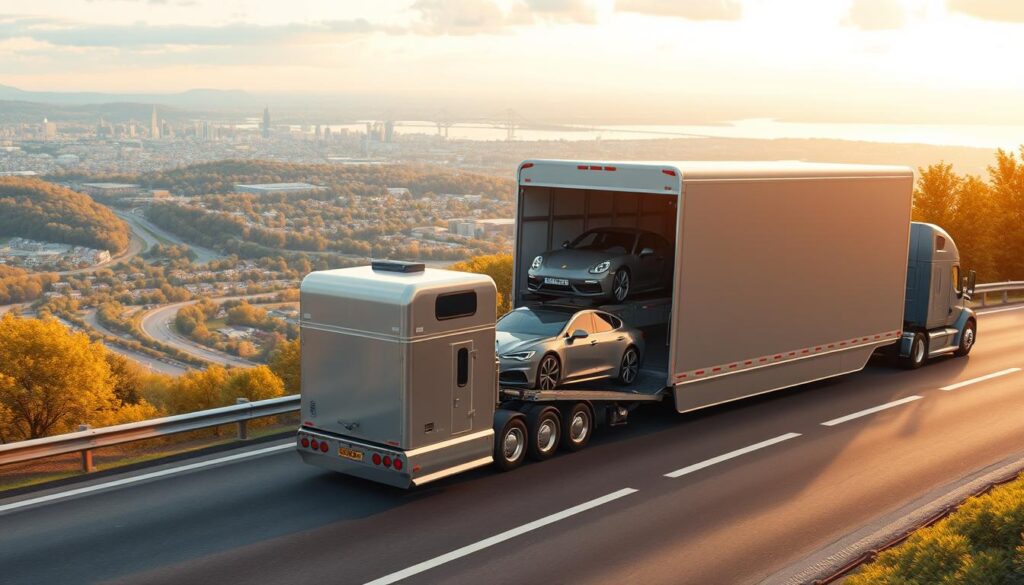
A reliable workflow turns an often complex move into a predictable, documented process. The three core steps—quote and booking, pickup with inspection, then transit and delivery—keep customers informed from start to finish.
Step one: Quote and booking
Provide pickup and delivery addresses, year/make/model, operability, preferred trailer type, and dates for a precise quote. A confirmed booking secures a dispatch window. Flexible timing can lower rates and ease scheduling.
Step two: Pickup and inspection
Drivers arrive with ID and carrier paperwork. They complete a Bill of Lading inspection and photos before loading. Customers should leave a quarter tank of fuel, remove personal items, and disable alarms or toll tags.
Step three: Transit, updates, and delivery
Licensed carriers provide liability and cargo insurance. Shippers receive ETA updates and driver contact during transit. On delivery, a final inspection and paperwork close the shipment. Keep all photos and documents for records or claims.
“Proactive communication preserves schedule visibility and gives customers peace of mind.”
Ready to start? Request a tailored quote at info@bestcarshippinginc.com or call (307) 288-5972 for expert advisory support.
Coverage Area: Local, Statewide, and Across the Country
Coverage ranges from local Westchester pickups to scheduled deliveries that span all 50 states.
Local service covers White Plains, Sleepy Hollow, nearby neighborhoods, and broader Westchester pickup points. Teams stage at safe meet sites when street access is limited.
Statewide reach includes all New York origins and destinations. Customers can request quotes for single vehicles or for multi‑vehicle and fleet moves for business relocations.
Popular lanes and transit windows
Frequently booked routes include New York to Florida (about 3–6 days), coast‑to‑coast NY to California (about 6–9 days), and NY to Texas Sun Belt moves.
Interstate corridors such as I‑95 to the Southeast and I‑80/I‑40 westward support faster dispatch and smoother routing. Weather, seasonal demand, and access rules can compress or extend these windows.
- Door‑to‑door service applies where access allows; restricted areas use nearby meet points and documented handoffs.
- Businesses may request multi‑unit transport for relocations or dealer shipments; carriers provide tailored quotes.
- For less common routes or rural addresses, contact dispatch early to set realistic expectations and timing.
For precise service locations and to start a quote, visit service locations or email info@bestcarshippinginc.com for planning guidance and timing nuances during peak periods.
Cost and Timeframes: What Affects Your Quote
Pricing depends on miles traveled, pickup access, and the route a carrier must run. These core items set baseline cost and expected transit time for any request.
Distance, pickup/delivery locations, and route traffic
Total miles are the primary pricing input. Longer routes raise base rates and fuel surcharges.
Dense urban spots, restricted streets, or remote rural sites add handling fees and extra time. Carriers may stage at safe meet points when truck access is limited.
Seasonal demand and scheduling windows
Peak months—summer moves and snowbird periods—tighten carrier availability and lift rates. Off-peak bookings typically reduce cost and shorten lead times.
Flexible pickup and delivery windows lower cost by letting dispatch match lanes efficiently.
Vehicle type, operability, and trailer selection
Vehicle size, operability, and modifications determine required equipment. Inoperable or modified vehicles need special gear and raise the quote.
Open trailers remain more affordable and widely available. Enclosed options cost more and book faster during high demand.
- Fuel, weather, and construction can extend transit time.
- Provide full details early to lock dates and secure accurate quotes.
- Request a personalized consultation to balance protection, time, and cost.
| Driver | Primary Impact | Tip |
|---|---|---|
| Distance (miles) | Base price | Provide exact origin/destination |
| Access | Added fees/time | Note gate codes or tight streets |
| Trailer type | Rate & availability | Choose open or enclosed early |
For a clear quote, share pickup and delivery addresses, vehicle details, and preferred trailer type. Contact info@bestcarshippinginc.com or call (307) 288-5972 for a tailored estimate.
Estimated Transit Windows for Popular New York Routes
Average transit windows reflect carrier legal drive/rest limits and common lane speeds.
New York to Florida typically completes in about 3–6 days. This estimate assumes main‑corridor routing along I‑95, normal traffic, and standard loading times. Mandatory driver rest breaks and scheduled stops influence total days.
New York to California commonly takes about 6–9 days. Cross‑country distance, weather across mountain passes, and varied speed limits add time. Drive time alone does not include loading, unloading, or staging.
“Plan a buffer when coordinating delivery with move‑in dates or flights; live updates help adjust expectations.”
Rural pickups or destinations off main corridors often add time due to detours and lower lane frequency. Severe weather systems along I‑95 or through the Midwest can shift ETAs seasonally.
- Loading & unloading: separate from drive time; count them in total delivery planning.
- Enclosed availability: limited slots can slightly extend lead time.
- Flexible windows: increase chances of faster carrier assignment and handoff.
- High‑demand months: book earlier to secure preferred dates.
| Route | Typical Transit Days | Primary Factors |
|---|---|---|
| New York → Florida | 3–6 days | I‑95 traffic, rest breaks, loading time |
| New York → California | 6–9 days | Distance, weather, mountain passes |
| Rural/Off‑corridor | +1–3 days | Detours, low carrier frequency |
Final note: These windows are estimates. Exact delivery time is set at dispatch and updated during transit. For planning help email info@bestcarshippinginc.com or call (307) 288-5972.
Insurance, Inspection, and Peace of Mind
Transparent coverage limits and a photographed inspection process create reliable proof of condition.
Industry-standard carrier liability and cargo insurance protect the shipment while on the road. Carriers must show active policies before dispatch. Customers receive a summary of coverage, limits, and deductible details to review.
Cargo and liability coverage standards
What is typically covered: basic loss from carrier fault, physical damage during handling, and limited third-party liability. Personal items are excluded. Customers should confirm exact limits with the carrier.
Pre- and post-transport inspections
Drivers complete a Bill of Lading at pickup with condition notes and photos. The same process repeats at delivery. Signatures at both ends finalize the report.
- Be present or have an authorized person review and sign documents.
- Take photos at pickup and delivery for added evidence.
- Report any discrepancy immediately to dispatch and the insurer.
| Item | Recommended Action | Reason |
|---|---|---|
| Policy verification | Request insurer name and limits | Confirms active coverage |
| Bill of Lading | Review, sign, keep copy | Official condition record |
| Personal items | Remove before pickup | Not covered by carrier insurance |
“Complete documentation and clear coverage reduce claims friction and provide true peace of mind.”
Keep all paperwork and photo files until the claim window closes. Clear communication with the carrier and dispatch prevents misunderstandings. Enclosed options add protection for high-value vehicles. For questions email info@bestcarshippinginc.com or call (307) 288-5972.
Preparing Your Vehicle for Pickup
A few focused steps before pickup make inspection quick and clear.
Proper preparation reduces delays and protects owners during a shipment. Follow these simple actions to streamline the inspection and final delivery.
Clean, remove personal items, and fuel level
Wash the exterior and tidy the interior so scratches and dings are visible. Remove all personal items and valuables; carriers do not cover these contents.
Leave roughly a quarter tank of fuel. This lowers weight while allowing loading and rolling during pickup.
Disable toll tags, alarms, and secure accessories
Deactivate toll passes and vehicle alarms to prevent unexpected charges or stops. Secure or remove loose accessories like roof racks, spoilers, or bike mounts.
Fold mirrors where possible and stow detachable electronics and child seats before the driver arrives.
Photograph, document condition, and confirm access
Take clear photos of all sides, close-ups of existing blemishes, and the interior dash before pickup. Keep images for the inspection and any future claim.
Provide a working spare key and confirm the vehicle can roll, brake, and steer if operable. Tell dispatch about gate codes or tight street access ahead of time.
- Sign and retain the Bill of Lading after reviewing the inspection notes at pickup.
- Keep photos and inspection records until the shipment closes.

“Clear documentation at pickup prevents avoidable disputes and speeds delivery.”
For questions about pre-pickup requirements or to confirm details, contact info@bestcarshippinginc.com or call (307) 288-5972.
Pickup and Delivery in Tarrytown: Access and Logistics
Confirming safe access at the pickup and delivery addresses prevents last‑minute rerouting. Drivers assess street width, overhead clearance, and on‑street parking before dispatch. This keeps the scheduled window intact and reduces fees.
When direct door service is not feasible, the team coordinates nearby meet locations. Common spots include large retail lots near I-87 and staging areas off I-287 for easy truck ingress and egress.
Coordination is simple: the assigned driver sends confirmations by call or text, shares an arrival window, and provides meet‑point directions. Customers should plan daylight pickups when possible for clearer inspections.
- Assess neighborhood access: check curb width, parked vehicle density, and low bridges.
- Notify building management or HOA in advance for gate access or parking exceptions.
- Have a contingency plan for closures or construction; carriers reroute or propose nearby safe lots.
Safety matters: flat, open areas are preferred for loading and unloading. Avoid busy lanes and allow time for the final inspection. Include accessibility notes in the initial quote to streamline planning. The team will suggest convenient alternatives when curbside access is constrained.
“Drivers confirm arrival windows and meet locations in advance to ensure a smooth handoff.”
| Issue | Recommended Action | Benefit |
|---|---|---|
| Narrow streets | Use retail or highway exit lot | Safe truck maneuvering |
| Gated property | Provide codes or manager contact | Saves time at pickup/delivery |
| Construction detours | Agree alternate meet point | Avoids delays and extra fees |
Specialized Services for Every Vehicle Type
Specialty shipments need tailored equipment and an experienced crew to protect value and finish. This section explains how the company handles luxury, exotic, and other unique units with focused care.
Luxury and exotic protection
Enclosed transport offers full weather and debris shielding for high-value vehicles. Options include soft-strap tie-downs, lift gates for low-clearance chassis, and low-angle ramps to avoid undercarriage contact.
Booking tip: enclosed slots fill fast during event and winter seasons; reserve early to secure the right equipment.
Motorcycles, EVs, and specialty handling
Motorcycles move with wheel chocks and soft ties. Carriers use covered trailers or crates when extra protection is requested.
For battery-electric models, disclose battery state of charge. Drivers follow safe loading protocols to avoid system errors and maintain range for on-truck moves.
Inoperable, oversized, and modified units
Inoperable units require winches, ramps, or tilt-bed trailers. Customers must declare operability at booking so dispatch assigns the proper gear and driver.
Oversized or heavily modified units may need specialized trailers or permits. Early consultation avoids last-minute reroutes and added fees.
| Vehicle Type | Typical Equipment | Carrier Notes |
|---|---|---|
| Luxury / Exotic | Enclosed trailer, soft straps, lift gate | Photos at pickup; limited slots—book early |
| Motorcycle / ATV | Wheel chocks, soft ties, covered options | Secured to prevent tipping; crate if requested |
| Inoperable / Oversized | Winch, tilt-bed, specialized trailer, permits | Full disclosure required for accurate dispatch |
“Experienced drivers with the right gear reduce risk and ensure smooth handoffs.”
Documentation and inspection follow the same standards for every shipment: pre/post photos and a signed Bill of Lading. This consistency supports claims and protects owners.
For a consultation that matches a vehicle type to the right equipment, contact info@bestcarshippinginc.com or call (307) 288-5972.
Snowbird, Military, and Relocation-Friendly Options
Seasonal moves for owners heading south require a plan that pairs flexibility with early booking.
Snowbirds should target off-peak pickup and delivery windows to save money and secure slots on popular Florida lanes. Flexible dates let dispatch match a shipment to existing routes, often lowering rates and reducing hold times.
For active-duty moves, the company provides prioritized communication and full documentation. Drivers supply inspection photos, a Bill of Lading, and real-time status updates so military families can meet PCS timelines with confidence.
Flexible dates and off-peak savings
Booking outside peak winter or summer weeks improves availability. Allowing a 2–4 day window often cuts costs and assigns a carrier faster.
Dependable timelines for military and corporate relocations
Corporate and multi-vehicle moves receive dedicated coordination. The company aligns pickup and delivery to move-in schedules and housing logistics.
“Early quotes and clear access instructions make complex moves predictable and stress-free.”
- Provide second-home gate codes or lot instructions at booking to avoid delays.
- Request priority updates for active-duty families to track status en route.
- Ask about multi-address coordination when shipping vehicles across state lines.
| Move Type | Best Timing | Benefit |
|---|---|---|
| Snowbird (NY → FL) | Book 30–60 days early; consider off-peak | Lower rates; better carrier assignment |
| Military PCS | Lock dates as soon as orders release | Priority communication; documented timelines |
| Corporate / Fleet | Schedule with firm delivery windows | Coordinated multi-vehicle handoffs |
Plan early to secure preferred dates, especially for cross-country moves. For a tailored quote or to discuss specific timing, contact info@bestcarshippinginc.com or call (307) 288-5972.
Personal Items in the Vehicle: Policies and Best Practices
An empty cabin makes inspections faster and reduces the chance of disputed damage claims.
Carriers generally do not accept responsibility for personal items left in a vehicle. Insurance policies often exclude household goods for liability reasons. Removing belongings lowers risk and keeps the shipment compliant with carrier rules.
Personal items can add weight, obstruct visibility during the Bill of Lading inspection, and complicate claims. Excess weight may lead to extra fees or delayed pickup while dispatch arranges suitable equipment.
- Safety: loose items can shift and cause damage during loading or transit.
- Insurance: carriers focus coverage on the vehicle; belongings are typically excluded.
- Security: empty, locked cabins lower theft risk while the shipment is en route.
Keep only vehicle-related accessories that are permanently attached or properly secured. Remove toll tags, portable electronics, and personal documents. Document a clean interior with photos at pickup for condition records.
“Carriers move the vehicle, not household goods—arrange separate services for bulky or valuable items.”
Ask dispatch about limited allowances and follow the carrier’s policy. Door-to-door convenience applies to the vehicle transport only; plan separate logistics for boxed or oversized household items. For questions, contact info@bestcarshippinginc.com or call (307) 288-5972.
New York Requirements to Know Before and After Shipping
New residents must act quickly to align vehicle paperwork with New York state deadlines. Register a vehicle within 30 days of establishing residency to avoid fines or holds on registrations and licenses.
Registration and inspection timing
Annual safety inspections are required across the state. Emissions testing applies in certain locations, including Westchester County. Schedule an inspection soon after delivery to stay compliant.
Insurance and documentation
New York requires state-issued liability insurance. Lapses can lead to registration suspension or license penalties. Carrier cargo and liability insurance covers the shipment during transit; it does not replace the owner’s on-road policy.
- Bring proof of ownership, valid ID, and insurance to the DMV.
- Verify county-specific emissions requirements before arrival.
- Retain shipping documents and inspection photos for DMV requests.
“Plan delivery timing ahead of DMV deadlines to avoid rushed inspections and fines.”
For help aligning delivery time with registration or inspection windows, contact the company at info@bestcarshippinginc.com or call (307) 288-5972.
Get Your Tarrytown Auto Transport Quote Today
Begin with a focused quote to match dates, equipment, and special handling needs. A clear estimate speeds carrier selection and sets expectations for pickup and delivery.
What to have ready:
- Exact pickup and delivery locations and preferred dates.
- Vehicle year, make, model, and operability status.
- Trailer preference (open or enclosed) and any specialty needs.
Quotes are based on origin/destination, dates, trailer selection, vehicle type, and operability. Flexible pickup and delivery windows often improve rates and availability during peak New York seasons.
Enclosed requests or specialty units may require extra lead time. Door‑to‑door service is provided when access allows. If access is restricted, the company arranges a nearby meet point and documents handoff procedures.
How pricing, payment, and timing work
Accepted payment methods include standard online options and prepayment terms; charges are applied per the confirmed quote and any agreed add‑ons. A specialist confirms payment timing before dispatch.
Align transport timing with move dates and required inspections to avoid rushed DMV or delivery windows. Customers are encouraged to discuss seasonal considerations that influence rate and timing.
- Quick turnaround on quotes with transparent, all‑in pricing.
- A specialist will confirm details and set expectations before dispatch.
- Need immediate help? Email info@bestcarshippinginc.com or call (307) 288-5972.
“Provide full pickup/delivery details and flexible windows to optimize cost and carrier assignment.”
Request a fast, accurate car shipping quote today and receive clear next steps for scheduling and delivery.
Conclusion
Customers gain clarity from an upfront quote, a documented pickup inspection, and timely delivery updates.
BestCarShippingInc offers licensed, insured car shipping in New York with a three-step workflow: quote/booking, pickup with a Bill of Lading, then final inspection at delivery.
The team matches open or enclosed trailer options to value and schedule. Local route knowledge speeds access while nationwide transport covers longer lanes with realistic transit windows.
Transparent pricing, proactive updates, and documented inspections protect owners. Follow preparation best practices for a fast pickup and seamless handoff.
Get a fast, customized quote for tailored services and true peace of mind. Email info@bestcarshippinginc.com or call (307) 288-5972 for concierge support and on-time results.