
Car shipping charges in Canada mean the total price to move a vehicle with a professional transport company. On average, costs ran near $650, with per-mile pricing about $0.40–$2.00 (Jan 2026) depending on distance, carrier type, location, vehicle size, season, and delivery speed.
Buyers should expect quotes to vary. Route length, pickup and delivery access, condition, and service tier all affect the final number. Reliability matters more than the lowest rate. Underpriced offers can mean limited coverage, weak dispatch, or sudden rate changes.
This guide helps readers compare transport options — open, enclosed, rail, and flat deck — and shows what fees include. It also explains inspection, documentation, and ways to protect funds.
Request a quote and compare quotes using identical trip details (postal codes, vehicle info, dates, and service tier) for true apples-to-apples pricing. For scheduling or questions, contact Best Car Shipping Inc. at (307) 288-5972 or info@bestcarshippinginc.com.
Key Takeaways
- Average national cost is about $650; per-mile rates vary widely.
- Final price depends on distance, access, vehicle size, season, and speed.
- Choose reliable providers with clear pricing and written terms.
- Compare identical quotes to get accurate, fair pricing.
- Use inspection and documentation to protect your vehicle and payment.
What Car Shipping Charges Cover When You Book Auto Transport in Canada
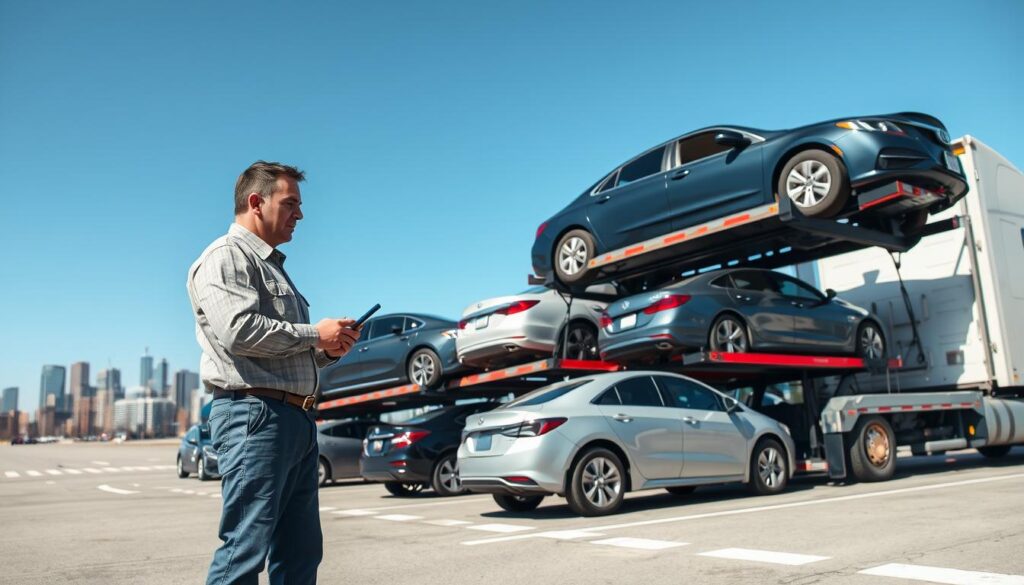
Knowing which line items a carrier bills for helps owners judge value, not just price. A transparent quote lists dispatch and carrier coordination, driver scheduling, trailer space allocation, fuel-based linehaul, and final delivery under the chosen service tier.
Door-to-door vs terminal pickup
Door-to-door delivery prioritizes convenience. A driver picks up and drops off near the specified addresses.
Terminal-to-terminal pickup can lower rates when customers can meet at major metro hubs. It removes last-mile stops and often reduces transit time variability.
Carrier coordination and service tiers
Standard open transport offers the best value for routine moves. Expedited pickup shortens lead times but raises rates. Enclosed transport adds protection for high-value vehicles and commands a premium.
Insurance basics and no hidden fees
Standard cargo coverage is typically included, but customers should confirm limits, deductibles, and claims steps. Insist on written terms that list inoperable fees, rural access surcharges, and expedited premiums to avoid last-minute surprises.
- Ask for: pickup/destination, year/make/model, operable status, carrier type, and desired delivery window in your quote.
“Reputable transport services protect vehicles with documented inspections and clear pricing.”
Expect documented inspections and transparent terms—those are signs of a reliable provider. For comparisons and reputable options, see best car shippers in the US.
Average Car Shipping Costs and Real-World Price Ranges
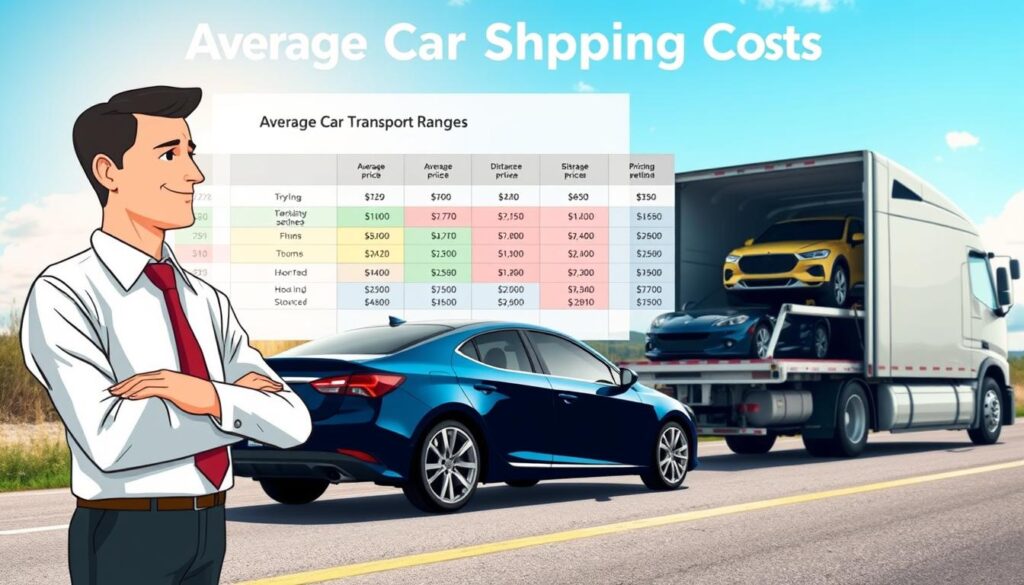
Use per-mile benchmarks to frame your budget before requesting firm quotes.
The national average sits near $650, while per-mile estimates generally run from $0.40 to $2.00 (Jan 2026). Short runs often cost more per mile. Fixed loading and dispatch work drive early legs higher. Longer lanes reduce per-mile math, but they raise the total cost.
Open vs enclosed by route length
Below is a directional pricing guide to help plan moves. Canadian customers should treat these as starting points and verify with local carriers.
| Distance | Open (avg) | Enclosed (avg) | Practical note |
|---|---|---|---|
| <500 miles | $630 | $930 | Higher per-mile on short runs |
| 500–2,500 miles | $1,135 | $1,550 | Balanced per-mile, common long-haul lanes |
| >2,500 miles | $1,350 | $1,830 | Lower per-mile, higher total |
Vehicle type affects totals too. Sedans run lowest; SUVs and trucks use more trailer space and cost more. Typical vehicle averages rise with distance and weight.
“Request both open and enclosed quotes to compare protection against price.”
Plan for add-ons such as rural pickup, inoperable handling, and expedited timelines. For a detailed per-mile analysis, see the average cost per mile reference.
Key Factors That Change Car Shipping Charges
Several predictable variables shape the final transport price for any vehicle move.
The pricing stack starts with distance as the base linehaul. Then location complexity, vehicle specs, condition, and service speed adjust the total.
Distance and price-per-mile
Longer routes spread fixed work—dispatch, loading, and paperwork—over more miles. That lowers price-per-mile while raising the total costs for the job.
Pickup and destination
Metro hubs have more available drivers and frequent lanes. Rural pickups can add detours or require different equipment, which increases rates.
Vehicle size, make, and add-ons
Roof racks, oversized tires, lift kits, or heavy accessories change trailer spacing. Extra space or special equipment raises cost.
Operable vs inoperable condition
Non-running vehicles need winching or special handling. Disclose condition up front to avoid delays and re-quotes at pickup.
Expedited service and carrier type
Tighter delivery windows reduce scheduling flexibility and add premium fees. Open transport is the most cost-effective for standard loads; enclosed carriers protect high-value vehicles at a higher price.
Seasonality and time of year
Winter weather and peak demand tighten capacity and push costs up. Plan ahead during busy months to secure better rates and timelines.
- Quick checklist: distance, pickup access, vehicle specs, operable status, service speed, and carrier type.
Choosing the Right Transport Method Across Canada
Selecting the right transport method makes a big difference in cost, risk, and timing for moves across Canada.
Primary options include multi‑car auto carrier, enclosed transport, rail auto‑rack, and flat deck moves. Each option balances protection, transit time, and price.
How the common methods compare
| Method | Typical Use | Capacity | Lead Time |
|---|---|---|---|
| Multi‑car auto carrier | Long‑haul general transport | 6–10 vehicles per trailer | Medium |
| Enclosed transport | Classic, vintage, high‑value vehicles | 1–2 vehicles | Short/Medium |
| Rail auto‑rack | Lower‑cost long runs (terminal coordination) | 2–3 decks; ~20 vehicles | Long |
| Flat deck | Short moves, rescue, inoperable runs | Single vehicle | Short |
“Pick the method that matches vehicle value, timing needs, and acceptable exposure.”
Expect rail to be cheaper but slower and to require terminal handling. Flat deck is ideal for short hops but can cost more on long lanes because the run is dedicated.
Do not pack personal items unless a carrier confirms approval in writing—rail usually forbids items inside the vehicle.
Next step: confirm the transport company, method, restrictions, and the booking process before pickup to avoid day‑of changes. Call (307) 288-5972 or email info@bestcarshippinginc.com for guidance.
Seasonality in Canada: When Shipping Rates Tend to Be Higher or Lower
Seasonal shifts shape capacity and route safety, so rates and timelines change across the year. Transport availability depends on driver supply, trailer capacity, and road conditions. Those elements affect both costs and the delivery experience for customers.
Winter constraints and why lead times can increase
Snow, ice, and shorter daylight reduce safe driving windows. Routes may require detours or speed limits, which can add days to transit.
Holiday demand in December and January often requires earlier booking. Book several weeks ahead to avoid last-minute premium fees.
Spring and summer demand spikes that can impact rates
Late March through August sees higher volume from relocations and seasonal moves. That tightens capacity and lifts rates on many popular lanes.
In busy corridors, competition sometimes stabilizes pricing. Still, flexibility on pickup or delivery dates often produces better offers.
Fall shipping: a common balance of availability and price
October and November usually offer milder roads and improved trailer availability. Fall often gives a better tradeoff between costs and predictable delivery times.
“A reliable provider communicates seasonal risks upfront so the customer experience stays predictable.”
- Booking tip: shifting pickup by a few days can lower rates and smooth dispatch.
- Operational note: expect slower lanes in winter and peak lead times in summer.
For detailed pricing by season and route, check a cost guide at how much does it cost to ship a or contact the team at (307) 288-5972 or info@bestcarshippinginc.com.
Transit Time Expectations for Vehicle Transportation in Canada
Transit windows for long-distance moves vary by route, weather, and stop frequency. Set realistic expectations: coast-to-coast lanes often require several days. Weather and routing affect schedules and the final delivery day.
Common timelines and what “several days” means
Typical long-haul examples make planning concrete. Edmonton to Toronto can take up to 6 days. Vancouver to Toronto can take up to 10 days under standard routing.
Booking ahead, windows, and price impact
Pickup window is the span when a carrier will collect the vehicle. Delivery window is when arrival is expected. Flexible windows help dispatch optimize routes and lower the final price.
| Route | Typical Days | Pickup window | Delivery window |
|---|---|---|---|
| Edmonton → Toronto | Up to 6 days | 2–4 days | 1–3 days |
| Vancouver → Toronto | Up to 10 days | 3–5 days | 2–4 days |
| Regional moves | 1–4 days | 1–3 days | 1–2 days |
Book several weeks ahead to improve carrier availability. Last-minute requests narrow options and often increase price because of premium assignments.
“Clear quotes and milestone updates build predictable delivery outcomes.”
Provide exact pickup and destination details when requesting a quote. Confirm the written delivery plan and request milestone updates (dispatch, pickup, in‑transit, ETA). For transport between the U.S. and Canada, see vehicle transport USA to Canada and contact (307) 288-5972 or info@bestcarshippinginc.com to schedule early.
Insurance, Damage Prevention, and Documentation to Protect Your Money
Documenting a vehicle’s condition and confirming coverage saves time and money. Do this before the pickup so the customer keeps control of the process and expectations.
Verify the carrier’s policy
Request the carrier’s insurance certificate. Confirm active dates, limits per vehicle, deductible amounts, and the claims procedure. Ask how to report damage and who pays first.
Pre-shipment inspection
At pickup, take time-stamped photos and notes of dents, scratches, and fluid leaks. Sign a condition report or bill of lading with the driver. Keep a copy for filing claims.
Vehicle prep checklist
- Wash the vehicle so defects are visible.
- Keep fuel at a quarter to half tank and disable alarms.
- Remove valuables, loose items, and exterior antennas or covers.
- Provide a full set of keys and disclose aftermarket parts.
Sign inspection paperwork at delivery only after reviewing the vehicle; a signature usually confirms receipt condition.
For step-by-step prep guidance, see how to prepare a car for.
Shipping a Car Overseas From Canada: Charges, Options, and Required Documents
Export moves combine inland pickup, ocean transit, and port work into a single planning puzzle. The overseas cost stack differs from domestic moves: inland delivery to the port, ocean freight, port/handling fees, insurance, and destination clearance all add to the final total.
RoRo vs container: cost, protection, best fit
RoRo loads a vehicle onto a specialized deck and usually offers the lower price. It fits regular daily drivers that do not need extra protection.
Container transport gives stronger security and weather protection at higher costs. Choose containers for high‑value or modified vehicles, or when storage and added security matter.
Typical ranges and destination examples
All-in overseas costs from Canada typically run about CAD $1,300–$5,300. Expect ocean freight RoRo ~CAD $1,300–$4,100 and container ~CAD $2,500–$5,300. Add insurance (~$500–$600) and port/handling (~$400–$750).
- Spain: RoRo $1,300–$2,800 / container $2,500–$4,000
- Italy: RoRo $1,300–$2,700 / container $2,200–$3,700
- Germany: RoRo $1,300–$2,800 / container $2,200–$3,700
- Japan: RoRo $2,000–$4,100 / container $3,200–$5,300
Remove personal items unless a specific provider allows them in writing. Overseas carriers and customs often restrict in‑vehicle items.
“Confirm written quotes that list method, all fees, and required documents before delivery to the port.”
Required export documents include proof of ownership, vehicle registration, government ID, and the B13A Export Declaration. Confirm any destination‑specific paperwork with the chosen shipping company and request written terms.
For budget-conscious planning, compare options and get a formal quote from a trusted provider; see cheap car shipping for a starting reference. Contact (307) 288-5972 or info@bestcarshippinginc.com for compliance help and booking.
Conclusion
A smart transport plan balances cost, timing, and protection to avoid surprises.
Choose a plan that weighs price against delivery time and documented insurance. Compare at least two written quotes built from the same route, vehicle data, operable status, and service tier to judge true value.
Verify licensing, coverage, and recent reviews. Clean and photograph the vehicle, remove valuables, and confirm whether personal items are allowed to prevent disputes.
For standard moves, open carriers often offer the best value; use enclosed for high‑value protection, rail for budget routes with longer time, and flat deck for short single‑vehicle runs.
Request multiple quotes, ask for all fees in writing, and pick the service that protects the vehicle and schedule. For help with routes or to request pricing, contact Best Car Shipping Inc. at (307) 288-5972, info@bestcarshippinginc.com, or learn about car shipping in Texas.