BestCarShippingInc offers a service-first car shipping price calculator for U.S. vehicle owners who need fast, dependable guidance. Use the tool for an instant estimate based on route, vehicle details, transport type, timing, and service level.
The quick quote is an estimate that reflects route and options. Final confirmation follows carrier dispatch and detail validation. This approach ensures clear pricing, direct communication, and protection-focused handling for every move.
Visitors can compare options and begin booking support at (307) 288-5972 or info@bestcarshippinginc.com. The page explains how choices — open vs enclosed, door-to-door vs lot meetups, and standard vs expedited pickup — change rates and cost expectations.
Intended users include relocating households, online buyers, dealerships, fleets, and logistics coordinators. The section previews how pricing is calculated, current market benchmarks, and steps to avoid delays and extra fees.
Key Takeaways
- Get an instant quote using the service-first shipping calculator.
- Estimates depend on route, vehicle details, transport type, and timing.
- Transparent terms: vetted carriers, standard insurance, and clear payment steps.
- Common decision points—open vs enclosed and pickup options—affect rates.
- Contact support at (307) 288-5972 or info@bestcarshippinginc.com to book.
Instant car shipping quote calculator for the United States
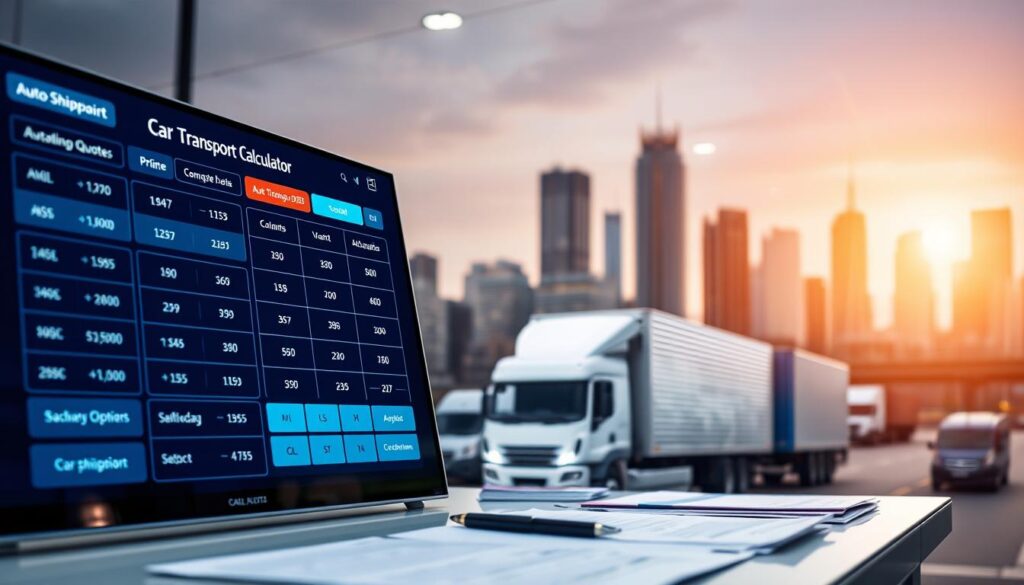
An instant estimate gives U.S. customers a data-driven view of expected transport costs for their chosen route. The tool supports interstate lanes, metro corridors, and long-haul runs. Results reflect current carrier availability and realistic routing.
Get transparent auto transport rates in minutes
Transparency is built into the estimate. Distance, vehicle size, seasonality, and pickup timing all shape the result. This helps users budget with confidence.
“Instant does not mean vague — quotes use real inputs and refine as details are confirmed.”
Door-to-door pickup and delivery vs. meeting at a nearby lot
Door-to-door offers curbside convenience. Some neighborhoods block large carriers. Narrow streets, low trees, and tight turns can limit access.
Meeting at a nearby lot avoids these constraints. A large parking area often speeds scheduling and eases loading. That can reduce complexity and sometimes lower final costs.
- Service expectations: proactive communication and professional coordination.
- Privacy: contact inputs (email/phone) are handled with care and used only for updates.
- Need help? Call (307) 288-5972 to review a quote or select a service tier.
| Route Type | Best Option | Common Constraints |
|---|---|---|
| Urban short haul | Nearby lot meetup | Narrow roads, permits, parking limits |
| Interstate long haul | Door-to-door | Carrier timing, fuel stops, route windows |
| Suburban pickup | Door-to-door or lot | Driveway access, trees, HOA rules |
How the car shipping price calculator works

Complete a few clear inputs and the tool delivers a tailored transport quote you can compare in minutes.
Enter origin and destination ZIP codes or city
Provide precise pickup and delivery locations. Exact ZIPs help estimate mileage, lane demand, and carrier availability.
Select vehicle year, make, model, and size
Specify year, make, model, and size. These details affect trailer space, loading method, and handling needs.
Choose open or enclosed transport
Open is the most common and value-focused. Enclosed adds protection and cost. The choice sets service type and expected rates.
Set your preferred pickup window and delivery speed
Flexible windows often reduce cost and improve matching. Narrow dates or expedited delivery increase premiums because capacity is limited.
- The flow: location → vehicle details → transport type → timing → instant quote.
- Review options, then select a quote and confirm details.
| Input | Why it matters | Effect on quote |
|---|---|---|
| ZIP / City | Determines distance and lane demand | Drives base rate and carrier availability |
| Vehicle details | Trailer space and loading needs | Can raise or lower the cost |
| Transport type | Protection level required | Enclosed adds premium |
Next step: complete the inputs, review the shipping quote, and contact the team if the vehicle needs special handling or timing. For details on fees, see our shipping charges page or call (307) 288-5972.
Car shipping price calculator inputs that change your shipping cost
A few key data points explain why two similar moves end up with different transport totals.
Distance: Longer hauls raise the total but usually lower the per-mile rate. Carriers run established lanes on long routes and spread fixed costs, which reduces the unit cost. January 2026 market range is roughly $0.40–$2.00 per mile depending on route and other factors.
Pickup and delivery accessibility
Metro locations offer more carrier options and shorter detours. Rural pickups add deadhead miles and time. That raises both labor and fuel-related costs.
Vehicle type and condition
Size and weight affect trailer capacity and fuel consumption. Larger SUVs or trucks occupy more space and raise the total cost.
Inoperable vehicles often require winches or extra equipment, increasing handling time and labor charges.
Carrier type, timing, and operational risks
Open carriers are the value option; enclosed carriers add protection and cost. Seasonal demand, fuel swings, weather risk, and route constraints change availability and final pricing.
- Transparent pricing: the calculator factors distance, vehicle, carrier type, timing, and route limits so customers see the main drivers up front.
Average car shipping costs right now
Real-world rate data gives customers a practical baseline for budgeting transport.
Typical total price ranges and what to expect
Most quotes fall inside a predictable band. Total costs depend on distance, vehicle size, seasonality, and service tier. Use benchmarks to set realistic expectations before you book.
Average cost per mile in current market conditions
January 2026 market snapshot: $0.40–$2.00 per mile. Short routes often show a higher per-mile rate. Long hauls typically lower the unit cost.
Nationwide benchmarks to compare your quote
As of October 2025: average shipment about $1,215; median distance 987 miles; median cost per mile ~$1.23. Use the average cost per mile to sanity-check offers.
- Confirm the same service tier and pickup flexibility when you compare a quote.
- Beware unusually low rates — they may signal poor dispatch or hidden fees.
- For budgeting, apply national benchmarks, then finalize with a route-specific result.
If special needs affect cost — oversize accessories, rural access, or expedited pickup — call (307) 288-5972 or email info@bestcarshippinginc.com for clarity.
Open vs. enclosed auto transport pricing
Choosing between open and enclosed transport affects cost and risk for every move.
Open transport is the most common and cost-effective option for routine routes and standard vehicles. It exposes vehicles to weather and road debris, but it also offers wider carrier availability and lower rates.
Average open carrier cost by distance
Typical averages help set realistic expectations for lanes.
| Distance | Open (avg) | Notes |
|---|---|---|
| <500 miles | $630 | Value option; broad carrier supply |
| 500–2,500 miles | $1,135 | Common long-haul lane pricing |
| >2,500 miles | $1,350 | Lower per-mile unit cost |
Average enclosed carrier cost by distance
Enclosed transport is a premium protection service. It reduces exposure to weather, dirt, and debris but typically costs more and has tighter availability.
| Distance | Enclosed (avg) | Notes |
|---|---|---|
| <500 miles | $930 | Good for local high-value moves |
| 500–2,500 miles | $1,550 | Higher demand on premium lanes |
| >2,500 miles | $1,830 | Limited enclosed carriers on ultra-long runs |
When enclosed transport is worth the premium
Choose enclosed for luxury, classic, or collectible vehicles that need extra protection. Confirm insurance levels and documentation before pickup. Base selection on vehicle value and risk tolerance, not just the lowest sticker.
Next step: Use the interactive tool to compare open vs enclosed side-by-side and confirm carrier availability for your pickup window. For questions call (307) 288-5972 or email info@bestcarshippinginc.com.
Shipping cost estimates by vehicle type and distance
Benchmarks by vehicle class make it simple to preview expected transport totals across common distance bands. These ranges help owners estimate before they run the instant tool.
| Vehicle type | <500 miles | 500–2,500 miles | >2,500 miles |
|---|---|---|---|
| Sedan | $425 | $725 | $925 |
| Compact SUV | $455 | $775 | $1,025 |
| SUV | $505 | $825 | $1,075 |
| Truck | $575 | $925 | $1,275 |
Sizing, accessories, and operational impact
Size and weight change how carriers plan loads. Trucks use more trailer space and may raise fuel-related costs compared with sedans.
Oversized accessories—bike racks, roof boxes, oversized tires, lift kits, and wide-body mods—change measured dimensions. That can increase rates or require special placement on the trailer.
Always disclose modifications early. Accurate make, model, and year let carriers plan geometry and clearances. This prevents last-minute repricing, loading delays, or insurance mismatches at pickup.
- Use benchmarks to check where a quote should land.
- Report accessories before booking to avoid surprises.
- Need help? If the vehicle is modified or oversized, contact the team for guidance before booking via the instant quote tool or call (307) 288-5972.
Seasonal car shipping rates in the United States
Each season brings distinct operational factors that influence transport timing and carrier supply.
Winter realities
Winter reduces carrier capacity around holidays and short daylight hours. Storms and snow can delay delivery and disrupt common routes.
February is often one of the slowest months and can offer lower rates for flexible shippers. Book early when fixed pickup dates matter.
Spring pressure
Improving weather increases demand. Northbound lanes often see backlogs as buyers and movers restart activity.
Limited carrier slots on popular routes can push up transport costs and stretch lead times.
Summer peak
Summer is the busiest season for relocations and college moves. Strong demand means fewer open windows and higher costs.
Secure a pickup window well in advance and consider nearby lot meetups to improve scheduling odds.
Fall balance
Fall brings milder weather and better availability than summer. October and November can be competitive for rates and service.
Planning tips: widen your pickup window, avoid last-minute expedited requests, and use the instant tool to time your shipment for lower costs.
“Seasonal shifts in carrier supply and weather directly affect shipment timing and rates.”
For help timing a move or reviewing a quote, contact BestCarShippingInc at (307) 288-5972 or info@bestcarshippinginc.com.
Expedited car shipping and faster pickup-delivery options
When time is limited, priority dispatch shortens the window to pickup and reduces scheduling risk. This expedited service speeds carrier assignment to move a shipment up the schedule.
What expedited transport changes in price and scheduling
Expedited moves raise the quote because brokers must secure scarce capacity fast. Carriers may deviate from planned lanes or accept tighter pickup windows. That increases the overall cost and alters routing choices.
Scheduling shifts to narrower pickup and delivery windows. Expect faster confirmation, more proactive updates, and higher priority for time-critical loads.
When accelerated open carrier service makes sense
Use accelerated open carrier for job relocations, auction purchases, dealership transfers, and urgent business moves. It balances speed with broad carrier access at a modest premium.
| Need | Benefit | Typical trade-off |
|---|---|---|
| Deadline move | Higher pickup probability | Higher quote |
| Auction or dealer transfer | Faster carrier assignment | Less flexible routing |
| Business-critical delivery | Priority updates | Limited schedule options |
Realistic expectations: expedited improves timing but still follows safety rules, legal route limits, and carrier hours-of-service. Compare service tiers in the tool to see pricing differences before you book.
“Expedited should be priced and explained clearly up front to avoid surprises.”
Urgent move? Call (307) 288-5972 to confirm the fastest available pickup and delivery options for your route.
Service tiers and what’s included in your transport quote
Tiered offerings let owners compare standard access, faster dispatch, and premium protection side-by-side.
Standard open carrier
Best availability and value-focused pricing. This tier fits most daily-driver vehicles on common lanes. It offers broad carrier access and steady lead times.
Included: coordinated pickup and delivery, professional loading, basic documentation, and routine updates during transit.
Expedited
Preferred dates and faster dispatch. Expedited service prioritizes carrier assignment for tighter windows. It reduces scheduling risk for time-sensitive moves.
Included: earlier pickup placement, proactive communication, and higher dispatch priority. Expect a premium for the faster timeline.
Enclosed premium
Maximum protection for high-value vehicles. Enclosed trailers limit exposure to weather and debris. This service suits collectors, luxury models, and modified vehicles.
Included: secured placement on enclosed trailers, detailed documentation, and frequent status updates to protect condition and value.
How to compare: Use the same route, vehicle details, and condition when requesting a transport quote. That ensures an apples-to-apples comparison of services and pricing.
Next step: Choose a tier, confirm carrier availability, and proceed with booking support by calling (307) 288-5972 or emailing info@bestcarshippinginc.com.
Transparent pricing: what your car shipping quote should include
A clear quote lists every charge so customers can approve totals with confidence.
Expect clear line items. A professional company shows base transport fees, service tier, and any special handling charges. Assumptions—like access, vehicle condition, or enclosed transport—appear as separate entries.
No hidden fees and upfront expectations
No hidden fees means customers know in advance when rural access, inoperable handling, expedited timing, or premium protection will change the total. Any potential add-on should be listed with a reason and an approximate cost range.
Credit/debit vs. COD and deposit rules
Common payment structures: full pre-payment by credit or debit, or COD with a deposit. Deposits typically range from 20%–40% of the total.
| Payment Method | Typical Deposit | When Balance Is Due |
|---|---|---|
| Credit/Debit (pre-pay) | 0%–100% (often full) | At booking or dispatch |
| COD (deposit + balance) | 20%–40% | At pickup or delivery to carrier |
| Company invoicing (fleet) | Net terms on approval | Per agreed contract |
Customers should request written confirmation of the final quote and documentation of charges. This protects schedules and internal approvals for business moves.
Questions about a shipping quote? Call (307) 288-5972 for a direct explanation before booking or review options online with our car shipping quotes page.
Insurance and protection during vehicle shipping
Standard cargo policies cover common transit risks, but limits and exceptions matter.
How standard auto cargo insurance works: Most quotes include basic coverage that pays for accidental damage during transport. It is designed to cover physical loss from collision, loading, and unloading. Customers should treat it as primary but limited protection.
Verify documentation: Confirm policy limits, listed exclusions, and the claim procedure before pickup. Ask for written proof and note any deductibles. Keep carrier and insurer contact details on file.
When to request extra coverage
Owners of luxury, exotic, classic, collector, or newly purchased high-value vehicles should secure additional protection. Request higher limits or a specialist policy and prefer enclosed service tiers when possible.
- Document condition with timestamped photos before pickup.
- Match photos to inspection forms at handover.
- Understand how added insurance affects pricing and why the cheapest quote can increase risk.
Practical benefit: Verified protection reduces exposure for personal owners and logistics coordinators. Direct communication speeds approvals for higher limits.
“Confirm coverage and document condition before the carrier arrives.”
To review coverage for a specific vehicle value range, email info@bestcarshippinginc.com or call (307) 288-5972 for a protection-first consultation.
Pickup, delivery, and tracking expectations for auto transport
Knowing how door-to-door execution works helps customers plan pickups in tight neighborhoods. Drivers aim for the closest legal and safe point and will confirm options before arrival.
How door-to-door delivery works in real neighborhoods
Door-to-door means the driver will approach as near as permitted by local rules, low trees, and street width. If a large truck cannot safely enter, the carrier will arrange a nearby lot meetup.
What to do if you don’t know the exact address yet
Customers may start an order with a ZIP code or city. Update exact locations before dispatch so the carrier can plan the best route and assign the right resources.
Tip: Use a dealership or warehouse address temporarily if a final residence is not yet confirmed.
Tracking updates and communication during transit
Expect clear milestones: dispatch confirmation, pickup scheduling, in-transit status, and delivery coordination calls. Regular updates reduce downtime when customers are matching flights or coordinating receiving staff.
“Tracking and timely updates are core service deliverables; they keep schedules reliable and risks low.”
| Stage | Typical update | Customer action |
|---|---|---|
| Dispatch | Carrier assigned, ETA window | Confirm access details and contacts |
| Pickup | Driver en route and arrival time | Be at the agreed point or confirm lot meetup |
| In transit | Periodic location/status updates | Plan delivery acceptance or notify receiving locations |
Business receiving: Offices, auctions, and dealerships should provide a receiving contact and any gate procedures in advance. This prevents delays at delivery.
Need help with a tight access or complex schedule? Call (307) 288-5972 to plan the smoothest pickup and delivery method and confirm service options before dispatch.
Prepare your car for shipment to avoid delays and extra costs
Simple, deliberate steps taken the day before pickup reduce the chance of hold-ups and extra handling charges.
Pre-transport checklist: cleaning, photos, and documenting condition
Clean the vehicle so inspectors can spot pre-existing marks. Light washing removes road grime that hides scratches.
Take timestamped photos from multiple angles. Save them with notes to document condition before the move.
Remove personal items, disable alarms, and secure loose parts
Empty the interior. Personal belongings can shift, be lost, or add handling time. Remove detachable accessories, fold mirrors, and secure spoilers or antennas.
Disable alarms and valet modes so drivers can load without delays.
Operational basics for a successful pickup
Check tire pressure, battery charge, and fluid levels. Leave about a quarter tank of gas for safe loading and testing.
| Prep item | Why it matters | Effect on cost / delay |
|---|---|---|
| Cleaning & photos | Clear condition record | Reduces disputes and re-inspection |
| Remove items & secure parts | Prevents loss and damage | Avoids extra handling fees |
| Operational checks | Ensures safe loading | Prevents carrier refusal or re-dispatch |
Final note: Proper preparation protects the vehicle and supports on-time pickup and delivery. For help, contact BestCarShippingInc at (307) 288-5972 or info@bestcarshippinginc.com.
Why choose a professional auto transport company for accurate rates
Professional transport partners deliver clearer, reliable estimates you can plan around. A short intro clarifies the business case: better dispatch, clearer rate logic, and lower operational risk for customers moving a vehicle.
Vetted carrier networks and driver availability
Vetted networks mean experienced drivers and the right equipment for most moves. Trusted companies pre-screen carriers, confirm insurance, and match capacity to demand.
That improves pickup reliability and reduces last-minute rerouting.
Why “too-good-to-be-true” quotes can be a red flag
Unusually low quotes often hide weak dispatch, capacity gaps, or later repricing. Evaluate offers on communication, insurance alignment, and realistic timelines — not just the sticker.
“Very low quotes can lead to delayed pickup or surprise add-on charges.”
Time and total-cost savings vs. driving yourself
Selling the business case: professional transportation saves fuel, lodging, meals, and wear. For many moves, those savings plus time recovered outweigh direct costs.
Final step: use the instant quote tool, then call (307) 288-5972 to confirm the most reliable option for your route and timeframe.
Conclusion
A concise summary helps owners translate an online estimate into an actual shipment plan.
Use the instant tool for fast, data-informed quotes that support confident decisions for U.S. routes. Note the key inputs: distance, metro versus rural access, vehicle size and condition, carrier type, seasonality, and delivery speed.
Decision framework is simple: open vs enclosed, standard vs expedited, and door-to-door vs nearby lot—each ties to clear cost and protection tradeoffs. Compare your quote to national benchmarks, then finalize based on exact shipment details.
Run your vehicle transport quote, pick a service tier, and confirm pickup and delivery needs with a coordinator. For immediate help call (307) 288-5972 or email info@bestcarshippinginc.com.
Accurate inputs yield accurate quotes, fewer delays, and a smoother transport experience.
FAQ
What is the Car Shipping Price Calculator and how quickly can I get an instant quote?
How do I use the instant car shipping quote calculator for the United States?
Should I choose door-to-door pickup and delivery or meet at a nearby lot?
What inputs in the calculator most affect my shipping cost?
Why can longer routes cost less per mile than short hauls?
How does vehicle condition impact the transport quote?
How do open and enclosed carriers differ in pricing?
What seasonal factors change rates throughout the year?
What are current average costs and per-mile benchmarks?
FAQ
What is the Car Shipping Price Calculator and how quickly can I get an instant quote?
The Car Shipping Price Calculator is an online tool that returns an instant auto transport quote after you enter origin and destination details, vehicle year/make/model, and service preferences. Typical responses appear in minutes, giving transparent rates and available carrier options so customers can book or request follow-up assistance.
How do I use the instant car shipping quote calculator for the United States?
Enter origin and destination ZIP codes or cities, choose vehicle details and carrier type (open or enclosed), and set a pickup window and delivery speed. The tool factors distance, vehicle size, and current market conditions to produce a tailored transport quote.
Should I choose door-to-door pickup and delivery or meet at a nearby lot?
Door-to-door pickup and delivery offers convenience and reduced handling but can cost more in hard-to-access areas. Meeting at a terminal typically lowers the fee and can speed scheduling. Choose based on location accessibility and personal convenience.
What inputs in the calculator most affect my shipping cost?
Key inputs that change rates include distance, pickup/delivery accessibility (metro vs. rural), vehicle type/size/weight, running condition, carrier type (open vs. enclosed), seasonal demand, and fuel or route constraints.
Why can longer routes cost less per mile than short hauls?
Longer routes spread fixed driver and mobilization costs across more miles, improving per-mile economics. Short, regional moves often carry higher per-mile rates because of loading, unloading, and route planning overhead.
How does vehicle condition impact the transport quote?
Running vehicles load and secure faster and typically cost less. Inoperable vehicles require extra equipment and labor, which raises the rate and may limit carrier options.
How do open and enclosed carriers differ in pricing?
Open carriers are the most cost-effective option and offer wide availability. Enclosed carriers provide extra protection for luxury or classic vehicles and carry a premium due to reduced capacity and higher demand.
What seasonal factors change rates throughout the year?
Demand swings by season. Winter can slow demand with weather delays, often offering lower rates in February. Spring and summer raise demand with relocations and better weather, increasing rates. Fall may offer more availability and competitive pricing.
What are current average costs and per-mile benchmarks?
Typical total price ranges vary by route and vehicle, but current per-mile ranges in the market run from about
FAQ
What is the Car Shipping Price Calculator and how quickly can I get an instant quote?
The Car Shipping Price Calculator is an online tool that returns an instant auto transport quote after you enter origin and destination details, vehicle year/make/model, and service preferences. Typical responses appear in minutes, giving transparent rates and available carrier options so customers can book or request follow-up assistance.
How do I use the instant car shipping quote calculator for the United States?
Enter origin and destination ZIP codes or cities, choose vehicle details and carrier type (open or enclosed), and set a pickup window and delivery speed. The tool factors distance, vehicle size, and current market conditions to produce a tailored transport quote.
Should I choose door-to-door pickup and delivery or meet at a nearby lot?
Door-to-door pickup and delivery offers convenience and reduced handling but can cost more in hard-to-access areas. Meeting at a terminal typically lowers the fee and can speed scheduling. Choose based on location accessibility and personal convenience.
What inputs in the calculator most affect my shipping cost?
Key inputs that change rates include distance, pickup/delivery accessibility (metro vs. rural), vehicle type/size/weight, running condition, carrier type (open vs. enclosed), seasonal demand, and fuel or route constraints.
Why can longer routes cost less per mile than short hauls?
Longer routes spread fixed driver and mobilization costs across more miles, improving per-mile economics. Short, regional moves often carry higher per-mile rates because of loading, unloading, and route planning overhead.
How does vehicle condition impact the transport quote?
Running vehicles load and secure faster and typically cost less. Inoperable vehicles require extra equipment and labor, which raises the rate and may limit carrier options.
How do open and enclosed carriers differ in pricing?
Open carriers are the most cost-effective option and offer wide availability. Enclosed carriers provide extra protection for luxury or classic vehicles and carry a premium due to reduced capacity and higher demand.
What seasonal factors change rates throughout the year?
Demand swings by season. Winter can slow demand with weather delays, often offering lower rates in February. Spring and summer raise demand with relocations and better weather, increasing rates. Fall may offer more availability and competitive pricing.
What are current average costs and per-mile benchmarks?
Typical total price ranges vary by route and vehicle, but current per-mile ranges in the market run from about $0.40 to $2.00/mile. Nationwide benchmarks show a median near $1.23/mile and an average shipment cost around $1,215 based on recent market data.
How much more does enclosed transport usually cost compared to open transport?
Enclosed service commonly costs significantly more—often 30–70% above open carrier rates depending on distance and demand. It’s worthwhile for high-value, classic, or show vehicles that need maximum protection.
Are there pricing differences by vehicle type and added accessories?
Yes. Larger vehicles like full-size SUVs and trucks cost more to transport than sedans and compacts. Oversized accessories—lift kits, aftermarket bumpers, roof racks—can increase dimensions or weight and raise the quote.
How does expedited transport affect price and scheduling?
Expedited service prioritizes dispatch and reduced transit time. It improves scheduling flexibility but increases cost due to re-routing and driver scheduling premiums. Use expedited for time-sensitive moves.
What should be included in a transparent transport quote?
A clear quote lists pickup and delivery locations, vehicle details, carrier type, estimated transit time, all fees (fuel, tolls, accessorials), deposit requirements, and insurance coverage. No hidden fees and clear payment terms are essential.
What are common payment structures for a transport booking?
Typical options include a deposit by credit/debit card to reserve the carrier and final payment upon delivery. Some companies accept COD for full payment on delivery. Confirm accepted methods before booking.
What insurance coverage is standard during transport?
Standard auto cargo insurance covers damages in transit up to carrier policy limits. For high-value vehicles, request higher coverage or a supplemental policy and obtain documentation of limits before shipment.
How does door-to-door delivery work in residential areas?
Drivers coordinate a pickup window and arrive at the agreed address or nearby safe curbside spot. If exact address access is restricted, carriers may request a nearby secure lot or public staging area to complete pickup or delivery.
What if I don’t know the exact delivery address when I request a quote?
Provide the best available city, ZIP code, or neighborhood. The quote will use that area’s access profile; confirm the exact address as soon as possible to avoid accessorial fees or schedule changes.
How can I track my vehicle during transit?
Most carriers provide regular status updates by phone, email, or text. Some offer GPS tracking or portal access for real-time location and ETA. Confirm tracking options when you book the shipment.
What should I do to prepare the vehicle before pickup?
Follow a pre-transport checklist: clean the vehicle, take photos documenting condition, remove personal items, disable alarms, secure loose parts, check tire pressure and fluids, and leave about a quarter tank of gas.
Why use a professional auto transport company rather than driving the vehicle yourself?
Professionals offer vetted carrier networks, licensed drivers, and insurance. They save time and reduce wear-and-tear, toll costs, and lodging expenses. Reliable companies also provide clear quotes and customer support to minimize risk.
How can I contact the company for more help or to book a shipment?
For personalized assistance or to confirm a quote, email info@bestcarshippinginc.com or call (307) 288-5972. The team provides support on rates, pickups, delivery windows, and insurance options.
FAQ
What is the Car Shipping Price Calculator and how quickly can I get an instant quote?
The Car Shipping Price Calculator is an online tool that returns an instant auto transport quote after you enter origin and destination details, vehicle year/make/model, and service preferences. Typical responses appear in minutes, giving transparent rates and available carrier options so customers can book or request follow-up assistance.
How do I use the instant car shipping quote calculator for the United States?
Enter origin and destination ZIP codes or cities, choose vehicle details and carrier type (open or enclosed), and set a pickup window and delivery speed. The tool factors distance, vehicle size, and current market conditions to produce a tailored transport quote.
Should I choose door-to-door pickup and delivery or meet at a nearby lot?
Door-to-door pickup and delivery offers convenience and reduced handling but can cost more in hard-to-access areas. Meeting at a terminal typically lowers the fee and can speed scheduling. Choose based on location accessibility and personal convenience.
What inputs in the calculator most affect my shipping cost?
Key inputs that change rates include distance, pickup/delivery accessibility (metro vs. rural), vehicle type/size/weight, running condition, carrier type (open vs. enclosed), seasonal demand, and fuel or route constraints.
Why can longer routes cost less per mile than short hauls?
Longer routes spread fixed driver and mobilization costs across more miles, improving per-mile economics. Short, regional moves often carry higher per-mile rates because of loading, unloading, and route planning overhead.
How does vehicle condition impact the transport quote?
Running vehicles load and secure faster and typically cost less. Inoperable vehicles require extra equipment and labor, which raises the rate and may limit carrier options.
How do open and enclosed carriers differ in pricing?
Open carriers are the most cost-effective option and offer wide availability. Enclosed carriers provide extra protection for luxury or classic vehicles and carry a premium due to reduced capacity and higher demand.
What seasonal factors change rates throughout the year?
Demand swings by season. Winter can slow demand with weather delays, often offering lower rates in February. Spring and summer raise demand with relocations and better weather, increasing rates. Fall may offer more availability and competitive pricing.
What are current average costs and per-mile benchmarks?
Typical total price ranges vary by route and vehicle, but current per-mile ranges in the market run from about
FAQ
What is the Car Shipping Price Calculator and how quickly can I get an instant quote?
The Car Shipping Price Calculator is an online tool that returns an instant auto transport quote after you enter origin and destination details, vehicle year/make/model, and service preferences. Typical responses appear in minutes, giving transparent rates and available carrier options so customers can book or request follow-up assistance.
How do I use the instant car shipping quote calculator for the United States?
Enter origin and destination ZIP codes or cities, choose vehicle details and carrier type (open or enclosed), and set a pickup window and delivery speed. The tool factors distance, vehicle size, and current market conditions to produce a tailored transport quote.
Should I choose door-to-door pickup and delivery or meet at a nearby lot?
Door-to-door pickup and delivery offers convenience and reduced handling but can cost more in hard-to-access areas. Meeting at a terminal typically lowers the fee and can speed scheduling. Choose based on location accessibility and personal convenience.
What inputs in the calculator most affect my shipping cost?
Key inputs that change rates include distance, pickup/delivery accessibility (metro vs. rural), vehicle type/size/weight, running condition, carrier type (open vs. enclosed), seasonal demand, and fuel or route constraints.
Why can longer routes cost less per mile than short hauls?
Longer routes spread fixed driver and mobilization costs across more miles, improving per-mile economics. Short, regional moves often carry higher per-mile rates because of loading, unloading, and route planning overhead.
How does vehicle condition impact the transport quote?
Running vehicles load and secure faster and typically cost less. Inoperable vehicles require extra equipment and labor, which raises the rate and may limit carrier options.
How do open and enclosed carriers differ in pricing?
Open carriers are the most cost-effective option and offer wide availability. Enclosed carriers provide extra protection for luxury or classic vehicles and carry a premium due to reduced capacity and higher demand.
What seasonal factors change rates throughout the year?
Demand swings by season. Winter can slow demand with weather delays, often offering lower rates in February. Spring and summer raise demand with relocations and better weather, increasing rates. Fall may offer more availability and competitive pricing.
What are current average costs and per-mile benchmarks?
Typical total price ranges vary by route and vehicle, but current per-mile ranges in the market run from about $0.40 to $2.00/mile. Nationwide benchmarks show a median near $1.23/mile and an average shipment cost around $1,215 based on recent market data.
How much more does enclosed transport usually cost compared to open transport?
Enclosed service commonly costs significantly more—often 30–70% above open carrier rates depending on distance and demand. It’s worthwhile for high-value, classic, or show vehicles that need maximum protection.
Are there pricing differences by vehicle type and added accessories?
Yes. Larger vehicles like full-size SUVs and trucks cost more to transport than sedans and compacts. Oversized accessories—lift kits, aftermarket bumpers, roof racks—can increase dimensions or weight and raise the quote.
How does expedited transport affect price and scheduling?
Expedited service prioritizes dispatch and reduced transit time. It improves scheduling flexibility but increases cost due to re-routing and driver scheduling premiums. Use expedited for time-sensitive moves.
What should be included in a transparent transport quote?
A clear quote lists pickup and delivery locations, vehicle details, carrier type, estimated transit time, all fees (fuel, tolls, accessorials), deposit requirements, and insurance coverage. No hidden fees and clear payment terms are essential.
What are common payment structures for a transport booking?
Typical options include a deposit by credit/debit card to reserve the carrier and final payment upon delivery. Some companies accept COD for full payment on delivery. Confirm accepted methods before booking.
What insurance coverage is standard during transport?
Standard auto cargo insurance covers damages in transit up to carrier policy limits. For high-value vehicles, request higher coverage or a supplemental policy and obtain documentation of limits before shipment.
How does door-to-door delivery work in residential areas?
Drivers coordinate a pickup window and arrive at the agreed address or nearby safe curbside spot. If exact address access is restricted, carriers may request a nearby secure lot or public staging area to complete pickup or delivery.
What if I don’t know the exact delivery address when I request a quote?
Provide the best available city, ZIP code, or neighborhood. The quote will use that area’s access profile; confirm the exact address as soon as possible to avoid accessorial fees or schedule changes.
How can I track my vehicle during transit?
Most carriers provide regular status updates by phone, email, or text. Some offer GPS tracking or portal access for real-time location and ETA. Confirm tracking options when you book the shipment.
What should I do to prepare the vehicle before pickup?
Follow a pre-transport checklist: clean the vehicle, take photos documenting condition, remove personal items, disable alarms, secure loose parts, check tire pressure and fluids, and leave about a quarter tank of gas.
Why use a professional auto transport company rather than driving the vehicle yourself?
Professionals offer vetted carrier networks, licensed drivers, and insurance. They save time and reduce wear-and-tear, toll costs, and lodging expenses. Reliable companies also provide clear quotes and customer support to minimize risk.
How can I contact the company for more help or to book a shipment?
For personalized assistance or to confirm a quote, email info@bestcarshippinginc.com or call (307) 288-5972. The team provides support on rates, pickups, delivery windows, and insurance options.
FAQ
What is the Car Shipping Price Calculator and how quickly can I get an instant quote?
The Car Shipping Price Calculator is an online tool that returns an instant auto transport quote after you enter origin and destination details, vehicle year/make/model, and service preferences. Typical responses appear in minutes, giving transparent rates and available carrier options so customers can book or request follow-up assistance.
How do I use the instant car shipping quote calculator for the United States?
Enter origin and destination ZIP codes or cities, choose vehicle details and carrier type (open or enclosed), and set a pickup window and delivery speed. The tool factors distance, vehicle size, and current market conditions to produce a tailored transport quote.
Should I choose door-to-door pickup and delivery or meet at a nearby lot?
Door-to-door pickup and delivery offers convenience and reduced handling but can cost more in hard-to-access areas. Meeting at a terminal typically lowers the fee and can speed scheduling. Choose based on location accessibility and personal convenience.
What inputs in the calculator most affect my shipping cost?
Key inputs that change rates include distance, pickup/delivery accessibility (metro vs. rural), vehicle type/size/weight, running condition, carrier type (open vs. enclosed), seasonal demand, and fuel or route constraints.
Why can longer routes cost less per mile than short hauls?
Longer routes spread fixed driver and mobilization costs across more miles, improving per-mile economics. Short, regional moves often carry higher per-mile rates because of loading, unloading, and route planning overhead.
How does vehicle condition impact the transport quote?
Running vehicles load and secure faster and typically cost less. Inoperable vehicles require extra equipment and labor, which raises the rate and may limit carrier options.
How do open and enclosed carriers differ in pricing?
Open carriers are the most cost-effective option and offer wide availability. Enclosed carriers provide extra protection for luxury or classic vehicles and carry a premium due to reduced capacity and higher demand.
What seasonal factors change rates throughout the year?
Demand swings by season. Winter can slow demand with weather delays, often offering lower rates in February. Spring and summer raise demand with relocations and better weather, increasing rates. Fall may offer more availability and competitive pricing.
What are current average costs and per-mile benchmarks?
Typical total price ranges vary by route and vehicle, but current per-mile ranges in the market run from about
FAQ
What is the Car Shipping Price Calculator and how quickly can I get an instant quote?
The Car Shipping Price Calculator is an online tool that returns an instant auto transport quote after you enter origin and destination details, vehicle year/make/model, and service preferences. Typical responses appear in minutes, giving transparent rates and available carrier options so customers can book or request follow-up assistance.
How do I use the instant car shipping quote calculator for the United States?
Enter origin and destination ZIP codes or cities, choose vehicle details and carrier type (open or enclosed), and set a pickup window and delivery speed. The tool factors distance, vehicle size, and current market conditions to produce a tailored transport quote.
Should I choose door-to-door pickup and delivery or meet at a nearby lot?
Door-to-door pickup and delivery offers convenience and reduced handling but can cost more in hard-to-access areas. Meeting at a terminal typically lowers the fee and can speed scheduling. Choose based on location accessibility and personal convenience.
What inputs in the calculator most affect my shipping cost?
Key inputs that change rates include distance, pickup/delivery accessibility (metro vs. rural), vehicle type/size/weight, running condition, carrier type (open vs. enclosed), seasonal demand, and fuel or route constraints.
Why can longer routes cost less per mile than short hauls?
Longer routes spread fixed driver and mobilization costs across more miles, improving per-mile economics. Short, regional moves often carry higher per-mile rates because of loading, unloading, and route planning overhead.
How does vehicle condition impact the transport quote?
Running vehicles load and secure faster and typically cost less. Inoperable vehicles require extra equipment and labor, which raises the rate and may limit carrier options.
How do open and enclosed carriers differ in pricing?
Open carriers are the most cost-effective option and offer wide availability. Enclosed carriers provide extra protection for luxury or classic vehicles and carry a premium due to reduced capacity and higher demand.
What seasonal factors change rates throughout the year?
Demand swings by season. Winter can slow demand with weather delays, often offering lower rates in February. Spring and summer raise demand with relocations and better weather, increasing rates. Fall may offer more availability and competitive pricing.
What are current average costs and per-mile benchmarks?
Typical total price ranges vary by route and vehicle, but current per-mile ranges in the market run from about $0.40 to $2.00/mile. Nationwide benchmarks show a median near $1.23/mile and an average shipment cost around $1,215 based on recent market data.
How much more does enclosed transport usually cost compared to open transport?
Enclosed service commonly costs significantly more—often 30–70% above open carrier rates depending on distance and demand. It’s worthwhile for high-value, classic, or show vehicles that need maximum protection.
Are there pricing differences by vehicle type and added accessories?
Yes. Larger vehicles like full-size SUVs and trucks cost more to transport than sedans and compacts. Oversized accessories—lift kits, aftermarket bumpers, roof racks—can increase dimensions or weight and raise the quote.
How does expedited transport affect price and scheduling?
Expedited service prioritizes dispatch and reduced transit time. It improves scheduling flexibility but increases cost due to re-routing and driver scheduling premiums. Use expedited for time-sensitive moves.
What should be included in a transparent transport quote?
A clear quote lists pickup and delivery locations, vehicle details, carrier type, estimated transit time, all fees (fuel, tolls, accessorials), deposit requirements, and insurance coverage. No hidden fees and clear payment terms are essential.
What are common payment structures for a transport booking?
Typical options include a deposit by credit/debit card to reserve the carrier and final payment upon delivery. Some companies accept COD for full payment on delivery. Confirm accepted methods before booking.
What insurance coverage is standard during transport?
Standard auto cargo insurance covers damages in transit up to carrier policy limits. For high-value vehicles, request higher coverage or a supplemental policy and obtain documentation of limits before shipment.
How does door-to-door delivery work in residential areas?
Drivers coordinate a pickup window and arrive at the agreed address or nearby safe curbside spot. If exact address access is restricted, carriers may request a nearby secure lot or public staging area to complete pickup or delivery.
What if I don’t know the exact delivery address when I request a quote?
Provide the best available city, ZIP code, or neighborhood. The quote will use that area’s access profile; confirm the exact address as soon as possible to avoid accessorial fees or schedule changes.
How can I track my vehicle during transit?
Most carriers provide regular status updates by phone, email, or text. Some offer GPS tracking or portal access for real-time location and ETA. Confirm tracking options when you book the shipment.
What should I do to prepare the vehicle before pickup?
Follow a pre-transport checklist: clean the vehicle, take photos documenting condition, remove personal items, disable alarms, secure loose parts, check tire pressure and fluids, and leave about a quarter tank of gas.
Why use a professional auto transport company rather than driving the vehicle yourself?
Professionals offer vetted carrier networks, licensed drivers, and insurance. They save time and reduce wear-and-tear, toll costs, and lodging expenses. Reliable companies also provide clear quotes and customer support to minimize risk.
How can I contact the company for more help or to book a shipment?
For personalized assistance or to confirm a quote, email info@bestcarshippinginc.com or call (307) 288-5972. The team provides support on rates, pickups, delivery windows, and insurance options.
.40 to .00/mile. Nationwide benchmarks show a median near
FAQ
What is the Car Shipping Price Calculator and how quickly can I get an instant quote?
The Car Shipping Price Calculator is an online tool that returns an instant auto transport quote after you enter origin and destination details, vehicle year/make/model, and service preferences. Typical responses appear in minutes, giving transparent rates and available carrier options so customers can book or request follow-up assistance.
How do I use the instant car shipping quote calculator for the United States?
Enter origin and destination ZIP codes or cities, choose vehicle details and carrier type (open or enclosed), and set a pickup window and delivery speed. The tool factors distance, vehicle size, and current market conditions to produce a tailored transport quote.
Should I choose door-to-door pickup and delivery or meet at a nearby lot?
Door-to-door pickup and delivery offers convenience and reduced handling but can cost more in hard-to-access areas. Meeting at a terminal typically lowers the fee and can speed scheduling. Choose based on location accessibility and personal convenience.
What inputs in the calculator most affect my shipping cost?
Key inputs that change rates include distance, pickup/delivery accessibility (metro vs. rural), vehicle type/size/weight, running condition, carrier type (open vs. enclosed), seasonal demand, and fuel or route constraints.
Why can longer routes cost less per mile than short hauls?
Longer routes spread fixed driver and mobilization costs across more miles, improving per-mile economics. Short, regional moves often carry higher per-mile rates because of loading, unloading, and route planning overhead.
How does vehicle condition impact the transport quote?
Running vehicles load and secure faster and typically cost less. Inoperable vehicles require extra equipment and labor, which raises the rate and may limit carrier options.
How do open and enclosed carriers differ in pricing?
Open carriers are the most cost-effective option and offer wide availability. Enclosed carriers provide extra protection for luxury or classic vehicles and carry a premium due to reduced capacity and higher demand.
What seasonal factors change rates throughout the year?
Demand swings by season. Winter can slow demand with weather delays, often offering lower rates in February. Spring and summer raise demand with relocations and better weather, increasing rates. Fall may offer more availability and competitive pricing.
What are current average costs and per-mile benchmarks?
Typical total price ranges vary by route and vehicle, but current per-mile ranges in the market run from about $0.40 to $2.00/mile. Nationwide benchmarks show a median near $1.23/mile and an average shipment cost around $1,215 based on recent market data.
How much more does enclosed transport usually cost compared to open transport?
Enclosed service commonly costs significantly more—often 30–70% above open carrier rates depending on distance and demand. It’s worthwhile for high-value, classic, or show vehicles that need maximum protection.
Are there pricing differences by vehicle type and added accessories?
Yes. Larger vehicles like full-size SUVs and trucks cost more to transport than sedans and compacts. Oversized accessories—lift kits, aftermarket bumpers, roof racks—can increase dimensions or weight and raise the quote.
How does expedited transport affect price and scheduling?
Expedited service prioritizes dispatch and reduced transit time. It improves scheduling flexibility but increases cost due to re-routing and driver scheduling premiums. Use expedited for time-sensitive moves.
What should be included in a transparent transport quote?
A clear quote lists pickup and delivery locations, vehicle details, carrier type, estimated transit time, all fees (fuel, tolls, accessorials), deposit requirements, and insurance coverage. No hidden fees and clear payment terms are essential.
What are common payment structures for a transport booking?
Typical options include a deposit by credit/debit card to reserve the carrier and final payment upon delivery. Some companies accept COD for full payment on delivery. Confirm accepted methods before booking.
What insurance coverage is standard during transport?
Standard auto cargo insurance covers damages in transit up to carrier policy limits. For high-value vehicles, request higher coverage or a supplemental policy and obtain documentation of limits before shipment.
How does door-to-door delivery work in residential areas?
Drivers coordinate a pickup window and arrive at the agreed address or nearby safe curbside spot. If exact address access is restricted, carriers may request a nearby secure lot or public staging area to complete pickup or delivery.
What if I don’t know the exact delivery address when I request a quote?
Provide the best available city, ZIP code, or neighborhood. The quote will use that area’s access profile; confirm the exact address as soon as possible to avoid accessorial fees or schedule changes.
How can I track my vehicle during transit?
Most carriers provide regular status updates by phone, email, or text. Some offer GPS tracking or portal access for real-time location and ETA. Confirm tracking options when you book the shipment.
What should I do to prepare the vehicle before pickup?
Follow a pre-transport checklist: clean the vehicle, take photos documenting condition, remove personal items, disable alarms, secure loose parts, check tire pressure and fluids, and leave about a quarter tank of gas.
Why use a professional auto transport company rather than driving the vehicle yourself?
Professionals offer vetted carrier networks, licensed drivers, and insurance. They save time and reduce wear-and-tear, toll costs, and lodging expenses. Reliable companies also provide clear quotes and customer support to minimize risk.
How can I contact the company for more help or to book a shipment?
For personalized assistance or to confirm a quote, email info@bestcarshippinginc.com or call (307) 288-5972. The team provides support on rates, pickups, delivery windows, and insurance options.
.23/mile and an average shipment cost around
FAQ
What is the Car Shipping Price Calculator and how quickly can I get an instant quote?
The Car Shipping Price Calculator is an online tool that returns an instant auto transport quote after you enter origin and destination details, vehicle year/make/model, and service preferences. Typical responses appear in minutes, giving transparent rates and available carrier options so customers can book or request follow-up assistance.
How do I use the instant car shipping quote calculator for the United States?
Enter origin and destination ZIP codes or cities, choose vehicle details and carrier type (open or enclosed), and set a pickup window and delivery speed. The tool factors distance, vehicle size, and current market conditions to produce a tailored transport quote.
Should I choose door-to-door pickup and delivery or meet at a nearby lot?
Door-to-door pickup and delivery offers convenience and reduced handling but can cost more in hard-to-access areas. Meeting at a terminal typically lowers the fee and can speed scheduling. Choose based on location accessibility and personal convenience.
What inputs in the calculator most affect my shipping cost?
Key inputs that change rates include distance, pickup/delivery accessibility (metro vs. rural), vehicle type/size/weight, running condition, carrier type (open vs. enclosed), seasonal demand, and fuel or route constraints.
Why can longer routes cost less per mile than short hauls?
Longer routes spread fixed driver and mobilization costs across more miles, improving per-mile economics. Short, regional moves often carry higher per-mile rates because of loading, unloading, and route planning overhead.
How does vehicle condition impact the transport quote?
Running vehicles load and secure faster and typically cost less. Inoperable vehicles require extra equipment and labor, which raises the rate and may limit carrier options.
How do open and enclosed carriers differ in pricing?
Open carriers are the most cost-effective option and offer wide availability. Enclosed carriers provide extra protection for luxury or classic vehicles and carry a premium due to reduced capacity and higher demand.
What seasonal factors change rates throughout the year?
Demand swings by season. Winter can slow demand with weather delays, often offering lower rates in February. Spring and summer raise demand with relocations and better weather, increasing rates. Fall may offer more availability and competitive pricing.
What are current average costs and per-mile benchmarks?
Typical total price ranges vary by route and vehicle, but current per-mile ranges in the market run from about $0.40 to $2.00/mile. Nationwide benchmarks show a median near $1.23/mile and an average shipment cost around $1,215 based on recent market data.
How much more does enclosed transport usually cost compared to open transport?
Enclosed service commonly costs significantly more—often 30–70% above open carrier rates depending on distance and demand. It’s worthwhile for high-value, classic, or show vehicles that need maximum protection.
Are there pricing differences by vehicle type and added accessories?
Yes. Larger vehicles like full-size SUVs and trucks cost more to transport than sedans and compacts. Oversized accessories—lift kits, aftermarket bumpers, roof racks—can increase dimensions or weight and raise the quote.
How does expedited transport affect price and scheduling?
Expedited service prioritizes dispatch and reduced transit time. It improves scheduling flexibility but increases cost due to re-routing and driver scheduling premiums. Use expedited for time-sensitive moves.
What should be included in a transparent transport quote?
A clear quote lists pickup and delivery locations, vehicle details, carrier type, estimated transit time, all fees (fuel, tolls, accessorials), deposit requirements, and insurance coverage. No hidden fees and clear payment terms are essential.
What are common payment structures for a transport booking?
Typical options include a deposit by credit/debit card to reserve the carrier and final payment upon delivery. Some companies accept COD for full payment on delivery. Confirm accepted methods before booking.
What insurance coverage is standard during transport?
Standard auto cargo insurance covers damages in transit up to carrier policy limits. For high-value vehicles, request higher coverage or a supplemental policy and obtain documentation of limits before shipment.
How does door-to-door delivery work in residential areas?
Drivers coordinate a pickup window and arrive at the agreed address or nearby safe curbside spot. If exact address access is restricted, carriers may request a nearby secure lot or public staging area to complete pickup or delivery.
What if I don’t know the exact delivery address when I request a quote?
Provide the best available city, ZIP code, or neighborhood. The quote will use that area’s access profile; confirm the exact address as soon as possible to avoid accessorial fees or schedule changes.
How can I track my vehicle during transit?
Most carriers provide regular status updates by phone, email, or text. Some offer GPS tracking or portal access for real-time location and ETA. Confirm tracking options when you book the shipment.
What should I do to prepare the vehicle before pickup?
Follow a pre-transport checklist: clean the vehicle, take photos documenting condition, remove personal items, disable alarms, secure loose parts, check tire pressure and fluids, and leave about a quarter tank of gas.
Why use a professional auto transport company rather than driving the vehicle yourself?
Professionals offer vetted carrier networks, licensed drivers, and insurance. They save time and reduce wear-and-tear, toll costs, and lodging expenses. Reliable companies also provide clear quotes and customer support to minimize risk.
How can I contact the company for more help or to book a shipment?
For personalized assistance or to confirm a quote, email info@bestcarshippinginc.com or call (307) 288-5972. The team provides support on rates, pickups, delivery windows, and insurance options.
,215 based on recent market data.
How much more does enclosed transport usually cost compared to open transport?
Enclosed service commonly costs significantly more—often 30–70% above open carrier rates depending on distance and demand. It’s worthwhile for high-value, classic, or show vehicles that need maximum protection.
Are there pricing differences by vehicle type and added accessories?
Yes. Larger vehicles like full-size SUVs and trucks cost more to transport than sedans and compacts. Oversized accessories—lift kits, aftermarket bumpers, roof racks—can increase dimensions or weight and raise the quote.
How does expedited transport affect price and scheduling?
Expedited service prioritizes dispatch and reduced transit time. It improves scheduling flexibility but increases cost due to re-routing and driver scheduling premiums. Use expedited for time-sensitive moves.
What should be included in a transparent transport quote?
A clear quote lists pickup and delivery locations, vehicle details, carrier type, estimated transit time, all fees (fuel, tolls, accessorials), deposit requirements, and insurance coverage. No hidden fees and clear payment terms are essential.
What are common payment structures for a transport booking?
Typical options include a deposit by credit/debit card to reserve the carrier and final payment upon delivery. Some companies accept COD for full payment on delivery. Confirm accepted methods before booking.
What insurance coverage is standard during transport?
Standard auto cargo insurance covers damages in transit up to carrier policy limits. For high-value vehicles, request higher coverage or a supplemental policy and obtain documentation of limits before shipment.
How does door-to-door delivery work in residential areas?
Drivers coordinate a pickup window and arrive at the agreed address or nearby safe curbside spot. If exact address access is restricted, carriers may request a nearby secure lot or public staging area to complete pickup or delivery.
What if I don’t know the exact delivery address when I request a quote?
Provide the best available city, ZIP code, or neighborhood. The quote will use that area’s access profile; confirm the exact address as soon as possible to avoid accessorial fees or schedule changes.
How can I track my vehicle during transit?
Most carriers provide regular status updates by phone, email, or text. Some offer GPS tracking or portal access for real-time location and ETA. Confirm tracking options when you book the shipment.
What should I do to prepare the vehicle before pickup?
Follow a pre-transport checklist: clean the vehicle, take photos documenting condition, remove personal items, disable alarms, secure loose parts, check tire pressure and fluids, and leave about a quarter tank of gas.
Why use a professional auto transport company rather than driving the vehicle yourself?
Professionals offer vetted carrier networks, licensed drivers, and insurance. They save time and reduce wear-and-tear, toll costs, and lodging expenses. Reliable companies also provide clear quotes and customer support to minimize risk.
How can I contact the company for more help or to book a shipment?
For personalized assistance or to confirm a quote, email info@bestcarshippinginc.com or call (307) 288-5972. The team provides support on rates, pickups, delivery windows, and insurance options.
