
Understanding car shipping prices helps Canadian owners pick the right provider. A quote is an informed estimate based on route, equipment, and market capacity — not a flat fee. Typical benchmarks show wide ranges by route, vehicle type, season, and transport method.
The guide aims to help readers compare quotes across Canadian routes. It explains common per-mile ranges, major pricing drivers, and ways to lower cost without losing service quality. Expect clear checklists and decision points.
Best outcomes favor reliability over the lowest number. Look for documented insurance, reliable schedules, and transparent terms when you request quotes from companies. For personalized help, contact Best Car Shipping Inc. at info@bestcarshippinginc.com or (307) 288-5972.
Key Takeaways
- Quotes reflect route, equipment, and market capacity, not a single universal fee.
- Major factors: transport type, distance, seasonality, and vehicle condition.
- Prioritize documented insurance and clear scheduling over lowest price.
- Compare open vs enclosed, operable vs inoperable, and standard vs expedited options.
- Use the guide’s checklists when ordering, requesting quotes, and verifying carriers.
What you’ll pay in Canada: realistic car shipping price ranges in today’s market
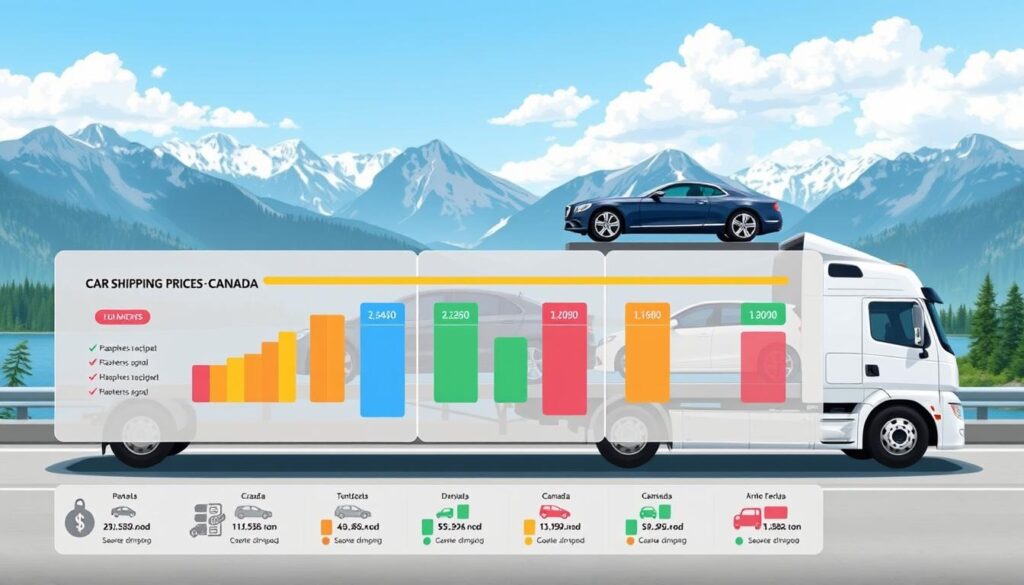
Expect practical benchmarks so owners can set realistic budgets before they request quotes. Recent datasets show open transport averages near $914 and enclosed about $1,342 per trip. These figures are ballpark guides, not guarantees.
The per‑mile rate falls as trips lengthen. Fixed loading and dispatch fees spread over more miles. That lowers the per mile number while the total cost rises for longer moves.
Typical industry benchmarks to know
Open vs enclosed: open is the best‑value choice for most vehicles; enclosed adds roughly 50% to the trip due to limited capacity and higher protection costs.
- Request multiple quotes and compare the same service tier.
- Adjust estimates for Canadian route demand and fuel surcharges.
| Distance band (miles) | Open avg (USD) | Enclosed avg (USD) |
|---|---|---|
| <500 | $630 | $930 |
| 500–2,500 | $1,135 | $1,550 |
| >2,500 | $1,350 | $1,830 |
Next: use these benchmarks as a starting point. Final quotes will depend on route, timing, and the specific vehicle being moved.
For deeper per‑mile analysis and example calculations, see this average cost per mile guide.
Car shipping prices: the biggest factors that change your quote
Several key variables determine why two quotes for the same route can differ by hundreds of dollars.
Distance and route demand. High‑traffic corridors attract more carriers and competitive bids. Low‑demand lanes often add wait time and higher per‑mile fees.
Pickup and delivery access. Metro areas reduce driver detours and lower surcharges. Rural pickups may require deadhead miles or special routing, raising the final cost.
Vehicle size and make. Larger, heavier vehicles use more trailer space and can limit load counts. That reduces carrier revenue per trip and increases your fee.
Vehicle condition. Operable vehicles are simpler to load. Inoperable units often need winching or extra handling, typically adding $100–$300 to the quote.
Carrier type and delivery speed. Open carriers are economical; enclosed transport adds protection and cost. Expedited delivery requires faster dispatching and repositioning, which increases charges.
“Accurate details—postal codes, vehicle trim, operable status, and preferred dates—produce the most reliable quotes.”
- Provide exact postal/ZIP codes.
- State vehicle trim or modifications.
- Confirm operable status and ideal pickup window.
- Choose service tier: standard or expedited.
| Factor | Typical impact | Example |
|---|---|---|
| Distance / lane demand | Low to high | Busy corridor = lower per mile |
| Pickup access | Metro lower; rural higher | Rural surcharge for long detours |
| Vehicle condition | $0–$300 added | Inoperable needs winch |
| Carrier type | Open = least; enclosed = +~50% | Enclosed for high-value vehicles |
Tip: For accurate comparison, ask for a detailed quote and review line items. For help finding affordable options, see cheap transport options or contact info@bestcarshippinginc.com.
Open car transport vs enclosed transport in Canada
Choosing between open and enclosed transport hinges on how much protection you need and how much you are willing to invest.
Operational difference: Open carriers carry many vehicles on exposed decks. Enclosed trailers carry fewer units inside a covered trailer. That changes both cost and risk exposure during transit.
When open transport is the best-value choice
Open service suits daily drivers, standard sedans and SUVs, and routine relocations. It offers lower cost and wide carrier availability across Canada.
When enclosed transport is worth the added cost
Enclosed is recommended for luxury, classic, collector, or newly restored vehicles. It protects from debris, salt, and weather.
How high-value protection affects pricing
Why cost rises: Limited capacity, special handling and higher liability mean carriers charge more. Premium tiers often require supplemental cargo coverage.
Buyers should confirm limits, deductibles and claims procedures before booking. A reputable provider will explain what the service covers and what documentation is needed at pickup and delivery.
| Service | Typical use | Price impact |
|---|---|---|
| Open | Everyday vehicles | Lower |
| Enclosed | High-value vehicles | Higher |
| Premium insurance | Collector & exotic | Additional fee |
Seasonality and timing: when shipping costs are lowest (and highest)
Timing affects both the final quote and the predictability of the delivery window. Seasonal demand, driver availability, and weather create repeating patterns across Canada. Owners who plan with those rhythms save money and reduce surprises.
Winter pricing and weather-related delays
Winter brings snow, ice, and shorter daylight. Drivers may slow routes and face load delays, which can lower capacity and change quotes.
February is often one of the slower months and can offer lower rates, but expect higher schedule risk on long lanes.
Spring and summer demand spikes
Late spring and summer are peak months for relocations and vacations. Higher demand limits carrier availability and raises shipping cost.
Book early for summer moves. Wider pickup windows improve chances of securing a lower fee during busy time.
Fall shipping: balanced availability and price
Fall generally offers milder weather and better driver availability. That balance often yields fairer quotes and steadier delivery times.
Practical guidance: Be flexible on dates, allow multi-day pickup windows, and compare options to save money. For an organized start, compare quotes and lock in clear delivery expectations.
Canada-specific cost considerations you should ask about
Regional differences and added fees make asking precise questions essential before you accept a quote.
Checklist for buyers: Request a written quote that lists fuel surcharges, access fees, and any government or import levies. Ask whether the rate is brokered or operated by a fleet-owned carrier and what tracking and claims support are included.
Cross-Canada route realities
Long lanes such as Toronto–Vancouver mean more distance, higher time in transit, and greater weather exposure. Shorter runs like Toronto–Montreal usually cost less overall and offer more schedule predictability.
Fuel surcharges and access limits
Fuel surcharges adjust with market fuel. A reputable company will show the surcharge formula. Door-to-door is convenient but can add access fees where trucks cannot reach tight streets or condos.
Broker vs fleet-owned
Brokers match capacity; fleets own their trucks and often provide tighter control, GPS tracking, and clearer accountability.
Regulatory fees not included
Import duties, provincial permits, and inspection fees are usually billed separately. Confirm what is excluded before you book.
“Request written clarification for surcharges, access limits, and included services before you sign.”
How car shipping quotes are created (and why the final price can change)
A transport quote reflects many moving parts, from lane demand to driver schedules. Customers submit details and shippers pass those to carriers for evaluation. That process sets the initial number you see.
The carrier bidding process and what it means for your rate
Most bookings go to a bidding pool. Carriers review route, pickup window, and vehicle specifics. They then bid based on available capacity and projected deadhead miles.
For Canadian lanes with thin demand, bids can rise as the pickup date nears. Tight windows and rural pickups push cost higher.
Guaranteed vs non-guaranteed pricing: avoiding surprise increases
Guaranteed quotes lock the rate, pickup window, and listed inclusions. Non-guaranteed offers are estimates that can change with fuel, access limits, or revised vehicle details.
Buyers should insist on written terms, refund rules for deposits, and clear triggers for any change in price. Professional carriers communicate early and present options rather than surprise fees.
“Ask for documented guarantees and confirm what exactly is included before you pay a deposit.”
How to compare quotes and spot the best value (not just the lowest price)
A structured approach to evaluating quotes helps owners avoid surprises and choose a reliable provider. Start by lining up offers that use the same service tier and similar pickup and delivery windows.
What a transparent quote should include
- Carrier type: open or enclosed and who operates the truck.
- Pickup & delivery method: door-to-door, terminal, or meet-and-greet.
- Insurance summary: cargo coverage limits, deductibles, and claims contact.
- All fees: fuel surcharge, access fees, and any expected surcharges listed.
- Transit time and terms: estimated delivery window, deposit and cancellation rules.
Red flags to watch for
Unusually low offers that pressure you to pay large nonrefundable deposits often lead to added charges later. Vague insurance language or unclear pickup responsibilities also warn of trouble.
What to verify about the carrier
- Confirm licensing and DOT or provincial authority numbers.
- Ask about vetting, driver experience, and claims handling procedures.
- Request contact points and documentation for guarantees.
“Lowball quotes can signal future price increases, especially when deposits are nonrefundable.”
Tip: Compare quotes line by line. For help reviewing terms or for a second opinion, Best Car Shipping Inc. will review quote details and explain coverage and service tiers at their quote review page or via info@bestcarshippinginc.com.
Ways to lower your car shipment cost without sacrificing reliability
Smart planning — not shortcuts — reduces transport fees while keeping delivery reliable. Small changes to timing, meeting points, and service tiers cut total cost. These steps protect the shipment and keep documentation clear.
Choose open transport when it fits
Open trailers are the most cost-effective option for everyday vehicles. When risk tolerance allows normal road exposure, this choice saves money without degrading service standards.
Be flexible with scheduling
Wider pickup windows attract more carriers and lower bids. Avoid expedited requests unless timing is critical. A flexible window often reduces per mile and total cost by hundreds on long lanes.
Meet the truck at an accessible location
Metro meet‑ups near highways cut rural surcharges and driver detours. Offering a nearby terminal or major intersection can trim fees and speed pickup.
Ship multiple vehicles when feasible
Carrying several units on one load improves per‑vehicle pricing. Fleet moves let carriers optimize capacity and pass savings to the customer.
Guardrails: confirm insurance limits, report vehicle condition accurately, and avoid lowball offers that require large nonrefundable deposits. For a deeper cost breakdown, see how much does it cost to ship a.
Conclusion
Conclusion
A clear end-to-end checklist helps Canadian owners turn quotes into dependable delivery plans. Start with benchmark figures, then weigh the main factors: lane demand, vehicle size and condition, and service tier.
Prioritize transparency. Choose documented terms, confirmed insurance, and realistic pickup windows over the lowest number. Flexible timing often lowers shipping cost and reduces schedule risk.
Protect the shipment by reporting vehicle details accurately and confirming door access. For help comparing offers or selecting open or enclosed transport, contact Best Car Shipping Inc. at info@bestcarshippinginc.com or (307) 288-5972.