
Moving a vehicle across states calls for clear planning and a trusted partner. RoadRunner Auto Transport holds an A+ BBB rating and over 20 years of experience, offering steady service and transparent pricing.
Sherpa Auto Transport backs nationwide shipping with a 4.86-star average from thousands of reviews. SGT Auto Transport focuses on major hubs like Los Angeles and San Francisco, which helps shorten transit times.
Cross-country transit typically takes 6 to 10 days, depending on origin and route. Customers should begin with a fast quote and pick carriers that provide door delivery, clear insurance, and inspection at pickup.
California requires new residents to register vehicles and complete smog checks within 20 days. Choosing a reputable company streamlines the process and protects the vehicle’s condition during transport.
For detailed local options and carrier choices, see this guide on top-rated Irvine car shipping experts.
Key Takeaways
- Start with an instant quote to set expectations on cost and time.
- Pick carriers with strong ratings and clear insurance for protection.
- Expect 6–10 days for cross-country transit to California on average.
- Prepare the vehicle for pickup: remove items, clean, and document condition.
- Complete registration and smog inspection within 20 days of arrival.
Understanding the Best Way to Ship a Car to California

Experienced transport companies cut risk and simplify long-distance vehicle moves. RoadRunner Auto Transport brings over 20 years of experience managing complex logistics. Their network of professional carriers moves each vehicle with clear handling protocols.
Many customers choose Sherpa Auto Transport for transparent pricing and a customer-first service model. That transparency helps owners plan budgets and avoid surprise fees during shipping.
SGT Auto Transport publishes detailed routes for major hubs like Los Angeles and San Diego. Requesting a personalized quote from SGT lets you compare transit times and costs for your exact route.
Choosing the right company is the single most important decision when you ship car assets across the country. Reliable providers offer insurance, inspection reports, and step-by-step support so customers feel secure from pickup through delivery.
- Check carrier experience and delivery records for the state.
- Confirm insurance coverage and written pickup inspection.
- Compare quotes to balance price and service quality.
How the Vehicle Transport Process Works
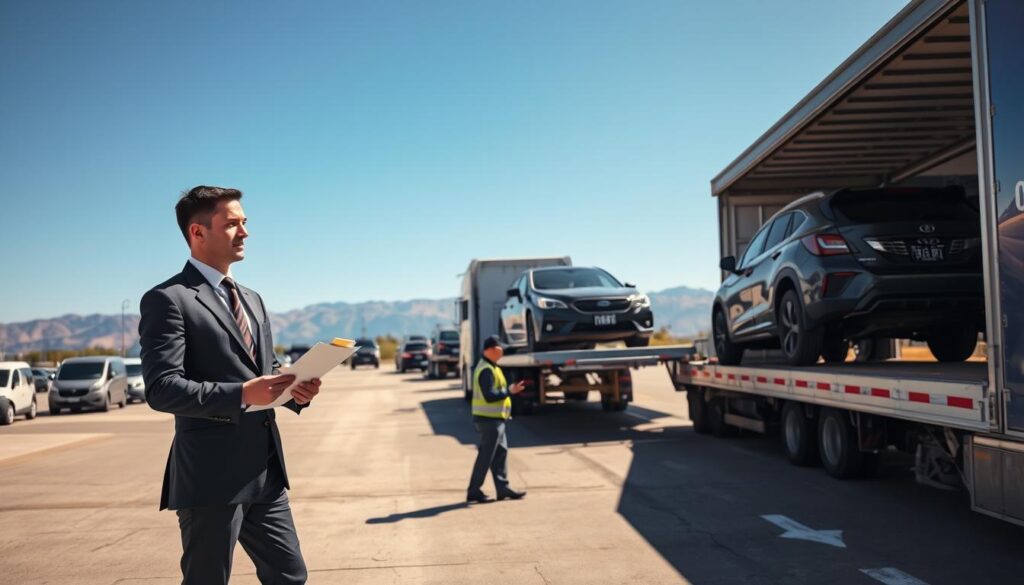
Scheduling is fast: expect a pickup slot within one to three business days of your request. Getting a quote starts the car shipping process and confirms timing with an auto transport coordinator.
Initial Booking and Scheduling
After you get quote confirmation, the coordinator assigns a licensed carrier. Customers in los angeles and other hubs often see earlier pickup windows.
For best rates and preferred dates, book at least two weeks ahead. This secures the carrier and reduces delays during peak seasons.
Pickup and Loading Procedures
At pickup, drivers perform a detailed inspection and take photos to document the vehicle condition. These records protect both parties during transit.
The carrier secures the car with specialized equipment to prevent movement. Transit from Texas typically takes 6–10 days; Washington runs about 1–4 days.
- Updates keep you informed through pickup delivery and arrival.
- After unloading, complete a final inspection and sign the bill of lading.
- Professional carriers handle various vehicles to ensure a safe, efficient experience.
Factors Influencing Your Shipping Costs
Several key price drivers determine what you pay when arranging long-distance vehicle transport.
Distance is the major factor. Longer routes need more fuel and driver time, which raises the final cost. From Texas to California, open carrier quotes usually run $800–$1,900. Enclosed transport ranges from $1,000–$2,400.
Vehicle size matters. SUVs and trucks take more trailer space and often cost more to ship. Modified or oversized vehicles may require specialized carriers and extra fees.
Season and fuel add variability. Summer demand and high diesel prices push shipping prices up. Expedited delivery shortens transit days but increases the price.
- Distance: longer miles = higher cost.
- Vehicle type: size and modifications affect price.
- Carrier choice: open vs enclosed changes the rate.
- Season and fuel: seasonal peaks and diesel affect prices.
- Expedited delivery: faster delivery costs more.
| Factor | Impact on Price | Typical Example |
|---|---|---|
| Distance | High | Texas → California drives up fuel and labor costs |
| Carrier Type | Medium–High | Open: $800–$1,900 · Enclosed: $1,000–$2,400 |
| Vehicle Size/Mods | Medium | SUVs, trucks, lifted or widened vehicles need more space |
| Season & Fuel | Variable | Summer demand and rising diesel increase rates |
Get a quote from a reputable company to see how these factors combine for your shipment. Professionals like RoadRunner Auto Transport provide transparent pricing and clear pickup and delivery schedules so customers can plan with confidence.
Choosing Between Open and Enclosed Carriers
Open trailers move the bulk of vehicles across long routes because they balance capacity and cost. Open transport is the most common option used by major carriers. It provides reliable, efficient car shipping for everyday vehicles.
Benefits of Open Trailers
Open carriers carry many vehicles at once. That scale lowers the per-vehicle shipping cost.
Open trailers are ideal for routine moves and for owners who want a budget-friendly option. They offer frequent routes and shorter wait times.
Advantages of Enclosed Protection
Enclosed transport shields a vehicle from weather, road debris, and dust. It is the recommended option for luxury, classic, or rare vehicles.
Enclosed service typically costs about 50% more than open trailers. For high-value vehicles, the extra protection often justifies the added expense.
“Choose the carrier type based on vehicle value and personal risk tolerance.”
- Open trailers: popular, cost-effective, frequent departures.
- Enclosed carriers: maximum protection, limited capacity, higher cost.
- Professional carriers are vetted to ensure safe handling regardless of trailer type.
For a deeper look at enclosed options and local service, see our guide on enclosed car shipping in Orange County.
Preparing Your Vehicle for Safe Transit
Simple prep steps make loading on the trailer faster and prevent avoidable damage. A clear, short routine before pickup helps the carrier document the condition and complete the job within scheduled days.
Essential Vehicle Preparation Checklist
Follow these practical steps to protect your car and speed the auto transport process.
- Wash the exterior so scratches and dents are visible during inspection.
- Remove all personal items; carriers cannot transport household goods and insurance may not cover them.
- Keep the gas tank at about one-quarter full to reduce weight for safe loading on the trailer.
- Disable the alarm to prevent battery drain during long transit.
- Ensure the vehicle is operable: it must roll, brake, and steer for loading and unloading.
- Take clear photos from all angles before the driver arrives to document pre-shipping condition.
- Remove loose exterior accessories like roof racks or spoilers that could be damaged by wind or debris.
| Action | Why It Matters | When to Do It |
|---|---|---|
| Wash & inspect | Shows existing scratches and protects against dispute | Before pickup |
| Remove items | Avoids uninsured loss and weight issues | Before carrier arrival |
| Gas ~1/4 tank | Reduces weight and fuel cost for transport | Day of pickup |
| Photo record | Documents vehicle condition for claims or verification | Immediately before loading |
Following this checklist helps the driver load vehicles efficiently and reduces delays in the car shipping process. For questions about auto transport procedures, contact the team at (307) 288-5972 or email info@bestcarshippinginc.com.
Navigating California Vehicle Registration Requirements
California enforces tight registration and emissions rules that arriving vehicle owners must handle quickly. Timely compliance matters for anyone using car shipping or auto transport to move into the state.
You must register your vehicle and complete a smog inspection within 20 days of arrival. This deadline applies to most passenger cars and affects how soon you can legally drive after delivery.
Some movers come from states like Washington, which lacks a statewide emissions test. That difference can surprise owners when their car needs a smog check in California.
Window tint and vehicle height rules are strict. Front side windows must allow at least 70% light. Verify tint levels and frame height before delivery to avoid fines.
- Schedule a DMV visit early to avoid penalties.
- Update insurance to California minimums: $15,000/$30,000 liability.
- Prepare inspection records before pickup to speed final registration.
The team provides guidance on paperwork and timelines so you can focus on the move. For help with car shipping, or to ask how to ship car paperwork, contact (307) 288-5972 or email info@bestcarshippinginc.com.
Benefits of Door to Door Auto Transport
Door-to-door service brings your vehicle from driveway to driveway with minimal effort on your part. The carrier picks up and delivers the car at the address you provide. This removes the need to visit a terminal and saves time during a move.
Large carriers may still need a nearby meeting spot if streets have low trees, tight turns, or weight limits. In those cases, the driver will find a safe pickup delivery location close by.
This option is popular for customers moving between states like Washington and California. It provides a seamless experience from loading until final delivery.
- Convenience: direct pickup at home or office.
- Time savings: no terminal drop-off or extra travel.
- Coordination: carriers confirm access in cities such as los angeles.
- Communication: real-time updates keep customers informed during transit.
The company coordinates the carrier and handles scheduling, inspection, and delivery. Customers can get a quick quote, book pickup, and rely on professional car transport that prioritizes safe, timely delivery.
“Door-to-door service makes relocation easier and reduces disruption for customers.”
Managing Transit Times and Delivery Expectations
Transit estimates rely on multiple moving parts, so realistic timing starts with route details.
Several factors influence how long vehicle transport takes. Weather, traffic, road construction, and the driver’s mandatory rest hours change schedules.
Most customers finish the car shipping process within one to two weeks. Longer distances and complex routes add days or weeks.
Factors Affecting Delivery Speed
- Distance and route planning determine basic transit time.
- Seasonal weather and local traffic slow carriers unexpectedly.
- Driver hours and required stops add predictable pauses.
- Express shipping or guaranteed pickup dates speed delivery for an added price.
Plan ahead: book pickup at least two weeks before a firm move-out date to secure carrier availability and better rates.
“Clear timelines start with a confirmed quote and a carrier that communicates updates in real time.”
| Factor | Impact | What customers can do |
|---|---|---|
| Weather | High — may delay by days | Allow buffer days; choose flexible windows |
| Distance / Route | Medium–High — longer routes add days | Confirm route; select experienced carriers |
| Driver Rest Rules | Medium — required stops extend transit | Accept safety-first schedules; track shipment |
Customers can track their shipment for live updates and receive clear communication about any changes to delivery. For local timing guidance or to get a quick quote for car shipping, contact the team.
Why Professional Carriers Are Essential for Long Distance Moves
Long-distance vehicle moves demand carriers with proven insurance and routing expertise. Professional carrier networks matter when distance and interstate rules add complexity.
Required protections include at least $1,000,000 in liability coverage and $100,000 in cargo insurance. These limits protect customers if an accident or loss occurs during transit.
Carriers are vetted for transportation records, accident history, and customer feedback. That vetting reduces risk and ensures experienced drivers handle the load.
Efficient routing is critical for moves to major hubs like los angeles. A strong network of carriers shortens transit time and improves on-time delivery.
- Professional carriers use certified equipment and follow strict loading procedures.
- Using a vetted company avoids the wear and tear of driving your car across states.
- Customers gain clear documentation at pickup and final delivery for claims or verification.
“The quality of the carrier is the most important factor in a successful car shipping experience.”
Choose a company that verifies carriers, shows insurance limits, and provides a transparent quote. For questions about auto transport or to arrange pickup, call (307) 288-5972 or email info@bestcarshippinginc.com.
Seasonal Impacts on Shipping Rates and Schedules
Seasonal demand directly alters quotes, pickup windows, and carrier schedules.
Summer is the peak period for car shipping. High travel demand raises price and stretches carrier availability. Expect longer wait times for pickup and slower booking windows.
Winter brings lower shipping volume and often lower costs. However, mountain routes can face snow and ice. That weather may delay delivery and add days to transit time.
- Book 2–4 weeks ahead during peak months to secure a favorable quote and carrier.
- Plan moves in fall or early spring for lower prices and more flexible times.
- Avoid major holidays to reduce scheduling conflicts and unexpected delays.
“Booking early and choosing flexible windows helps lock in price and prioritize your vehicle.”
The company monitors seasonal factors and works with its carrier network to find the best transport option for each route. For an accurate quote or help scheduling pickup, call (307) 288-5972 or email info@bestcarshippinginc.com.
Handling Paperwork and Inspection Protocols
Clear, consistent paperwork and a step-by-step inspection protect customers and carriers during every transit.
The Bill of Lading is the legal receipt for any car shipping job. It records the vehicle condition at pickup and again at delivery.
You or a trusted adult must be present at both ends. Inspect the exterior, interior, and mechanical condition. Sign the Bill of Lading only after you agree with the recorded notes.
If you see new damage at delivery, document it immediately on the form and notify the company. Carriers must note any changes and begin claims procedures.
- Why this matters: paperwork protects your rights if a claim is needed.
- What we do: we ensure all forms are filled and photos are taken.
- Your role: be present at pickup and delivery and review the condition carefully.
| Document | Action | Who is Responsible |
|---|---|---|
| Bill of Lading | Record pre/post condition, sign | Customer & carrier |
| Inspection Photos | Take and attach to file | Driver and customer |
| Damage Report | Note issues, start claim | Carrier & company |
| Proof of Delivery | Confirm drop-off and timing | Driver and customer |
Questions about the inspection process or paperwork? Contact the team at (307) 288-5972 or email info@bestcarshippinginc.com for a quick quote or guidance on auto transport and shipping timelines.
Specialized Services for Luxury and Exotic Vehicles
Luxury and exotic vehicles require dedicated handling that goes beyond standard transport. Owners should expect enclosed trailers, experienced handlers, and tailored insurance when arranging car shipping for high-value models.
White-glove service often includes padded straps, low-profile ramps, and single-vehicle loads to reduce movement during transit. These measures protect custom paint and delicate trim from road debris and weather.
Requesting a quote for this type of shipping prompts a vehicle-specific assessment. The carrier evaluates the car type, trailer needs, and delivery time to calculate a fair price and timeline.
- Enclosed trailers are recommended for sports cars, classics, and custom-painted vehicles.
- Specialized handlers perform careful loading and unloading to prevent scuffs or scratches.
- Personalized service can include door-to-door delivery and dedicated tracking for peace of mind.
For owners moving high-value vehicles, the extra cost of specialized service is often justified by reduced risk and greater confidence in delivery. For a detailed route or to get a tailored quote for luxury transport, contact the team at (307) 288-5972 or email info@bestcarshippinginc.com.
Regional Logistics for Major California Hubs
California’s major hubs rely on interstate corridors that shape how carriers schedule pickups and delivery windows. The state’s highway network connects key ports and cities, and regional planning keeps transit predictable.
Southern California Logistics
Southern routes require careful timing. Traffic in and around los angeles can add hours during peak periods.
Coordinated pickup schedules and flexible windows reduce delays and keep transport on track.
Northern California Routes
Bay Area congestion affects delivery timing. Urban streets and bridge restrictions influence final stop choices.
Carriers plan around local limits to protect schedules and vehicle condition.
Central Valley Considerations
The Central Valley offers steady freight flow and reliable route options. This corridor is efficient for moving vehicles between north and south.
Planning considers mountain passes and seasonal closures to avoid surprises.
- Regional logistics require knowledge of highways and traffic patterns.
- We use an extensive carrier network to coordinate door and terminal pickup delivery.
- When you get quote, regional factors are included for an accurate estimate.
For precise routing and to ship car with confidence, contact the team at (307) 288-5972 or email info@bestcarshippinginc.com.
Insurance Coverage and Protection Standards
Insurance is the backbone of reliable auto transport service. Every carrier in the network must carry at least $1,000,000 in liability insurance and $100,000 in cargo insurance.
Before any pickup, the company verifies that the carrier’s policy is active and in good standing. This step reduces risk and ensures the vehicle is covered from loading through delivery.
Customers should also review their personal auto insurance. Some policies offer supplemental coverage during transit. Knowing your own limits helps when comparing protection and price in a quote.
- Coverage verified: We confirm carrier insurance before assigning shipments.
- Continuous protection: Your vehicle is covered during pickup, transit, and delivery.
- Customer review: Check personal policies to understand overlap with carrier protection.
“High insurance standards mean carriers accept responsibility for vehicles in their care.”
If you have questions about coverage or need help understanding a carrier’s certificate, contact the team at (307) 288-5972 or email info@bestcarshippinginc.com. Request a quote with confidence—your vehicles are protected every step of the way.
Tips for Reducing Your Overall Transport Expenses
Flexible pickup and delivery windows let carriers group shipments and cut per-vehicle price. This small change often lowers the quoted shipping rate without reducing service quality.
Booking 2–4 weeks in advance secures better quote options and more carrier availability. Early bookings also reduce last-minute fees and improve scheduling during busy times.
- Be flexible with dates: allow a wider delivery window so carriers can bundle loads and reduce cost.
- Consider terminal-to-terminal or meeting at a nearby hub rather than driveway pickup delivery in tight urban areas.
- Compare quotes from multiple companies to see price differences and service levels.
- Book weeks ahead to access lower rates and more carrier choices.
- Understand quote factors like vehicle weight, route, and season so you can choose cost-effective options.
- Avoid peak shipping times such as summer to lower cost and reduce delays.
- Choose open transport for average vehicles when price matters; use enclosed only for high-value models.
- If moving near Los Angeles, meeting a driver in a suburb can save fees for tight street access.
“Small timing shifts and smart pickup choices often produce the biggest savings.”
Get a quote to compare options and secure the right balance of price and service. For local guidance, see our Los Angeles car shipping guide or contact the team at (307) 288-5972 or info@bestcarshippinginc.com.
Conclusion
A clear plan and a vetted carrier make long-distance vehicle moves straightforward and predictable.
Understand cost drivers and transit timelines so you can schedule with confidence. Prioritize carriers with verified insurance and strong delivery records for added protection.
Prepare the vehicle, follow California registration rules, and document condition at pickup and delivery. These steps reduce delays and simplify claims if needed.
The team provides transparent communication and professional handling throughout the transport process. For a personalized quote, call (307) 288-5972 or email info@bestcarshippinginc.com today.