
Choosing the right transport method is a critical decision for owners of high-value vehicles. RoadRunner Auto Transport brings over 30 years of industry experience and offers clear guidance on the best option for each request.
Every shipment needs a tailored plan. Whether a customer values maximum protection or prefers a lower price, the team evaluates transit risks like weather, road conditions, and handling to recommend the proper method.
RoadRunner provides both open trailers and secure enclosed auto transport. The company emphasizes transparent quotes, professional carriers, and careful handling to reduce the chance of damage during delivery.
Proper planning saves time and prevents unexpected costs. Owners moving across the United States or buying online can rely on experienced staff to balance cost, protection, and availability so vehicles arrive in the same condition they left.
Key Takeaways
- Assess protection needs and budget before choosing a transport method.
- RoadRunner Auto Transport has 30+ years of reliable experience.
- Enclosed auto transport offers higher protection; open trailers reduce price.
- Transparent quotes and vetted carriers help limit damage risk during transit.
- Contact the company to get a tailored quote and delivery plan.
Understanding Car Shipping for Sports Cars: Open or Enclosed?
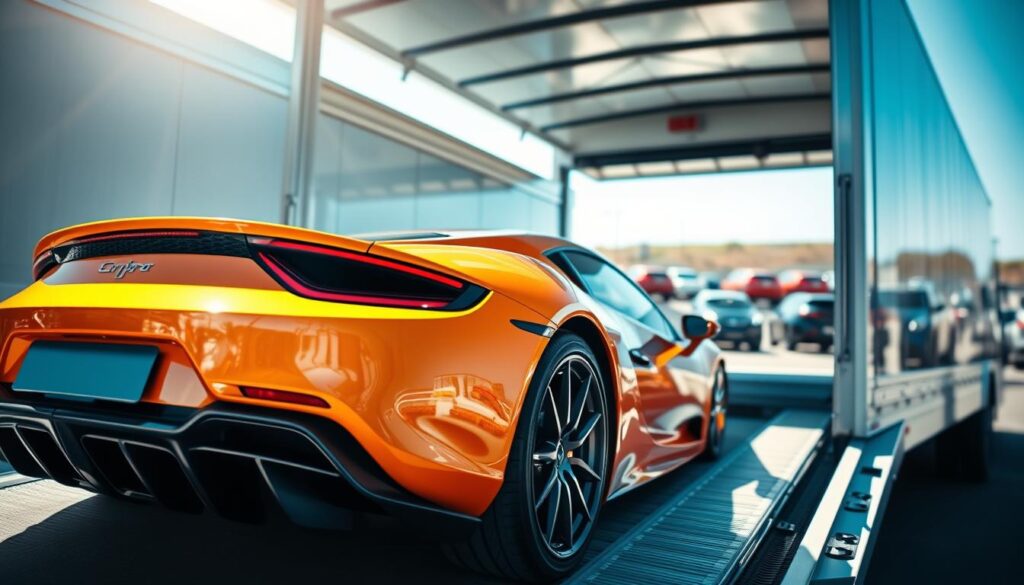
Owners of premium vehicles must weigh risk, budget, and transit conditions when selecting a transport method. Auto transport choices hinge on protection needs and cost constraints.
An enclosed transport option provides a sealed storage space that shields each vehicle from weather, road debris, and potential damage. This method is common when extra care is required for exotic models.
Many customers prefer exposed trailers for affordability. Others choose enclosed auto services to reduce exposure and improve peace of mind.
The company outlines how each carrier type affects delivery timelines and safety when you request a quote. Staff explain how trailers, carrier schedules, and transit routes influence final arrival.
- Compare protection: match needed coverage to available budget.
- Assess risk: consider weather and road debris on long hauls.
- Request a quote: get clear details on services and carrier options.
For practical tips on preparing a vehicle and easing the process, see this stress-free transport guide.
The Mechanics of Open Auto Transport
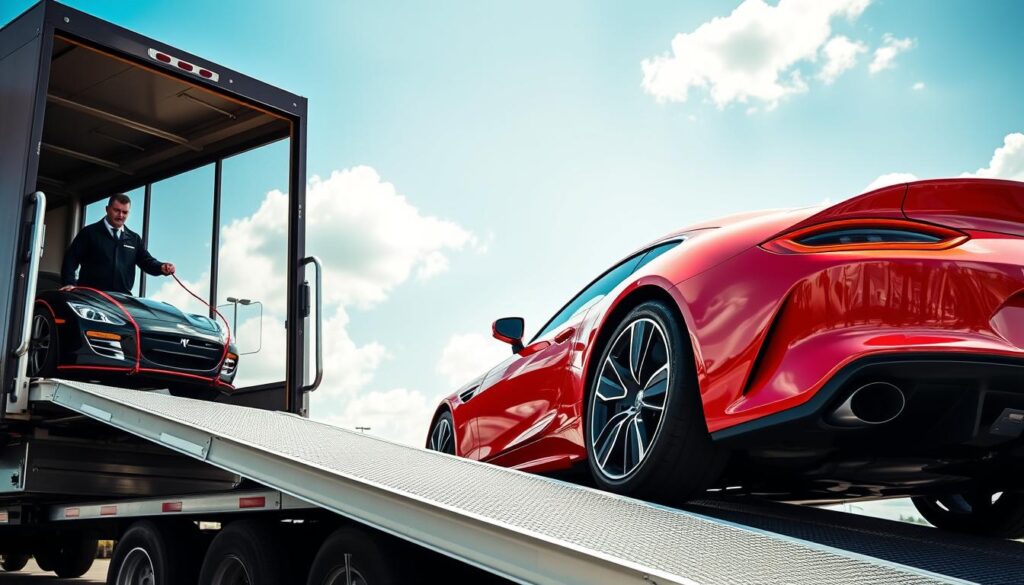
Open trailers move multiple vehicles efficiently, but they expose each load to the elements during transit.
Standard trailer configurations are built to carry up to ten units at once. That capacity makes this method cost-effective and widely available across the United States.
Standard Trailer Configurations
These trailers stack vehicles on two levels. Load plans focus on weight distribution and secure tie-down points. Drivers and handlers monitor the process to limit movement and potential damage.
Exposure to Environmental Elements
Because trailers are uncovered, transported vehicles face dust, road grime, and occasional road debris impacts. Grime is common; visible wear from transit can occur despite secure loading.
“Open carriers offer speed and value, but they do not provide the weatherproof protection of sealed transport.”
- Efficiency: high load numbers reduce per-unit cost.
- Risk: exposure to debris and weather increases cleaning needs.
- Advice: discuss upgrade options with the carrier when extra protection is required.
| Feature | Open Trailer | Practical Impact |
|---|---|---|
| Capacity | Up to 10 vehicles | Lower per-unit cost |
| Protection | Limited (exposed) | Possible dust, grime, debris |
| Availability | High nationwide | Faster scheduling |
| Best use | Daily drivers, non-show vehicles | Practical and affordable choice |
For a detailed look at open carrier services and whether this method fits your needs, see our open auto transport services guide.
The Benefits of Enclosed Carrier Services
Enclosed carrier services give high-value owners a controlled environment that limits exposure to the elements.
Maximum protection comes from fully sealed trailers that block dust, road debris, and direct weather impact. This level of protection reduces the chance of cosmetic damage during transit.
Soft-sided trailers use canvas-like covers and offer lighter, more flexible loading. Hard-sided trailers provide rigid walls and frames, giving superior security and resistance to impact.
Types of Enclosed Trailers
- Soft-sided: lighter, often more cost-effective, good for moderate protection.
- Hard-sided: rigid structure, ideal for high-value and show vehicles.
- Security: fully enclosed units are harder to access, lowering theft risk.
For owners who need a premium option, consider our dedicated enclosed car transport service. It pairs specialized carriers with careful handling to keep vehicles pristine.
| Feature | Soft-Sided | Hard-Sided |
|---|---|---|
| Construction | Canvas-like coverings | Rigid metal walls |
| Protection Level | High vs weather and dust | Maximum against impact and elements |
| Best Use | Value vehicles needing extra care | Exotic, classic, and show-ready units |
| Security | Good | Excellent |
Comparing Protection Levels Against Road Hazards
Not all transit options offer the same defense against gravel, dust, and storms. Owners of high-value vehicles should compare protection levels before choosing a transport method.
Enclosed transport removes most risk from road debris and severe weather. Fully sealed trailers block flying gravel and keep paint finishes safe. This level of protection is often worth the cost for rare or high-value vehicles.
By contrast, open transport exposes a vehicle to dust, road grime, and minor impacts. It remains a reliable option for everyday units, but it does not offer the same environmental safeguards as enclosed trailers.
RoadRunner assesses each request and recommends the proper carrier based on vehicle value and route risks. The team evaluates weather forecasts, road conditions, and trailer types to reduce the chance of damage.
- Consider vehicle value when choosing protection.
- Enclosed trailers prevent most debris-related cosmetic harm.
- Open carriers are cost-effective but more exposed to the elements.
For help comparing carriers and service levels, consult our guide to reliable automobile shipping companies. RoadRunner ensures each carrier meets safety standards to protect your vehicle during transport.
Evaluating Cost Differences and Budget Considerations
A focused review of costs lets owners align protection needs with available funds. On average, enclosed transport runs about $1,500 while open transport averages $1,080. That is roughly a 40% price increase for the higher-protection method.
Transparent quotes show how distance, route, and carrier availability affect the final price. Fewer enclosed trailers on the road can raise lead times and cost. Open trailers remain the more budget-friendly option for many owners.
RoadRunner offers clear estimates so buyers compare price against protection. If budget limits are strict, the open method moves a car reliably and efficiently. If preservation is the priority, the added expense of enclosed car shipping is often justified.
- Tip: Request an itemized auto shipping quotes to see exact line items.
- Consider: availability of carriers and timetable when choosing a method.
Contact the team to get a custom quote and decide which transport option best matches safety needs and budget.
Why Ground Clearance Matters for Sports Cars
Certain low-profile vehicles change how carriers prepare for pickup. When ride height is four inches or less, standard ramps and lifts can cause bottoming out.
Loading Challenges for Low-Profile Vehicles
Low clearance creates loading risk. The undercarriage can catch on a ramp, which risks costly damage.
Drivers must use ramps with shallow angles and secure lift points. Incorrect technique can scratch or bend critical components.
Specialized Equipment Requirements
Special tools protect the vehicle during transit. Carriers should bring hydraulic lifts, low-angle trailers, and adjustable dollies to manage tight clearances.
Road handlers verify equipment before scheduling. This step lowers the chance of damage and reduces unexpected cost on delivery.
| Equipment | Purpose | Impact on Delivery |
|---|---|---|
| Low-angle ramp | Reduces ramp slope | Prevents undercarriage contact |
| Hydraulic lift | Lifts vehicle safely | Secure loading with minimal stress |
| Adjustable dollies | Move wheels independently | Allows tight positioning on trailer |
| Soft straps & pads | Protect body and trim | Limits cosmetic damage from tie-downs |
- Verify carrier equipment before booking a transport.
- Request enclosed car options when clearance is extremely low.
- Inform the team of unique dimensions to get the right trailer and crew.
Assessing Transit Times and Scheduling Flexibility
Transit windows and carrier availability often determine whether a faster pickup is possible.
Open transport generally moves quicker due to high carrier and trailer availability nationwide. That speed lowers wait times and can cut price.
Enclosed transport provides more protection but may require longer lead times. Fewer enclosed units operate, so scheduling can take extra days.
The team works with customers to give realistic delivery estimates based on the selected method and current carrier availability. Clear communication helps manage expectations during transit.
When fast delivery is essential, the company discusses trade-offs between speed and protection. Staff will present competitive quotes that reflect market availability and cost.
Scheduling flexibility is a service advantage. RoadRunner aims to meet preferred dates and updates clients promptly about delays or changes.
Contact the team to discuss timelines and receive a professional quote for your upcoming auto transport or car shipping needs. Email: info@bestcarshippinginc.com. Phone: (307) 288-5972.
| Feature | Typical Transit | Availability | Best Use |
|---|---|---|---|
| Open transport | Faster (shorter lead) | High nationwide | Everyday vehicles needing speed |
| Enclosed transport | Longer lead times | Limited | High-value units needing protection |
| Expedited service | Shortest delivery | By request, extra cost | Time-sensitive moves |
Essential Criteria for Selecting a Shipping Company
Choosing a reputable transport partner begins with three simple checks: credentials, coverage, and records. These steps cut risk and clarify expectations before any pickup date is set.
Verifying Insurance Coverage
Confirm insurance limits and loss procedures. High-value vehicles need clear liability and cargo policies. Ask for proof and request the carrier explain deductible amounts and claim steps.
Tip: get the policy details in writing and compare them against the declared value of the vehicle.
Checking Professional Credentials
Legitimate companies list FMCSA registration and USDOT numbers. RoadRunner Auto Transport has over 30 years of experience, which signals a proven record.
Look for transparent pricing promises too. For example, Sherpa Auto Transport advertises a Price Lock Promise that protects the quoted price.
Reviewing Customer Feedback
Read recent reviews to gauge delivery reliability and damage handling. Pay attention to how the company answers complaints and resolves claims.
“A trustworthy provider will welcome questions about enclosed auto transport standards and carrier safety.”
- Verify registration and insurance before booking.
- Compare experience and price protections across providers.
- Ask for a detailed quote with no hidden fees.
For a vetted list of carriers, see our guide to auto hauler companies. Contact the team at info@bestcarshippinginc.com or (307) 288-5972 to confirm credentials and schedule service.
Preparing Your High-Value Vehicle for Transit
Owners should document every inch of a high-value vehicle before any carrier arrives. Take clear photos from all angles and note existing marks. This creates proof of condition before transport begins.
Remove personal items and valuables. Empty the interior to meet carrier rules and avoid loss. Disable alarms and security systems to prevent disruptions during loading and unloading.
Keep fuel low—about a quarter tank—to reduce weight and meet safety rules. Lock loose panels and secure straps where needed to limit movement on the trailer.
Inspect the vehicle at delivery. Note any new damage on the carrier’s paperwork before signing. If there is a dispute, photos and timestamps speed resolution.
Using enclosed trailers provides top protection, but preparation still matters. The team offers a concise checklist and expert guidance to prepare vehicles for safe national transport.
“A thorough check and clear documentation protect both the owner and the carrier.”
- Document condition with photos.
- Remove items; disable alarms.
- Keep fuel low; secure trim.
| Step | Why it Matters | Owner Action |
|---|---|---|
| Document condition | Proof against delivery damage | Photos, notes, timestamps |
| Remove items | Compliance and safety | Empty interior, take valuables |
| Disable alarms | Prevents false triggers | Turn off systems before pickup |
Questions about specific preparation steps or to request a customized enclosed car shipping guide and quote? Contact the team at info@bestcarshippinginc.com or (307) 288-5972.
Conclusion
The best transport choice balances protection needs, delivery timing, and cost. Evaluate value, route risks, and the desired level of coverage before booking a service.
Enclosed transport offers superior defense for high-value cars and rare vehicles. Open transport remains a reliable, cost-conscious option for everyday cars and routine moves.
RoadRunner focuses on vetted carriers and consistent handling to protect each auto through transit. Clients receive clear quotes and transparent timelines so decisions stay simple and predictable.
Contact the team today at info@bestcarshippinginc.com or (307) 288-5972 to get a personalized quote and discuss the ideal option for your vehicle.