
Choosing the right auto transport option matters. Urban and remote routes change how a vehicle moves from origin to destination. Infrastructure, distance, and access affect time, costs, and delivery windows.
Sherpa Auto Transport keeps a 4.9-star rating from over 8,000 reviews and a BBB A+ accreditation. That record shows reliability when customers request a quote or book door-to-door service.
The company evaluates factors like trailer type, weather, fuel, and insurance. These choices shape costs and the expected days in transit. Whether moving to New York or a remote location, the process aims to give peace of mind.
Professional carriers prioritize vehicle safety and clear communication. This helps customers plan around rates, season, and distance so expectations match the final delivery.
Key Takeaways
- Infrastructure and access drive major differences in transport time and cost.
- Sherpa’s 4.9 rating and A+ BBB status reflect consistent service quality.
- Distance, trailer type, and seasonality influence final quotes.
- Professional carriers protect vehicles with insurance and secure loading.
- Customers should compare rates and delivery windows before booking.
- Options exist for standard cars and high-end vehicles to meet special needs.
Understanding City-to-City Car Shipping vs Rural Pickup
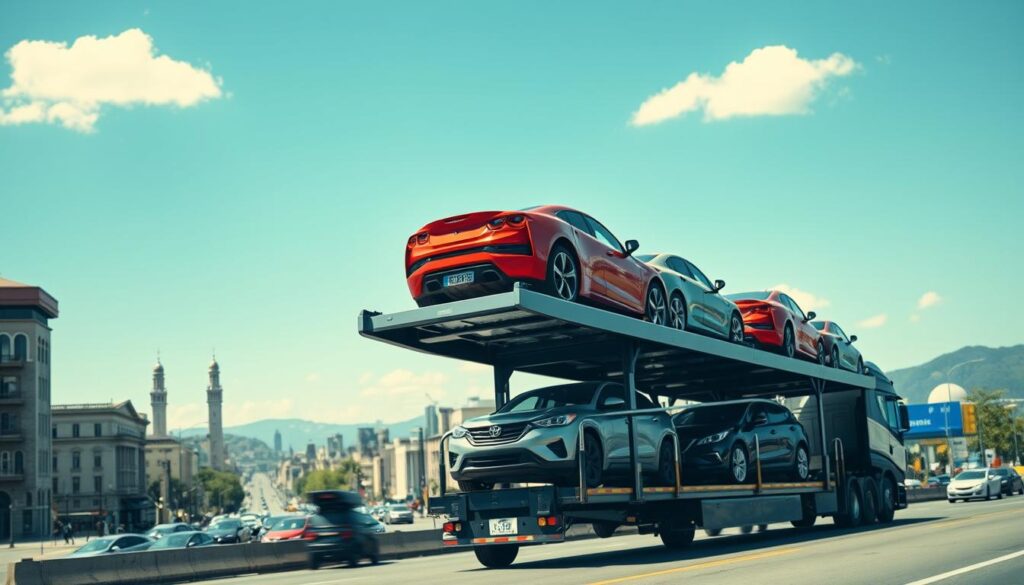
Moving a vehicle between major hubs and remote addresses changes how carriers price and schedule transport. Urban terminals, like New York, give carriers easy access to highways and loading zones. That access often yields more competitive rates and predictable delivery windows.
Rural collection points add time and fuel to the job. Drivers may leave main routes to reach narrow roads or long driveways. Those detours increase cost and extend estimated days in transit.
Distance is one of the clearest pricing factors. For example, transporting a vehicle from Murrieta to New York covers about 2,750 miles and typically costs between $1,300 and $1,650.
Professional auto transport companies use established routes and experience to meet delivery windows. They also account for vehicle type—sedan, SUV, or specialty auto—when offering services and insurance options.
- Urban access often lowers prices and speeds pickup.
- Remote addresses add fuel, time, and handling costs.
- Off-peak months can improve rates and scheduling flexibility.
For a clear estimate, customers can get a transparent quote that reflects distance, routes, and specific service needs.
The Logistics of Urban Auto Transport

Urban auto logistics blend route optimization with flexible pickup windows to reduce delays and costs. Major corridors and local planning help carriers move vehicles efficiently. This section explains how highway access and traffic patterns shape service and delivery expectations.
Major Highway Access
Access to interstates shortens transit days and limits extra miles off-route. For example, Murrieta sits near I-15 and I-215, allowing carriers to plan direct routes that save fuel and time.
By using major corridors, a carrier can consolidate multiple vehicles on one trailer. That consolidation often lowers the overall cost and keeps quotes predictable.
Urban Traffic Considerations
Dense areas such as New York require flexible delivery windows. Traffic and loading restrictions mean carriers coordinate arrival times to avoid delays.
Professional auto transport companies monitor patterns and adjust routes. Every vehicle is insured during transit, with common coverage levels including $1,000,000 liability and $100,000 cargo protection. This adds a layer of protection and reassurance for owners.
For tailored routing and an accurate quote, consider trusted urban auto transport services like those offered here at urban auto transport services. Experienced companies keep delivery windows clear and handle the complexities of city logistics.
Challenges Associated with Rural Vehicle Collection
Remote pickups create practical constraints that affect schedule, equipment, and price. Carriers often must change routes or find nearby meeting points to complete a safe delivery.
Last Mile Delivery Hurdles
Narrow lanes, soft shoulders, and long driveways can block a large trailer. When access is impossible, the carrier arranges a meeting at a highway hub or safe drop point.
Professional auto transport companies coordinate with the customer to locate the best accessible spot. This coordination reduces delays and helps set realistic delivery days.
- Extra time and fuel: trips off main routes increase cost and scheduling complexity.
- Experienced carriers: partners navigate tough terrain and protect your vehicle with full insurance during transit.
- Clear communication: direct updates between company, carrier, and owner prevent surprises at the door.
| Issue | Common Solution | Impact on Service |
|---|---|---|
| Narrow roads | Use nearby highway hub or smaller lift service | Longer pickup time, modest cost increase |
| Remote destination | Coordinate exact meeting point and window | Improved safety, clear delivery days |
| Unpredictable terrain | Dispatch experienced carrier with proper equipment | Higher reliability, slightly higher cost |
For complex requests, customers can consult vetted car freight companies by visiting car freight companies. BestCarShippingInc coordinates carriers to ensure safe, timely transport to even the hardest-to-reach destinations.
Cost Drivers in Modern Vehicle Shipping
Several key factors determine how much you will pay to move a vehicle across miles.
Distance is the most direct driver of price. Longer routes increase fuel use and driver time, which raises the final cost and the estimated days in transit.
Vehicle type also matters. Heavier or oversized cars take more space and require special handling, so prices rise for SUVs and other large models.
Fuel changes flow through to customers. When market fuel costs climb, carriers often add surcharges that reflect current prices.
- Real-time data helps companies give an accurate quote.
- Pickup and delivery location shape routes and time on the road.
- Flexible dates let carriers bundle vehicles and lower your price.
| Factor | How it affects cost | Customer action |
|---|---|---|
| Distance (miles) | Higher mileage increases fuel and labor charges | Consolidate routes or allow flexible days |
| Vehicle type | Size/weight can require special trailers or permits | Disclose exact model and measurements |
| Market fuel & carrier availability | Fluctuations lead to surcharges or limited slots | Book early and compare offers |
| Pickup/delivery location | Remote spots add time and handling fees | Use nearby hubs when possible |
Our team guides each customer through these factors and works with vetted companies to reduce unnecessary miles and costs. For a clear estimate, see current car shipping prices.
Comparing Open and Enclosed Trailer Options
How a vehicle travels—open or enclosed—shapes protection levels, delivery timing, and overall costs. Choosing the right trailer type helps owners balance budget and protection.
Benefits of open trailers
- Open trailer transport is the most common and cost-effective option for standard cars. It offers reliable service and lower cost.
- Carriers can consolidate more vehicles on one trailer, which often reduces price and improves scheduling.
- Open trailers keep delivery times predictable for many routes and reduce days in transit when routes are direct.
Enclosed trailer service is recommended for luxury, classic, or exotic vehicles that need complete protection from weather, road debris, and dust.
Expect enclosed transport to cost about 50% to 65% more than open options. That premium buys added security and peace of mind.
Professional auto transport companies offer both options. Carriers inspect each vehicle before loading and document condition to ensure a safe delivery. Our team helps compare costs and benefits so owners get the right service for their vehicle and budget.
Seasonal Impacts on Transport Rates and Availability
Demand shifts across the year can change how available carriers are and what prices customers pay. Peak months such as summer and holidays push up demand for car shipping and may require bookings several weeks ahead.
Weather affects route choices and delivery time. Storms or winter conditions force carriers to reroute, adding miles and days to transit.
Our team factors seasonality into every quote. That helps provide accurate pricing for vehicle transport and avoids last-minute surprises.
- Snowbird months increase demand and limit carrier options.
- Off-season bookings often mean lower prices and flexible delivery windows.
- Fuel swings and longer routes in bad weather can raise final cost.
| Season | Typical effect | Owner action |
|---|---|---|
| Summer / Holidays | High demand, higher prices, limited slots | Book 3–6 weeks early |
| Winter | Weather delays, reroutes, added miles | Allow extra delivery days |
| Off-season | Lower costs, more carrier options | Be flexible with pickup dates |
Planning ahead and staying flexible are the best ways to secure a fair price and timely pickup. For a tailored quote, contact the team at (307) 288-5972 or email info@bestcarshippinginc.com.
Preparing Your Vehicle for Safe Transit
Preparing a vehicle before transport reduces delays and protects owners from disputes. A short checklist clears up expectations and speeds the loading process.
Documenting Vehicle Condition
Before the carrier arrives, take dated photos of every side, the interior, and any existing damage. Photos are your record if discrepancies arise after delivery.
All carriers in our network carry at least $1,000,000 liability and $100,000 cargo insurance. Still, clear documentation helps speed claims and protects owners.
Removing Personal Items
Remove all personal belongings. Personal effects are not covered by the carrier’s insurance and can shift during transit.
Empty the trunk, glove box, and under-seat storage. Lock loose compartments and note any aftermarket parts on your documentation.
Battery and Fluid Checks
Verify the battery can hold charge and top off fluids as needed. Leave about a quarter tank of fuel so the driver can move the vehicle if required.
Disable alarms and fold mirrors if needed. These small steps prevent loading delays and help ensure a prompt delivery within the expected days.
Proper preparation helps prevent weather- or distance-related delays and gives the carrier a clear understanding of your vehicle’s condition. For detailed guidance, consult our vehicle preparation guidelines or contact customer service at (307) 288-5972 or info@bestcarshippinginc.com.
Navigating State Regulations and Documentation
Each state enforces its own registration, emissions, and insurance standards for transported vehicles.
Navigating state regulations is a vital part of the car shipping process. For example, California requires new residents to register a vehicle with the DMV within 20 days.
Owners must also ensure the vehicle meets local emission rules. In many states, a smog check is mandatory soon after delivery.
Professional auto transport services guide customers through necessary paperwork. They reduce delays and the risk of fines at delivery.
“Prepare documents in advance and confirm insurance levels so the transfer is smooth and compliant.”
- Verify insurance meets the new state’s minimum before delivery.
- Confirm emission or safety inspections required within the first days after arrival.
- Ask the carrier about local weather rules like snow-tire requirements in cold regions.
| Requirement | Typical Action | Impact on Delivery |
|---|---|---|
| Registration deadline | File with local DMV within stated days | Avoids fines; may affect legal use of vehicle |
| Emissions/safety check | Schedule local smog or inspection | Needed for title transfer; can add days |
| Insurance minimums | Confirm/adjust policy before arrival | Prevents coverage gaps at delivery |
Preparing documentation in advance streamlines the process. The team works with experienced carriers familiar with state rules to ensure a hassle-free delivery.
For guidance, contact the service desk at (307) 288-5972 or email info@bestcarshippinginc.com.
Strategic Tips for Reducing Shipping Expenses
Smart timing and small flexibility choices can cut transport bills without reducing protection.
Book your car shipping at least two to three weeks ahead. Early booking secures better rates and more carrier options.
Allow a five-day pickup and delivery window. That margin gives carriers room to consolidate routes and lower your cost.
- Choose major hubs: flexible locations near highways reduce extra miles and handling fees.
- Pick an open trailer: the open option is the cost-effective choice for most standard cars.
- Compare quotes: get multiple offers from reputable companies to find the best value.
Ship during off-season months when demand and rates tend to fall. Our team advises customers on timing and routing to cut costs without sacrificing safety or insurance coverage.
Work with a professional company to use their carrier network and secure the most efficient, affordable route. For help, call (307) 288-5972 or email info@bestcarshippinginc.com for a clear quote and service options.
Conclusion
Good communication and careful logistics cut delays and keep your vehicle safe during transit. Professional providers coordinate schedules, offer clear quotes, and reduce uncertainty so delivery meets expected time frames.
Choosing the right service requires thinking about protection, cost, and the specific needs of your vehicles. Proper preparation and paperwork make the entire process smoother and offer real peace mind.
Many people prefer professional auto transport for long moves. Trusted teams provide tracking, updates, and support to save you time and stress. For guidance on state moves, consult this state-to-state transport guide.
Questions? Call (307) 288-5972 or email info@bestcarshippinginc.com for prompt answers and clear scheduling.