
BestCarShippingInc recognizes that online vehicle purchases became as routine as grocery orders by 2025. Buyers now depend on reliable logistics to protect an investment from pickup through delivery. Quick, clear planning cuts risk and keeps the condition intact.
BestCarShippingInc.com provides professional auto transport and transparent communication. Call (307) 288-5972 or email info@bestcarshippinginc.com for an accurate quote and timeline. The company pairs experienced carriers with verified insurance and clear tracking.
Researching reputable companies with strong reviews is the first step. Secure early quotes to control cost and expected delivery time. Confirm coverage and carrier practices to reduce the chance of damage during transit across state lines.
Key Takeaways
- Online purchases now require professional transport for safe delivery.
- Get an early quote and verify insurance coverage before booking.
- Choose companies with positive reviews and experienced carriers.
- Transparent communication keeps customers informed during the process.
- Plan ahead to protect condition and limit cost and time risks.
Understanding the Logistics of How to Ship a Car Bought Online
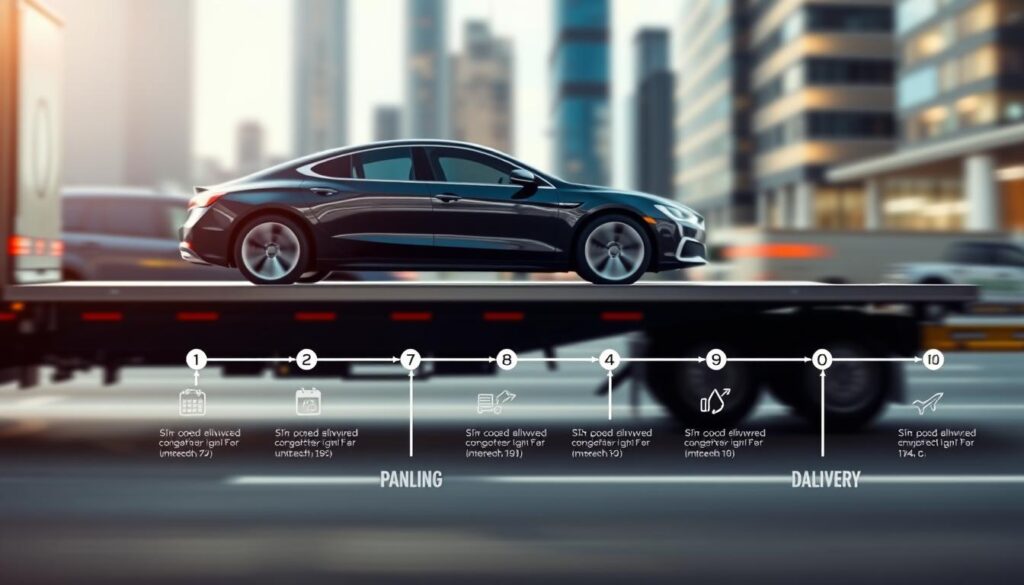
A clear timeline for transport rests on carrier schedules and the path between locations.
Understanding Delivery Timelines
Most transport companies provide a 2–5 day pickup window. Regional hauls of 500–800 miles usually arrive in 3–5 days.
Coast-to-coast trips often take 7–10 days. Weather and driver availability can change those estimates.
Expedited service is available when time is critical but it increases cost. Scheduling during March–May may lower fees and improve availability.
Choosing Between Door-to-Door and Terminal Shipping
Door-to-door delivery brings the car to your home for convenience and less extra travel. Professional carriers focus on safe handling from pickup to the delivery location.
Terminal-to-terminal can cut price but requires travel to industrial areas for drop-off and pickup. Consider distance from your home and the carrier’s route when choosing a way forward.
For route specifics and regional guidance, review the Florida to North Dakota route as an example of timing and carrier planning.
Evaluating Your Transport Method Options
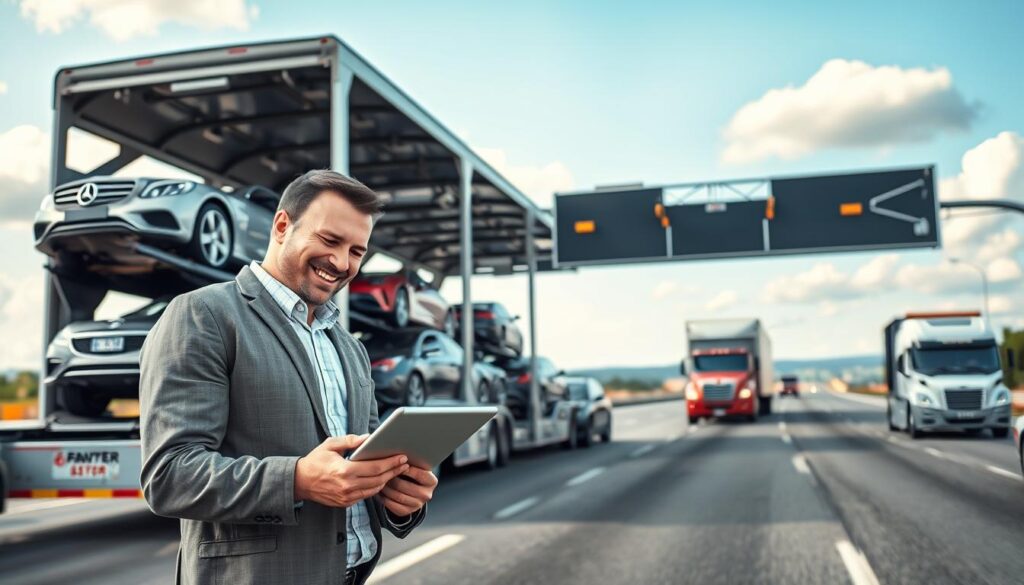
Selecting the right carrier begins with matching your vehicle’s needs to the available transport options.
Comparing Open and Enclosed Transport
Open transport is the industry standard. Carriers use two-level trailers that often carry up to ten vehicles for efficiency.
Enclosed auto transport shields cars from rain, road debris, and weather. It adds about 30–40% in cost and suits high-value, luxury, or classic cars.
| Method | Protection | Cost | When to Choose |
|---|---|---|---|
| Open transport | Standard; exposed to elements | Lower | Everyday cars, tight budgets, broad availability |
| Enclosed transport | High; blocks road debris | Higher (30–40% more) | Luxury, classic, or collector vehicles |
| Carrier practice | Professional securing | Included | Any vehicle requiring care |
Professional drivers secure all vehicles on the trailer. The right option depends on your car type, budget, and acceptable risk level. For tips on planning and timing, review this car shipping guide.
Calculating the True Cost of Vehicle Delivery
Understanding final cost requires more than a per-mile estimate. Short hauls under 200 miles often run near $2.92 per mile (UShip, July 2022). Long hauls over 1,000 miles fall closer to $0.78 per mile.
In 2025, open transport for trips under 500 miles typically costs $400–$600. Cross-country moves most often range $1,200–$1,600.
Enclosed transport adds about 40% more but offers greater protection for high-value cars.
“Always confirm that the quote includes all service fees and insurance to avoid surprises on delivery.”
| Factor | Effect on Price | Notes |
|---|---|---|
| Distance (miles) | Higher miles, lower per-mile rate | Short runs cost more per mile |
| Vehicle size/weight | Increases price | Heavy or oversized cars require more space |
| Pickup/delivery location | Accessibility fees | Urban or remote locations alter cost |
| Service level | Open vs enclosed transport | Enclosed is ~40% pricier |
Keep fuel near one-quarter tank to lower weight and fees. Use an instant online calculator for a reliable number. Compare prices and reviews from multiple companies. For scheduling and interstate guidance, request a tailored quote from BestCarShippingInc.
Preparing Your Vehicle for Safe Transit
Preparing the vehicle correctly reduces risk and speeds the inspection process. Small steps before pickup protect the car and simplify the delivery process.
Cleaning and Personal Belongings
Remove all personal items. Most transport companies will not accept vehicles with belongings inside.
Wash the exterior so pre-existing damage is easy to spot. A clean finish helps the driver and seller note condition clearly.
Managing Fuel Levels
Keep the tank near one-quarter full. That amount allows the driver to move the vehicle without adding unnecessary weight or cost.
Disable any alarm system before the driver arrives. This prevents delays during loading.
Documenting Vehicle Condition
Take 8–10 clear photos. Include the dashboard and all four sides. Capture close-ups of any existing scratches or dents.
The seller should join the pre-delivery inspection so all damage is listed on the Bill of Lading. This step protects both buyer and seller if a dispute arises.
- Tip: Keep keys, registration, and proof of insurance accessible for the carrier.
- Confirm the driver can access the vehicle and that the location is ready for pickup.
Proper prep is a vital part of a stress-free shipping experience. For tailored guidance and reliable scheduling, review BestCarShippingInc’s car shipping services or call (307) 288-5972.
Essential Documentation and Paperwork
Proper paperwork protects the buyer and clarifies the vehicle’s condition at every stage.
The Bill of Lading is the critical document. It is signed at pickup and again at delivery. This record confirms the vehicle’s condition and serves as proof of transport.
Make sure the seller brings the title, bill of sale, and any required transfer forms. Verify that signatures and dates are complete on the title for a smooth legal transfer.
Provide the driver with contact details, gate codes, and access instructions for the pickup location. A short inspection with the driver creates a condition baseline for comparing damage at delivery.
Always have insurance details and a signed transport agreement before the truck arrives. Make copies of every document and keep them in one folder for quick access.
| Document | Purpose | Action |
|---|---|---|
| Bill of Lading | Proof of transport and condition | Sign at pickup and delivery; keep copy |
| Title / Bill of Sale | Ownership transfer | Confirm signatures, dates, and notarization if required |
| Insurance & Transport Agreement | Coverage and service terms | Verify limits and keep signed copy before loading |
| Inspection Photos | Visual record of condition | Take 8–10 photos with driver present |
Tip: Organize all paperwork and photos in a single folder. This simple step speeds claims, reduces disputes, and keeps the shipping process professional.
Navigating Pickup and Delivery Challenges
Rural pick-ups often force detours that raise miles and final price.
Remote locations may require meeting the driver partway. That adds time, gas, and cost. Confirm access and parking before booking.
Seasonal surges—like snowbird moves—tighten schedules and raise price. Plan earlier for fall and spring moves.
Weather delays are common. Carriers prioritize safety, so delivery windows can shift during storms or heavy road debris.
Auction yards often add storage fees of roughly $35 per day after three free days. Non-operational vehicles may need a winch; expect $150–$300 extra.
Clear communication with the driver and seller prevents most problems. Confirm the exact address, hours, and the person releasing the vehicle before pickup.
| Issue | Impact | Typical Cost/Note |
|---|---|---|
| Rural detours | Higher miles, longer time | May require customer meet-up |
| Seasonal demand | Limited slots, higher price | Book early in peak months |
| Auction storage | Daily fees after grace period | ~$35 per day after three days |
| Non-operational vehicle | Requires winch | $150–$300 added fee |
For reliable planning and a tailored quote, review local options like car shipping in Scottsville or call (307) 288-5972.
Protecting Your Investment with Insurance
Verify the carrier’s policy before pickup. Ask for proof of insurance and confirm limits that match your vehicle’s value.
Verifying Carrier Coverage
Every legitimate transport company carries cargo insurance. That does not guarantee glass or aftermarket parts are covered.
Read the fine print. Check exclusions and deductibles. A clear policy shows what damage is paid and what you must claim on your own insurance.
Keep your comprehensive auto coverage active during transit. That extra layer often fills gaps if the carrier’s coverage is insufficient.
- Ask the carrier for a certificate of insurance.
- Compare policy limits to the vehicle’s value and condition.
- Keep the Bill of Lading for any claims; it documents condition at pickup and delivery.
“Always request insurance documentation and verify carrier credentials before releasing the keys.”
When in doubt, contact your insurer and confirm coverage during transport. For carrier credentials and local guidance, review carrier credentials at carrier credentials or call (307) 288-5972.
Identifying Red Flags and Scams
A careful check of credentials can stop a scam before any money changes hands.
Verify any carrier in the FMCSA database using SAFER at dot.gov. A valid DOT number proves the company is registered and operating legally.
Be wary of firms that demand full payment upfront. Standard practice is a deposit with the balance due at delivery. If a quote seems unrealistically cheap, treat it as a red flag.
Watch for pushy representatives who avoid clear answers or cannot supply a DOT number. Confusing responses about insurance, pickup hours, or delivery time are signs to walk away.
Check reviews and compare prices from multiple companies. Reliable companies publish insurance details and clear terms. RoadRunner Auto Transport, for example, lists decades of experience and a large certified carrier network.
- Do: Request written quotes and proof of insurance.
- Don’t: Send full payment before the vehicle reaches your home.
- Verify: DOT number, online reviews, and carrier credentials.
“If a price seems too good to be true, the company may disappear after taking your deposit.”
Confirming credentials prevents surprises on delivery and protects both buyer and seller. For assistance, contact BestCarShippingInc at (307) 288-5972 or info@bestcarshippinginc.com.
Conclusion
A clear endgame and careful checks make arrival day straightforward and stress-free.
Plan every step: research carriers, confirm documentation, and prepare the vehicle. Know the expected time window and the likely cost before you commit.
Verify insurance and carrier credentials. Confirm the exact pickup address and the delivery location, so the vehicle reaches your home without delay.
Use an instant online quote tool to set a realistic budget and schedule. With proper prep and a trusted partner, the final leg of your purchase finishes cleanly and confidently.
Questions or ready to book? Call (307) 288-5972 or email info@bestcarshippinginc.com.