
SGT Auto Transport offers clear guidance to owners who worry about their vehicle during transit. Industry data shows that open trailer transport moves millions of units each year with proven procedures.
Clients often ask about exposure to weather and road debris. Trained drivers use industry-standard tie-downs and load checks to keep each vehicle secure from pickup to delivery.
Comprehensive insurance covers shipments from the moment a licensed driver inspects the vehicle. For specific routing and cost details, the company explains options and protections at (307) 288-5972 or info@bestcarshippinginc.com.
Readers may also review a detailed guide on typical open transport practices and affordability in Sunnyvale via this open transport guide.
Key Takeaways
- Open trailer transport is a common, well-established method for moving vehicles nationwide.
- Drivers secure loads with standard equipment and perform routine checks during transit.
- Insurance protects the vehicle from pickup through delivery.
- SGT Auto Transport provides direct explanations and customer support by phone and email.
- Consult the linked guide for local route and pricing context.
Understanding Open Car Shipping
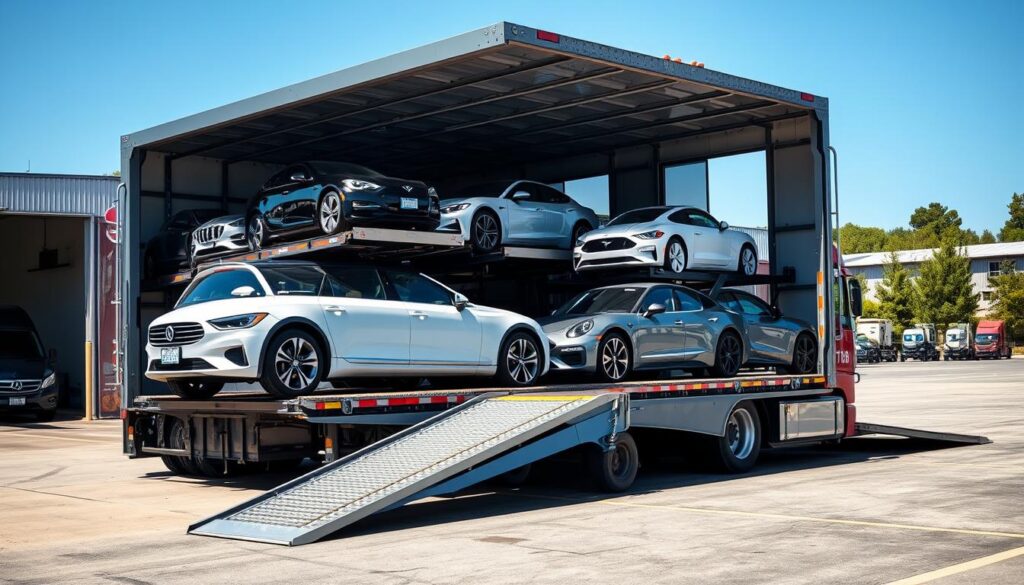
Carriers in the United States rely on exposed multi-level trailers to move vehicles with speed and cost-efficiency. Roughly 90% of the more than 12 million annual moves by FMCSA-licensed carriers use this method.
How the Process Works
The process begins when a professional carrier inspects and loads a vehicle onto a multi-level truck. Drivers secure each vehicle with industry-standard tie-downs and perform routine checks during transit.
Common Trailer Types
Most carriers use 7- to 10-vehicle multi-tier trailers. This setup mirrors manufacturer logistics and keeps schedules consistent across major corridors.
“Using standardized trailers lets carriers move more units per trip and pass savings to customers.”
- Efficiency: Higher capacity lowers per-vehicle cost.
- Reliability: Consistent routing and schedules.
- Practicality: Preferred for everyday vehicles over enclosed options.
| Feature | Exposed Multi-Level | Enclosed Transport |
|---|---|---|
| Capacity | 7–10 vehicles | 1–3 vehicles |
| Cost | Lower per vehicle | Higher per vehicle |
| Typical Use | Standard everyday vehicles | Luxury or modified vehicles |
Is Open Car Shipping Safe for New Cars?
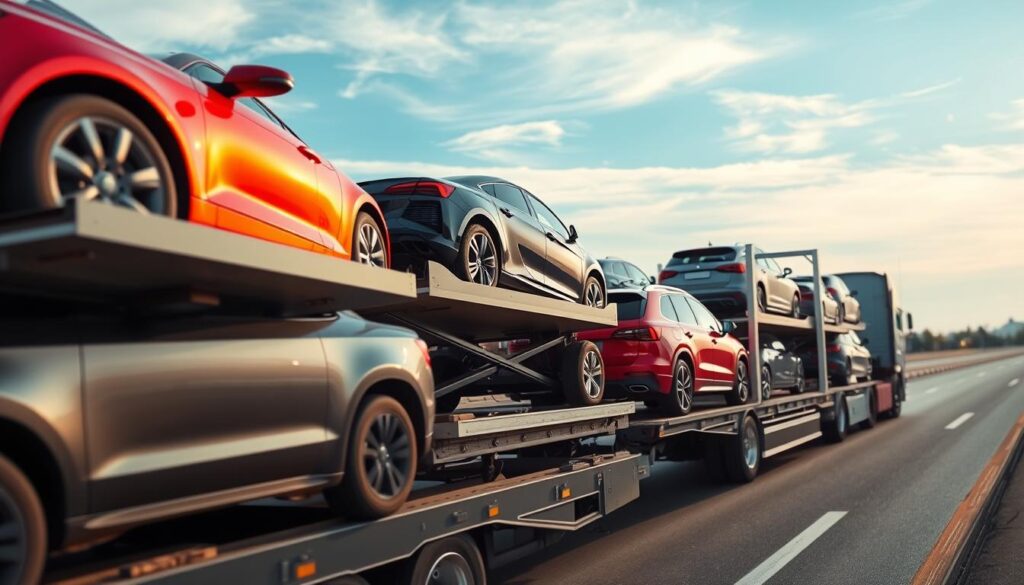
Many owners worry about exposure during transit. Modern trailers use metal beams and crossbars that act as a physical shield. This design helps deflect road debris and reduce direct hits to paint and trim.
Vehicles are fastened with chains or locking tie-downs to keep them stable from pickup to delivery. That restraint limits movement and lowers the chance of contact between units on multi-level trailers.
Exposure to weather and road debris is real but often mirrors what a vehicle experiences on a highway drive. Many people find that professional carrier handling and routine load checks reduce overall risk compared with self-driving long distances.
Insurance held by reputable carriers covers most damage scenarios. For those who prefer extra protection, enclosed transport remains an available option.
“Professional trailers and trained drivers provide consistent protection across long routes.”
To learn more about choosing the right method, review this auto transport service guide.
Benefits of Choosing Open Transport
A wide carrier network lets most customers schedule pickup within days, not weeks. This speed matters when deadlines or moves are tight.
Lower cost and greater capacity drive the main advantage. Multi-level trailers carry seven to ten vehicles per trip. That reduces fuel use and lowers the per-vehicle price compared with enclosed options.
Efficiency and Speed
Auto transport via exposed trailers often allows pickup in 1–5 days. Many carriers maintain frequent runs, so time on the road is shorter.
- Competitive price from higher load factor and fuel savings.
- Fast pickup windows thanks to a broad truck network.
- Trained drivers secure each vehicle with industry-standard tie-downs to give reliable protection.
| Benefit | Open Transport | Enclosed Option |
|---|---|---|
| Capacity | 7–10 vehicles | 1–3 vehicles |
| Typical Price | Lower | Higher |
| Pickup Time | 1–5 days | Variable, often longer |
When Enclosed Transport Becomes the Better Choice
Enclosed transport is the preferred option when value and condition make protection the priority. This method offers a fully shielded environment that removes exposure to rain, snow, road debris, and salt.
Luxury and exotic vehicles benefit most from this approach. Enclosed trailers keep finishes pristine and reduce the risk of damage during long hauls.
Lowered or Modified Vehicles
Modified and lowered cars often require special handling. Enclosed trailers with hydraulic liftgates prevent scraping during loading.
Protection Against Road Salt
In the Northeast and Midwest, road salt causes corrosion quickly. Choosing enclosed shipping removes that exposure entirely.
- Cost vs. protection: Enclosed transport typically costs about 30–60% more than open methods, often around 35% extra on average.
- Secure tie-downs: Enclosed carriers use soft-strap tie-downs that reduce suspension and body stress.
- Peace of mind: This option minimizes dust, grime, and potential damage to investment-grade vehicles.
| Use Case | Why Enclosed? | Typical Benefit |
|---|---|---|
| Luxury / Exotic | Full weather and debris shielding | Preserves finish and resale value |
| Lowered / Modified | Hydraulic liftgates, careful loading | Prevents undercarriage damage |
| Winter Routes | Avoids salt and corrosion | Long-term protection against rust |
“Enclosed trailers offer unmatched protection for high-value vehicles.”
For specialist advice and quotes, contact SGT Auto Transport at (307) 288-5972 or info@bestcarshippinginc.com.
Analyzing the Role of Cargo Insurance
Cargo insurance is the financial backbone of any professional vehicle transport service. It ensures owners have recourse if a carrier causes physical damage during transit.
Every reputable auto transport company must carry cargo insurance. Limits vary by carrier and method.
- Open transport carriers typically list limits between $100,000 and $250,000. This suits most standard cars and everyday vehicles.
- Enclosed transport providers often offer higher coverage. Limits can range from $250,000 to $1,000,000+ for luxury and exotic vehicles.
Insurance covers physical damage caused by the carrier. Typical claims include scrapes during loading or impacts inside a trailer.
“Confirm policy limits and covered events before the shipment begins.”
Verify the policy with the company before pickup. Ask for written proof of coverage and details about deductibles and claims procedures.
Understanding insurance helps owners choose the right option, balance protection versus cost, and reduce surprise expenses after delivery.
Factors Influencing Your Shipping Costs
How much a shipment will cost depends on several clear factors. Distance and market demand set the baseline price. Seasonal peaks raise rates as more people move vehicles between regions.
Vehicle condition and operability shape fees. Inoperable units need winch assistance and extra time to load. That equipment and labor increase the final cost compared with a drivable vehicle.
Providing accurate make, model, and operable status when you request an instant quote helps carriers plan space on the trailer. Accurate details reduce surprises and avoid last-minute adjustments.
Quick cost considerations
- Distance and route complexity influence base transport costs.
- Seasonal demand, like winter or migration months, can raise rates.
- Inoperable vehicles often incur higher fees due to winch use and special handling.
SGT Auto Transport offers an online instant quote calculator and live advisors. Call (864) 546-5038 to get a transparent estimate and advice tailored to your shipment. Clear preparation and honest vehicle details often secure a better price from the selected carrier.
Preparing Your Vehicle for Transit
A clear pre-shipment checklist reduces risk and speeds inspections at pickup. Owners should wash the exterior so any existing damage is visible.
Photograph the vehicle from all angles. Take close shots of trim, bumpers, and wheels. These images support an insurance claim if damage occurs.
Remove personal items heavier than 100 pounds and anything above the window line. Most carriers do not cover such items under cargo insurance.
Disable aftermarket alarms to avoid battery drain during transport. Keep the fuel tank at a quarter or less to reduce weight and handling needs on the trailer.
These steps help carriers load faster and reduce the chance of damage. Clear documentation and simple prep lower cost and speed delivery.
“Documenting condition and lightening load make the transport process more efficient.”
- Wash and photograph the vehicle.
- Remove heavy personal items.
- Disable alarms and limit fuel.
| Step | Why It Matters | Quick Tip |
|---|---|---|
| Wash & document | Shows pre-existing damage | Use dated photos |
| Remove personal items | Not covered by insurance | Keep valuables with you |
| Disable alarms & limit fuel | Prevents battery drain and lowers weight | Leave battery connected if testing needed |
For scheduling and carrier guidance, visit car shipping and auto transport Upton or contact support at (307) 288-5972.
How to Vet Your Auto Transport Carrier
Start by asking for written proof of coverage and regulatory authority before you book. A reputable broker or company will supply a certificate of insurance (COI) without hesitation. Review the COI for policy numbers and coverage limits tied to your shipment.
Next, verify USDOT and MC authority through the FMCSA’s SAFER registry. This step confirms the carrier is legally allowed to transport vehicles and shows safety ratings you can trust.
Check the carrier’s safety record. Look for clear compliance with drug and alcohol testing and hours-of-service rules. A transparent record signals a professional team that prioritizes protection and reduces the chance of damage.
If shipping a luxury or high-value car, ask about experience with enclosed car shipping and enclosed trailers. Specialized handling lowers risk even if it raises the price.
“Requesting documentation and asking direct questions reveals whether a carrier matches your needs.”
- Request COI and confirm insurance limits.
- Verify USDOT/MC in the SAFER registry.
- Ask about enclosed transport experience for luxury vehicles.
For help vetting options, contact SGT Auto Transport at (307) 288-5972 or info@bestcarshippinginc.com.
Navigating Seasonal Shipping Challenges
Winter months change both cost and risk when a vehicle moves long distance. Snowbird routes from the Northeast to Florida often run 15–25% above standard rates between November and April.
Road salt is a silent threat. Salt spray can reach the underbody of a vehicle on an exposed trailer and speed corrosion over time. That damage affects resale value and long-term condition.
Many owners choose enclosed shipping during winter to eliminate exposure to snow, ice, and corrosive road debris. Enclosed carriers and enclosed trailers provide extra protection when weather raises the stakes.
- Plan early: Peak seasons reduce availability of high-quality enclosed carriers.
- Consider cost vs. protection: Extra expense often acts as corrosion insurance for luxury vehicles.
- Check insurance: Confirm coverage limits for winter risks before booking.
For a focused view on price impacts and to compare options, review details on shipping costs and choose the transport that best protects your vehicle and timeline.
Conclusion
Deciding which transport method fits a vehicle comes down to balancing protection and budget.
Open enclosed and enclosed options each offer trade-offs. Open transport is a cost-effective way to move most everyday cars. Enclosed shipping is the better choice when value and finish matter most.
Always work with a vetted carrier that carries clear insurance and has strong service records. Ask for written coverage and confirm estimated transport costs and final price before booking.
Questions about a specific move? Call (307) 288-5972 or email info@bestcarshippinginc.com. Learn more and easily ship your car to another state with guidance tailored to your needs.