
Quick, accountable delivery is essential when a buyer secures a vehicle at sale. Phoenix serves as a major inland redistribution hub in the Southwest, so many buyers arrange shipping immediately after release to keep inventory moving.
Professional auto teams use documented condition checks and appointment-based pickup. This reduces idle time and limits handling. Fewer handoffs mean fewer risks to the purchased car during the first mile.
Decisions on day one shape the full journey. Buyers choose open or enclosed carriers, door-to-door or facility delivery, and standard versus express timelines. Each choice affects cost and ETA.
Cost transparency and timing clarity are core promises. Quotes reflect route demand, distance, vehicle type, and pickup windows. Later sections will cover vetted carriers, verified insurance, and aligned release documentation to build trust.
Key Takeaways
- Phoenix is a key origin market for moving inventory into major U.S. regions.
- Professional dispatch and condition checks protect purchases at release.
- Buyers decide on carrier type and delivery method on day one.
- Transparent quotes depend on route demand, distance, and vehicle type.
- Fewer touchpoints and controlled workflows improve reliability.
Car Transport From Auction Services Built for Buyers, Dealers, and Fleets
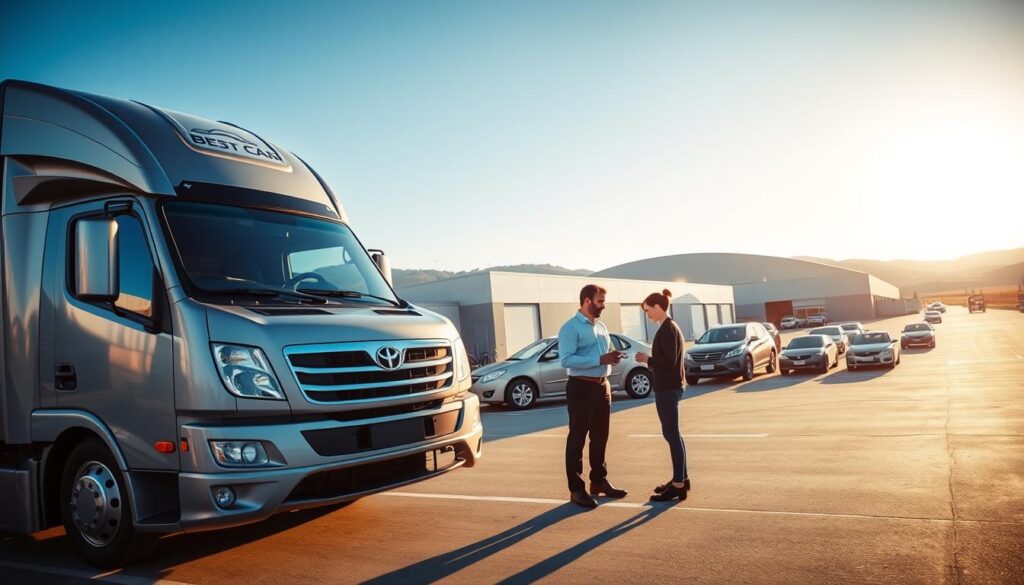
Operators design workflows that match a buyer’s scale—one vehicle or dozens—so inventory keeps moving. Single-unit requests rely on fast pickup windows and precise delivery. High-volume outbound moves prioritize consolidation, lane planning, and full-truckload efficiency.
Support for single-vehicle buyers and high-volume wholesale moves
Professional buyers use structured vehicle transport to move stock to resale, reconditioning, or distribution without extended idle time. Centralized dispatch reduces handoffs and speeds turnaround.
Direct-from-auction logistics that reduce idle time and extra handling
Direct-from-auction means coordinating release paperwork, hitting pickup windows, and minimizing extra handling that raises risk. Dealers and fleets get predictable delivery windows and consistent documentation to support inventory control.
- Dealer needs: reliable pickup execution, clear delivery ETA, and paperwork that aligns with dealership systems.
- Remote buyers: single workflow for dispatch, tracking, and delivery confirmation.
- Supported venues: Manheim, ADESA, and America’s Auto Auction release coordination.
The objective is clear: lower downtime, faster time-to-market, and protected margins for wholesale and dealership operations.
Why Phoenix Is a Major Southwest Auction Shipping Hub
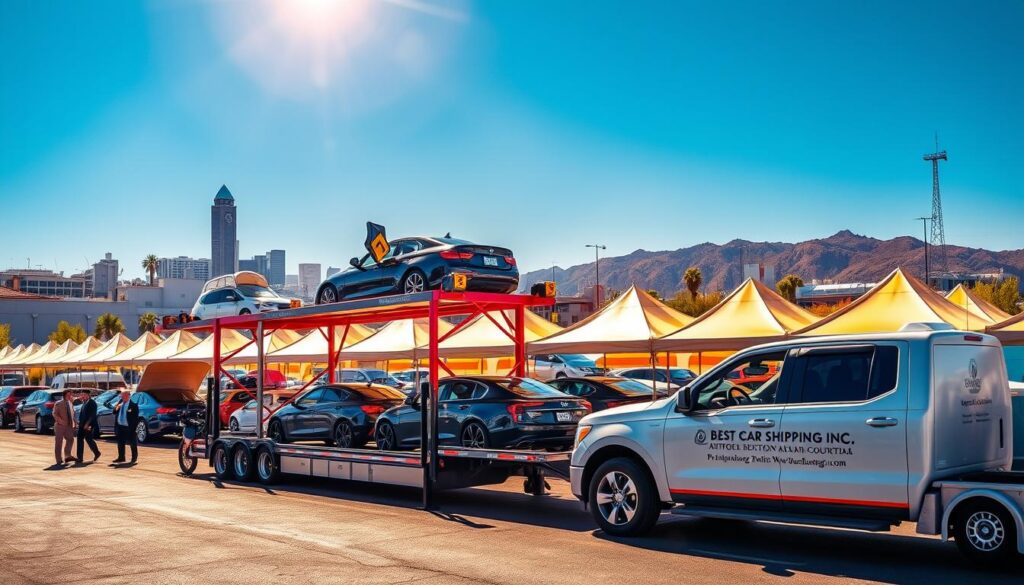
Phoenix sits at a crossroads that helps dealers and fleets move inventory quickly across the Southwest.
Geography, climate, and dealer density create steady lot volume. That steady flow supports reliable outbound lanes to California, Texas, the Mountain states, and the Midwest.
Inland redistribution advantages for Arizona and neighboring states
Major corridors like I-10 and I-17 give Phoenix fast access to key markets. This reduces cycle time and handling for each vehicle.
Steady year-round inventory and predictable outbound lanes
Weekly sales yield predictable loads. Car volumes stay consistent across seasons, so carriers can plan routes and capacity.
How Phoenix functions as a routing hub rather than a terminal market
Phoenix-origin loads often continue into other states as part of multi-stop plans. That makes the city a routing hub, not just a delivery terminal.
| Feature | Benefit | Example Lanes |
|---|---|---|
| Corridor access | Faster redistribution | Phoenix → Los Angeles; Phoenix → Dallas |
| Year-round inventory | Predictable carrier schedules | Weekly dealer and fleet sales |
| Routing hub model | Lower dwell time and fewer handoffs | Through-routes to Mountain states and Midwest |
These patterns stabilize capacity and pricing compared with ad-hoc, low-volume origins. For specialized Phoenix shipping needs, consider our dedicated Phoenix shipping services for clear timelines and secure handling.
Common Auction Pickup and Delivery Scenarios We Handle
Typical shipment scenarios center on short-haul restocking, high-traffic corridor runs, long-haul redistribution, and planned multi-unit outbound loads.
Auction to dealership lots across Arizona and neighboring states
Local restocks move inventory quickly to dealer lots. These runs focus on tight pickup windows and consistent delivery confirmations. Buyers set the pickup window and destination constraints.
Auction to Southern California and Nevada resale markets
High-traffic corridors support fast delivery when lanes are active. Dispatch prioritizes lane timing to hold promised ETAs. Communication and paperwork are synchronized with dealers at the destination.
Auction to Texas and Midwest distribution hubs
Longer lanes balance regional supply. Loads are planned to match wholesale schedules and dealer allocation strategies. Consolidation helps reduce handling and keep vehicles moving.
Multi-vehicle outbound loads after weekly sales
Weekly sales often become consolidated outbound loads. Load building and sequencing cut dwell time. Customers control preferred method and required communications to ensure a smooth vehicle delivered process.
“Direct routing and fewer touchpoints protect inventory and speed time-to-market.”
| Scenario | Primary Aim | Customer Controls |
|---|---|---|
| Local dealership restock | Fast lot replenishment | Pickup window, delivery ETA |
| SoCal & Nevada runs | Tight corridor delivery | Preferred carrier, communication |
| Texas/Midwest redistribution | Inventory balance | Destination scheduling, consolidation |
| Multi-vehicle outbound | Full-truckload efficiency | Load sequencing, dispatch timing |
How Auction Vehicle Transport Works From Release to Delivery
A smooth release and prompt pickup set the tone for a reliable delivery cycle. Planning begins at lot release and follows a defined workflow that keeps responsibility clear and handling minimal. Clear procedures reduce delays and protect vehicle condition.
Coordinating release procedures and pickup windows
Teams verify release status, required IDs, and the pickup window that prevents storage days. Buyers arrange access times to avoid lot fees and scheduling conflicts. These checks keep timelines intact and limit extra handling.
Carrier dispatch, route planning, and load consolidation
Dispatch assigns a carrier and checks lane availability against active corridors. Planners group mixed inventory for consolidation to improve pricing and efficiency. Consolidation changes pickup timing but lowers per-vehicle cost.
Delivery appointment, paperwork handoff, and condition verification
Drivers schedule delivery appointments and follow access rules at the destination. Paperwork includes the bill of lading and photo records. Teams note exceptions at pickup and again at delivery to confirm conditions and close the job.
- Timing note: schedules can shift due to road or weather, but communication and accountability remain central.
Auto Transport Options for Auction Purchases
Selection matters. Buyers should match service level to value, condition, and timelines. The right choice reduces handling, delays, and extra cost.
Open carrier for standard inventory
Open carrier is the default for routine units and mixed wholesale loads. It moves inventory efficiently along major lanes and keeps per-unit cost low.
Enclosed service for high-value or delicate vehicles
Enclosed transport shields valuable or rare units from road grit and weather. Use it when exposure risk outweighs the added fee.
Express shipping and guaranteed pickup for tight timelines
Express shipping and guaranteed pickup serve last-minute release windows and time-sensitive resale commitments. These options reduce dwell and protect resale schedules.
How to choose: non-running units or low-clearance vehicles may need tailored handling. Match method to vehicle type and operational needs to avoid rework.
| Option | Best use | Cost impact |
|---|---|---|
| Open carrier | Standard auction car, mixed loads | Lower per-unit cost, high capacity |
| Enclosed | High-value or delicate vehicle | Higher fee, reduced exposure risk |
| Express / Guaranteed | Tight pickup windows or resale deadlines | Premium for priority handling |
For routine open carrier options and details, see open carrier options. Proper selection controls hours, handling, and final cost.
Door-to-Door Vehicle Delivery From Auction Facilities
A direct pickup and delivery workflow keeps custody under a single carrier from lot release to final handoff.
What door-to-door delivery means: the service collects a purchased vehicle at the sale lot and delivers it to commercial destinations such as dealership lots, fleet yards, or logistics centers. This option targets business locations and reduces handling steps.
Fewer touchpoints lower risk. Fewer transfers mean fewer staging locations and fewer chances for delay or condition disputes. Centralized responsibility keeps documentation consistent through the route.
Access planning is essential. Providers confirm receiving hours, dock or lot instructions, and authorized signers before pickup. Clear instructions prevent rejected deliveries and speed handoff.
When door service is best
Remote buyers, multi-state dealer groups, and time-sensitive resale or recon schedules benefit most. Tight urban streets or restricted lots may require a nearby meeting point while maintaining a door intent.
“Centralized communication and documentation protect the buyer’s asset from release to handoff.”
| Feature | Benefit | Typical destination |
|---|---|---|
| Single-carrier custody | Consistent accountability | Dealership lot |
| Pre-planned access | Faster handoff | Fleet yard |
| Reduced handling | Lower damage risk | Logistics center |
What Impacts Auction Car Shipping Cost in the United States
Operational timing and route balance often outweigh raw distance when setting rates. Lane demand, direction of travel, and pickup scheduling shape pricing more than simple mileage. Carriers price lanes where capacity and demand meet, so a popular corridor can lower the per-mile cost.
The vehicle itself affects costs. Non-running units, oversized models, or those needing special loading add time and equipment. Choosing open, enclosed, or express service changes availability and rates. Enclosed and express services command premiums and limited carrier options.
Seasonality and fuel shifts move market pricing quickly. Peak sale periods, sudden fuel spikes, or severe weather raise carrier rates and reduce flexibility. Tight pickup windows, last-minute bookings, or guaranteed pickup requirements also increase fees.
Volume reduces per-vehicle costs. Multi-vehicle loads and full-truckload planning lower the unit rate through shared routing and fewer stops. Accurate quotes require complete route and vehicle details up front.
- Controllable: pickup window, service level, vehicle readiness.
- Market-driven: lane demand, direction, fuel, seasonal volume.
- Dealer tip: align shipments with active lanes to cut costs.
| Factor | Impact | Why it matters |
|---|---|---|
| Distance & direction | Variable | Lane balance affects rates more than miles |
| Vehicle condition | Up to premium | Non-running or oversized needs special gear |
| Timing & season | Surge pricing | Peak periods and fuel spikes raise costs |
Estimated Transit Times and Delivery Windows You Can Plan Around
Estimating transit windows helps buyers plan inventory turn and customer commitments. Clear benchmarks reduce surprises and support scheduling for docks and staffing.
Short-haul expectations around 200 miles
Short runs of about 200 miles usually complete in roughly two days. This applies when lanes are active and pickup and drop-off windows are met.
Benchmarks: about two days for routine car shipping and vehicle moves under normal conditions.
Long-haul expectations around 2,000 miles
Long routes near 2,000 miles commonly land in a seven-to-nine-day window. Stops, consolidation, and lane balance affect the final days.
Plan extra days when consolidation or scheduled stops are part of the load.
How weather, road conditions, and construction can affect delivery time
Delivery windows are built from the dispatch date, pickup appointment, and drivers’ legal hours. Unexpected weather systems, road conditions, and construction cause detours and delays.
Flexibility helps. Wider pickup windows and accessible delivery points lower missed appointments and re-dispatch risk. Keep communication and documentation current when schedules change to protect accountability.
| Trip Type | Typical time | Key delay factors |
|---|---|---|
| ~200 miles | About 2 days | Traffic, short detours |
| ~2,000 miles | 7–9 days | Weather, construction, staging |
| Planned lanes | Variable | Consolidation, pickup windows |
Popular Auction Transport Routes Out of Phoenix
Phoenix-origin routes form the backbone of several high-volume redistribution corridors. These lanes move inventory into neighboring states and national wholesale hubs with predictable cadence.
Phoenix to California: fast corridors and next-day potential
Southern and Northern California lanes are the busiest. When pickup timing and dispatch align, Phoenix → Los Angeles can support near next-day delivery under typical conditions.
Regional distribution to Nevada, Utah, and the Mountain States
Steady dealer demand keeps lanes to Nevada and Utah active. Phoenix’s corridor access enables efficient regional routing and consolidation across Mountain State locations.
Phoenix to Texas and Midwest wholesale hubs
Longer moves balance inventory to high-demand markets. Use Phoenix → Dallas as a planning benchmark at ~2–3 days for typical shipments, noting this is an example, not a guarantee.
- Why these lanes stay active: steady demand and predictable resale patterns.
- Planning note: timing, carrier capacity, and delivery access drive final ETA and pricing.
Carrier Network, Driver Standards, and Insurance Coverage
A reliable carrier network begins with strict vetting and lane performance data. That process confirms authority, verifies equipment, and proves consistent capacity on Phoenix outbound lanes.
Vetted carrier capacity and lane availability
Vetted carriers have active authority, documented lane history, and suitable trailers for each vehicle type. This reduces delays and keeps capacity predictable.
Driver standards that protect assets
Drivers follow professional pickup etiquette, secure loading procedures, and timely updates. Clear communication preserves condition records and improves the customer experience.
Verified insurance and documentation best practices
Carrier insurance is verified before assignment and typically covers the vehicle while in custody, subject to policy terms. Photo-backed condition reports and a complete bill of lading reduce disputes.
“Protect the vehicle, reduce uncertainty, and keep accountability clear from dispatch through delivery.”
| Element | Why it matters | Best practice |
|---|---|---|
| Vetting | Confirms capacity and legal authority | Check DOT, references, lane history |
| Driver standards | Protects condition and timing | Training, sealed loading, status updates |
| Documentation | Reduces disputes | Time-stamped photos, signed BOL |
Dealership and B2B Auction Shipping for Inventory Management
Effective B2B shipping turns inventory rebalancing into an operational routine, not an emergency task. Dealers schedule moves to match sales velocity and avoid overstock. This keeps working capital fluid and reduces holding costs.
Moving new, used, trade-in, and certified pre-owned vehicles
Typical flows include new vehicle distribution, used and certified pre-owned transfers, and trade-ins routed to recon centers or wholesale partners. These movements are regular and predictable for dealer groups.
Balancing regional supply and seasonal demand
Dealerships use Phoenix-origin lanes to support California, Texas, and Mountain State needs. Seasonal demand gets handled by reallocation and batch planning to avoid premium rush pricing.
Transport methods dealers use
Options: truckload shipping (open or enclosed), towaways for short runs, and rail for bulk, long-haul moves. Truckload suits time-sensitive lots. Rail lowers unit costs for large, scheduled transfers. Towaways work for short repositioning.
| Method | Best use | Cost / Advantage |
|---|---|---|
| Truckload (open/enclosed) | Multi-unit dealer moves, protected CPO | Balanced speed and predictable costs |
| Towaway | Short regional repositioning | Low cost for single, nearby units |
| Rail | High-volume, long-distance batches | Lower per-unit costs, fixed schedule |
Operational coordination that protects margins
Best practices: batch loads, align pickups with active lanes, minimize dwell time, and avoid last-minute premium requests. Standardized documentation and condition checks reduce claims and speed receiving.
Phoenix Pickup Logistics: Corridors, Timing, and Local Considerations
Scheduling around metro congestion and seasonal hazards makes Phoenix logistics reliable. Planners rely on two main corridors to keep lanes predictable and efficient.
Major corridors that support efficient routing
I-10 and I-17 are critical. They enable carriers to fold Phoenix loads into broader lane schedules. That alignment shortens transit time and eases load planning for open carriers and specialty services.
Traffic and timing for metro pickups and deliveries
Avoid peak rush hours to reduce missed pickup windows. Morning and late-afternoon congestion often creates delays. Confirm lot access and set a flexible pickup appointment to protect promised delivery windows.
Seasonal weather impacts that influence schedules
Weather matters in operational terms. Extreme heat stresses drivers and equipment. Monsoon storms and dust events reduce visibility and slow progress. Wildfire smoke can also disrupt lanes in northern areas.
Plan with buffers. Confirm auction windows early, verify destination receiving hours, and keep communication lines open with drivers. Good planning lowers reschedules and keeps the vehicle on the intended route over the next few days.
“Align pickup dates with active corridors and realistic time buffers to control delays.”
For a vetted provider and reliable scheduling, see our best car shipping company.
Preparing Your Auction Vehicle for Shipping
A clear pre-shipping routine protects the buyer and speeds every handoff on the way to delivery.
Pre-transport inspection photos and condition notes
Document condition with photos and brief notes. Take time-stamped images of all sides, interior, and known damage. Write down dents, chips, glass issues, and odometer reading.
Why it matters: photo-backed notes reduce claims and make delivery inspections quick and conclusive.
Keys, alarms, and access requirements at the lot
Confirm who releases keys and how drivers gain entry at pickup.
Disable alarms and immobilizers or leave clear instructions. If keys stay with the lot, note the contact and release window for the assigned drivers.
Battery, tires, and “runs/drives” expectations
Verify battery charge and tire inflation. A unit that rolls and starts follows standard loading procedures and avoids special equipment needs.
If the vehicle is inoperable, document the limitations and expect different equipment and added fees. Communicate these needs early to keep schedules intact.
- Pre-shipping checklist: photos, written condition notes, key release info, alarm status, and runs/drives confirmation.
- Access tip: provide lot hours and authorized signer details to prevent missed pickup windows.
- Inoperable units: note mechanical limitations and confirm any additional service requirements.
“Thorough preparation reduces delays, protects documentation, and supports a smoother delivery inspection.”
For a step-by-step prep guide, see how to prepare a car for. Clear prep saves time and keeps the customer’s asset protected.
Receiving Your Vehicle: Inspection, Paperwork, and Next Steps
A methodical receiving routine turns delivery into a controlled handoff that protects value and time.
Delivery walkthrough and bill of lading accuracy
Schedule the delivery appointment and meet the driver on time. A short, focused walkthrough is mandatory before signing.
Checklist:
- Verify VIN, mileage, and obvious exterior items.
- Note dents, glass, and mechanical exceptions on the bill of lading.
- Have an authorized signer and clear lot space for intake.
Bill of lading accuracy is the key control point. Match notes to the vehicle and mark any exceptions clearly. This protects the buyer and the carrier.
Residue, weather, and distinguishing transport effects
Open loads may show dust, road grit, or water residue after long lanes. These blemishes are not always damage.
Document any concerns immediately with time-stamped photos and written notes. Keep communication structured and professional when filing exceptions.
Next steps: move the vehicle into recon, listing, or fleet service promptly to cut downtime. Quick intake closes the loop and gets inventory back to work.
Get a Quote for Auction Car Shipping Based on Your Route and Timing
“Accurate quotes start with precise route and timing details.”
Quotes become reliable when lane demand, pickup windows, and vehicle specifics are captured up front. Clear inputs reduce surprises and help match the shipment to available carriers.
Details that improve pricing accuracy
Provide: exact auction location, final destination, vehicle type and condition, and preferred pickup date or window. These items produce a dependable quote.
How flexible pickup windows improve availability
Wider pickup windows let planners align the job with existing lane capacity. That reduces premium requests and lowers cost risk.
Aligning shipments with active lanes
Matching a route to busy corridors stabilizes pricing. Two routes with similar distance can cost differently because carrier demand and lane balance vary.
- Why it helps: route-specific quotes reflect live market conditions and limit surprises.
- Quick action: flexible pickup timing often secures better carrier options.
Ready to get a quote? Email info@bestcarshippinginc.com or call (307) 288-5972 for fast, business-ready scheduling support.
Conclusion
Coordinated pickup and routed lanes shrink idle time and improve margin control.
Quick, controlled delivery moves inventory faster with fewer touchpoints. Professional handling protects condition and keeps documentation clear.
Phoenix acts as a routing hub, enabling predictable outbound lanes into neighboring states and national hubs. That routing lowers dwell and supports steady scheduling.
Choose service by needs: open or enclosed, express priority, and door-to-door delivery. Plan realistic timelines and align pickups with active lanes to cut cost and risk.
Cost drivers: route demand, distance, vehicle condition, seasonality, and volume. Use these criteria to compare quotes and set expectations.
Request a route-specific quote and schedule pickup promptly after release. Email info@bestcarshippinginc.com or call (307) 288-5972 for reliable, documented service.