
Best Car Shipping Inc. operates as a reliability-first service offering professional auto transport across Canada. The company runs its own modern fleet, uses GPS-enabled tracking, and follows documented inspection routines to ensure on-time delivery and careful handling.
The practical meaning of car transport vehicles here is purpose-built equipment and trained operators. This avoids improvised towing and informal moves. Customers get predictable schedules and clear communication from pickup to delivery.
Readers will learn about available options, door and terminal models, routes, pricing drivers, timelines, and protection standards. Best Car Shipping Inc. backs each shipment with transparent quoting, accountable dispatch, and a care-focused approach that protects both the customer’s vehicle and time.
If you are ready to book, request a quote or call Best Car Shipping Inc. at (307) 288-5972 or email info@bestcarshippinginc.com today. For open-car options see open carrier service.
Key Takeaways
- Best Car Shipping Inc. runs its own fleet and emphasizes reliability.
- GPS tracking and documented inspections support predictable results.
- Practical equipment and trained operators replace ad-hoc towing.
- Readers will find info on service models, pricing drivers, and timelines.
- Transparent quotes, accountable dispatch, and care-focused handling build trust.
- Ready to move? Request a quote, call (307) 288-5972, or email info@bestcarshippinginc.com.
Auto Shipping Across Canada With a Team You Can Rely On

Moving a vehicle across long distances in Canada commonly arises from relocation, purchases, or sales.
When to ship: homeowners often move for work, students relocate between provinces, and snowbirds plan seasonal moves. Dealers and private sellers also arrange long-distance deliveries when buyers live far away.
Why the team matters: a dedicated team coordinates dispatch, sets accurate pickup windows, and sends proactive updates when weather or terminal congestion affects time.
How dedicated carriers and modern fleets support on-time delivery
Professional carriers manage drivers and equipment directly. This reduces handoffs and improves schedule reliability.
Fleet capacity allows better routing and faster recovery when lanes are busy. That operational control leads to fewer delays for the customer.
What to expect from a professional vehicle transport company today
Expect written order confirmations, documented inspection reports at pickup and delivery, and accessible customer support throughout the move.
Customer benefits include clearer accountability and a smoother experience from booking to delivery.
| Need | What the team does | Customer benefit |
|---|---|---|
| Relocation or sale | Coordinated pickup and routing | Predictable delivery windows |
| Dealer transfer | Managed fleet and drivers | Fewer handoffs, higher reliability |
| Seasonal moves | Proactive updates and contingency planning | Less stress, clearer timelines |
Later sections help readers choose the right method based on budget, route, and the vehicle’s needs without vague promises. Contact Best Car Shipping Inc. at (307) 288-5972 or info@bestcarshippinginc.com to learn more today.
Car Transport Vehicles Options for Secure Vehicle Shipping
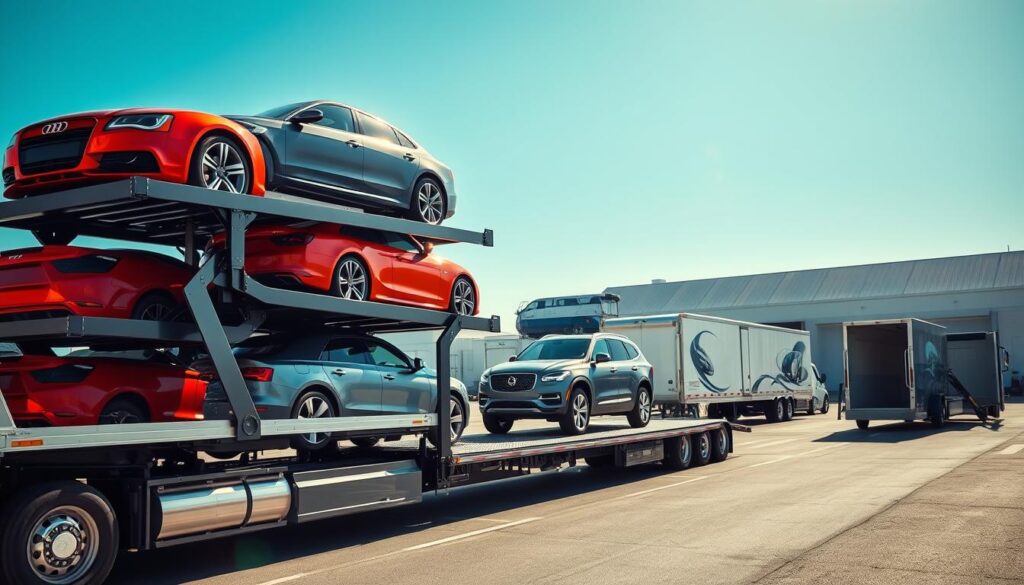
Selecting the right hauling method directly affects cost, timing, and protection for each shipment. The choice depends on the route, the asset’s condition, and how much protection is needed.
Open auto carrier trucks for cost-effective shipping
Open carriers are the most common and budget-friendly option. A typical trailer hauls 4–12 cars and can load in about 90 minutes. The tradeoff is exposure to weather and road debris during transit.
Enclosed transport for high-value and classic cars
Enclosed trailers shield classic and high-end cars from salt, grit, and incidental damage. This method costs more but reduces risk and suits collectors and premium purchases.
Flatbed transport for special loading needs
Flatbeds usually carry one vehicle. They work well for short hauls, low-clearance models, or when standard loading angles cause concern. Per-unit pricing is higher due to single-unit capacity.
Rail shipping for high-capacity, terminal-based moves
Rail can move up to 30 vehicles and often offers lower per-unit cost. This option requires terminal handoffs and longer lead times, so it fits commercial schedules or flexible residential plans.
Choosing the right way
- Consider route length, budget, and delivery speed.
- Factor in the asset’s operability—running units load faster and need fewer special resources.
- Match protection level to value: enclosed for high-value; open for economy; flatbed for special needs; rail for capacity and cost.
| Option | Capacity | Best use | Tradeoff |
|---|---|---|---|
| Open carrier | 4–12 cars | Cost-effective, cross-country shipping | Exposure to elements |
| Enclosed trailer | 1–4 cars | Classic, vintage, high-value | Higher price |
| Flatbed | 1 car | Short moves, low-clearance, special loading | Higher per-unit cost |
| Rail | Up to 30 cars | Terminal-based, high-capacity, budget-flexible | Longer lead times, terminal handling |
Door-to-Door and Terminal-to-Terminal Car Transport Services
Choosing between doorstep delivery and depot pickup shapes cost, timeline, and ease for every shipment.
Door delivery means carriers coordinate access at homes, workplaces, or dealership lots. Drivers schedule pickup windows, confirm parking access, and complete a brief intake inspection. This reduces customer effort and speeds final delivery.
Terminal pickup is a cost-conscious alternative. Customers drop off and collect at secure yards in major Canadian cities where lanes are active and equipment cycles faster. That often produces savings for longer routes across Canada.
Controlled access and facility security
Terminals use formal check-in, vehicle intake inspections, and ID verification. Scheduled pickup windows limit yard congestion and lower risk.
Common security standards include fenced perimeters, monitored entry gates, security guards, and 24/7 surveillance. These measures boost customer confidence and reduce incident exposure.
| Option | How it works | Best for | Tradeoff |
|---|---|---|---|
| Door-to-door | Pickup and delivery at specified address | Maximum convenience | Higher cost |
| Terminal-to-terminal | Drop-off and pickup at company yard | Cost savings in busy lanes | Requires customer travel to terminal |
| Hybrid | Terminal drop with optional final delivery | Balance of price and convenience | May add a local fee |
Request a quote that compares both options fairly. Best Car Shipping Inc. will advise the ideal method based on address constraints, route density, and scheduling needs. For more carrier options see best shippers or call (307) 288-5972.
Routes We Cover Across Country and Across Canada
Reliable coast-to-coast corridors let carriers plan capacity, reducing surprises on cross-country shipments.
Coast-to-coast lanes that support cross-country vehicle shipping
Established highway routes and terminal links create repeatable lanes. These corridors let dispatchers set pickup windows and manage load sequencing.
Some operators combine rail partnerships for long hauls. That adds capacity and often lowers per-unit shipping cost.
Major city delivery can reduce cost and speed up scheduling
Major city delivery benefits from high lane volume, shorter out-of-route miles, and frequent carrier availability.
Customers in smaller towns should expect linehaul moves that route through a city hub. This can add handling steps and extra time.
For dealerships and fleet coordinators, consistent lanes mean predictable schedules and repeatable logistics. Clear routes support better ETAs, fewer surprises, and faster communication from the team.
| Route Type | How it works | Best for |
|---|---|---|
| Coast-to-coast corridor | Planned lanes with terminal links | Cross-country shipping |
| Major city delivery | High-frequency pickups and drop-offs | Lower cost, faster scheduling |
| Hub-connected rural | Linehaul to city hub then local delivery | Small towns and remote addresses |
Car Shipping Quote and Pricing Factors
An accurate quote begins with route length and how busy that lane is. Distance and lane demand explain why identical miles can cost differently. High-demand corridors increase rates; quiet lanes often drop per-mile pricing.
Distance and lane demand
Longer miles add fuel, driver time, and routing complexity. Peak lanes fill quickly and carriers charge more when space is tight.
Size and type of the vehicle
Larger units occupy more trailer space. SUVs and pickups commonly raise costs because a trailer may fit fewer units when these are loaded.
Running vs non-running condition
Running units load faster and need less gear. Non-running units may require winches or flatbeds and add labor time. Working brakes simplify loading and reduce extra fees.
Transport method and protection level
Enclosed services cost more due to limited capacity and higher protection. Open carriers are more economical but offer less shielding from the elements.
Timing and seasonal availability
Weather and peak moving periods tighten availability. Winter routes and summer peaks can raise rates and extend lead times.
Best Car Shipping Inc. provides transparent quotes that list these factors plainly. Customers get a breakdown so they can match price to needed protection and schedule.
| Factor | How it affects price | What customers should expect |
|---|---|---|
| Distance & lane demand | Higher miles + busy lanes = higher rate | Variable per-mile pricing; check corridor demand |
| Size/type | Larger units use more trailer space | SUVs/pickups may add a surcharge |
| Running vs non-running | Inoperable units need extra equipment | Additional handling fees or flatbed requirement |
| Transport method | Enclosed = higher cost; open = lower cost | Choose based on value and risk tolerance |
| Timing/seasonality | Peak seasons and severe weather increase rates | Book early to lock service and price |
Our Vehicle Transport Process From Booking to Delivery
A clear, repeatable workflow helps customers know what to expect from booking through final delivery.
Get a quote and confirm your shipping services details
Step one starts with a targeted quote. The request captures pickup and delivery addresses, contact numbers, vehicle notes, chosen transport method, and any access constraints that affect loading.
Confirming these details speeds scheduling and avoids last-minute delays.
Pay online and lock in your pickup window
Online payment secures the booking and sets a firm pickup window. This scheduling control helps a customer plan around work, travel, or dealership handoffs.
Prepare for pickup with a condition check and documentation
Complete a short checklist before pickup: remove personal items, disable alarms, and note fuel level. Have registration and ID ready for driver verification.
Perform a quick photo-based condition check and keep copies. This supports clear accountability at both ends of the service.
Track your vehicle with GPS-enabled transportation updates
GPS-enabled trucks provide practical progress updates. Customers see route milestones and need fewer status calls. Expect periodic ETA messages rather than constant alerts.
Delivery day inspection to confirm condition upon arrival
On delivery, conduct a side-by-side inspection using the pickup report. Confirm the vehicle condition, sign the bill of lading, and complete final payment if required.
Final checklist helps close the service: verify condition, collect documentation, and confirm contact details for follow-up.
For local pickup options or to request detailed timing, visit local pickup options or call (307) 288-5972.
Delivery Time Estimates and What Affects Transit Time
Delivery windows vary widely; realistic expectations start with route distance and lane frequency.
Typical short hauls completed within a few days
Short hauls inside a metro area, such as within the Greater Toronto Area, commonly finish in about three days.
Local lanes have frequent departures and fewer handoffs. That speeds handling and lowers delay risk.
Longer routes like Toronto to Vancouver
Cross-country runs between Toronto and Vancouver can take up to 10 days depending on lane timing and traffic volume.
Longer distance adds driver hours, fuel considerations, and potential overnight staging at terminals.
How mode and capacity influence scheduling and speed
Open carriers often offer more frequent availability than enclosed options. That can shorten wait time for departure.
Rail shipments may lower cost but include terminal handoffs and longer lead times.
When trucks and carriers on a lane are full, pickup windows and departure dates can shift. Professional services provide timely updates and revised ETAs rather than leaving customers guessing.
“Clear timelines and proactive updates let customers plan with confidence.”
| Scenario | Typical time | Primary factors |
|---|---|---|
| Metro short haul | ~1–3 days | Frequent departures, short distance |
| Cross-country (Toronto–Vancouver) | Up to 10 days | Distance, lane demand, staging |
| Enclosed service | Variable; may add 1–3 days | Limited capacity, scheduling windows |
| Rail option | Often longer lead time | Terminal handling, fixed schedules |
Safety, Insurance, and Security Standards During Auto Transport
Industry-leading protection is a system of people, equipment, insurance, and technology. Best Car Shipping Inc. designs procedures so safety is measurable and repeatable.
Insurance coverage while your car is in the carrier’s possession
Coverage applies from pickup until delivery. Customers should confirm limits, deductible, and claim steps before booking.
Ask for written proof and an explanation of how loss or damage claims are handled.
Professional drivers and secure facilities
Drivers are bonded and trained. Loading and unloading follow consistent checklists that reduce handling risk.
Secure yards use fenced perimeters, controlled access, on-site guards, and 24/7 surveillance to protect stored units.
How tracking technology improves visibility
GPS-enabled tracking reduces missed handoffs and speeds issue resolution. Customers receive clear status updates and estimated arrival times.
| Standard | What it means | Benefit to customer |
|---|---|---|
| Insurance in custody | Carrier coverage while in possession | Clear claim path and financial protection |
| Bonded drivers | Certified, background-checked operators | Lower handling risk and higher accountability |
| Facility security | Fenced lots, guards, 24/7 cameras | Reduced theft and vandalism exposure |
| Real-time tracking | GPS and status updates | Better visibility, fewer delays |
Best Car Shipping Inc. positions protection at the center of its service. Customers can request a detailed policy summary or a direct quote via the reliable auto transport service. For questions call (307) 288-5972 or email info@bestcarshippinginc.com.
Conclusion
Deciding on the right method starts with balancing cost, speed, and protection for the move. Choose open, enclosed, flatbed, or rail; confirm door-to-door versus terminal handling; and match route timing to budget and risk tolerance.
strong. Reliable car shipping depends on a clear process, accountable communication, and the right equipment for each vehicle. Confirm insurance, inspection steps, and tracking before you finalize service.
Remember the primary pricing and scheduling drivers: distance, lane demand, unit size, operability, and seasonality. Request a quote with these details so the team can offer precise timing and costs.
Ready to proceed? Visit transporte de carros, call (307) 288-5972, or email info@bestcarshippinginc.com to confirm services and schedule pickup.