
Unexpected failure in wet conditions can leave anyone stranded. Heavy showers and high moisture often push water into vital electrical areas. That can disrupt the flow from the battery and damage ignition parts.
When a vehicle refuses to turn over, common causes include corroded terminals, shorted wiring, or wet spark plugs and distributor cap. Water near the air intake can also be drawn into the engine, risking serious internal damage.
Professional inspection helps identify which systems or components failed and prevents further harm. A trained mechanic will test the battery, check connections, and dry or replace affected parts safely.
Key Takeaways
- Moisture in electrical parts often stops the engine from cranking.
- Corrosion at battery terminals reduces electrical flow and causes problems.
- Water entering the intake can lead to severe engine damage.
- Ignition components like spark plugs and the distributor cap are vulnerable to wet conditions.
- Seek a professional mechanic to diagnose and repair system failures safely.
Understanding Why Your Car Won’t Start After Rain or Humidity
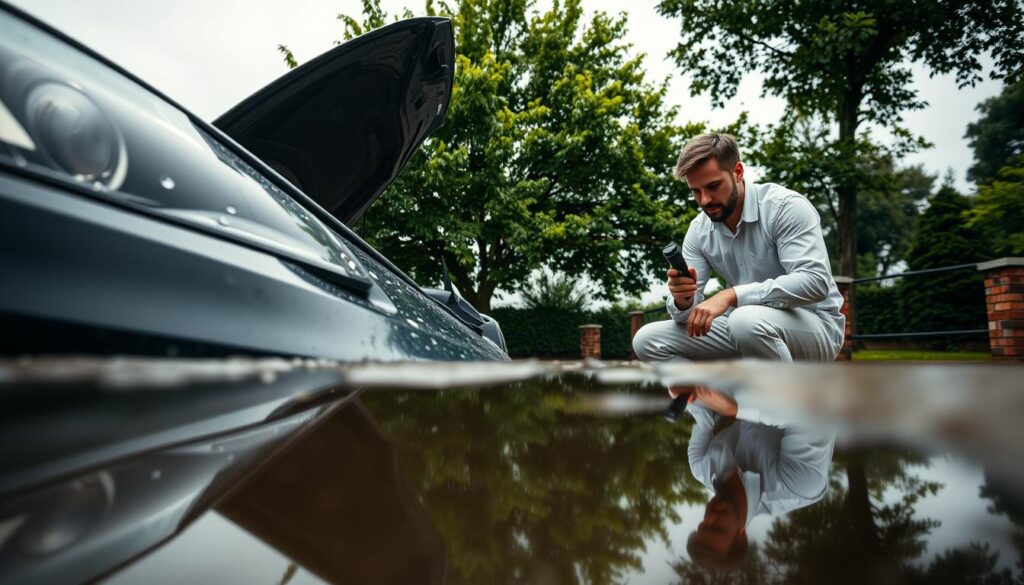
Water intrusion into wiring and modules often disables ignition circuits and halts engine operation. When moisture reaches junction connectors or the wiring harness, conductivity falls. That leads to higher resistance, heat, and insulation breakdown.
Debris from flooding can block moving parts and stop the starter motor. Corrosion at battery terminals and poor connections are a frequent problem. This prevents the battery from delivering reliable power to the electrical system.
Electronic control units are vulnerable. If moisture reaches ECU boards, permanent damage can occur and the vehicle may require module replacement.
“Quick drying is not always enough.” A trained mechanic will test the battery, inspect ignition components like spark plugs, and diagnose shorts safely.
- Key point: Moisture in electrical components causes short circuits and erratic behavior.
- Action: Seek professional inspection if the engine fails to crank after heavy rain or wet conditions.
Common Symptoms of Moisture-Related Starting Issues
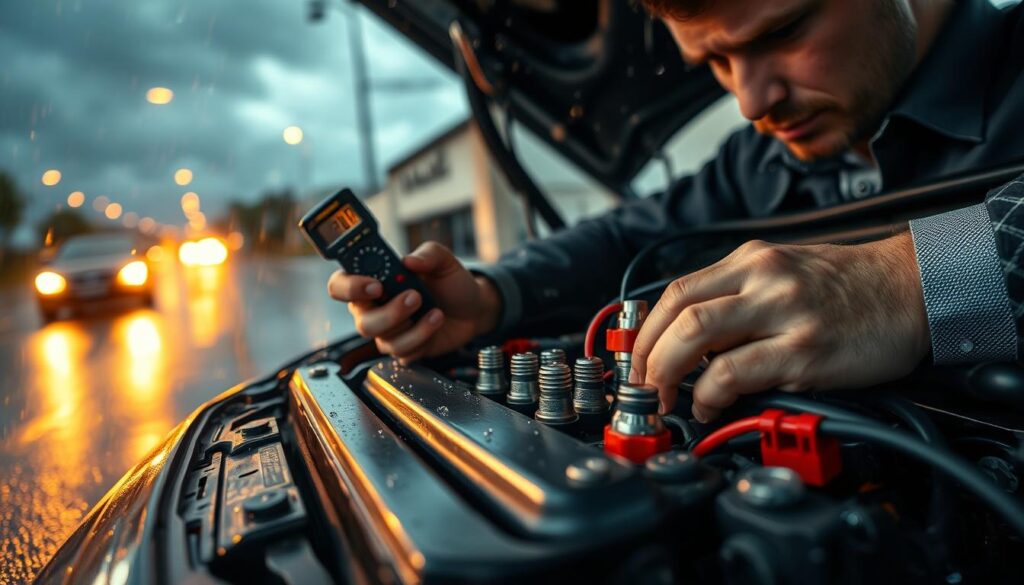
After heavy storms, drivers may notice sluggish cranking or odd electrical behavior that signals moisture damage.
Slow Cranking and Labored Starts
Slow or labored cranking often means the battery is not supplying enough power due to water exposure. Corrosion at terminals or wet connections raises resistance and reduces available power.
Unusual Clicking and Dashboard Flickering
Clicking noises and flickering lights point to compromised electrical systems. A failing starter motor or damp ignition components like spark plugs can cause these signs.
- Slow turnover: weak battery output or corroded terminals.
- Clicking/flicker: starter or system shorts caused by moisture.
- Stalling/misfire: water in ignition components reduces spark and harms engine performance.
- Cabin water: leaks that reach wiring create ongoing problems.
| Symptom | Likely Cause | Immediate Action |
|---|---|---|
| Slow cranking | Battery corrosion or wet terminals | Inspect terminals; test battery |
| Clicking / flicker | Starter motor or wiring moisture | Check starter and fuses; dry connectors |
| Engine misfire | Wet spark plugs or ignition coils | Dry or replace ignition components |
If these signs appear after heavy rain, schedule a professional inspection to prevent further damage.
Inspecting the Electrical System for Water Damage
A focused inspection helps spot early signs of water damage before it becomes costly.
Start with the battery area. Measure voltage with a multimeter. A healthy battery reads 12.6 to 12.8 volts.
Check the battery terminals for corrosion. Clean light buildup with a baking soda and water paste. Dry the posts fully before reconnecting.
Inspect wiring harnesses and exposed wiring for dampness, frayed insulation, or rusted connectors. Moisture in these runs often causes shorts that reduce power to the engine and ignition system.
- Verify battery voltage with a multimeter to confirm adequate power.
- Look for corrosion on terminals and clean as needed.
- Examine distributor cap, spark plugs, and ignition components for moisture or damage.
- Dry any wet connectors thoroughly before attempting to operate the vehicle.
If signs of water damage appear, contact a professional. A mechanic can test the system and ensure the battery and ignition are safe to use.
How to Safely Dry Out Your Engine Components
A careful, stepwise approach protects the vehicle and its electrical components. Start in a safe, dry spot and use simple tools to remove visible moisture.
Disconnect the battery before touching terminals or ignition parts. Use a clean cloth to wipe wet areas like the battery posts, starter housing, and exposed wiring.
If standing water appears in the engine bay, drain it and let the area air out. Replace a soaked air filter to ensure the engine can breathe properly.
Using Moisture Displacement Techniques
Apply a moisture displacement spray such as WD-40 to ignition wires, the distributor cap, and connectors. This helps force water away and speeds evaporation.
- Wipe visible water with a lint-free cloth.
- Let the vehicle idle briefly once it runs to evaporate residual moisture.
- Drain standing pools and allow full drying time before driving long distances.
Warning: If uncertainty remains about electrical condition, contact a professional mechanic to avoid further damage.
| Action | Target Area | Expected Result |
|---|---|---|
| Wipe and dry | Battery posts, connectors | Restore reliable contact |
| Use displacement spray | Ignition wires, distributor cap | Remove trapped moisture |
| Drain and replace | Engine bay pools, air filter | Prevent ingestion of water into engine |
Troubleshooting the Ignition System and Spark Plugs
Begin troubleshooting the ignition when electrical power reaches the starter but the engine refuses to fire. Focus first on visible components that moisture often targets. A quick, methodical check saves time and reduces repair costs.
Checking the Distributor Cap
Inspect the distributor cap for cracks, carbon tracking, or pooled water. Small gaps let moisture cause misfires that block reliable spark delivery.
If any damage or dampness is present, replace the cap. Replacement plus labor typically runs between $50 and $150 depending on the model.
Testing Ignition Coils
Use a multimeter to measure coil resistance. Deviations from the manufacturer specification indicate coil failure from moisture or contamination.
Document readings and compare to the service manual before ordering parts. Faulty coils prevent the engine from firing even when the battery is healthy.
Replacing Corroded Spark Plugs
If spark plugs are damp or corroded, dry them thoroughly or replace the full set for consistent performance. Replacing all plugs at once improves efficiency and reduces repeat visits.
- Test coils with a multimeter for resistance anomalies.
- Inspect distributor cap for cracks and moisture.
- Replace all spark plugs when corrosion is evident.
| Task | Tool | Expected Result |
|---|---|---|
| Distributor cap inspection | Visual check | Identify cracks or moisture entry |
| Ignition coil test | Multimeter | Confirm coil integrity |
| Spark plug replacement | Socket set | Restore reliable spark |
Tip: When uncertainty remains, seek a professional mechanic to avoid electrical damage and ensure safe, lasting repair.
When to Seek Professional Help for Your Vehicle
If basic checks fail, professional diagnostics can reveal hidden electrical faults that keep the engine from turning over.
Do not delay when symptoms persist after heavy rain or when you are stranded on a back road. A trained mechanic has test equipment to inspect the electrical system and related systems safely.
Common service ranges: terminal cleaning $20–$50, battery replacement $100–$200, spark plug or distributor cap service $50–$150, fuel drain and filter $150–$300. Severe engine repair for hydrolock can exceed $2,000.
If the vehicle still shows clicking, weak cranking, or unexplained faults after DIY steps, call for professional help. A mechanic can check the battery, starter motor, ignition components, and any water-damaged wiring. This prevents hidden damage from worsening.
- Fast roadside assistance is best when stuck on a back road.
- Comprehensive diagnostics identify moisture-related problems in components and systems.
- Professional repair often saves time and money versus repeated DIY attempts.
Pro tip: If your car still start issues persist, contact a qualified mechanic to avoid costly engine damage.
| Action | Typical Cost | When to Call a Mechanic |
|---|---|---|
| Terminal cleaning | $20–$50 | Battery shows corrosion or weak output |
| Battery replacement | $100–$200 | Voltage below spec or repeated failures |
| Spark plugs / distributor cap | $50–$150 | Misfires or moisture in ignition components |
| Hydrolock / engine repair | > $2,000 | Severe water ingestion or internal engine damage |
For prompt, professional help to get your vehicle back on the road, contact the team at (307) 288-5972 or email info@bestcarshippinginc.com. Learn more about our related services by visiting vehicle shipping services.
Essential Maintenance to Prevent Future Starting Problems
A few simple steps protect electrical connections from moisture damage. Regular maintenance reduces the chance of having to call for roadside help on a back road.
Applying Dielectric Grease to Connections
Apply dielectric grease to battery terminals and connectors to form a moisture barrier. This prevents corrosion and helps the ignition system work reliably.
Clean battery terminals often. Remove light corrosion with a brush and a baking soda paste. Dry the area fully before reassembly.
- Replace worn spark plugs and inspect the ignition system for signs of moisture or damage.
- Use a high-quality car cover when parked outside to reduce water exposure.
- Check door and window seals to keep water out of the cabin and electrical components.
“Proactive maintenance is the best defense against moisture-related starting problems.”
| Maintenance Task | Why It Matters | Frequency |
|---|---|---|
| Dielectric grease on terminals | Prevents moisture entry and corrosion | Every 6 months |
| Battery terminal cleaning | Ensures reliable battery contact | Quarterly or after storms |
| Spark plug replacement | Maintains consistent spark and engine performance | Per manufacturer schedule |
Tip: For transport or seasonal storage advice, consult a professional service such as Wisconsin car shipping. Proper care keeps the battery and ignition components ready when needed.
Risks of Ignoring Water Damage in Your Car
Ignoring early signs of water entry can quickly turn a minor issue into a major mechanical failure.
Hydrolock is the most serious outcome. If water reaches the engine, connecting rods and pistons can bend or break. Repairs for this damage often run into thousands of dollars.
Repeated attempts to run a wet vehicle strain the battery and other electrical components. That extra load speeds corrosion at terminals and weakens the electrical system overall.
Moisture in wiring harnesses and ignition parts causes intermittent faults. A failing starter motor will work harder, wear faster, and can leave a driver stranded in poor conditions.
- Safety risk: being stuck in unsafe locations during heavy rain.
- Escalating costs: simple fixes can become full engine or module replacements.
- Permanent failure: corroded connectors and damaged wiring may require system replacement.
If signs of water damage appear, have the vehicle inspected immediately to avoid costly and unsafe outcomes.
Conclusion
A final check of key systems reduces the chance of being stranded on a back road.
Understand the root cause of any car start problem and act quickly. Regular inspections and timely maintenance cut the risk of a recurring issue. If the vehicle still start struggles, seek professional help to avoid hidden damage.
When DIY steps do not fix the fault, contact a qualified team for diagnostic service. We help you get car back on the road with expert troubleshooting and reliable repairs.
Need professional help? Call (307) 288-5972 or email info@bestcarshippinginc.com for fast, trusted service and maintenance that keeps your car starting reliably.