
Professional auto transport is often the most affordable, low-stress way to move a vehicle long-distance. Booking early and staying flexible on dates usually lowers rates and shortens delivery windows.
This guide defines the lowest total cost that still protects the vehicle and includes clear insurance and claims terms. It explains how matching service level to route demand and timing produces the best value, not a single sticker price.
Readers will learn how open carriers compare to enclosed trailers, rail, flatbed, and DIY options, and which methods reduce risk and costs across canada routes. The write-up also shows how terminal-to-terminal pickup can cut fees versus door-to-door.
This piece is for vehicle owners, logistics coordinators, and business professionals who need reliable transport while saving money. For help comparing companies or requesting a confident quote, follow the clear criteria and savings levers outlined ahead.
Key Takeaways
- Book early and stay flexible to reduce rates.
- Terminal-to-terminal often costs less than door-to-door.
- Open carriers are the most cost-effective option for most moves.
- Prioritize reliability to avoid higher repair or delay expenses.
- Compare companies using consistent criteria and clear insurance terms.
How to Find the Cheapest Car Shipping Canada Without Sacrificing Reliability
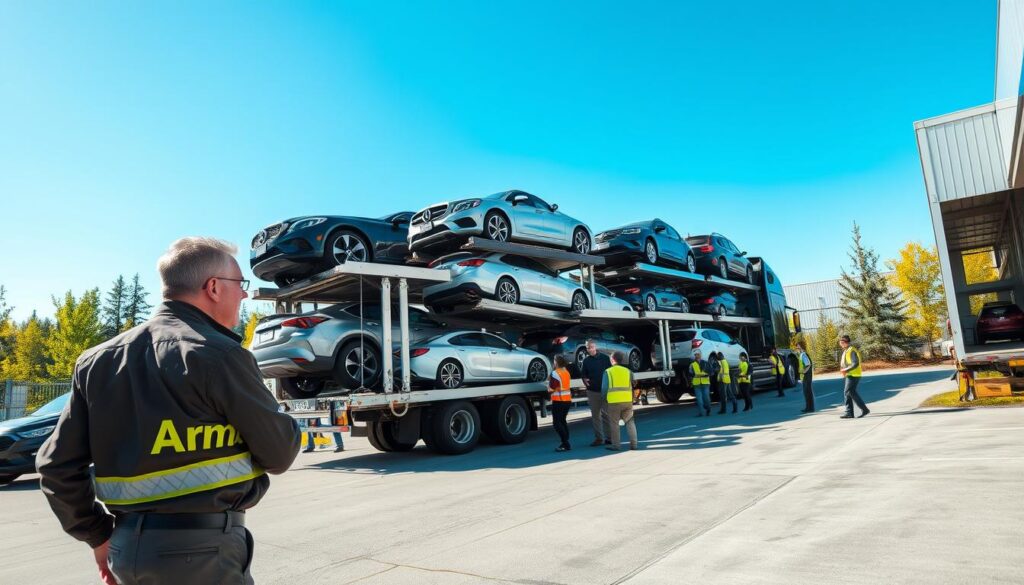
Booking well ahead and adjusting dates slightly gives transport providers time to optimize routes. Early reservations reduce rush premiums and let a company match your vehicle to existing capacity.
Be flexible. Offer a multi-day pickup window and accept off-peak hours. Avoid holiday and weekend constraints to lower rates and speed planning.
Choose terminal-to-terminal to save money. Dropping the vehicle at a secure yard trades convenience for lower fees and tighter scheduling.
Target large-city hubs. Carriers run frequent lanes into major metros, which cuts deadhead miles and improves load efficiency for transport across long routes.
- Bundle moves: coordinate vehicle delivery with household goods to avoid storage and last-minute adjustments.
- Pick the right option: open carrier works for most daily drivers; use enclosed only when value or condition justifies extra cost.
- Get a few quotes with identical details and confirm what each quote includes: fuel surcharge, terminal fees, and insurance.
Reliability matters. The lowest rate is acceptable only when the provider’s process, communication, and service quality protect the vehicle and delivery commitment.
For assistance or a professional quote, contact info@bestcarshippinginc.com or call (307) 288-5972.
What Impacts Car Shipping Costs in Canada
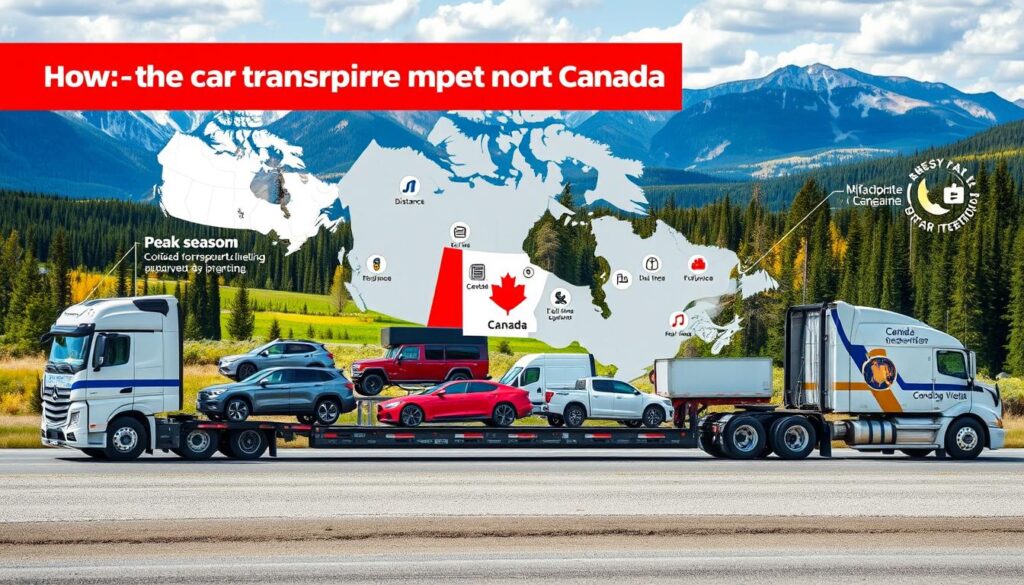
Long distances and sparse demand push rates higher on remote lanes more than on busy city corridors.
Distance and lane demand. Miles and how often carriers run a route dictate fuel, driver hours, and deadhead miles. High-volume corridors lower per-vehicle rates; remote lanes raise them.
Vehicle size and condition. Larger SUVs and pickup trucks reduce trailer capacity. That raises price compared with compact vehicles. Non-running vehicles require winches or extra labor, which adds fees.
Transport method. Open auto carriers offer the best value for standard vehicles. Enclosed trailers increase protection and cost. Rail can cut price but adds terminal handling and longer delivery time.
Pickup and insurance. Residential pickup, tight access, or special equipment can trigger extra charges. Confirm included insurance, deductible, and claims process before booking to avoid dispute costs.
Cost-control checklist
- Confirm exact dates and flexibility.
- State vehicle operability and dimensions.
- Choose terminal vs door delivery.
- Request clear quotes with insurance details.
| Method | Typical Price | Transit Time | Notes |
|---|---|---|---|
| Open carrier | Low–Medium | Standard | Best value for most vehicles |
| Enclosed trailer | High | Standard | Extra protection; higher cost |
| Rail (terminal) | Low | Longer | Cheap but requires yard pickup |
| Special handling (non-running) | Medium–High | Varies | Winch or lift equipment may be needed |
For moves into major city lanes or to get a clear quote, consider a company with frequent service. Compare quotes closely and confirm coverage before committing. For local assistance, visit major city lanes or contact the provider directly.
Cheapest Car Transport Options Compared: Open Carrier, Enclosed, Rail, and More
Professional transport methods vary widely in cost, protection, and timing. This section summarizes major options so readers can judge total costs, risk exposure, and convenience.
Open auto carrier
Best value for most vehicles. Multi-vehicle loads lower per-vehicle costs. Exposure to weather and road debris is the main trade-off for lower rates.
Enclosed transport
Use this when the vehicle is classic, vintage, or high-end. The premium reduces risk of weather and debris damage during delivery.
Rail shipping
Rail moves many vehicles at once and can lower total costs for long routes. Expect terminal pickup, limited schedules, and longer timeframes.
Flatbed, DIY, and hired drivers
Flatbeds suit short hauls or single-vehicle moves but can cost more per load. Driving yourself adds fuel, meals, and hotel costs over thousands of kilometers.
Renting a moving truck with a dolly works when goods move together. Hiring a driver can save time but requires careful vetting and confirmed insurance before handing over keys.
Compare options side-by-side—total price, transit time, and insurance—then request consistent quotes. For professional low-rate services and a clear quote, contact the company listed in this guide.
Delivery Time Expectations for Car Shipping Across Canada
Delivery windows vary widely across routes; distance is the single biggest driver of transit time. Route demand, carrier schedules, and weather refine that estimate. Timely planning reduces surprises and extra costs.
Typical timelines by distance
Short-haul moves inside a metro area, such as the Greater Toronto Area, commonly complete in about three days. Mid-range trips between provinces often take 4–7 days depending on load planning and lanes.
Cross-country transport, for example Toronto to Vancouver, can take up to 10 days. Allow extra time for peak seasons and holidays.
Why terminal and rail options can extend time
Rail and terminal-based methods add handling steps. Vehicles go through yard processing, scheduled rail departures, and destination pickup coordination. Those steps increase transit time but may lower costs.
Plan to control timeline risk
- Book early and use major-city hubs to shorten routing and improve carrier options.
- Get the estimated pickup window and transit estimate in writing from the company.
- Confirm communication cadence and who is accountable if delays affect your destination plans.
Tighter timelines usually increase rates. Prioritize realistic windows to avoid rush fees. For a clear cross-border transport quote or to compare services, request direct quotes at cross-border transport quote.
How to Compare Car Shipping Companies and Get the Best Quote
Requesting consistent information from each company turns price shopping into a fair comparison. Start by gathering identical details to avoid surprises and enable apples-to-apples quotes.
What to include in your quote request
Provide exact pickup and delivery addresses or a terminal preference. Add vehicle year, make, model, and operability.
State preferred method (open or enclosed or rail), target dates, and any access limits.
Insurance, claims, and damage questions
- Ask for coverage limits, exclusions, and deductible amounts.
- Confirm inspection steps, photo documentation, and the claims timeline.
- Request the written process for damage resolution and contact responsibility.
Capacity, availability, and price impact
Limited carrier space on a lane raises rates and delays pickup. Flexibility on dates or terminal delivery usually lowers price.
Screening by experience and reviews
Prioritize companies with steady communication, on-time pickup records, and a clear damage-history process.
Red flags
- Very low price with vague terms.
- Refusal to share insurance details or a delivery window.
- Pressure tactics or unclear responsibility for damage.
The best quote balances total costs, reliability, and protection—not just the lowest number. Request a detailed quote and confirm coverage before booking. For professional help and smooth rides, contact smooth rides and reliable service, or email info@bestcarshippinginc.com / call (307) 288-5972.
Overseas Vehicle Shipping From Canada: Costs, Methods, and Required Documents
Exporting a vehicle overseas introduces new stakeholders and steps that change cost, timing, and risk compared with domestic transport. This process involves ports, ocean carriers, and customs authorities. Budget and planning must reflect those extra steps.
Costs and main methods
Expect total costs from about CAD 1,300 to CAD 5,300 depending on method and destination. RoRo (roll-on/roll-off) is the lower-cost option, roughly CAD 1,300–4,100. It works by driving vehicles onto a vessel. That saves money but exposes the vehicle to weather and port handling risk.
Container shipping runs about CAD 2,500–5,300. A 20ft suits one vehicle; a 40ft fits two or extra goods. LCL (shared space) can lower the price. FCL (full container) gives full isolation and control.
Fees, destinations, and documents
Add-ons commonly include insurance (~CAD 500–600) and port/handling charges (~CAD 400–750). Sample destination ranges: Spain/Italy/Portugal/Germany RoRo ~CAD 1,300–2,800; container ~CAD 2,200–4,000. Japan is higher: RoRo ~CAD 2,000–4,100; container ~CAD 3,200–5,300.
Required documents include proof of ownership, vehicle registration, photo ID, and the B13A Export Declaration. Missing paperwork delays export and adds cost.
Pre-shipment checklist: inspect and photograph the vehicle with dates, clean it, remove personal goods, and confirm carrier rules. For detailed quotes or to request services, contact info@bestcarshippinginc.com or call (307) 288-5972.
Conclusion
Smart scheduling and the right method cut costs while protecting the vehicle. Book early, stay flexible, and prefer terminal-to-terminal or major hubs to improve routing and lower rates.
Open carrier works for most moves. Rail can save money but often adds time. Choose enclosed transport only for high-value vehicles.
Document condition at pickup and delivery, confirm insurance and claims steps, and get written pickup/delivery windows. Compare itemized quotes line-by-line before you request service.
For a business quote or to confirm the best option for your route and destination, email info@bestcarshippinginc.com or call (307) 288-5972.