
Door-to-door service makes moving a vehicle simple and reliable. This method removes the need to drive long distances and cuts extra handling at terminals. Customers get direct pickup and delivery to legally accessible locations.
Open carriers are the most common and cost-effective choice for standard cars. For rare or classic vehicles, enclosed carriers give full protection from weather and road debris. Typical coast-to-coast rates run roughly $700 to $1,200, with most shipments arriving in about 6 to 12 days.
The process starts with a clear quote that uses origin, destination, and vehicle details. At pickup, the bill of lading records condition and serves as the main receipt. Proper prep—removing personal items and reducing fuel—helps ensure a smooth delivery.
For a reliable estimate and personalized options, see our page on car shipping and auto transport in or contact the team at (307) 288-5972.
Key Takeaways
- Door-to-door service delivers vehicles directly to accessible locations, reducing handling.
- Open carriers suit most cars; enclosed carriers protect high-value vehicles.
- Typical continental U.S. costs range from about $700 to $1,200.
- Most shipments reach their destination within 6 to 12 days after pickup.
- The bill of lading documents vehicle condition and acts as the primary receipt.
- Accurate quotes depend on origin, destination, vehicle size, and service type.
Understanding Door-to-Door Auto Transport Explained
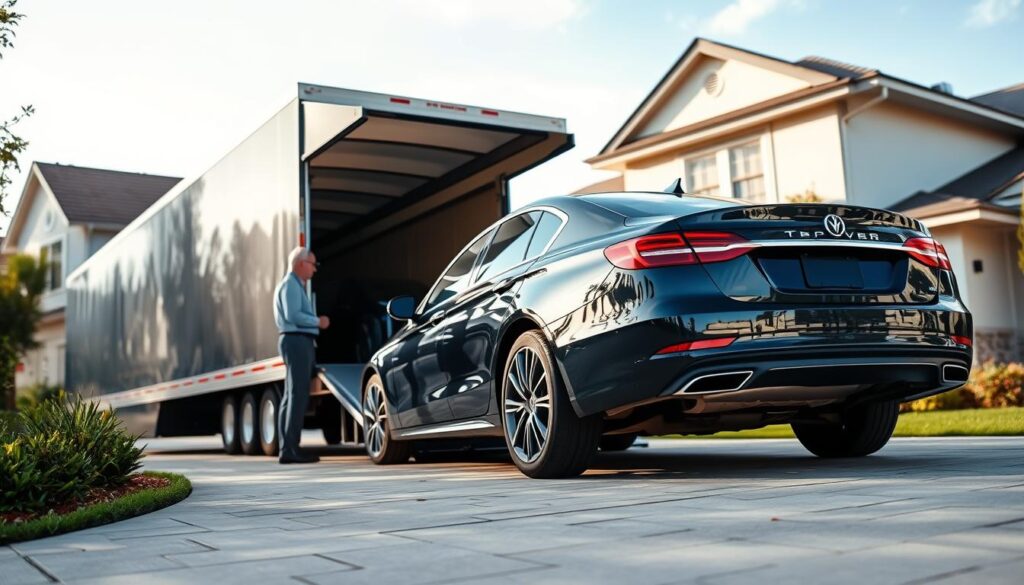
This service arranges pickup and delivery of your vehicle as close to your residence as traffic and local rules allow. It removes the need for customers to travel to a terminal and reduces handling steps that can add risk.
Professional car shipping focuses on convenience and care. The company assigns trained drivers who document condition at pickup and keep communication clear throughout the shipping process.
Options include open and enclosed carriers, scheduling windows, and tailored pickup details. Choosing this door delivery approach saves time and simplifies logistics for busy owners.
“Our priority is the safe, timely movement of each vehicle with transparent updates at every step.”
- Pickup and delivery near the requested address when accessible.
- Handled by professionals from start to finish.
- Multiple transport options to match vehicle needs.
How the Door Shipping Process Works
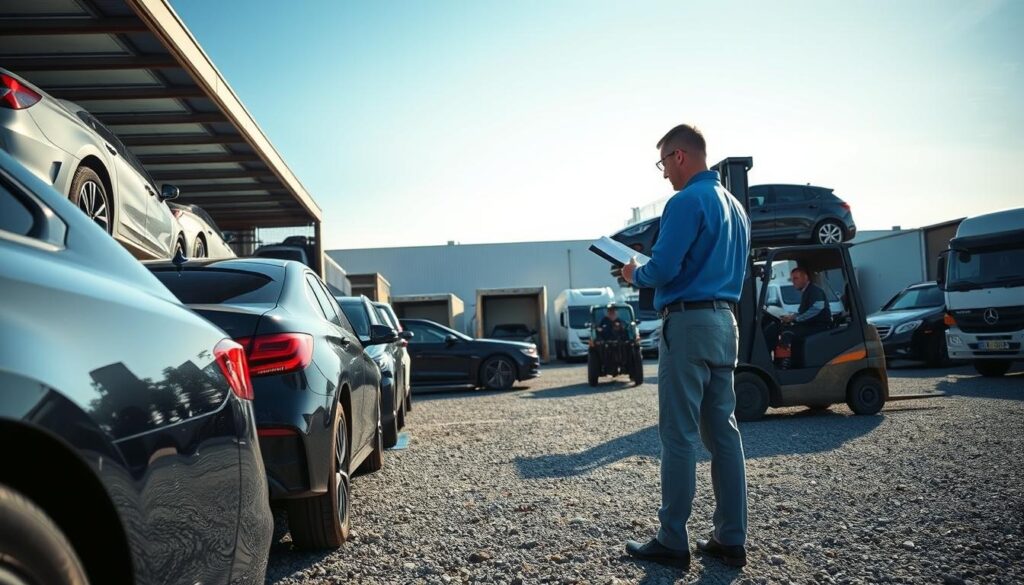
Pickup logistics begin when a trained driver arrives to assess access and load your car onto the truck. If a large carrier cannot reach your street, the driver will arrange a nearby meeting point for safe pickup delivery.
The team secures each vehicle to industry safety standards before departure. Drivers double-check straps, ramps, and vehicle condition to reduce risk during transport. Most carriers provide a pickup window rather than a guaranteed hour, so customers should plan accordingly.
Delivery Requirements
At delivery, an authorized person must be present to inspect the car and sign the bill of lading. The driver and recipient both sign this document to confirm the car delivered status.
- We coordinate the entire door shipping process to minimize terminal handling.
- Updates on estimated arrival time help with scheduling pickup delivery.
- In some cases, the type of truck dictates which roads can be used to reach your destination.
For a reliable quote and services tailored to your needs, see our car shipping options or call (307) 288-5972.
Key Benefits of Choosing Direct Vehicle Delivery
Direct delivery cuts handling steps and reduces the number of times a car is loaded and unloaded. This lowers the risk of damage from multiple handlings or terminal storage.
Customers gain clear convenience when their vehicle arrives at a requested location. That convenience saves time and removes the need to travel to a remote terminal.
“Professional carriers focus on secure, documented handling so vehicles arrive in the same condition they left.”
- Enhanced protection: fewer transfers means better protection for your car.
- Professional handling: trained drivers and quality equipment secure each vehicle.
- Flexible options: choose the carrier type and shipping option that fits budget and vehicle needs.
| Benefit | What it means | Customer impact |
|---|---|---|
| Reduced handling | Less loading/unloading at terminals | Lower damage risk |
| Dedicated truck | Personalized routing and care | Faster, tailored delivery |
| Professional carrier | Trained drivers and secure equipment | Reliability and peace of mind |
For questions or to schedule car shipping, contact the team at (307) 288-5972 or email info@bestcarshippinginc.com.
Factors Influencing Your Total Shipping Costs
What you pay for car shipping depends on more than just distance and carrier choice. Several clear elements shape the final cost and delivery timeline. Understanding them helps owners plan and avoid surprises.
Vehicle Size and Weight
Larger cars and heavy vehicles take more space and add weight to the truck. That raises the per-vehicle cost. Oversized SUVs, trucks, and specialty cars often require higher rates or a specific option.
Seasonal Demand
Summer and peak moving months push prices up. Higher demand can add hundreds to a quote. Booking early reduces the risk of surge pricing and limited carrier availability.
Distance and Location
Longer routes usually cost more overall, though per-mile rates drop on extended hauls. Shipping to or from remote locations is pricier than moves between major cities. Extra fees may apply for fuel surcharges, expedited delivery, or added insurance.
- Major city-to-city routes are generally cheaper.
- Rural pickups or deliveries can increase costs.
- A clear auto shipping quotes process ensures transparency before booking.
| Factor | Impact on Cost | Customer Tip |
|---|---|---|
| Size / weight | Higher rates for large vehicles | Consider scheduling or shared loads |
| Season | Peak months raise prices | Book ahead or choose off-peak dates |
| Location | Remote areas add fees | Use nearby pickup points if needed |
“Transparent quotes and early planning cut unexpected costs and improve delivery confidence.”
Preparing Your Car for Safe Transit
Before pickup day, a short checklist helps owners ready their vehicle for safe shipment. Proper prep reduces risk and speeds the loading process.
Cleaning and Personal Item Removal
Remove all personal belongings from the interior and trunk. Personal items add weight and can shift during shipping, raising the chance of damage.
Keep fuel low. Maintain about a quarter tank so the vehicle is light enough for transport and ready for any needed movement at delivery.
- Wash and wax the car shortly before pickup to repel debris and water.
- Take clear photos of all sides and the interior as proof of condition.
- Leave an extra set of keys with the carrier for smooth pickup and loading.
These steps help ensure protection and a timely delivery. Clear photos and a light vehicle speed up inspection at pickup and reduce hold-ups at the destination.
| Prep Item | Reason | Practical Tip |
|---|---|---|
| Remove belongings | Reduce weight and liability | Empty glove box and trunk |
| Fuel ~25% | Safe weight for loading | Refill after delivery if needed |
| Photos & keys | Proof of condition; access | Timestamp photos; provide spare keys |
For route-specific guidance or to arrange pickup, see College Station to Los Angeles car. Clear preparation improves the shipping car experience and protects your vehicle during transportation.
Essential Documentation for Your Shipment
Before a vehicle leaves, the carrier issues key paperwork that documents condition, coverage, and terms. These documents protect the owner and the company. Review them closely at pickup and delivery.
The bill of lading is the single most important form. It records the car’s condition before and after transit and acts as the official receipt for the shipment.
- You will receive insurance terms and conditions that explain carrier liability and coverage limits.
- Some shippers provide an order confirmation and a vehicle inspection report at pickup.
- In rare cases, the carrier may request title, registration, or proof of insurance to complete the shipping process.
Keep copies of every page. Accurate paperwork speeds claims and clarifies delivery time and location details. The company will guide customers through each step to ensure the documentation matches the car and the service ordered.
“Careful review of shipping documents prevents delays and protects your vehicle during transport.”
For more details or specific forms, see our car shipping and auto transport in page or contact the team at (307) 288-5972 or info@bestcarshippinginc.com.
Comparing Door-to-Door and Terminal-to-Terminal Methods
Understanding the difference helps customers choose the right car shipping option for their needs and budget.
Terminal-to-terminal shipping requires you to drop off and pick up your car at a designated hub. It tends to be less expensive but may force longer drives to reach a terminal.
Home delivery offers greater convenience. A driver collects and returns the vehicle near your requested location. That convenience usually raises the cost compared with hub-based service.
Both methods use similar trucks and carriers. The logistics differ: terminals concentrate handling, while doorstep routing adds routing time and personalized pickup steps.
| Method | Cost | Convenience | Best for |
|---|---|---|---|
| Terminal-to-terminal | Lower | Requires travel to hub | Budget-conscious customers |
| Home delivery | Higher | Doorside pickup and delivery | Busy owners or limited mobility |
| Both | Similar carrier types | Safe handling when booked properly | All vehicle types |
“Compare quotes for both methods to balance cost, time, and convenience.”
The company provides clear quotes for each option and handles the logistics for terminals or home pickup. Contact (307) 288-5972 or info@bestcarshippinginc.com to compare costs and choose the right delivery method for your vehicle.
Navigating Insurance Coverage and Protection
Insurance is one of the most important items to verify before any vehicle leaves your property. Confirm coverage, limits, and exclusions so you know who is responsible if damage occurs during shipping.
Understanding Carrier Liability
Carriers are legally required to carry insurance, but limits vary by company. Carrier liability typically covers damage from negligence or equipment failure during transit.
Most policies exclude acts of God like floods, hurricanes, and earthquakes. Always ask the carrier for proof of insurance, a copy of the policy summary, and details on deductibles.
Supplemental Insurance Options
Customers may purchase supplemental coverage to fill gaps. Check with your personal insurer to see if your auto policy extends to transported vehicles.
“Review insurance terms before booking to avoid surprises and to confirm adequate protection for your car.”
| Item | What it covers | Customer action |
|---|---|---|
| Carrier liability | Negligence, equipment failure | Request proof; note limits |
| Exclusions | Acts of God, preexisting damage | Document condition; consider extra cover |
| Supplemental insurance | Additional protection for high-value vehicles | Compare quotes; verify terms |
Questions about coverage for your shipment or to confirm policy details? Call (307) 288-5972 or email info@bestcarshippinginc.com for clear guidance on protection options.
Selecting a Reliable Auto Transport Company
Choosing a reputable company starts with customer feedback and verified credentials. Read online reviews and check Better Business Bureau ratings to gauge reliability.
Confirm licensing and insurance details with the Federal Motor Carrier Safety Administration before booking. This step verifies the carrier is authorized and covered for your shipment.
Obtain at least three quotes to compare rates, services, and fees. Ask for a clear breakdown so you can compare cost and delivery time without surprises.
- Request references or recent customer feedback.
- Verify FMCSA registration and insurance coverage.
- Compare multiple quotes for transparent rates.
- Choose a company that communicates clearly and professionally.
Reliable providers offer prompt answers, explained fees, and a clear process for pickup and drop-off. Selecting a trustworthy partner helps protect your car and gives peace of mind during shipping.
“A careful selection process reduces risk and ensures a smooth delivery.”
Managing Delivery Expectations and Timelines
Customers should expect a pickup or delivery window rather than an exact arrival moment. Most carriers give ranges, not guaranteed hours. Smaller windows are common in dense areas. Remote locations often need larger windows.
Tracking your shipment is part of the service. Many companies use GPS and online portals so customers can check vehicle location in real time. This visibility reduces uncertainty and helps plan for arrival.
Typical timelines within the continental U.S. run 6 to 12 days for most routes. In some cases, shipping may take up to four weeks. Factors such as weather, traffic, road conditions, and carrier space affect the final time.
- Expect realistic estimates for arrival when you request a quote.
- Delivery windows help scheduling at both origin and destination.
- The team notifies customers of changes to the shipment status.
“Clear communication and modern tracking keep customers informed and reduce delivery stress.”
For a tailored estimate, use our vehicle shipping calculator to view likely timelines and costs for different locations.
Final Inspection Upon Vehicle Arrival
When a vehicle arrives, a prompt, hands-on inspection protects you and the carrier alike. Check the exterior and interior right away. Look for new scratches, dents, fluid leaks, or other changes.
Note any damage on the bill lading and ask the driver to sign next to each entry. This step documents condition at pickup delivery and preserves evidence if a claim is needed.
- Perform a full walk-around with the driver present.
- Take timestamped photos of any issues and the vehicle overall.
- Ensure the bill lading lists each discrepancy and bears the driver’s signature.
The final inspection confirms that the car delivered matches expectations. If you find damage, contact the company and your insurance provider immediately. Record the time and details so resolution can begin promptly.
Our team supports customers through this process and helps with next steps if a claim is required. Call (307) 288-5972 or email info@bestcarshippinginc.com for assistance.
Conclusion
Final checks and documented signs-off protect your interests and confirm vehicle condition.
Choosing a professional, full-service carrier ensures the vehicle is handled with care and clear procedures. Proper preparation, accurate paperwork, and verified insurance reduce risk and speed resolution if issues arise.
Clear communication and timely updates keep customers informed through pickup, transit, and delivery. For a reliable option backed by experience and a national network, review our services at car shipping in Rome, GA.
Prioritize safety and trust when selecting a partner. The result is a smooth, low-stress move and a vehicle that arrives in excellent condition.