
Enclosed car shipping is a covered-trailer method that reduces exposure and risk when moving a high-value vehicle across Canada. This guide explains who hires this service, what to compare, and how to book with confidence.
Owners of classic models, luxury makes, and private collectors choose protected transport for privacy and peace of mind. Move.org reports an average enclosed vehicle transportation cost near $1,500, so budgeting up front prevents sticker shock.
The page serves as a commercial buyer’s guide. It covers protection level, carrier vetting, insurance, quote reliability, pickup and delivery options, and customer service. Readers will learn practical questions to ask and steps to verify a reputable company.
Best Car Shipping Inc. aims to deliver reliable, professional auto transport with clear communication and caring support. For a quote or help, call (307) 288-5972 or email info@bestcarshippinginc.com. Learn more via our enclosed car transport service.
Key Takeaways
- Protected trailers minimize weather and road risk for valuable vehicles.
- Expect typical enclosed auto pricing near $1,500; budget accordingly.
- Compare protection, insurance, and pickup/delivery options before booking.
- Vet the transport company for reputation, licenses, and clear quotes.
- Contact (307) 288-5972 or info@bestcarshippinginc.com for guidance and quotes.
Why enclosed auto transport is worth it in Canada
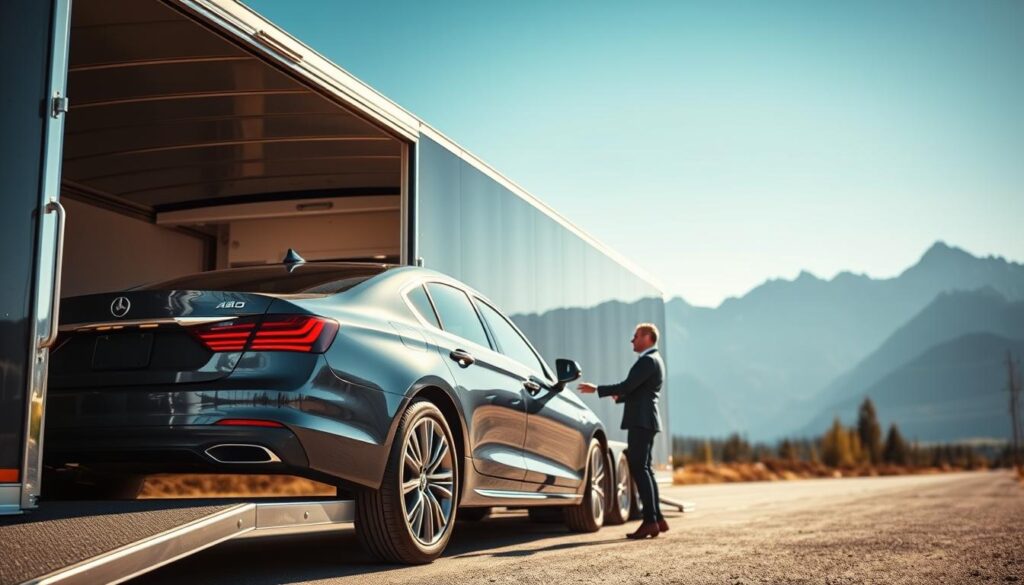
Harsh Canadian seasons and long highway stretches make covered transport a wise choice for high-value vehicles. Short trips can turn risky when spring thaw, heavy rain, or winter spray are factors. That risk drives many people to choose a higher level of protection.
Protection from weather and road debris
Auto transport in a covered trailer reduces exposure to sunlight, rain, and flying stones. That lowers the chance of paint chips, windshield damage, and corrosion from salt or grit.
Privacy and theft deterrence
Limiting visibility helps deter opportunistic theft and unwanted attention. For collectors and owners of limited-run vehicles, privacy is a tangible security benefit.
Who benefits most
Examples include collectors moving a classic across provinces, buyers receiving an exotic after an online purchase, and owners transporting a hard-to-replace model. The incremental cost is often justified when parts or finishes are costly to repair.
Reason matters: if protecting value and avoiding repair delays is the priority, covered transport is often worth it. Not all vehicles need this level of care, which is why comparing open vs enclosed options comes next.
Enclosed vs open transport for car shipping across Canada
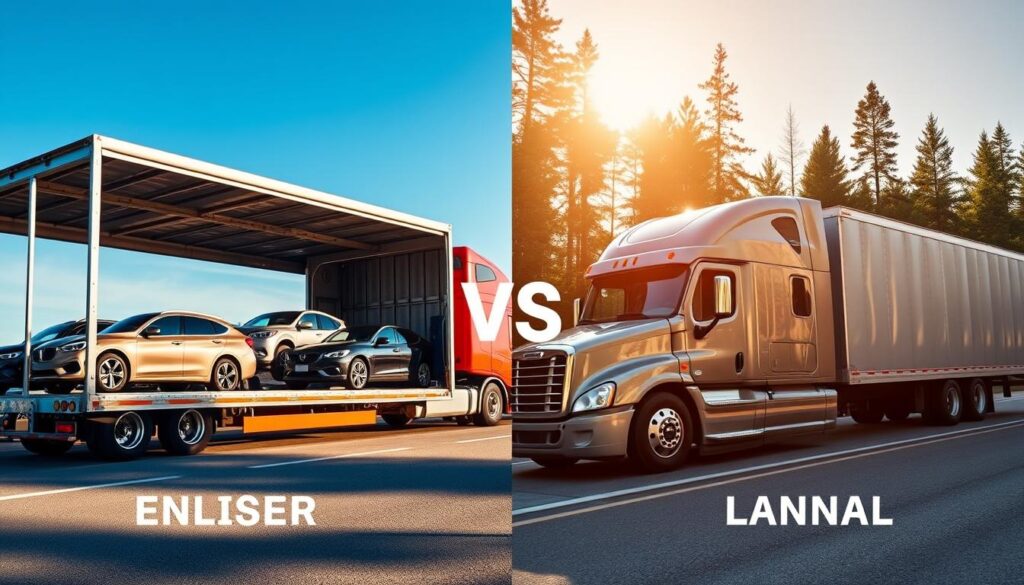
Choosing between covered and open trailers starts with a clear view of risk, cost, and timing.
What changes with a covered trailer
Covered trailers reduce exposure to weather and road debris. They add privacy and limit visible access during transit.
Physically, the vehicle sits inside a box-style trailer instead of on an exposed rack. That reduces dust, salt spray, and stone chips.
When open transport is “good enough”
Open transport is the cost-efficient option for most daily drivers. It is ideal when minor wear from wind or road grit is acceptable.
For people focused on saving money and minimizing delay, open units generally deliver reliable, lower-cost service across common routes.
Tradeoffs to expect
- Covered units carry fewer cars per trailer; expect higher per-vehicle pricing.
- Fewer slots can extend lead times, especially on remote routes or peak seasons.
- Open trailers offer more capacity and often faster scheduling for routine moves.
“Enclosed trailers hold fewer vehicles, which increases cost; open transport is generally more affordable for most daily-use cars.”
Match the option to the vehicle’s value, risk tolerance, and required delivery time. That prevents overspending when open transport meets protection needs.
Top enclosed car shipping companies to compare
Not all providers deliver the same balance of speed, protection, and price—compare key features before you book.
Montway Auto Transport — best overall pick
Montway has a strict carrier vetting process and guarantees pickup dates.
Move.org notes optional GPS tracking via 300+ carriers and a 4.7/5 score from nearly 50,000 reviews.
AmeriFreight Auto Transport — fast moves
AmeriFreight fits urgent timelines with same-day or within-24-hour options.
It offers gap coverage that can contribute up to $2,000 toward a deductible and a 48-hour damage review window.
SGT Auto Transport — streamlined buying
SGT provides instant online quotes valid seven days, 24/7 advisors, and price matching.
Average enclosed rates trend near $1,289 and fees are typically inclusive of taxes and basic insurance.
Ship a Car Direct — value option
Ship a Car Direct posts below-average pricing, a no-deposit policy, and a damage-free guarantee up to $500.
Ratings sit around 4.8/5 from over 10,000 reviews.
uShip — marketplace alternative
uShip lets buyers compare bids and carrier profiles.
This model helps select by price, timeline, and provider ratings rather than accepting a single broker match.
“Use reviews and response times as decision filters — strong customer service often signals consistent delivery.”
How to evaluate enclosed car shipping companies like a pro
Start with clear proof points: favor providers that show 10+ years of operation, transparent licensing, and public insurance records. Long tenure usually means established carrier networks and fewer surprise broker handoffs.
Experience signals
Ten-plus years in auto transport reduces risk from pop-up brokers. A mature company will have documented pickup procedures, staff trained for inspections, and stable carrier contracts.
Customer reviews benchmarks
Target providers with averages near 4.6 out of 5 or higher. Check review volume and dates to avoid old or sparse feedback. Recent, detailed reviews beat a single perfect score.
Carrier vetting standards
Verify that the broker or transport company shows carrier licensing and insurance evidence. Prefer firms with a published “do not use” list or vetting policy like AmeriFreight or marketplace transparency like uShip.
Quote reliability
Ask for a guaranteed option or written fee breakdown to prevent late price jumps of 25–50%. Firms that lock pricing or post clear add-on fees increase predictability.
Insurance extras
Look for deductible assistance, gap coverage, or damage guarantees such as those offered by Ship a Car Direct. These extras limit out-of-pocket exposure after an incident.
“Proactive communication and documented inspection reports are as important as coverage—good service reduces stress and surprises.”
When in doubt, call for clarification. Best Car Shipping Inc. can review quotes and vet carriers: (307) 288-5972 or info@bestcarshippinginc.com.
Enclosed car shipping cost in Canada: what you’ll pay and why
Understanding what you’ll pay begins by anchoring expectations to a reliable average rate. Move.org lists a national reference near $1,500 for enclosed transport in Canada. SGT reports averages near $1,289 and Ship a Car Direct trends about 11% below average with no deposit.
Key cost drivers
Distance is the primary factor—longer lanes raise fuel and labor costs. Vehicle size and weight also matter: larger models need more space and handling time.
Route and location affect availability. Major corridors run cheaper than remote routes. Timing and seasonality change pricing during peak demand.
Lead time and money
Standard bookings usually lower rates. Short-notice requests can add hundreds, sometimes forcing 25–50% higher quotes when capacity is tight.
Compare quotes apples-to-apples
- Confirm fees included: taxes, terminal charges, and fuel surcharges.
- Verify insurance coverage levels and any deductible assistance.
- Check deposit rules, cancellation terms, and whether the quote is guaranteed.
Watch low bids closely. A very low number may omit fees or rely on scarce carrier capacity, creating add-on risk at delivery. The best providers explain pricing logic and document inclusions.
“Ask whether a quote is guaranteed or estimated—this single question prevents costly surprises.”
For a deeper per-mile reference and to compare how distance affects rates, see this resource on average cost per mile: average cost per mile. Choosing the right quote type and booking channel is often as important as the number itself.
Quote types and booking options that affect price and timing
How you request a quote shapes timing, certainty, and final cost. Choosing the right booking process reduces surprises and keeps delivery on schedule.
Guaranteed quotes and when they make sense
Guaranteed quotes lock price and protect against 25–50% increases that Move.org warns can occur. They cost more, but they suit tight timelines, high-value vehicles, and buyers who need cost certainty.
Instant online quotes vs phone-based estimates
Instant quotes (SGT offers seven-day validity) give quick price signals and work for standard routes and common vehicles.
Phone estimates let an agent verify complex pickups, remote locations, or special handling needs. Use them when the route or vehicle is atypical.
Marketplace bidding vs broker-matched carriers
Marketplaces like uShip show multiple bids and carrier profiles for comparison. Broker-matched services reduce the buyer’s coordination work and streamline bookings.
| Quote Type | Price Certainty | Best for | Typical Time Impact |
|---|---|---|---|
| Guaranteed | High | Tight schedules, high-value moves | Often faster, priority options |
| Instant online | Medium | Standard routes, quick planning | Immediate estimate |
| Phone estimate | Variable | Complex pickups, remote locations | May add review time |
| Marketplace bidding | Low–Medium | Price-savvy buyers who compare carriers | Depends on bid cycle |
“Ask whether a quote is guaranteed or estimated—this single question prevents costly surprises.”
Keep written confirmations for quote terms, pickup windows, and included insurance. For a detailed option on protected transport, see our enclosed car shipping page or call (307) 288-5972 for help selecting the right process.
Pickup and delivery options for enclosed car transport in Canada
Pickup and delivery choices shape timing and convenience for any protected vehicle move across Canadian routes.
Door-to-door or terminal delivery: pick what suits you
Door-to-door brings the vehicle close to the requested address. It is more convenient but can cost more when access is limited.
Terminal delivery drops the vehicle at a local yard. It usually lowers price and works well when timing is flexible.
How pickup access affects scheduling
Narrow streets, downtown restrictions, and parking limits can require alternate meeting points. Drivers may request a nearby lot or wider street to load safely.
Inspection steps at pickup and drop-off
- Pre-pickup: document existing dents, scratches, and mileage on a condition report.
- Transit: the report travels with the transport and guides the final review.
- Drop-off: perform a joint inspection and sign the final paperwork if all items match.
Delays, communication, and planning
Road closures and severe weather are the most common causes of delivery changes in Canada. Expect proactive updates from a reliable service.
Good customer service means clear dispatch calls, timely tracking updates, and a transparent process when windows shift. Allow buffer days for critical moves.
“Customers should expect clear documentation and proactive updates when conditions change.”
For practical tips on timing and preparation, see our stress-free vehicle transport tips or contact support at (307) 288-5972.
How to prepare your vehicle for enclosed auto shipping
A few careful steps before pickup cut disputes and protect value during transport. This short routine helps the customer and the carrier complete a clean inspection and reduces stress at delivery.
Clean, document, and photograph before pickup
Clean the vehicle inside and out. A clear exterior makes dents and chips obvious. Interior cleaning helps show whether personal items remain.
Photograph all sides with time-stamped images. Capture close-ups of existing marks and the odometer. These photos support the pickup and delivery inspection.
Remove personal items and check insurance limits
Make sure personal belongings are removed. Most carrier insurance excludes personal property left inside a vehicle. SGT allows limited weight (often up to 100 lbs), but customers should confirm policy limits before loading.
Fuel, tires, and leak checks
Keep fuel at about one-quarter tank. Check tire pressure and ensure there are no fluid leaks. These steps prevent loading delays and safety holds during the transport process.
- Disclose special equipment or low clearance so the carrier can plan loading.
- Confirm pickup contacts, access notes, and inspection timing before the truck arrives.
- Keep inspection photos and condition reports until delivery is complete.
“Careful preparation is a simple step that materially improves shipping outcomes and reduces stress.”
For help with the prep checklist or to review carrier instructions, contact Best Car Shipping Inc. at (307) 288-5972 or info@bestcarshippinginc.com.
Red flags to avoid when choosing a car transport company
A few simple red flags often predict costly delays or disputes with a transport company. Spotting them early saves time and money.
Vague insurance details or refusal to share carrier credentials
Do not accept vague answers. A reputable company will provide carrier names, MC numbers, and written coverage limits. Refusal to share credentials is a major warning sign.
Unclear pickup windows and weak communication
Unclear pickup windows create operational risk. Missed pickups force short-notice rescheduling and increase cost.
Weak customer service shows as slow callbacks, no written confirmations, and inconsistent status updates. That behavior usually produces stress at delivery.
Price tactics that lead to surprise charges
Low initial quotes that later spike are common pitfalls. Move.org warns quotes can rise 25–50% after booking when a provider hides fees or blames “dispatch” or “availability.”
- Common warning signs: no written quote, vague coverage, and no carrier ID.
- Bad communication: missed calls, no tracking, and late status notes.
- Price traps: low base quotes, surprise terminal fees, and last-minute add-ons.
- Review patterns to watch: repeated complaints about billing or late delivery.
| Warning Sign | What it Means | How to Verify |
|---|---|---|
| Vague insurance | Carrier may lack adequate coverage | Request policy details and carrier number |
| No written quote | High risk of price increases | Insist on a signed or emailed quote |
| Poor communication | Likely delays and confusion | Test response times before booking |
| Negative review trends | Systemic operational or billing problems | Read multiple reviews for patterns |
“If a company avoids specifics on credentials, pickup timing, or quote terms, compare other options.”
Use reviews strategically. Look for patterns about billing transparency, on-time performance, and issue resolution rather than only star ratings.
Need help vetting providers? Best Car Shipping Inc. reviews quotes and verifies carrier credentials. Call (307) 288-5972 or email info@bestcarshippinginc.com.
Conclusion
,Begin by weighing how much protection your vehicle needs against timing and budget constraints.
Confirm whether protected transport fits your plan. Compare leading options and verify quotes, insurance, and carrier vetting before booking for reliable car shipping.
Selection criteria: favor firms with 10+ years of experience, strong reviews, clear carrier checks, reliable pricing, and insurance extras that protect the customer.
Use a documented process: insist on written quote terms, clear pickup windows, and signed inspection records at pickup and delivery. This reduces claims friction and stress.
Need help choosing a service? Request a consultation to compare options and book the right level of enclosed car shipping via our safe, secure enclosed car shipping to. Call (307) 288-5972 or email info@bestcarshippinginc.com for guided support and reassurance.
FAQ
What is enclosed auto transport and why choose it in Canada?
How does an enclosed trailer differ from open transport?
When is open transport sufficient?
Which companies offer the best enclosed transport options?
What should I look for when evaluating transport providers?
How much does enclosed transport generally cost in Canada?
FAQ
What is enclosed auto transport and why choose it in Canada?
Enclosed auto transport uses covered trailers to protect vehicles from weather, road debris, salt, and highway risks. It is ideal for high-value, classic, collector, or exotic vehicles where protection and privacy matter more than cost. The added security reduces exposure to theft and environmental damage during long-distance moves across Canada.
How does an enclosed trailer differ from open transport?
An enclosed trailer fully covers vehicles, limiting exposure to elements and road debris. Open transport carries multiple vehicles on exposed racks and is more cost-effective for everyday drivers. Enclosed trailers carry fewer vehicles per haul, which raises the price but improves protection and peace of mind.
When is open transport sufficient?
Open transport is suitable for daily drivers, economy vehicles, and short-distance moves where the risk of weather or road debris is acceptable. It’s the practical option when budget matters more than maximum protection or when the vehicle isn’t a rare or irreplaceable model.
Which companies offer the best enclosed transport options?
Top providers include Montway Auto Transport for vetted carriers and optional GPS tracking, AmeriFreight for fast moves and gap coverage, SGT Auto Transport for instant quotes and 24/7 support, Ship a Car Direct for value and a damage-free guarantee, and uShip as a marketplace to compare bids and carrier profiles.
What should I look for when evaluating transport providers?
Focus on tenure and experience, consistent customer ratings around 4.6/5 or higher, clear carrier vetting (licensing and insurance), transparent pricing, and documented insurance extras like deductible assistance or damage guarantees. Check for responsive customer service and no unexplained “do not use” carrier lists.
How much does enclosed transport generally cost in Canada?
Typical enclosed pricing often centers near
FAQ
What is enclosed auto transport and why choose it in Canada?
Enclosed auto transport uses covered trailers to protect vehicles from weather, road debris, salt, and highway risks. It is ideal for high-value, classic, collector, or exotic vehicles where protection and privacy matter more than cost. The added security reduces exposure to theft and environmental damage during long-distance moves across Canada.
How does an enclosed trailer differ from open transport?
An enclosed trailer fully covers vehicles, limiting exposure to elements and road debris. Open transport carries multiple vehicles on exposed racks and is more cost-effective for everyday drivers. Enclosed trailers carry fewer vehicles per haul, which raises the price but improves protection and peace of mind.
When is open transport sufficient?
Open transport is suitable for daily drivers, economy vehicles, and short-distance moves where the risk of weather or road debris is acceptable. It’s the practical option when budget matters more than maximum protection or when the vehicle isn’t a rare or irreplaceable model.
Which companies offer the best enclosed transport options?
Top providers include Montway Auto Transport for vetted carriers and optional GPS tracking, AmeriFreight for fast moves and gap coverage, SGT Auto Transport for instant quotes and 24/7 support, Ship a Car Direct for value and a damage-free guarantee, and uShip as a marketplace to compare bids and carrier profiles.
What should I look for when evaluating transport providers?
Focus on tenure and experience, consistent customer ratings around 4.6/5 or higher, clear carrier vetting (licensing and insurance), transparent pricing, and documented insurance extras like deductible assistance or damage guarantees. Check for responsive customer service and no unexplained “do not use” carrier lists.
How much does enclosed transport generally cost in Canada?
Typical enclosed pricing often centers near $1,500, but costs vary widely. Distance, vehicle size, route, peak seasons, and pickup location all influence the final price. Expect higher prices for longer hauls, oversized vehicles, and tight pickup windows.
What key factors drive enclosed transport prices?
Primary cost drivers include mileage, vehicle dimensions and weight, specific delivery route, demand and seasonality, pickup and drop-off locations, and lead time. Remote addresses or difficult access add time and fees, while short-notice bookings often carry premiums.
How does booking lead time affect price and timing?
Booking well in advance secures better rates and scheduling. Short-notice or guaranteed delivery windows can increase cost substantially. Planning ahead reduces the risk of last-minute surcharges and gives more carrier options.
What’s the difference between guaranteed quotes and instant online quotes?
Guaranteed quotes lock in a price for a set time and often require a deposit; they’re worth it when timing and certainty matter. Instant online quotes give fast estimates but may change after carrier review. Phone or broker estimates can be more tailored but sometimes less instant.
How do marketplace bids compare with broker-matched carriers?
Marketplaces like uShip let carriers bid, potentially lowering price but requiring careful vetting of carrier profiles and reviews. Brokers match shippers with pre-vetted carriers, offering more hands-on coordination and often clearer accountability for service and claims.
What pickup and delivery options are available?
Options include door-to-door delivery for maximum convenience or terminal-to-terminal for lower cost and scheduled pick-up windows. Door-to-door adds convenience fees in remote or congested areas. Terminals can be faster if carrier routes align with nearby hubs.
How do inspections work at pickup and drop-off?
Drivers perform a detailed inspection and document existing damage with photos and a condition report. Customers should do the same. Both parties sign the bill of lading noting mileage, fuel level, and any pre-existing issues. Keep copies for claims and insurance purposes.
What can delay delivery and how can I prevent it?
Weather, road closures, mechanical breakdowns, and permit issues can delay delivery. Choose carriers with contingency plans, allow extra transit time in winter, and confirm flexible pickup windows. Clear communication reduces surprises.
How should I prepare my vehicle before pickup?
Clean and photograph the vehicle inside and out. Remove personal items and documents. Leave about a quarter tank of fuel and disable alarms. Check tire pressure and for fluid leaks. Note that most carrier insurance excludes personal belongings; document valuables separately.
What insurance should I expect for transport?
Reputable carriers maintain liability and cargo insurance. Ask for carrier insurance limits, the broker’s insurance status, and any supplemental coverages like deductible assistance or damage guarantees. Verify coverage details before booking and keep the bill of lading and inspection report for claims.
What red flags indicate an unreliable transport provider?
Avoid companies that refuse to share carrier credentials, provide vague insurance details, use high-pressure sales to force deposits, give unclear pickup windows, or show poor communication. Watch for pricing tactics that add surprise fees at delivery or carriers without proper licensing.
How can I compare quotes apples-to-apples?
Compare total costs including taxes, deposits, fees, insurance, and expected delivery windows. Confirm whether the quote is guaranteed, what services are included, and any exclusions. Ask for written terms and the carrier’s USDOT or Canadian operating number for verification.
Are there special considerations for classic and exotic vehicles?
Yes. For rare, classic, or restored vehicles, demand fully enclosed transport, secure tie-down procedures, climate considerations, and detailed condition documentation. Consider carriers experienced with high-value cars and those offering additional damage guarantees or white-glove handling.
Who should I contact for booking or questions?
For quotes, booking, or customer service, contact the company directly at info@bestcarshippinginc.com or call (307) 288-5972. Confirm all terms in writing and request carrier details and insurance documentation before pickup.
,500, but costs vary widely. Distance, vehicle size, route, peak seasons, and pickup location all influence the final price. Expect higher prices for longer hauls, oversized vehicles, and tight pickup windows.
What key factors drive enclosed transport prices?
Primary cost drivers include mileage, vehicle dimensions and weight, specific delivery route, demand and seasonality, pickup and drop-off locations, and lead time. Remote addresses or difficult access add time and fees, while short-notice bookings often carry premiums.
How does booking lead time affect price and timing?
Booking well in advance secures better rates and scheduling. Short-notice or guaranteed delivery windows can increase cost substantially. Planning ahead reduces the risk of last-minute surcharges and gives more carrier options.
What’s the difference between guaranteed quotes and instant online quotes?
Guaranteed quotes lock in a price for a set time and often require a deposit; they’re worth it when timing and certainty matter. Instant online quotes give fast estimates but may change after carrier review. Phone or broker estimates can be more tailored but sometimes less instant.
How do marketplace bids compare with broker-matched carriers?
Marketplaces like uShip let carriers bid, potentially lowering price but requiring careful vetting of carrier profiles and reviews. Brokers match shippers with pre-vetted carriers, offering more hands-on coordination and often clearer accountability for service and claims.
What pickup and delivery options are available?
Options include door-to-door delivery for maximum convenience or terminal-to-terminal for lower cost and scheduled pick-up windows. Door-to-door adds convenience fees in remote or congested areas. Terminals can be faster if carrier routes align with nearby hubs.
How do inspections work at pickup and drop-off?
Drivers perform a detailed inspection and document existing damage with photos and a condition report. Customers should do the same. Both parties sign the bill of lading noting mileage, fuel level, and any pre-existing issues. Keep copies for claims and insurance purposes.
What can delay delivery and how can I prevent it?
Weather, road closures, mechanical breakdowns, and permit issues can delay delivery. Choose carriers with contingency plans, allow extra transit time in winter, and confirm flexible pickup windows. Clear communication reduces surprises.
How should I prepare my vehicle before pickup?
Clean and photograph the vehicle inside and out. Remove personal items and documents. Leave about a quarter tank of fuel and disable alarms. Check tire pressure and for fluid leaks. Note that most carrier insurance excludes personal belongings; document valuables separately.
What insurance should I expect for transport?
Reputable carriers maintain liability and cargo insurance. Ask for carrier insurance limits, the broker’s insurance status, and any supplemental coverages like deductible assistance or damage guarantees. Verify coverage details before booking and keep the bill of lading and inspection report for claims.
What red flags indicate an unreliable transport provider?
Avoid companies that refuse to share carrier credentials, provide vague insurance details, use high-pressure sales to force deposits, give unclear pickup windows, or show poor communication. Watch for pricing tactics that add surprise fees at delivery or carriers without proper licensing.
How can I compare quotes apples-to-apples?
Compare total costs including taxes, deposits, fees, insurance, and expected delivery windows. Confirm whether the quote is guaranteed, what services are included, and any exclusions. Ask for written terms and the carrier’s USDOT or Canadian operating number for verification.
Are there special considerations for classic and exotic vehicles?
Yes. For rare, classic, or restored vehicles, demand fully enclosed transport, secure tie-down procedures, climate considerations, and detailed condition documentation. Consider carriers experienced with high-value cars and those offering additional damage guarantees or white-glove handling.
Who should I contact for booking or questions?
For quotes, booking, or customer service, contact the company directly at info@bestcarshippinginc.com or call (307) 288-5972. Confirm all terms in writing and request carrier details and insurance documentation before pickup.